Between Realism and Expressionism: Yu Xiaojin Brings an Eastern Sense of Poetics to Southern California
By Richard Ren | Arts & Culture
CITY OF INDUSTRY, Calif. — In an era increasingly shaped by digital imagery and algorithm-generated aesthetics, painter Yu Xiaojin’s latest exhibition offers something distinctly human: the slow accumulation of memory, observation, and emotion translated through paint.
Opening May 30 in the City of Industry, “Western Form, Eastern Aesthetics” presents a selection of works created by the Chongqing-born artist over the past three years. The exhibition reveals an artist working between two seemingly opposite impulses — the disciplined observation of realism and the emotional freedom of expressionism — while searching for a visual language that bridges Eastern philosophy and Western oil painting traditions.
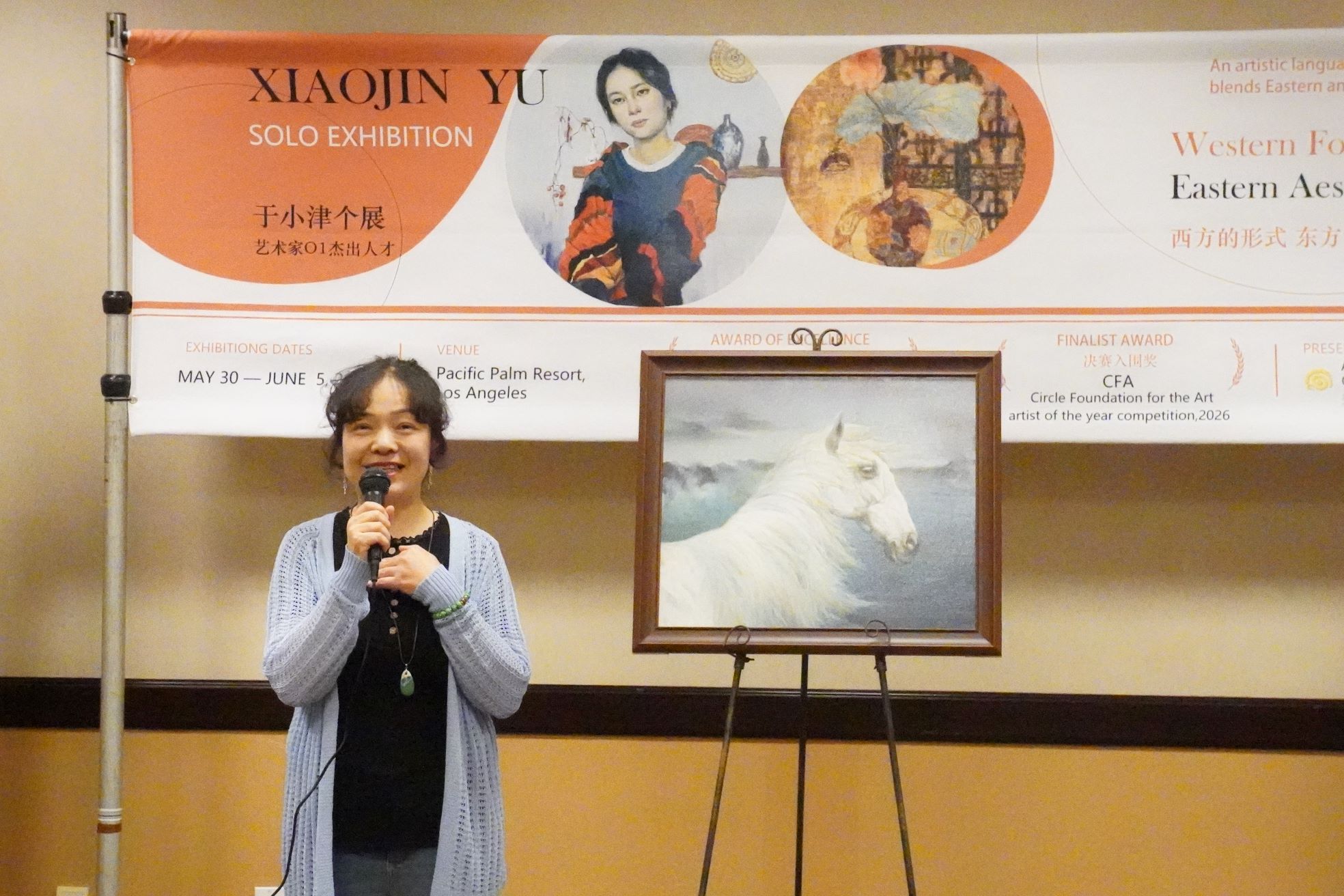
Yu Xiaojin (Photo by: Richard Ren/LAPost)
Born into an artistic family and trained at the prestigious Sichuan Fine Arts Institute, Yu belongs to a generation of Chinese artists whose education was rooted in rigorous academic realism but whose careers have unfolded in a globalized art world. Her paintings draw upon influences ranging from Dunhuang murals and ancient Chinese line drawing traditions to contemporary European expressionism.
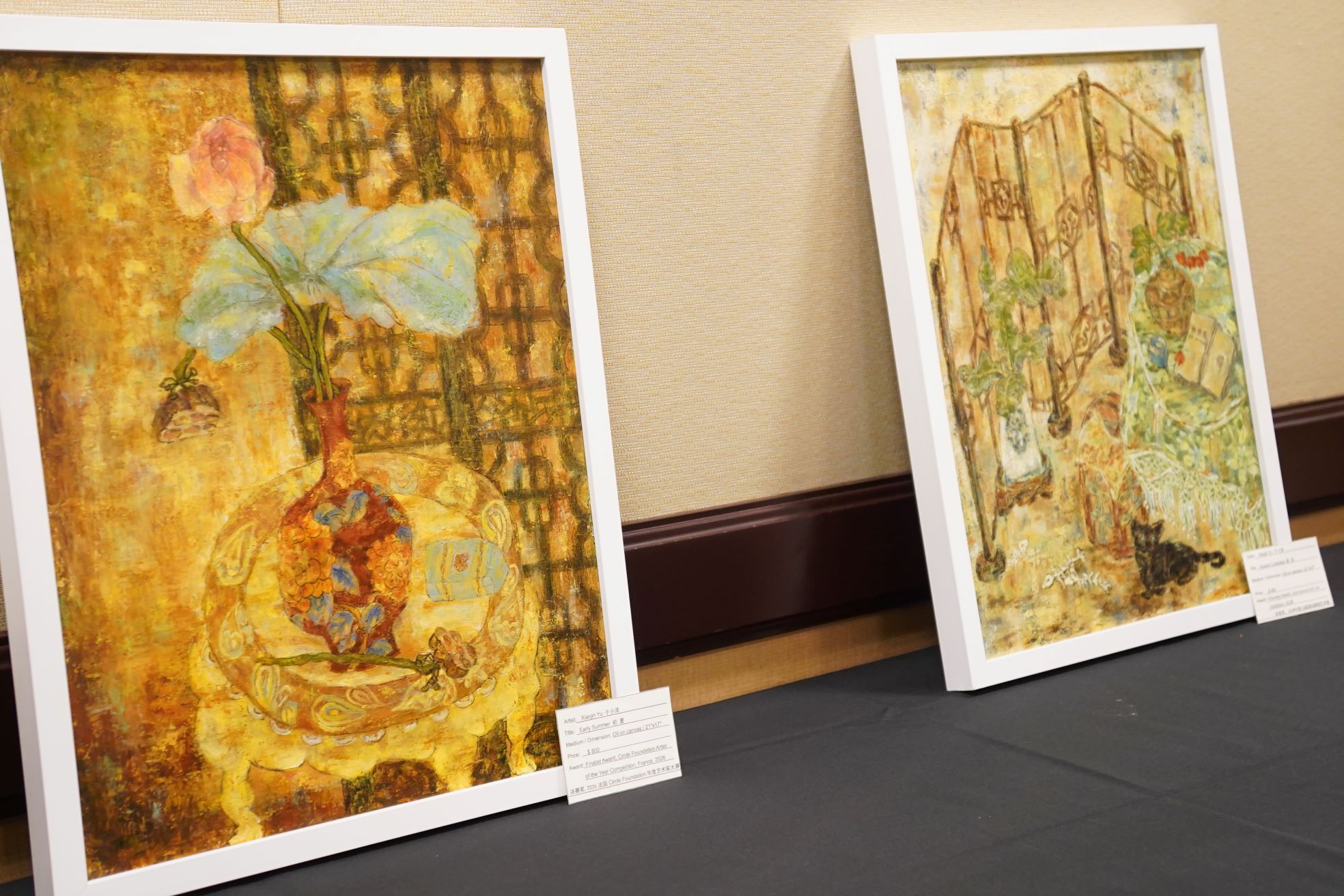
(Photo by: Richard Ren/LAPost)
Walking through the exhibition, viewers encounter two parallel artistic journeys.
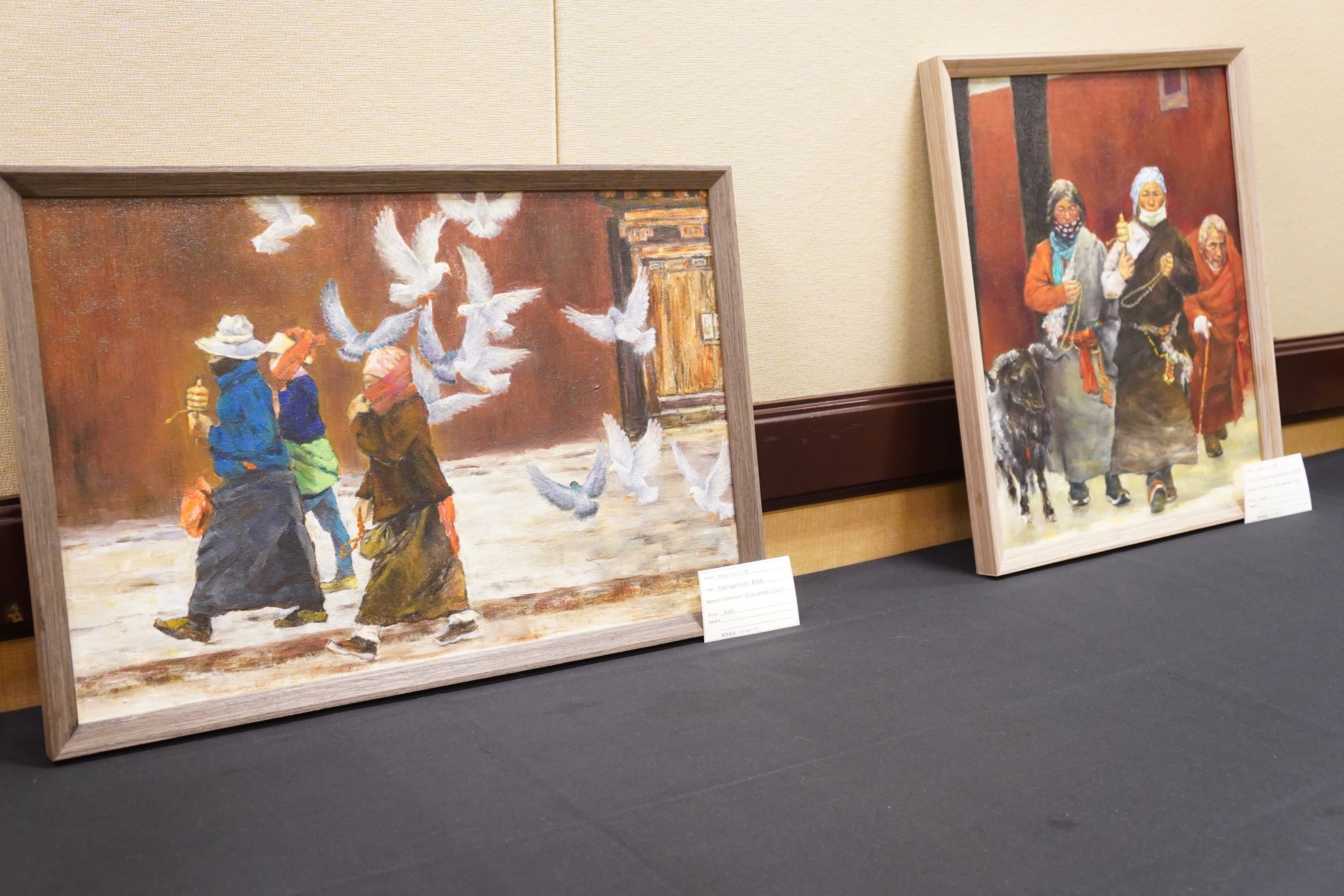
One gallery wall is devoted to carefully rendered portraits. Faces of elderly women, ethnic minority subjects, and everyday individuals emerge from layers of brushwork that reveal both technical precision and psychological depth. Several of these works have been exhibited in major juried exhibitions in the United States and Canada.
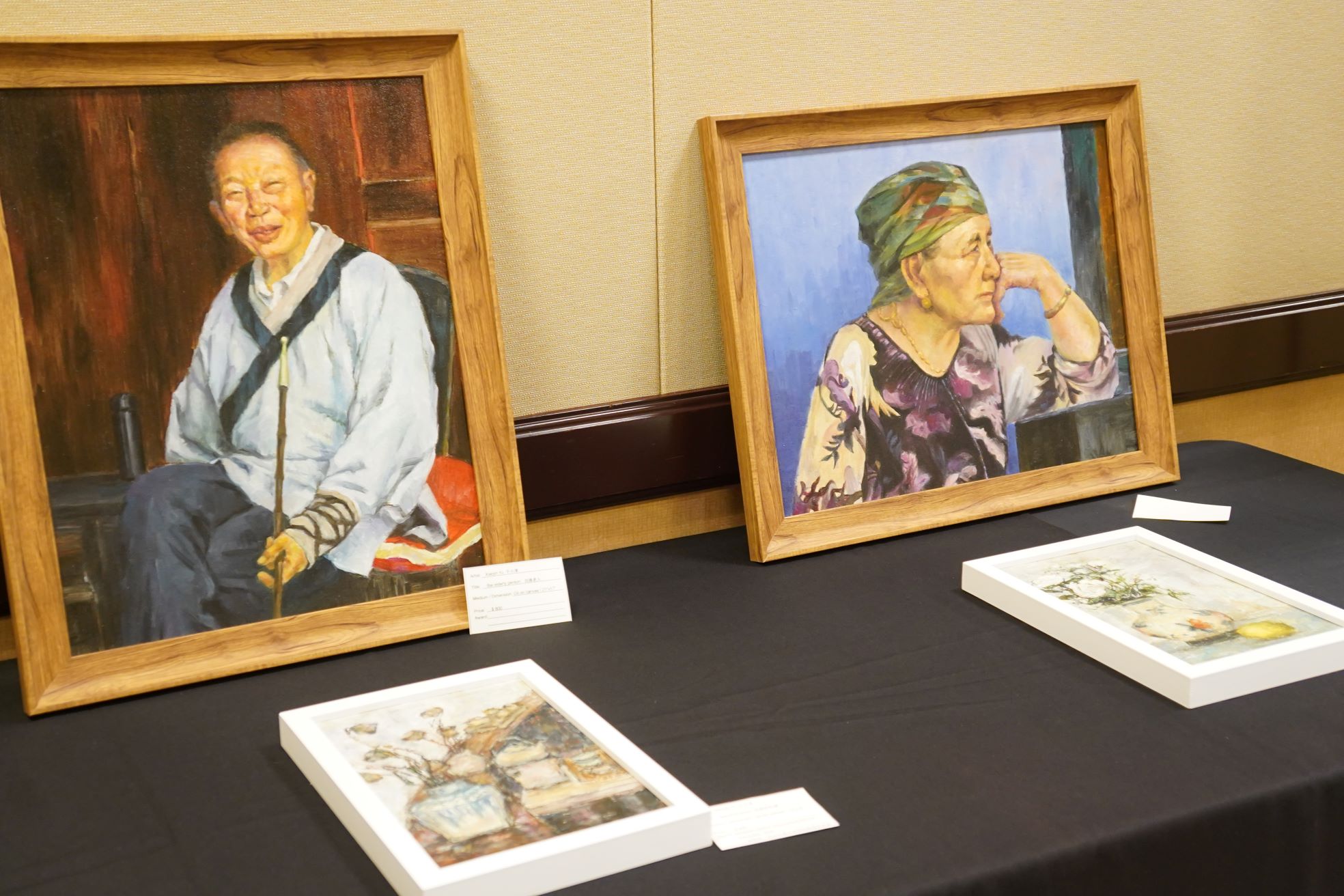
(Photo by: Richard Ren/LAPost)
Elsewhere, the mood shifts dramatically. Colors become more saturated. Forms loosen. Symbolic imagery replaces direct observation. These expressionist works, some of which have been exhibited and awarded in Paris, reflect a more personal and introspective side of the artist.
Rather than viewing the two approaches as contradictory, Yu sees them as complementary.
“I have always been thinking about three concepts,” she said during the exhibition opening. “The first is painting itself — the language of brushwork, texture, and color. The second is imagery, where every element carries emotional meaning. The third is artistic mood or atmosphere, creating a poetic space where viewers can enter their own emotional world.”
(Photo by: Richard Ren/LAPost)
Those three ideas — painterliness, imagery, and poetic resonance — form the conceptual framework of the exhibition.
For Yu, a painting is not simply a representation of reality. It is an invitation into a psychological landscape. A portrait becomes more than a likeness; a horse becomes more than an animal; a flower becomes more than a botanical study. Each image functions as a vessel for memory, emotion, and cultural reflection.
Her dual commitment to realism and expressionism also reflects a larger conversation occurring within contemporary art.
(Photo by: Richard Ren/LAPost)
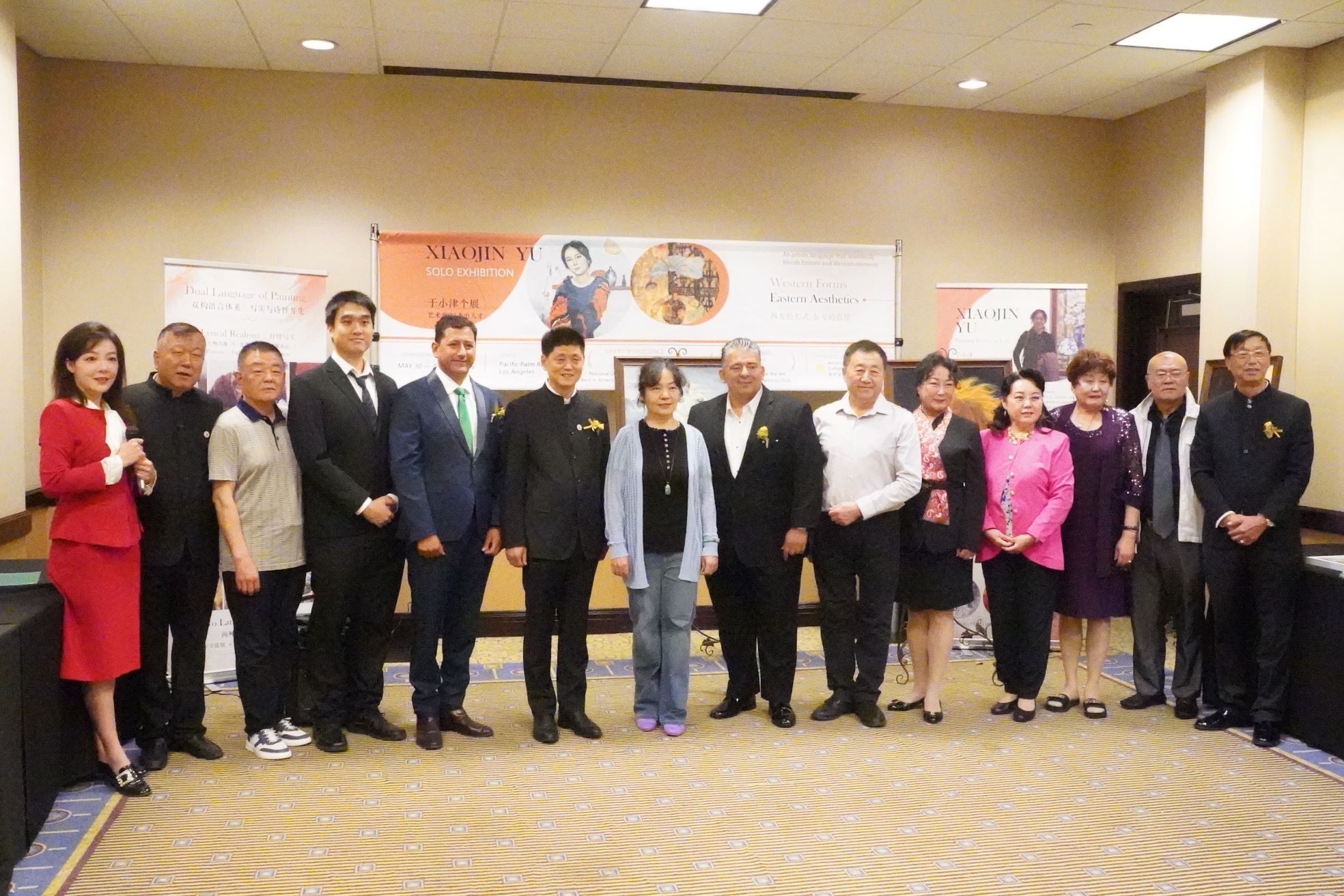
At the opening, artist and critic Tao Haixin suggested that Yu’s work speaks directly to questions facing artists in the age of artificial intelligence.
As AI-generated imagery becomes increasingly sophisticated, he argued, the value of art may lie less in technical production and more in lived experience — the emotional, intellectual, and cultural dimensions that remain uniquely human.
“The artist’s personal emotions, accumulated experiences, and individual visual language become even more precious,” Tao said. “What comes from genuine human experience will continue to matter.”
That sentiment resonated throughout the exhibition.
(Photo by: Richard Ren/LAPost)
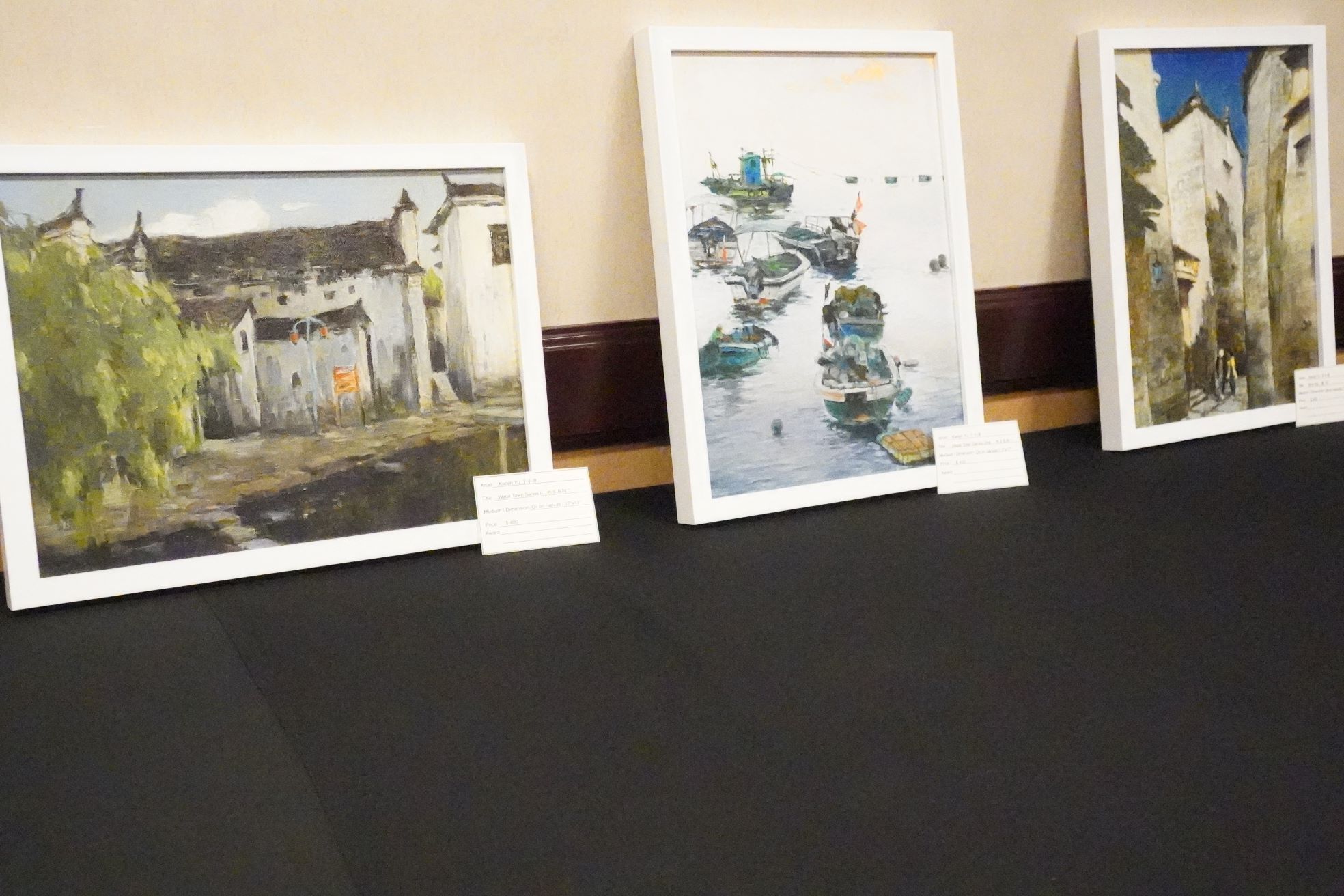
While many contemporary art discussions focus on innovation, technology, or market trends, Yu’s paintings return repeatedly to older questions: How does an artist transform observation into meaning? How does technique become expression? How does an image transcend description and enter the realm of feeling?
The artist herself often references a famous observation by Chinese master painter Pan Tianshou: “In the end, artists compete in the realm of spiritual and artistic attainment.”
For Yu, that pursuit extends beyond technical skill. It involves literature, philosophy, cultural understanding, and personal cultivation — a lifelong process rather than a destination.
That perspective may explain why the exhibition feels less concerned with stylistic consistency than with artistic inquiry. The realist portraits and expressionist canvases are not competing statements. Together, they document an artist navigating between tradition and experimentation, between East and West, between observation and imagination.
(Photo by: Richard Ren/LAPost)
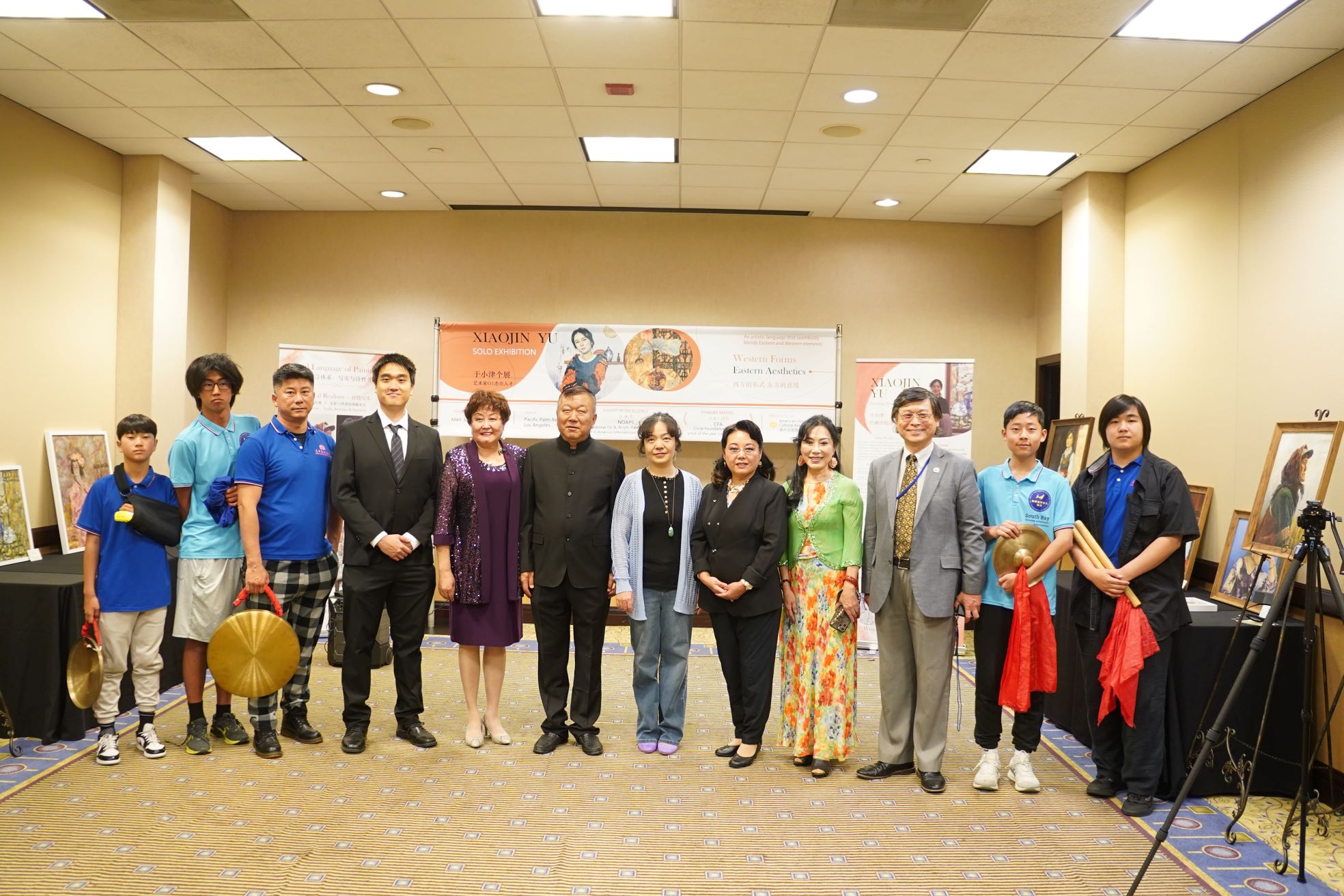
The exhibition’s title, Western Form, Eastern Aesthetics, could easily be interpreted as a simple description of cultural fusion. Yet the works suggest something more nuanced. The Western element is not merely oil paint, nor is the Eastern element simply subject matter. Instead, the exhibition explores how different artistic traditions can coexist within a single visual consciousness.
In Southern California — a region shaped by migration, cultural exchange, and layered identities — that conversation feels especially relevant.
As visitors moved quietly through the gallery on opening day, pausing before portraits and abstracted forms alike, the exhibition offered a reminder that art remains one of the few spaces where cultural dialogue can occur without translation.
Not through slogans or explanations, but through color, texture, memory, and the enduring language of human perception.