From Ancient Silk to Fossilized Wings: China-U.S. Cultural and Scientific Collaboration Enters New Era
By Richard Ren | LAPost | May 16, 2025
WASHINGTON D.C. — In a symbolic moment for cultural heritage and international cooperation, the Chinese Embassy in the United States hosted a handover ceremony on May 16 for the return of precious Chinese cultural relics. Among them was the Wuxing Ling and Gongshou Zhan silk manuscripts, excavated from the Zidanku Chu Tomb in China’s Hunan Province in 1942—recognized as the earliest silk texts known to date from China’s Warring States period (475–221 BC). Lost in 1946, these texts have now been officially returned to China’s National Cultural Heritage Administration by the National Museum of Asian Art under the Smithsonian Institution.
Chinese Ambassador Xie Feng hailed the return as a “cultural milestone,” underscoring the broader progress of China-U.S. heritage cooperation. “Over the years, nearly 600 artifacts have been returned to China,” Ambassador Xie noted. “This return exemplifies what cultural preservation can achieve when countries work together. It also adds new momentum to our people-to-people exchanges and mutual understanding.”
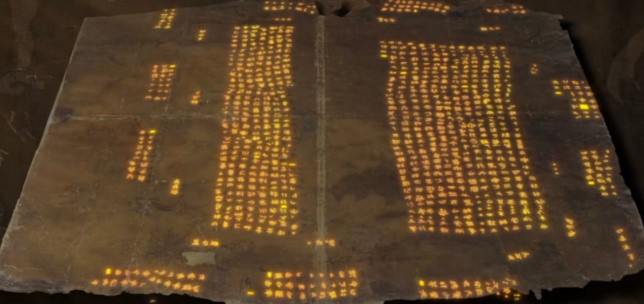
Zidanku Manuscript
Science Meets Heritage: Chicago’s ‘Archaeopteryx’ Fossil Revealed
While ancient silk made its way home, a separate scientific breakthrough unfolded this week in paleontology, further highlighting the impact of China-U.S. collaboration. A joint research team led by Dr. Hu Han of the Chinese Academy of Sciences and Dr. Jingmai O’Connor of Chicago’s Field Museum announced the discovery of a remarkably preserved Archaeopteryx fossil—only the 14th specimen ever identified—in a new study published in Nature.
Nicknamed the “Chicago Archaeopteryx,” the fossil is the smallest of its kind, comparable in size to a modern pigeon. Acquired by the Field Museum in 2022, the fossil offers unprecedented insights into the evolutionary transition from dinosaurs to birds. Using advanced CT scanning and 3D reconstruction, the team uncovered intricate details of the fossil’s skull, soft tissue, and feather structures—most notably a preserved palate and a previously undocumented arrangement of tertial feathers.
“This fossil bridges a critical evolutionary gap,” said Dr. Hu. “Its anatomical features provide fresh clues on how early birds evolved flight and adapted to their environments.”
Bridging Cultures Through Museums and Research
These developments reflect a broader and growing trend of collaboration between Chinese and American institutions in fields ranging from archaeology to museology. Recent years have seen major partnerships between institutions such as the Field Museum, Harvard University, Yale, and the University of Chicago, and their Chinese counterparts. Together, they have launched joint excavation projects, research initiatives, and public education programs that blend theoretical insight with cutting-edge technology.
Earlier this year, the Field Museum hosted the China-U.S. Museum Leadership Forum, co-organized by the Chinese Museums Association and the Pritzker Art Collaborative Foundation. The forum brought together over 20 museum directors and scholars from both countries to discuss shared goals and explore new forms of cross-border collaboration—from digital innovation to the reinterpretation of Asian art. The signing of a Memorandum of Understanding during the forum marked a new chapter of formal cooperation in the museum field.
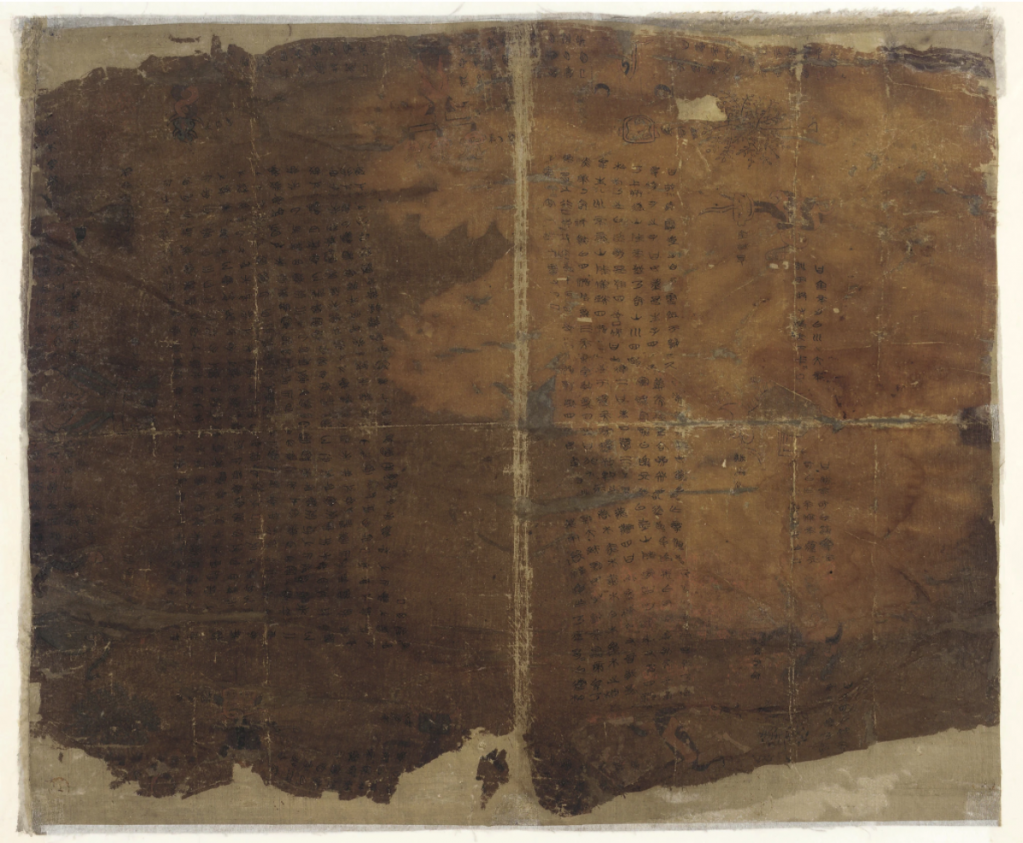
Zidanku Manuscript
Unlocking Dialogue Across Civilizations
Whether it’s the rediscovery of silk manuscripts or the anatomy of a 150-million-year-old bird, the common thread in these stories is the power of international cooperation. These efforts not only advance global scholarship but also foster deeper people-to-people ties and mutual respect between nations.
“In returning history to its roots and jointly studying the past, we are also shaping a more connected and collaborative future,” said one Chinese delegate at the ceremony. As cultural and scientific bridges continue to grow stronger, the China-U.S. relationship is finding new, meaningful dimensions—rooted in knowledge, mutual trust, and a shared commitment to preserving the legacy of civilization.