Hosted by the Chinese Consulate General in Los Angeles, USA Table Tennis, and the Southern California Chinese-American Federation, the 54th Anniversary Forum and Gala commemorating “Ping-Pong Diplomacy” brought together diplomats, Olympic leaders, former national team players, and community representatives for an evening that blended memory, symbolism and quiet hope for the future.
Chinese Consul General Guo Shaochun and his wife Wang Wei attended, along with International Table Tennis Federation President and IOC member Petra Sörling; USA Table Tennis CEO Virginia Sung; Chinese Deputy Consul General Guo Zhiqiang; Olympic champion coach Lang Ping; U.S. National Team coach Gao Jun; U.S. Olympic & Paralympic Committee International Director Joe Roesler; Southern California Chinese-American Federation President Charles Cai; and Dell and Connie Sweeris — members of the 1971 U.S. delegation whose visit to China helped open a diplomatic door the world once thought sealed shut.
Representatives from the Chinese Table Tennis Association also traveled to Los Angeles for the event. Wang Chen, head of the association’s Youth Division, led a delegation that included world youth champions Li Hechen and Hu Yi, who joined American national players for a friendly exhibition match prior to the forum — a spirited exchange that drew loud applause and reminded attendees why the story began with sport in the first place.
Remembering a Simple Gesture That Changed History
Speakers throughout the evening returned to the same theme: 1971’s “friendship first, competition second” encounter was not merely symbolic — it created human connection at a moment when official dialogue was nearly impossible.

(Photo by: Richard Ren/LAPost)
USA Table Tennis CEO Virginia Sung called the anniversary “a reminder of how powerful — and relevant — that moment remains,” noting that the sport demonstrated how competition and cooperation can coexist. “A small ping-pong ball showed the world that connection often begins in the most human way,” she said.

(Photo by: Richard Ren/LAPost)
Dell and Connie Sweeris recounted their memories of Beijing’s 18,000-seat friendship matches, the whirlwind attention that followed, and their unexpected meeting with Premier Zhou Enlai. They spoke less about politics and more about people — the friendships formed, the humility of their Chinese hosts and the bonds that endured long after the matches ended. “We hope the next generation carries this spirit forward,” they said.

(Photo by: Richard Ren/LAPost)
International Table Tennis Federation President Petra Sörling emphasized that Ping-Pong Diplomacy is not merely a story to honor but a lesson to apply: in an age of hyper-connection and deepening division, sport can still create rare, genuine spaces for respectful human encounter. “Keep the rally going,” she urged.
Looking Toward the Next Generation

(Photo by: Richard Ren/LAPost)
A congratulatory letter from Chinese Table Tennis Association President Wang Liqin underscored the role of youth, echoing Chinese President Xi Jinping’s belief that the future of China–U.S. relations lies in people, especially young people. Building exchange platforms, encouraging cultural understanding and turning sporting goodwill into long-lasting connection remain essential, he wrote.
The evening also served as a reminder that Los Angeles holds a special place in Chinese sporting memory — from the 1984 Olympics to the city’s upcoming 2028 Games.
If Ping-Pong Diplomacy once opened a diplomatic door, many speakers suggested, it may again serve as a quiet counterweight at a time when political tension is never far beneath the surface.
For one night in Los Angeles, instead of negotiations, speeches or policy statements, it was a ball bouncing across a table — and the idea that even now, friendship may begin there.
(By Richard Ren / LAPost)

(Photo by: Richard Ren/LAPost)

(Photo by: Richard Ren/LAPost)
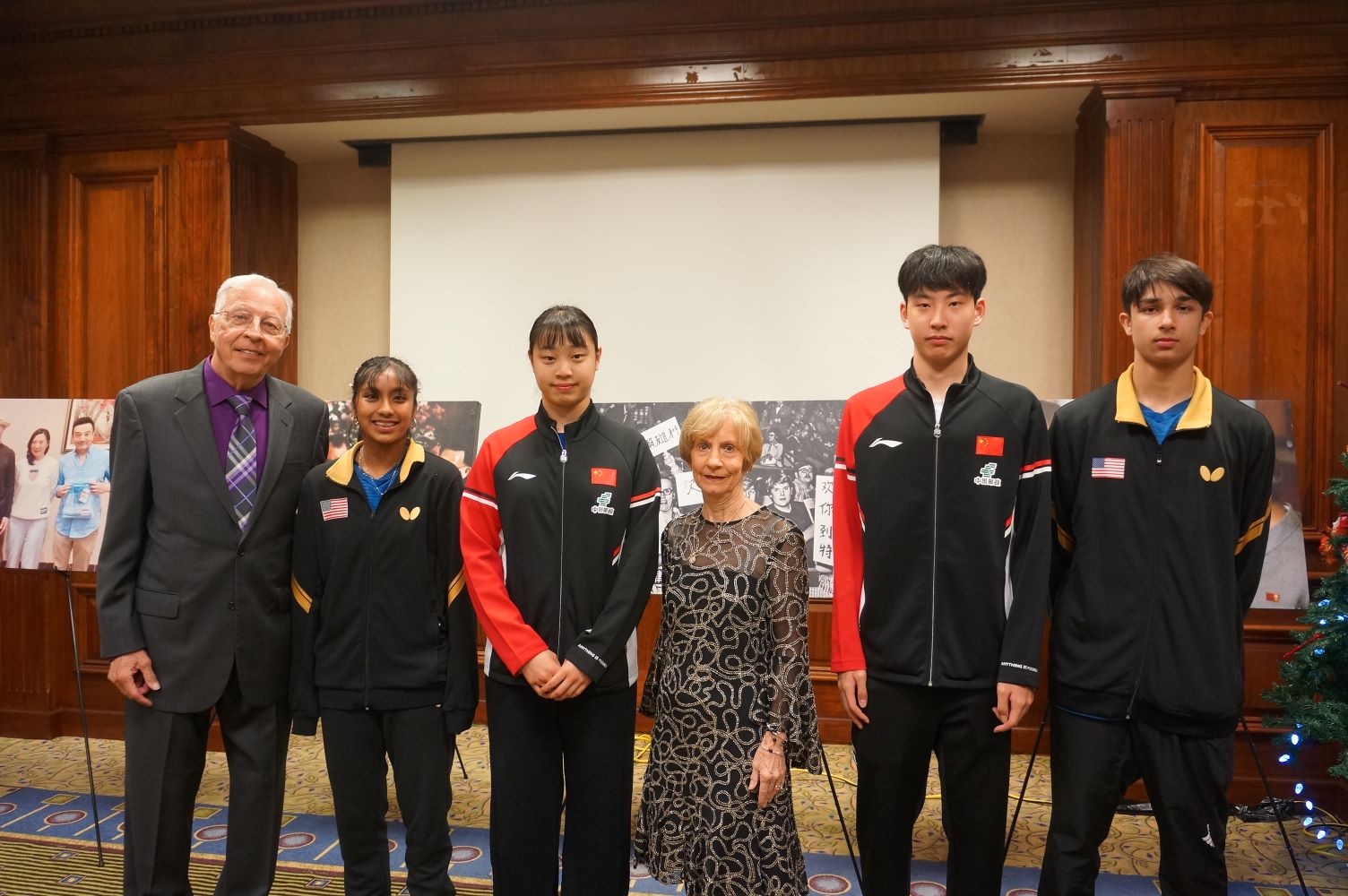
(Photo by: Richard Ren/LAPost)

(Photo by: Richard Ren/LAPost)

(Photo by: Richard Ren/LAPost)
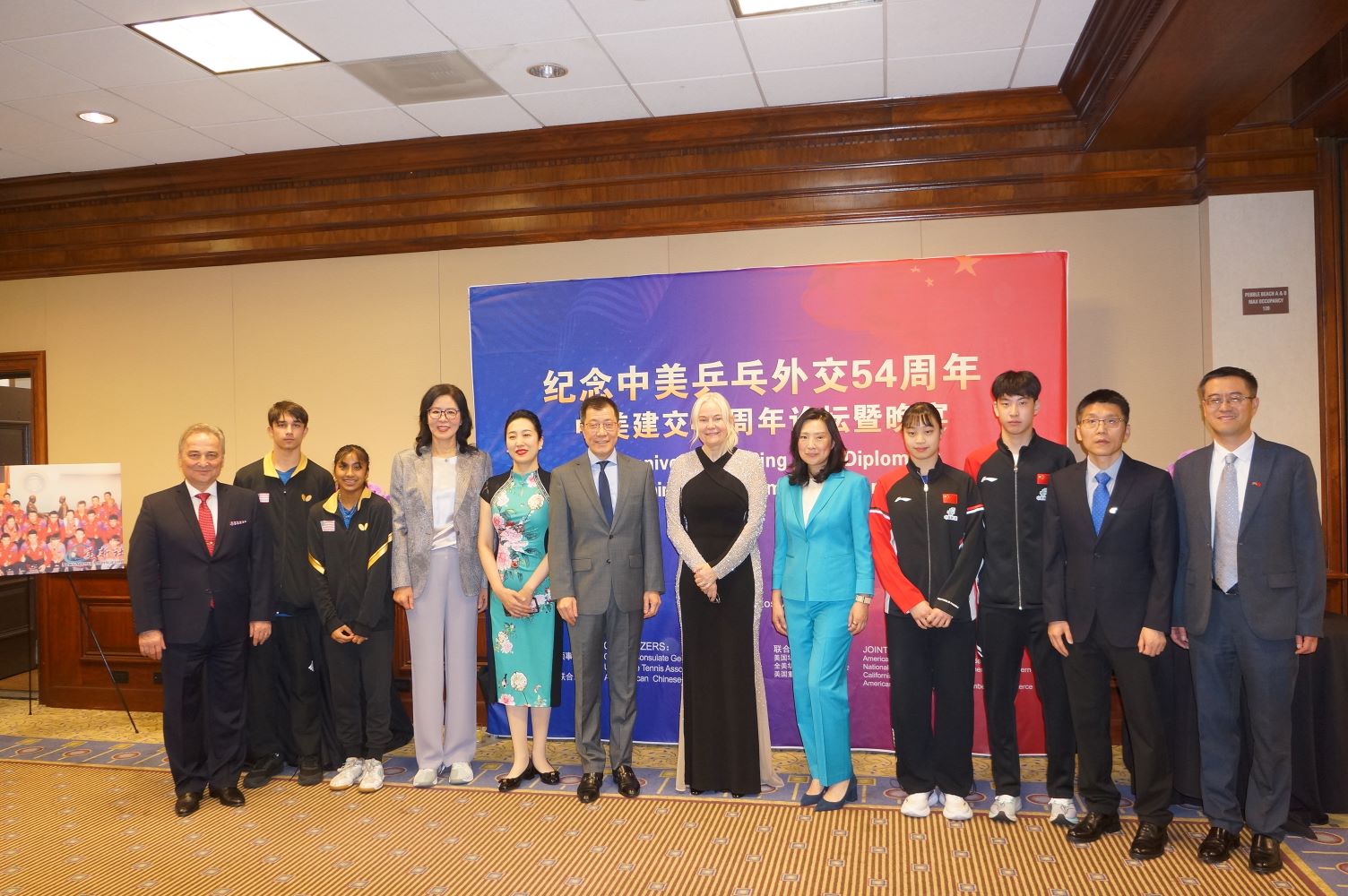
(Photo by: Richard Ren/LAPost)

(Photo by: Richard Ren/LAPost)