Chinese and Korean Firms Dominate Global Display Industry Landscape — SID Display Week 2026 Signals Intensifying Tech Race and Structural Shift
Chinese: https://lapost.us/?p=80562
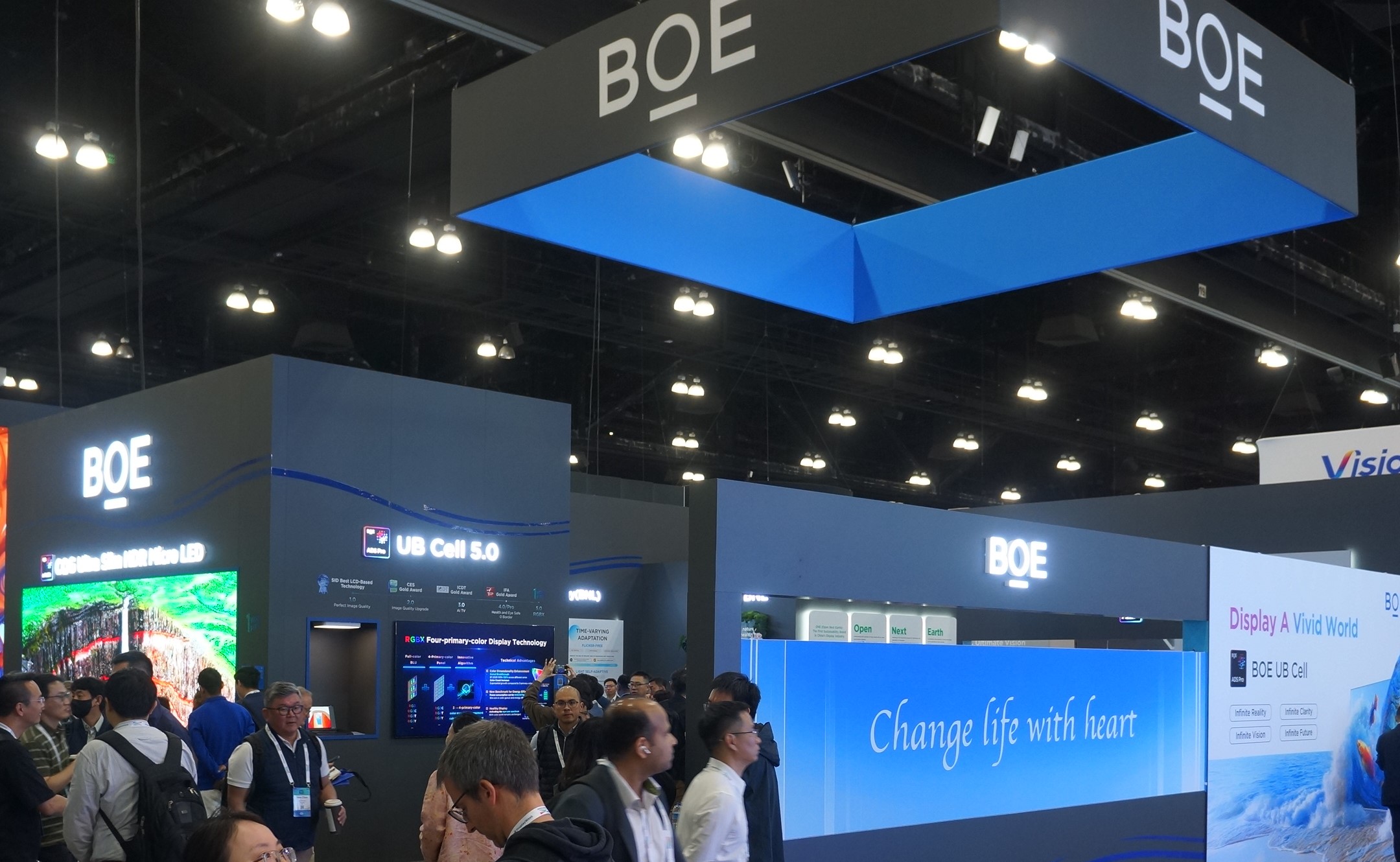
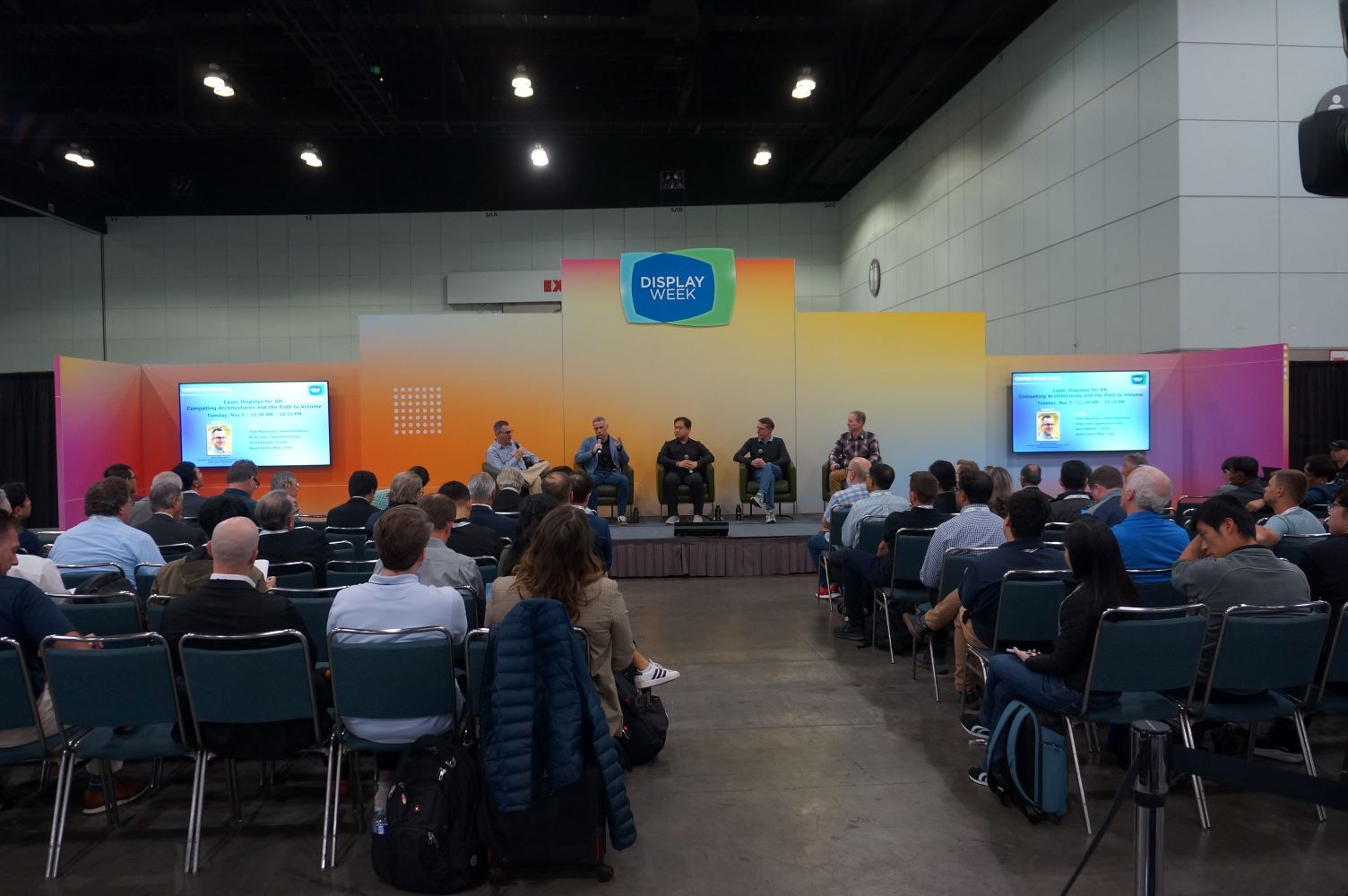
LOS ANGELES, May 5, 2026 (LAPost) — The global display industry’s most influential annual event, SID Display Week 2026, opened Tuesday at the Los Angeles Convention Center. Though modest in scale and housed in the South Hall due to its business-to-business focus, the exhibition floor immediately revealed a defining reality of today’s display industry: the concentration of power in the hands of Chinese and South Korean companies.
(Photo by: Richard Ren/LAPost)
Upon entering the hall, the dominance is unmistakable. The five most prominent booths at the entrance belong entirely to companies from China and South Korea, with Chinese exhibitors occupying nearly half of the total exhibition space.
(Photo by: Richard Ren/LAPost)
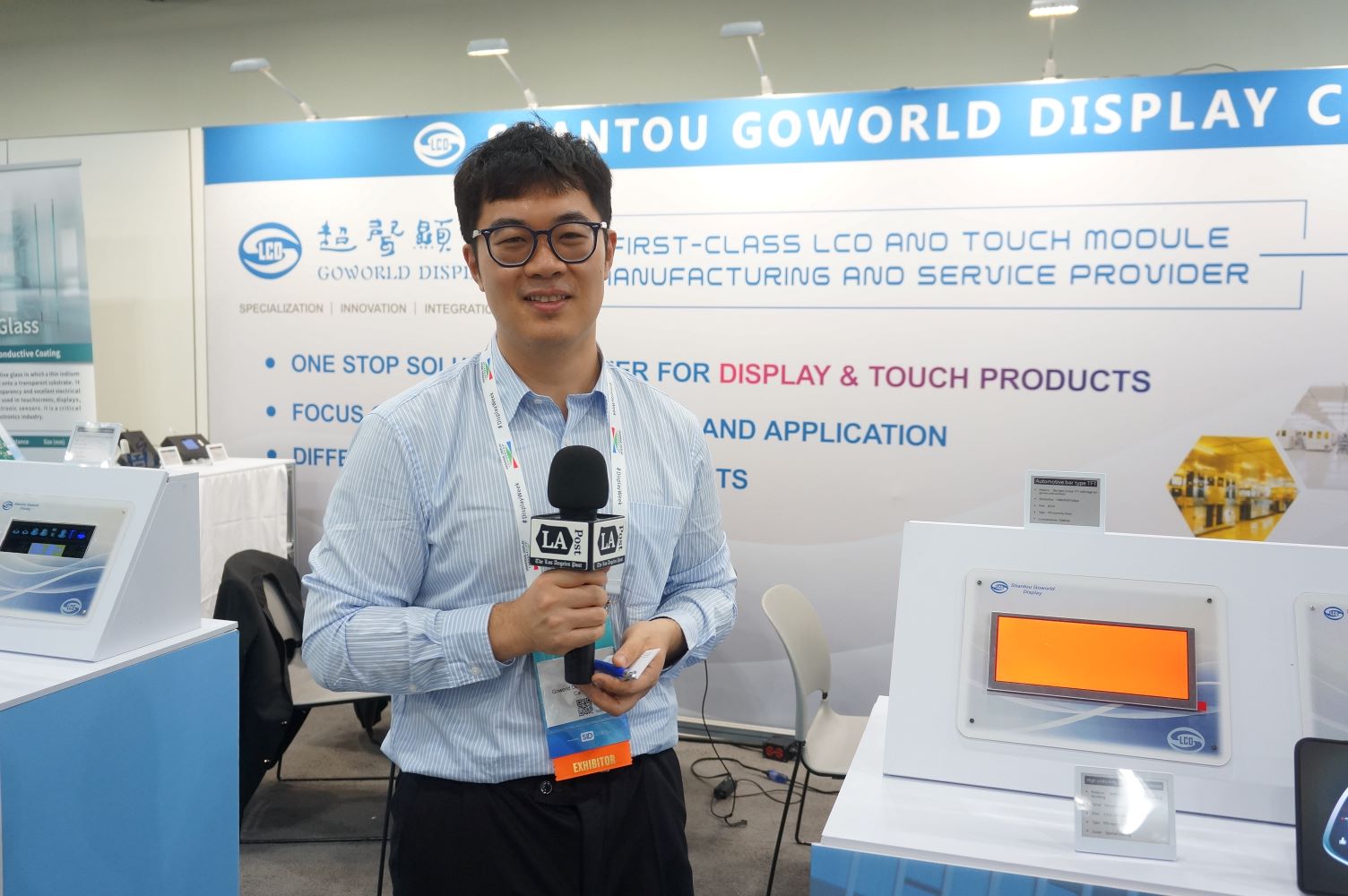
Dr. Alex Wang of Shantou Goworld Display Group described the event as a “wind vane for the entire industry,” noting that “most of the display industry is now concentrated in China and South Korea, including both technology and supply chains.”
(Photo by: Richard Ren/LAPost)
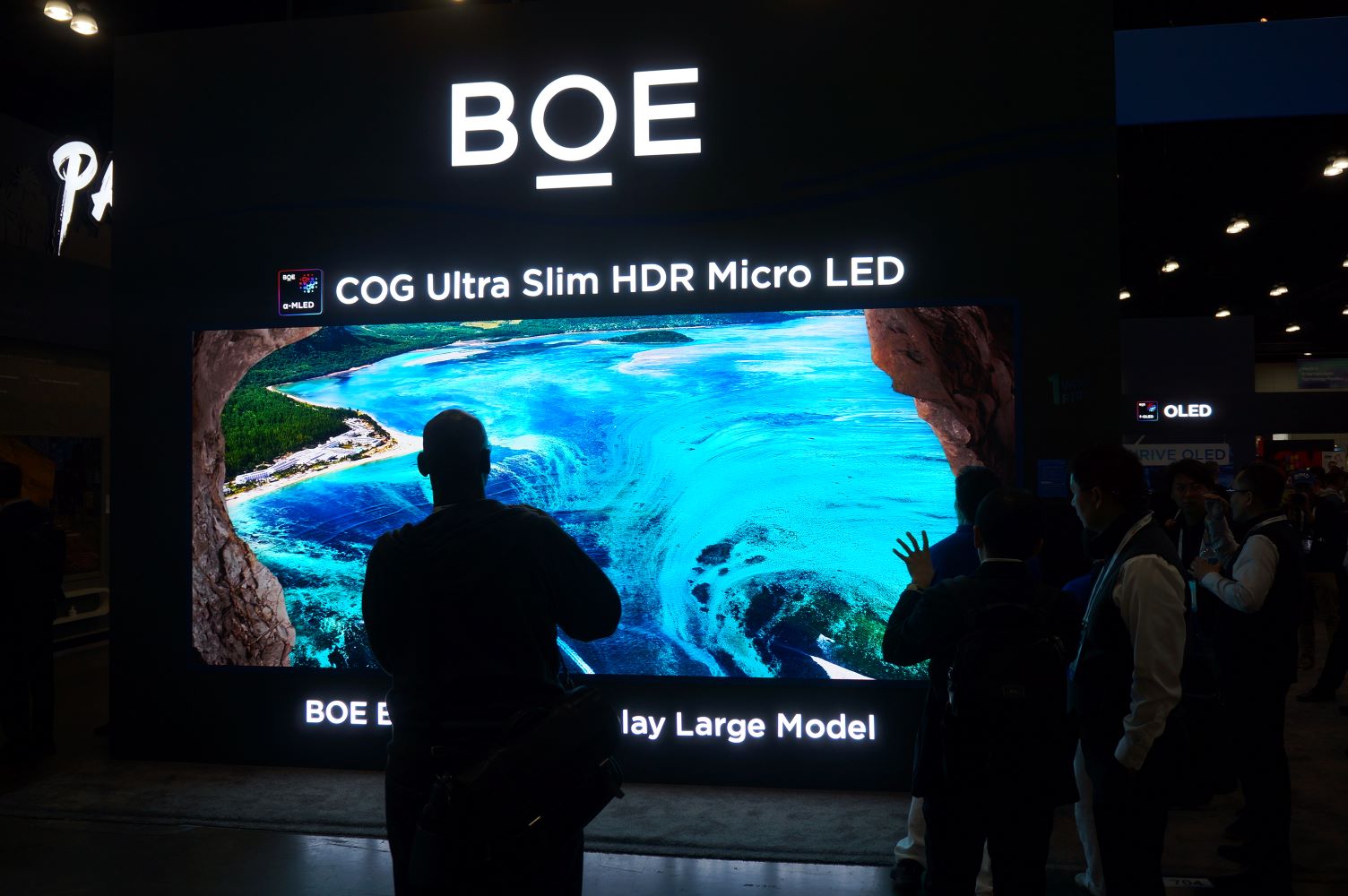
The technological direction on display reinforced this concentration. BOE Technology Group showcased more than 30 “world-first” and “industry-first” innovations, including an 85-inch UB Cell 5.0 RGBX Ultra TV achieving 130% BT.2020 color gamut, and new OLED breakthroughs in transparency and seamless display design. The focus, industry observers noted, is shifting from incremental improvements to system-level visual experience redesign.
(Photo by: Richard Ren/LAPost)
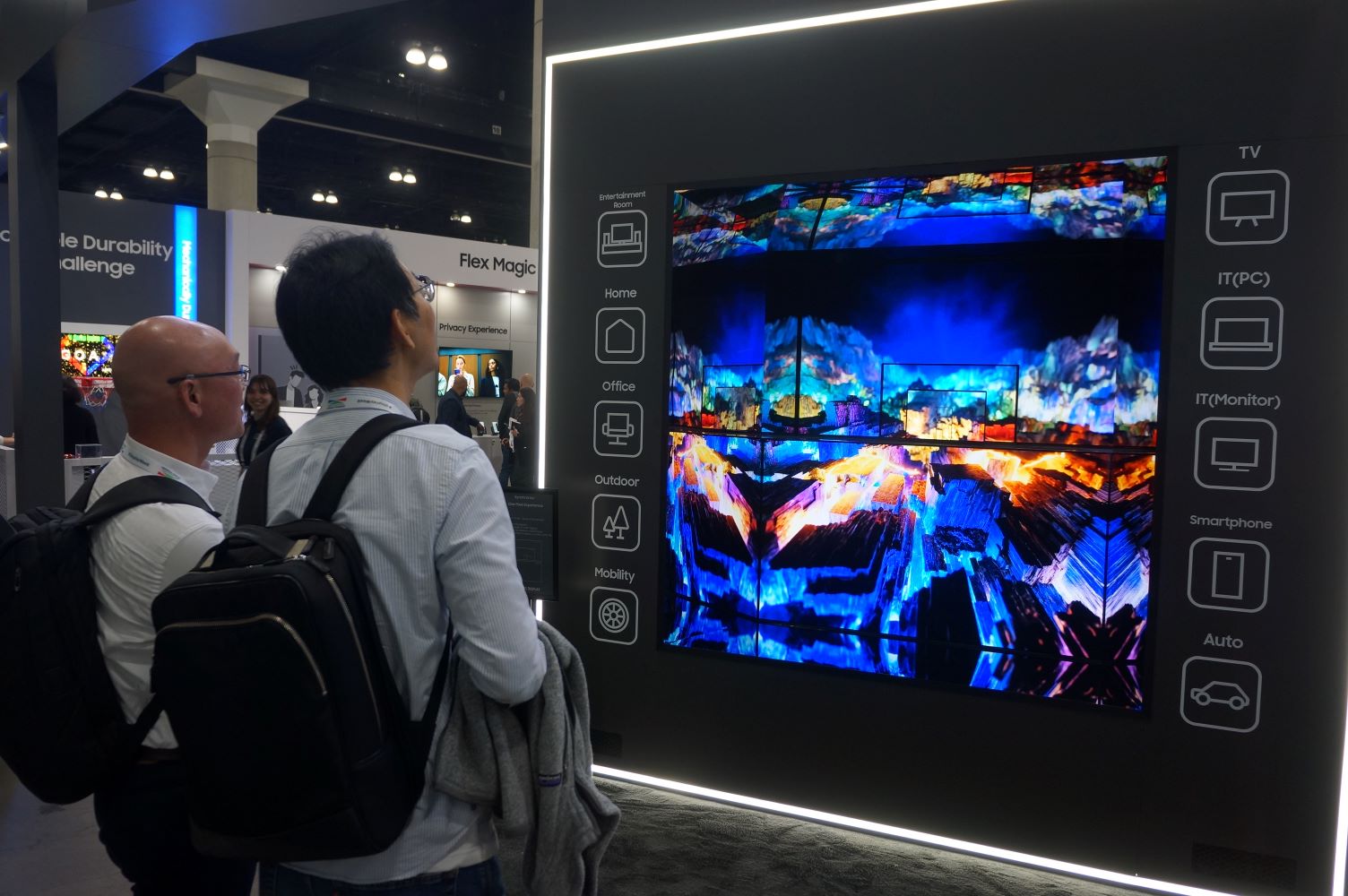
South Korean firms, meanwhile, emphasized cross-device consistency. At the Samsung Electronics booth, Sonia explained that the company aims to deliver “the same rich and vivid color performance across phones, laptops, monitors, and TVs,” underscoring a unified visual ecosystem strategy.
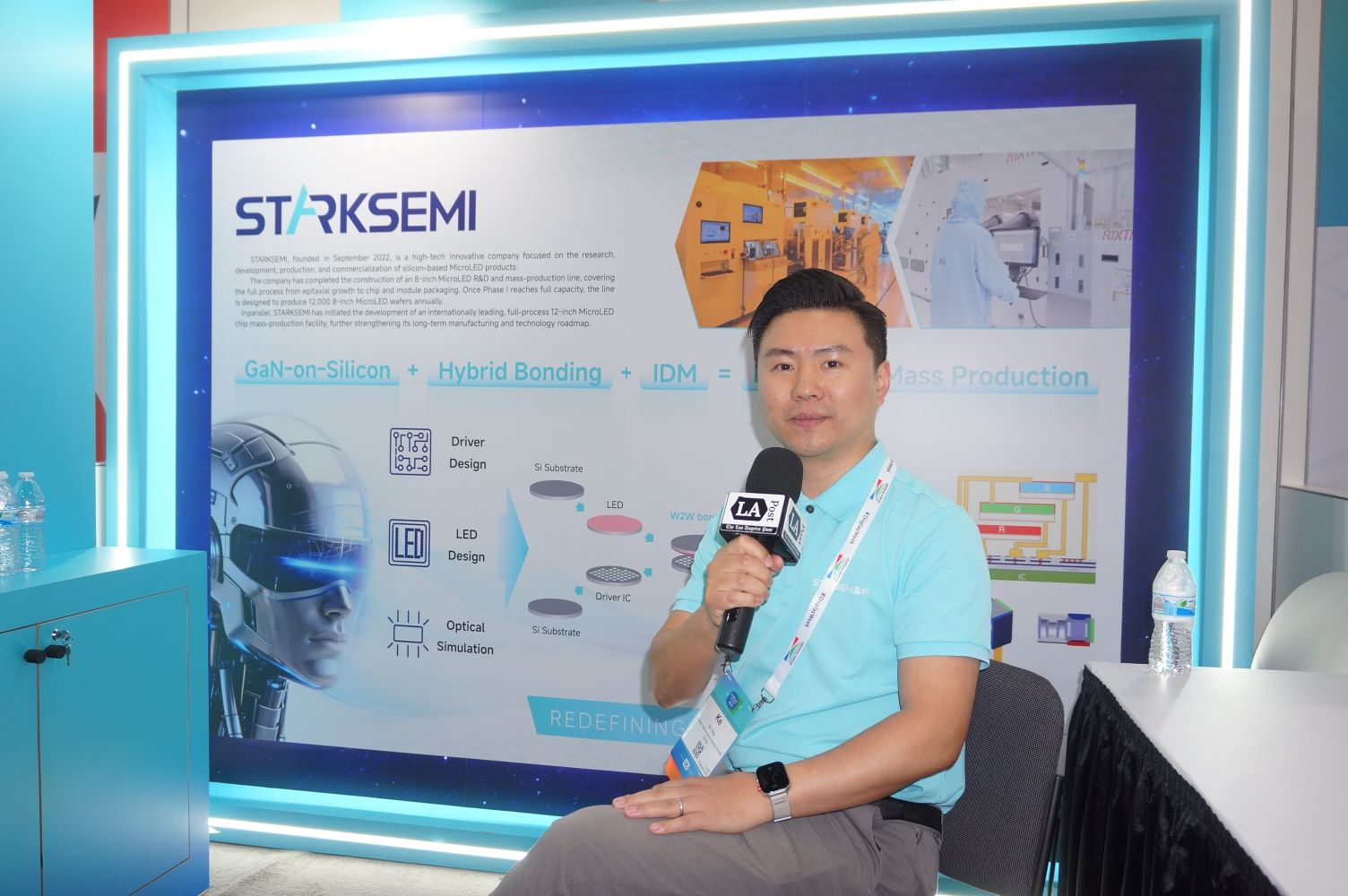
Tang Ke, CFO of Starksemi(Photo by: Richard Ren/LAPost)
Beyond mainstream display technologies, next-generation innovations also drew attention. Tang Ke, CFO of Starksemi, said the company is focused on Micro-LED micro-display development. He explained that Starksemi uses an 8-inch GaN-on-Si platform with hybrid bonding to integrate red, green, and blue Micro-LED wafers directly onto a CMOS backplane, eliminating the need for quantum dot conversion. He added that the company has already demonstrated red Micro-LED samples in both InGaN and AlInGaP forms, achieved within six months at its Wuhan-based fab, which covers full processes from epitaxy to packaging. With an annual capacity of 12,000 wafers and a new 12-inch mass-production fab under construction, the company aims to reduce Micro-LED costs and accelerate adoption in AI glasses and data center interconnect applications.
(Photo by: Richard Ren/LAPost)
Application-driven innovation was a recurring theme throughout the exhibition. Wesley Kendall, an optical engineer working in AR, said the automotive display technologies on show were particularly striking. “A lot of this isn’t happening in American cars,” he noted, pointing to advanced HUD and infotainment systems. Another AR engineer, Glen Pugano, added that while AR/VR has advanced significantly, “the United States is falling behind in display technology, especially in automotive applications.”
In contrast, South Korean exhibitors demonstrated strong communication strategies. At Samsung’s booth, staff engagement was highly proactive, reflecting a more global-facing presentation style. By comparison, some Chinese exhibitors appeared more cautious in engaging with media interviews, highlighting differences in international communication approaches.
(Photo by: Richard Ren/LAPost)
Taken together, SID Display Week 2026 offers a clear snapshot of an industry in transition. Chinese firms continue to lead in scale and supply chain integration, Korean companies maintain strength in experience-driven ecosystem design, and emerging players such as Starksemi are pushing into next-generation Micro-LED mass production.
As display technology moves beyond hardware performance toward system-level and cross-platform experience design, the competitive question is no longer just who builds the best screen—but who defines the future of visual interaction itself.
(By: Richard Ren/LAPost)