Why Ding’s Garden (Arcadia) in the San Gabriel Valley Has Remained on Chinese Dining Tables for Years
By: Richard Ren / Food Columnist
Competition among Chinese restaurants in Los Angeles has always been intense.
Across the San Gabriel Valley, new trendy restaurants seem to appear almost every month — places with more polished interiors, more aggressive social media marketing, and dishes designed to photograph well online. Yet the restaurants that truly endure within the Chinese community are often not the newest or most fashionable ones.
Ding’s Garden in Arcadia is one of those rare exceptions.
The restaurant, known for its Shanghai-style noodles, braised delicacies, and traditional small dishes, has operated in the San Gabriel Valley for years. For many Chinese diners, it functions less like a destination restaurant and more like a dependable neighborhood canteen — the kind of place people instinctively return to when they want familiar Chinese food without needing a special occasion.
I visited recently with two friends, including one who had just arrived from China. What was supposed to be a casual dinner quickly became a full-table feast once the menu opened.
From a culinary perspective, Ding’s Garden’s strength does not lie in a single viral dish. Its appeal comes from consistency — specifically, its ability to preserve the structure and flavor logic of traditional Shanghai home-style cooking.
The clearest example is the restaurant’s signature “Jiaohuo Jiaohuo,” a mixed braised cold dish that appears on nearly every table.
The dish combines pig ears, beef tripe, tofu, kelp knots, and cilantro, tossed in a Shanghai-style chili oil dressing. The emphasis is not overwhelming spice, but balance — between braising and seasoning, texture and aroma. The pig ears retain crunch, the tripe offers chew and depth, while the tofu absorbs the sauce.
Unlike Sichuan-style chili oil that prioritizes heat, the sauce here leans toward layered savory flavors commonly found in Shanghai braised dishes.
This kind of cold appetizer is deceptively difficult to execute. Once the seasoning ratio shifts too far, the dish can become either greasy or flat. Ding’s Garden’s version is designed to be “repeatable” — not necessarily explosive in the first bite, but increasingly addictive over the course of a meal.
(Photo by: Richard Ren/LAPost)
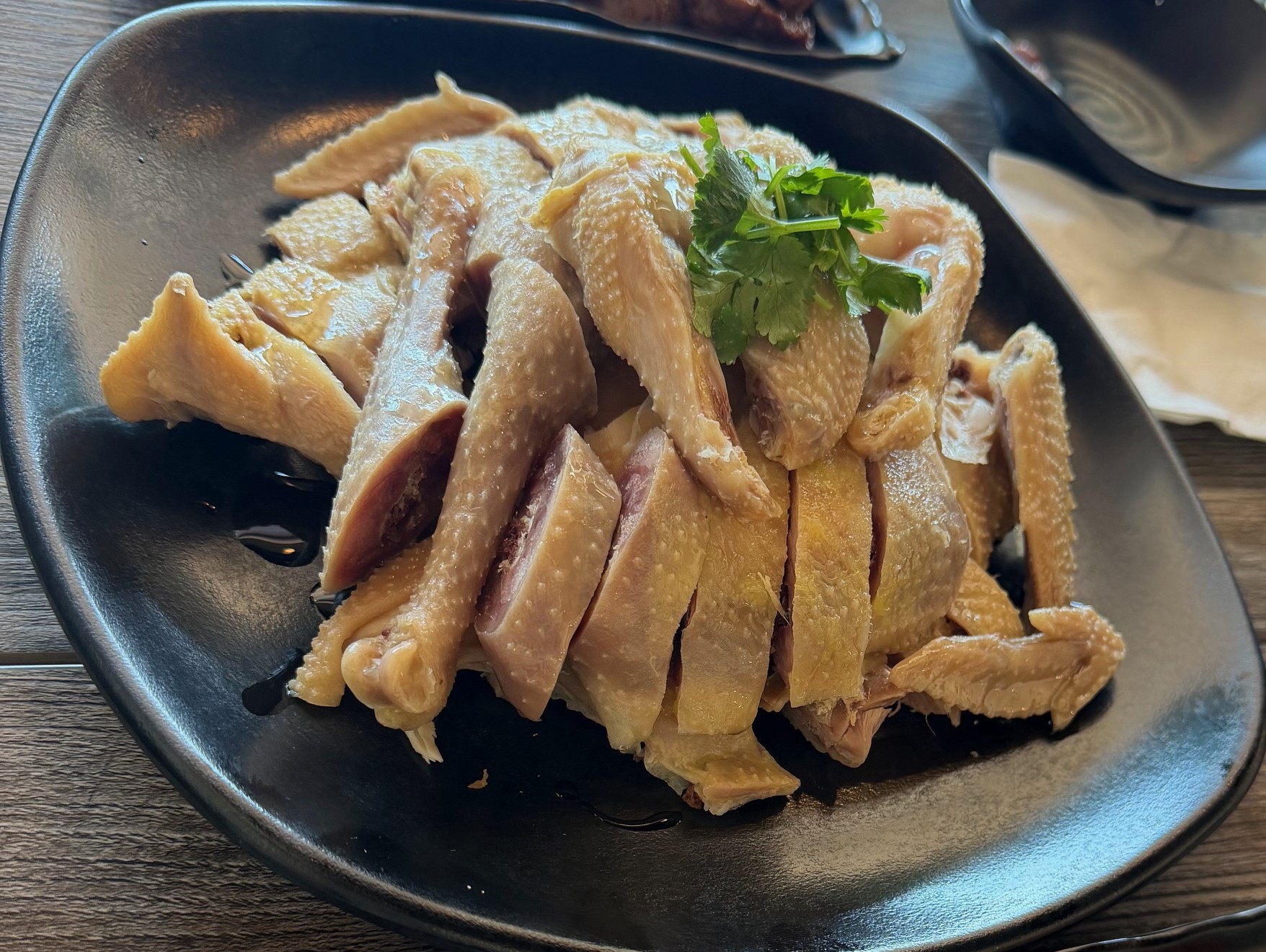
The crispy salted wind-dried chicken reflects another traditional Shanghai culinary technique.
After air-drying, the chicken develops a firmer texture with concentrated flavor. A light wine aroma slowly settles into the meat, while the skin retains slight elasticity. Dishes like this have become increasingly uncommon in Los Angeles Chinese restaurants because they require longer preparation time and more careful handling.
What may be most underrated, however, are the restaurant’s staple carbohydrates.
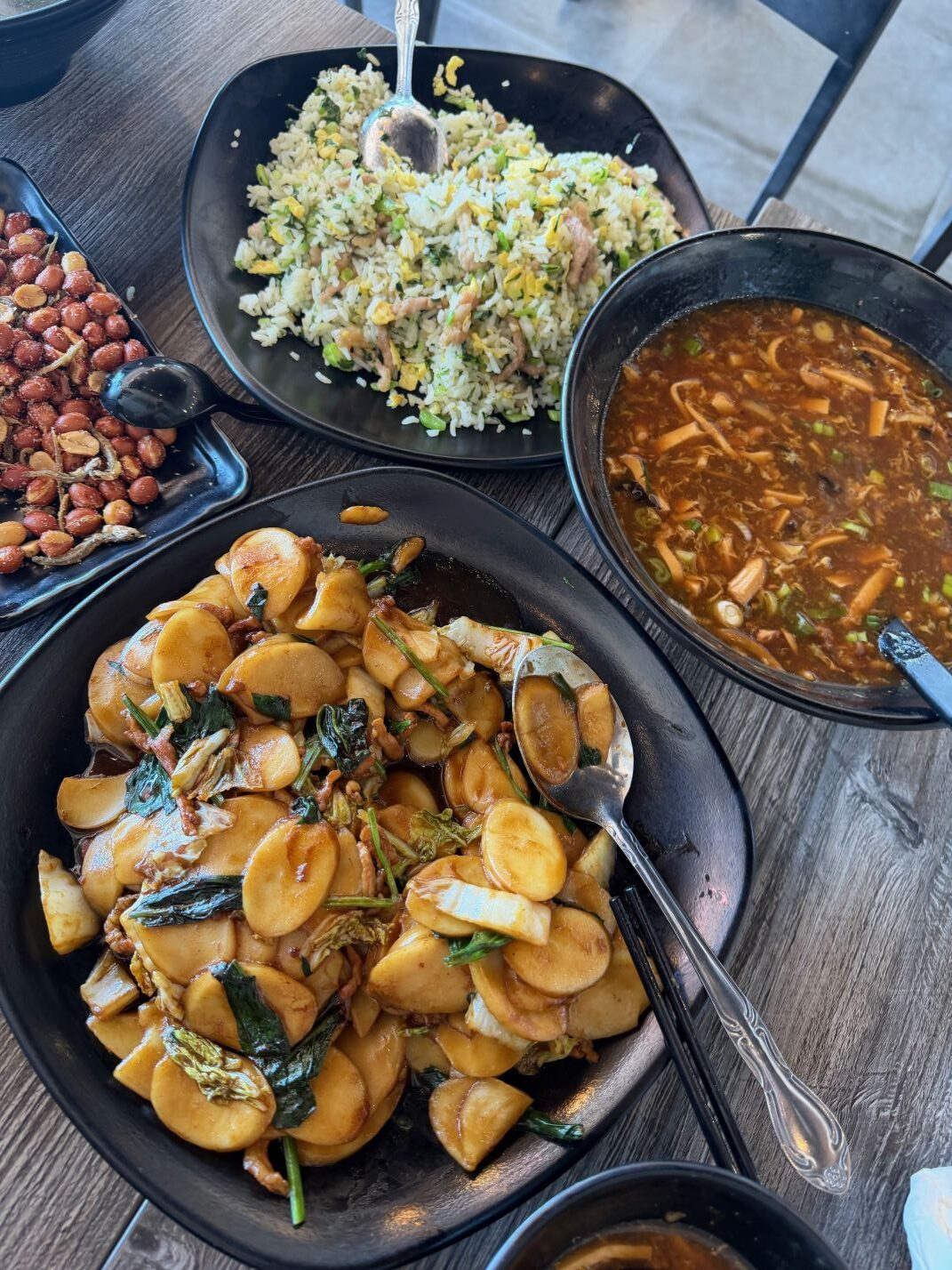
(Photo by: Richard Ren/LAPost)
The pickled mustard greens and shredded pork fried rice is almost textbook Shanghai comfort food. The rice remains dry and separated, while the mustard greens contribute saltiness and a faint fermented aroma. The shredded pork provides richness and wok fragrance.
It looks simple, but fried rice of this kind depends heavily on technique: heat control, rice moisture, and ingredient proportion all matter. Many customers intend to share a plate, only to end up finishing it themselves.
Shanghai stir-fried rice cakes represent another classic Shanghai starch tradition.
A good rice cake dish is not simply soft; it requires balance between elasticity and sauce absorption. Ding’s Garden’s version maintains noticeable chew without becoming overly dense. The sauce coats each rice cake evenly, pairing naturally with pork strips and greens in a combination familiar to many Shanghai households.
Several signature dishes we did not order that evening also help explain the restaurant’s long-term popularity.
The beef noodle soup, for example, follows a richer and heavier style rather than the lighter broth trend popular today. The soup is thick, the beef portions generous, and the flavor profile closer to traditional Chinese noodle shops many immigrants grew up with.
For Chinese Americans who have lived in the United States for years, dishes like this provide not only comfort but continuity.
The pan-fried pork buns are another long-time customer favorite.
Their bottoms are crisp, while the interior retains hot broth and pork juices — a hallmark of classic Shanghai street snacks. Compared with the increasingly refined presentation of modern soup dumplings, Ding’s Garden’s pan-fried buns feel more grounded and direct, emphasizing dough, meat filling, and oil aroma over aesthetics.
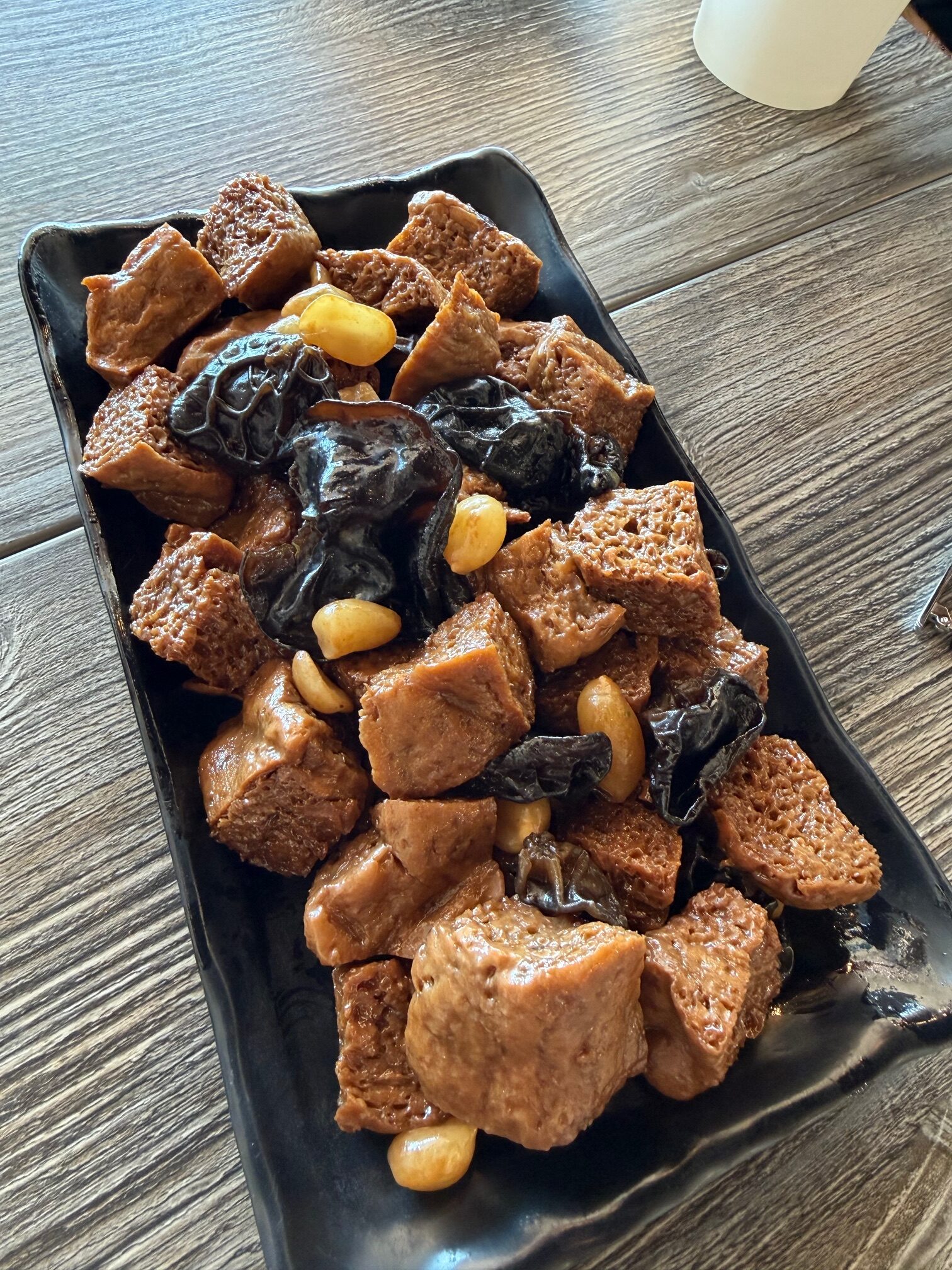
Stinky tofu and soy-braised duck belong to another category entirely: foods tied deeply to regional memory.
Stinky tofu remains one of the most divisive foods within Chinese communities — beloved by regulars and avoided by newcomers. Soy-braised duck, meanwhile, reflects the Shanghai cold dish tradition, relying on slow braising and layered soy-based flavors that penetrate the meat over time.
These dishes may not appeal to everyone, but they are often the ones that create long-term loyalty.
From a restaurant industry perspective, Ding’s Garden succeeds because it maintains the structure of a true community restaurant.
(Photo by: Richard Ren/LAPost)
Its menu is broad enough to cover braised dishes, cold appetizers, noodles, soups, fried rice, rice cakes, and small snacks. Portions and pricing align naturally with the family-style dining habits common in the San Gabriel Valley Chinese community.
More importantly, the restaurant has resisted the pressure to overly modernize or “reinvent” Chinese cuisine for trends. Instead, it has consistently preserved traditional Shanghai and Jiangnan-style home cooking.
In a city like Los Angeles, that kind of consistency is increasingly rare.
Many restaurants rise quickly through social media exposure, but the places that eventually become “hometown dining rooms” tend to share one quality: years later, customers can still walk in knowing exactly how the beef noodle soup will taste and how the stir-fried rice cakes will feel.
For many Chinese residents of the San Gabriel Valley, that familiarity is precisely why they continue to return.
Address: 733 W Naomi Ave, Arcadia, CA 91007