Finding Freedom Between Feathers: Taiwan’s HUNG DANCE Makes Los Angeles Debut at USC to a Standing Ovation
Choreographer Lai Hung-chung blends Peking opera feather props, Tai Chi and contemporary dance in BIRDY, a work performed by eight dancers exploring the tension between tradition and modernity.
LAPost/Los Angeles, CA (October 29, 2026) — By: Richard Ren/LAPost
A long feather can serve as a bird’s wing, an extension of the human body or even a symbol of the force needed to break free from confinement. When the traditional feather ornaments of Peking opera appear on a contemporary dance stage, an emblem of Chinese theatrical culture takes on an entirely new form of expression.
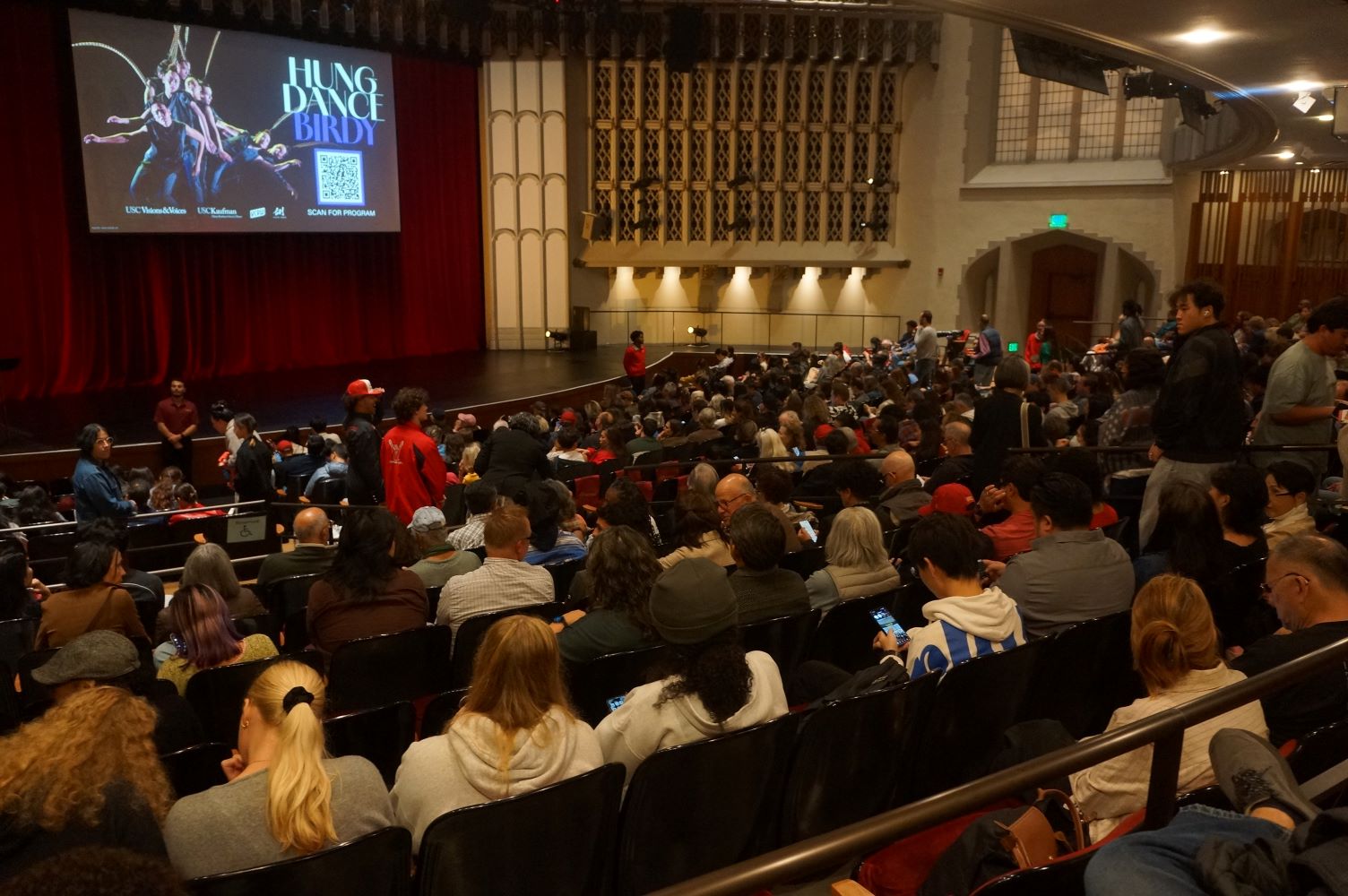
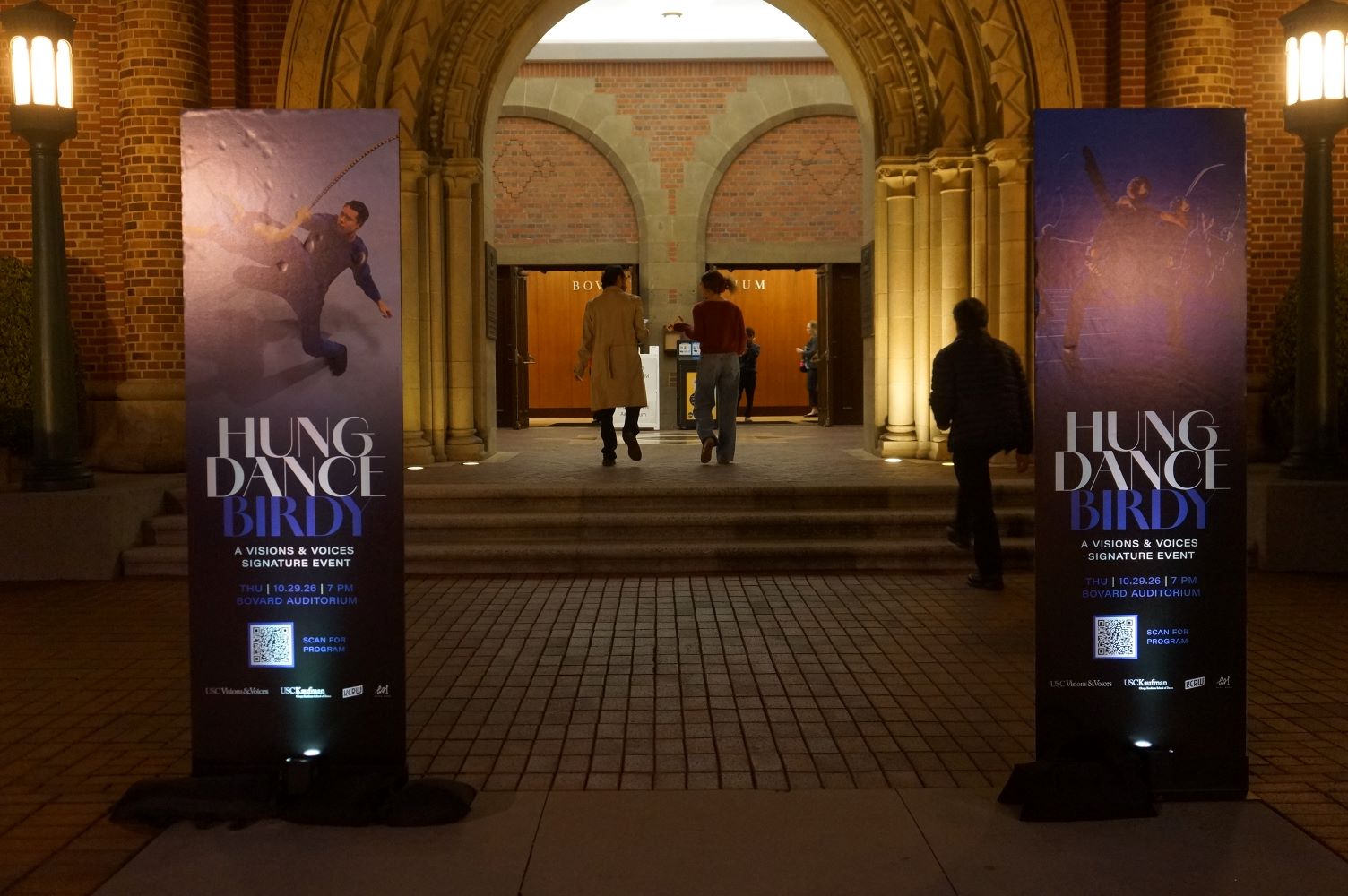
At 7 p.m. on Oct. 29, Taiwan-based contemporary dance company HUNG DANCE made its Los Angeles debut at the University of Southern California’s historic Bovard Auditorium with BIRDY (《羽人》), one of the company’s signature works. The performance also marked the opening of its fall 2026 North American tour.
Created by artistic director and choreographer Lai Hung-chung, the approximately 60-minute work features eight dancers. Combining the feather ornaments of Peking opera, Tai Chi movement and contemporary dance, the production explores the relationship between freedom and constraint through the interplay of bodies, feathers, music and stage space.
Among those attending were Ma Bo-yuan, director of the Taipei Economic and Cultural Office in Los Angeles, and his wife.
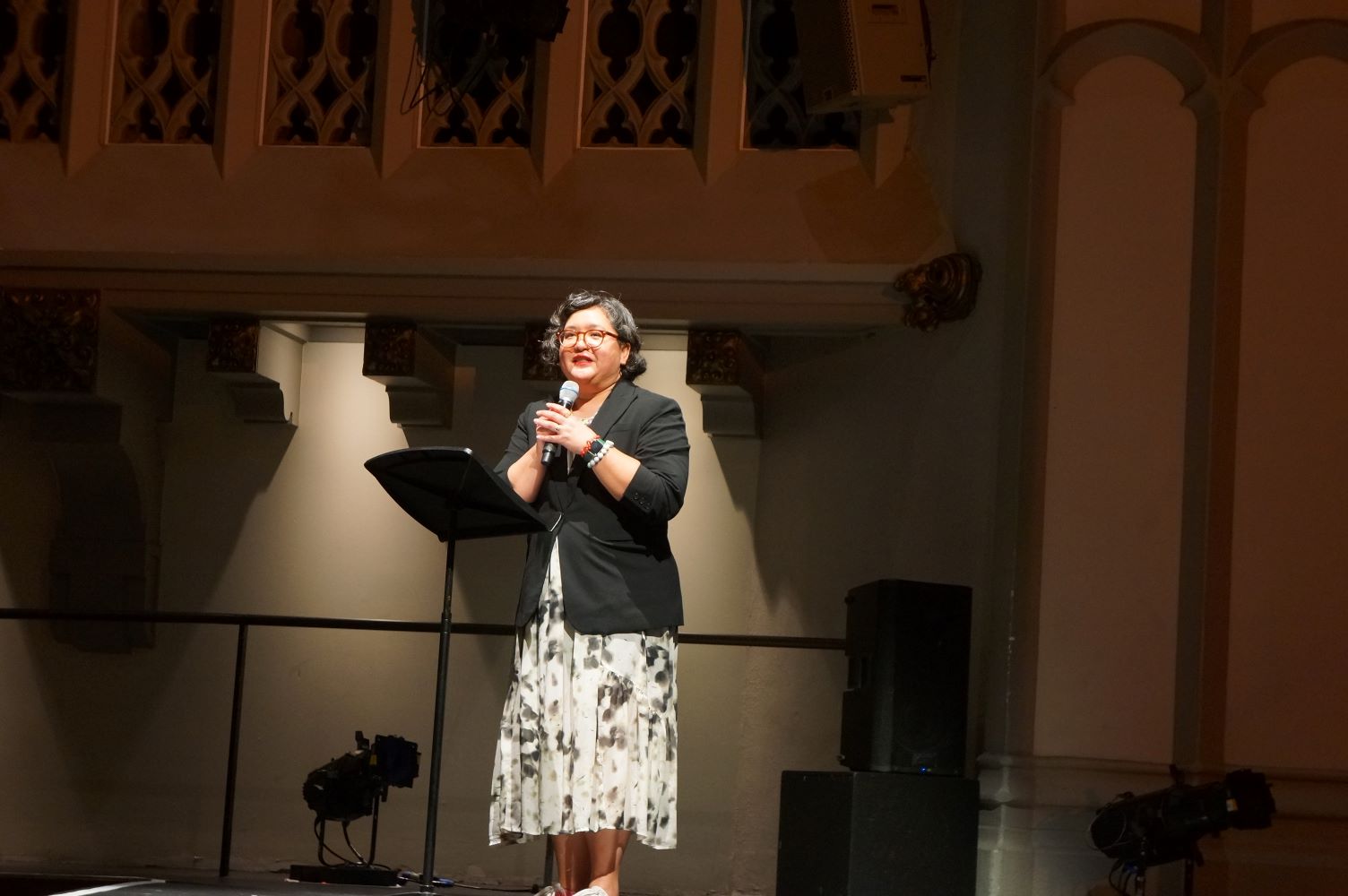
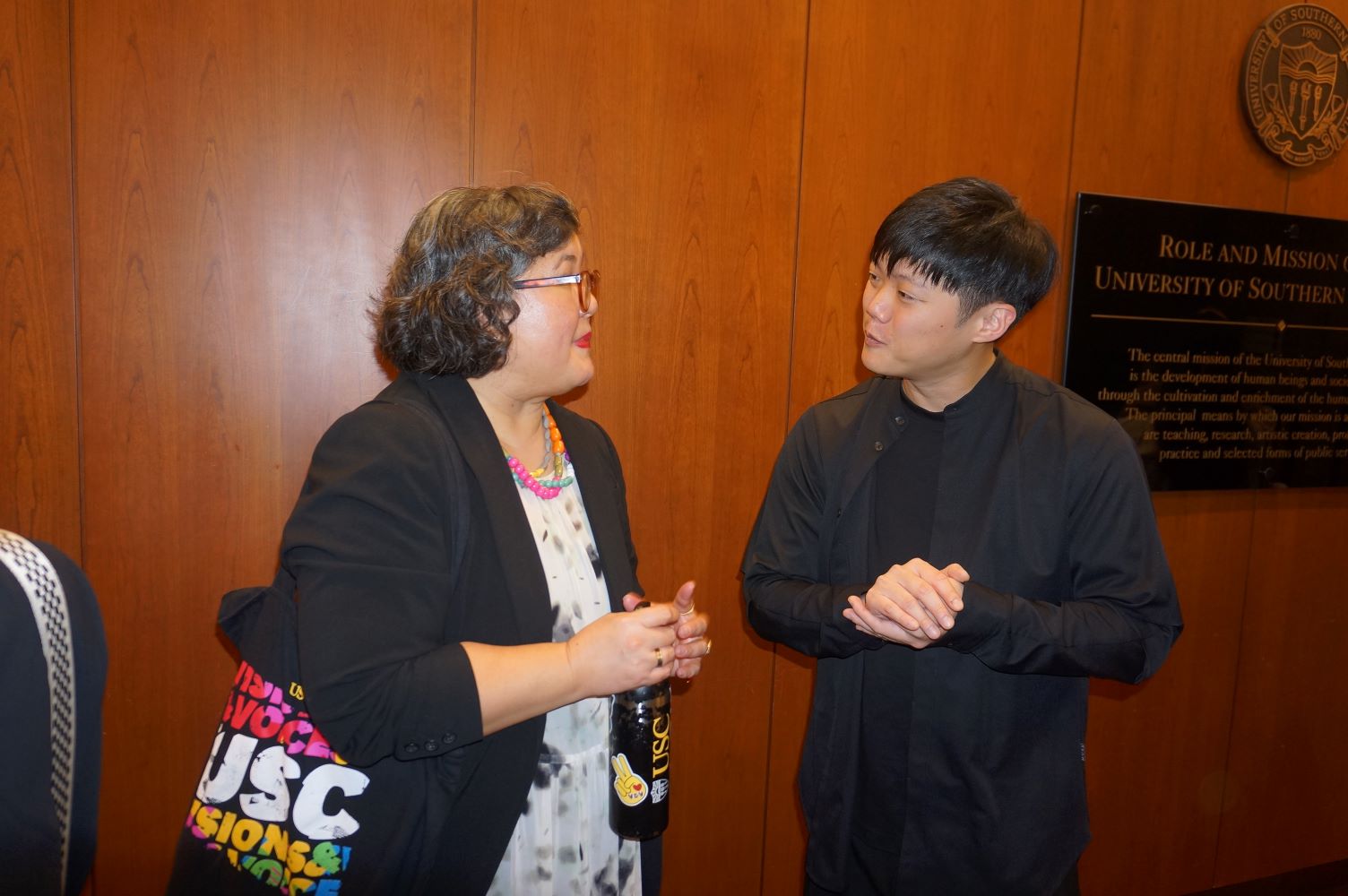
Marie-Reine Velez, interim director of USC Visions and Voices (Photo by: Richard Ren/LAPost)
Before the performance, Marie-Reine Velez, interim director of USC Visions and Voices, welcomed the company on behalf of the organizers. She said the program believes in the power of the arts to transform how people express emotions, experience life and connect with one another. Through open-access arts programming, she said, the initiative seeks to bring different cultural perspectives and artistic experiences to the university and surrounding community.
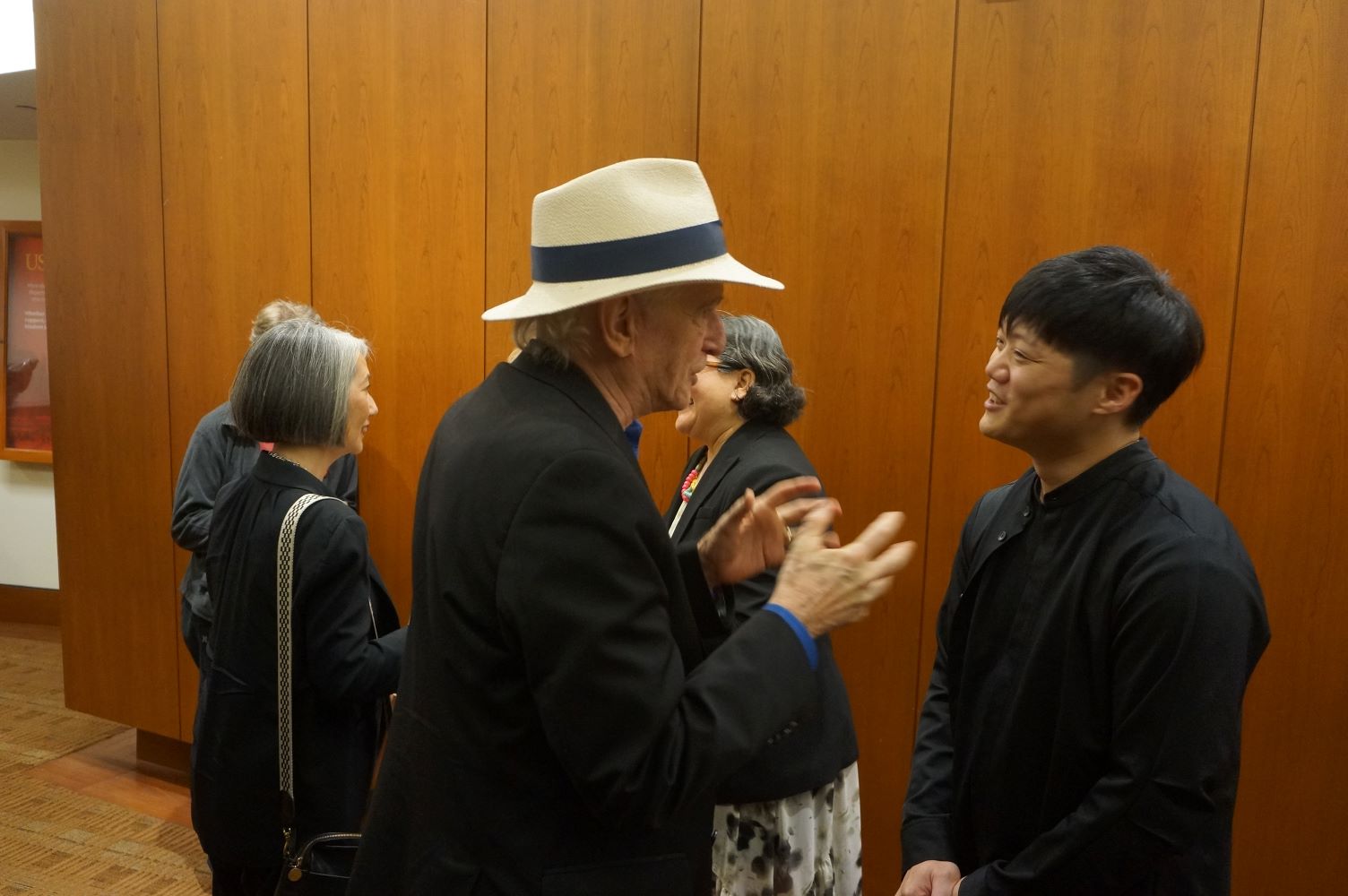
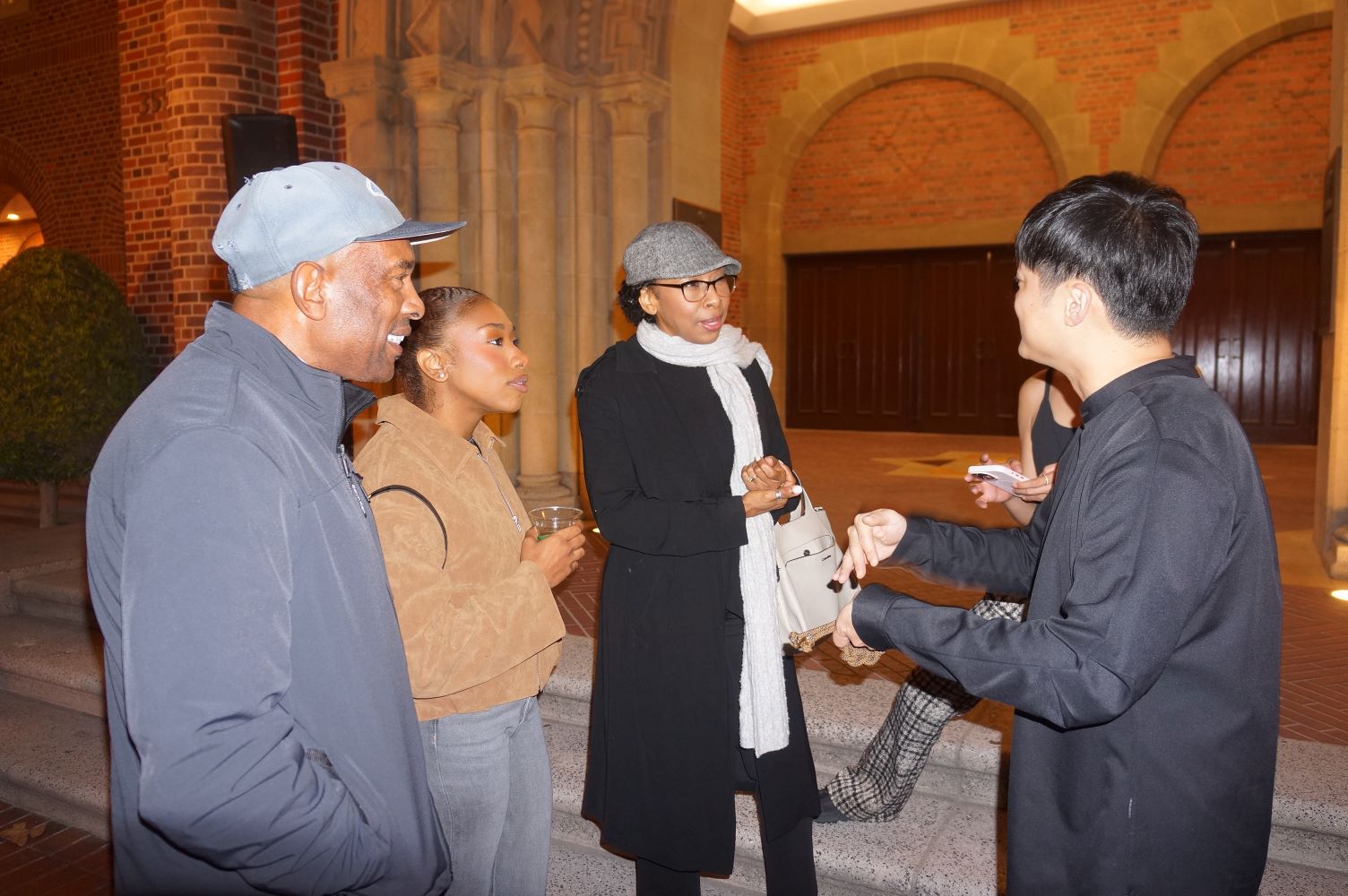
At the conclusion of the performance, the audience rose to its feet in applause. Lai and the dancers returned to the stage several times to acknowledge the response. After the show, audience members remained outside the auditorium to speak with the young performers from Taiwan. One audience member who lives near the USC campus told Lai that they had watched the performance almost without looking away, captivated by the action onstage throughout.
From Peking Opera Feathers to a Contemporary Dance Language
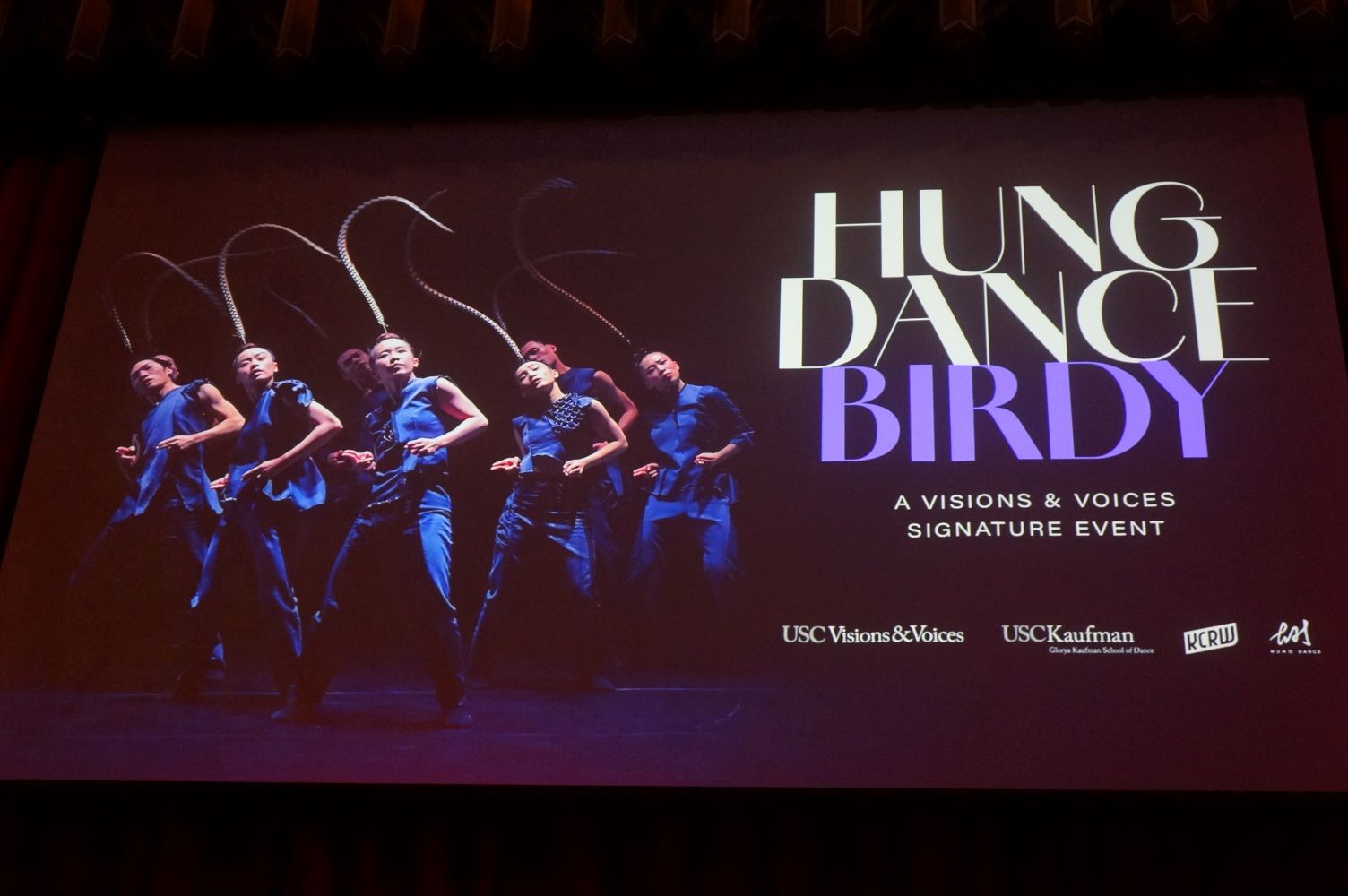
The central creative element of BIRDY comes from the long feather ornaments traditionally worn on the helmets of military characters in Peking opera. In Lai’s reimagining, the feathers are no longer merely costume accessories. They become extensions of the dancers’ bodies, tracing lines through the air in response to movements of the spine, head and torso.
Onstage, the eight dancers sometimes lean slowly, allowing the feathers to sway gently overhead. At other moments, sudden turns and leaps transform the soft ornaments into sharply directed lines of movement. The feathers can resemble birds’ wings, the tip of a brush writing in the air, or the motion of a whip, blade or arrow.
(Photo by: Richard Ren/LAPost)
The interaction between the dancers and the props forms one of the production’s most distinctive visual features. Even after a dancer stops moving, the feathers continue to sway through momentum. When a dancer changes direction abruptly, the feathers amplify the movement, creating visual patterns with subtle variations in force and rhythm.
The eight performers continually shift formations, gathering and dispersing like a flock of birds or creating spatial relationships through opposition and response. In duets, pulling, supporting and moments of imbalance reveal the tension between individuals. In group sequences, synchronized movements, staggered timing and changes in direction suggest how the pursuit of personal freedom is shaped by the surrounding environment and community.
The stage design relies on lines and geometric structures. Bamboo poles and modular installations create layered spatial frameworks, while changes in lighting divide and reshape the stage. Shifts in musical rhythm and tone contribute to the changing atmosphere. Moving through these structures, the dancers appear at times confined by their surroundings and at others intent on breaking through them. The images of a cage and flight recur throughout the work.
Precision and Physical Control in the Search for Freedom
BIRDY places considerable demands on the dancers’ physical control and coordination. Each performer must manage not only individual movements but also the direction and momentum of the long feathers, while maintaining precise distances and timing in relation to the other dancers.
The performance runs approximately 60 minutes without an intermission. From subtle shifts in body weight to rapid turns and jumps, the dancers move fluidly between different speeds, with tightly coordinated transitions and formations. Viewed from close range, their control of balance, force and landing technique becomes particularly apparent.
Among the audience members observing the performance from a dance perspective was Anna Tung (董乃昀), a Taipei native and fifth-year doctoral student in biomedical engineering at USC. Dong began studying dance at age seven and has more than 20 years of experience.
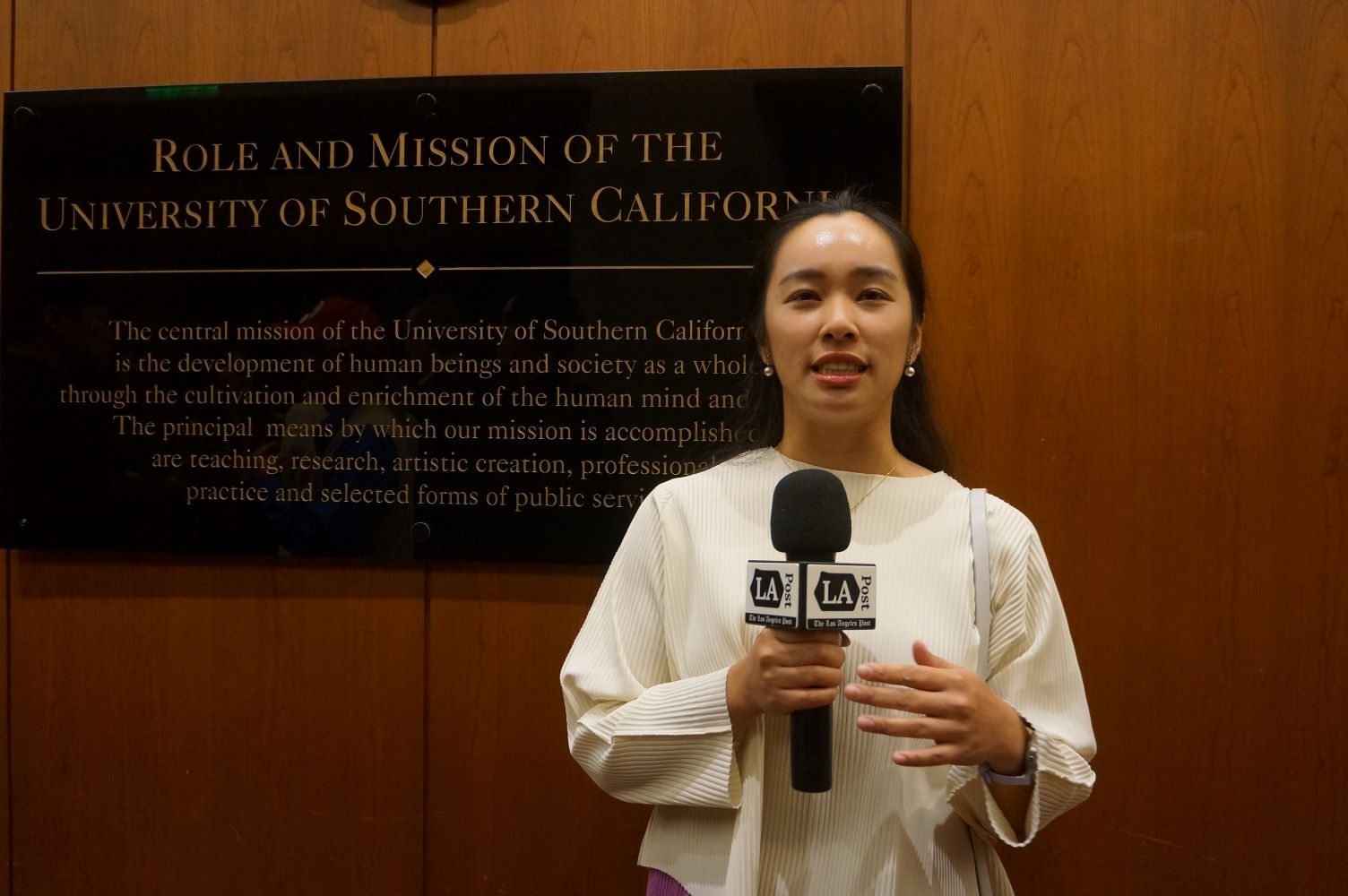
Anna Tung (董乃昀)(Photo by: Richard Ren/LAPost)
She said BIRDY brings a traditional element of Eastern theatrical culture into contemporary dance, using the interaction between the dancers’ bodies and the feather props to explore the relationship among humans, birds and nature. She also noted the combination of traditional Eastern aesthetics and Western contemporary dance vocabulary.
Tung, who was seated in the fourth row, said the proximity to the stage allowed her to observe the dancers’ movements in detail. Despite performing continuously for an hour, the dancers landed almost silently, and she found it difficult to detect signs of fatigue.
She said the performance demonstrated the physical demands placed on the dancers, as well as the degree of control and professional training required to execute the choreography.
Lai Hung-chung on the Creative Roots of BIRDY
After the performance, Lai spoke with LAPost about the ideas behind the work. He said the creative process began with the feather ornaments of Peking opera. He wanted to find an artistic element that could represent his cultural background while also embodying the idea of a dream.
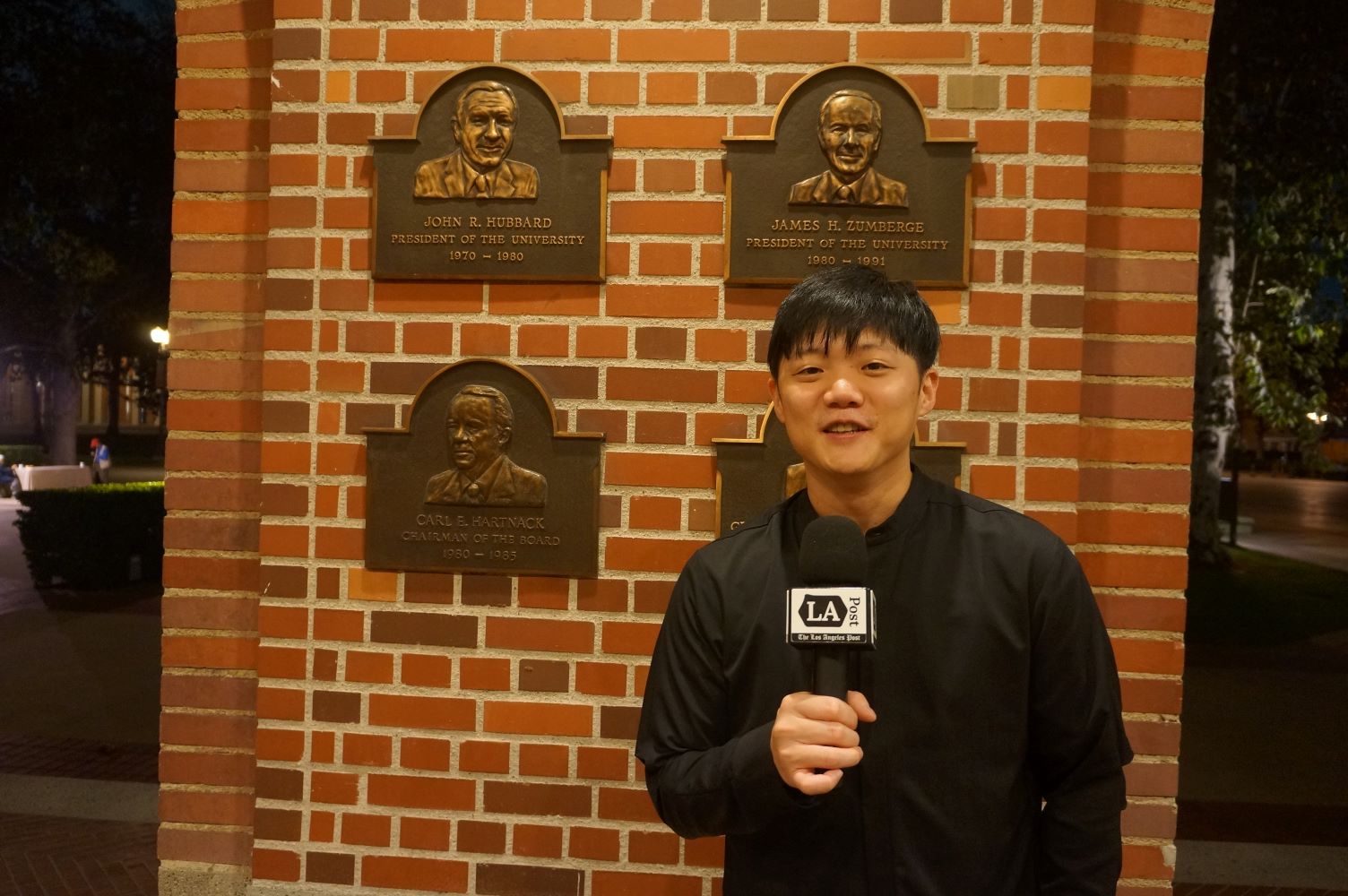
Choreographer Lai Hung-chung 賴翃中 (Photo by: Richard Ren/LAPost)
Lai noted that his given name, Hung (翃), carries an association with flight. The feather gradually became a way to connect his personal identity, cultural heritage and artistic vision.
He also drew a connection between the feathers and the movement principles of Tai Chi Dao Yin, using the spine as the center from which movement and force extend. As the body moves, the feathers follow, creating an effect similar to ripples spreading across the surface of water.
Discussing the ideas expressed in the work, Lai said freedom and constraint may appear contradictory, but can coexist in everyday life. Even within the frameworks imposed by society, people can seek their own ways to express themselves and pursue their dreams.
He emphasized that his approach was not to reproduce established Peking opera or martial arts movements directly. Instead, he wanted the dancers to begin with natural, everyday physical movement and then allow traditional elements to develop through contemporary choreography, creating a movement language unique to the company.
Taiwan Contemporary Dance Takes the Stage in North America
According to information released before the performance by the Taiwan Academy in Los Angeles, HUNG DANCE draws creative inspiration from Taiwanese culture, transforming traditional elements such as Chinese opera and Tai Chi into contemporary dance language. The North American tour is scheduled to visit nine cities in the United States and Canada, with workshops and arts exchanges intended to encourage interaction between the company and local arts communities.
Founded in 2017, HUNG DANCE focuses on original choreography, international collaboration and cross-cultural exchange. BIRDY premiered in 2024. Its Los Angeles performance at USC marked the first stop of the company’s fall 2026 North American tour.
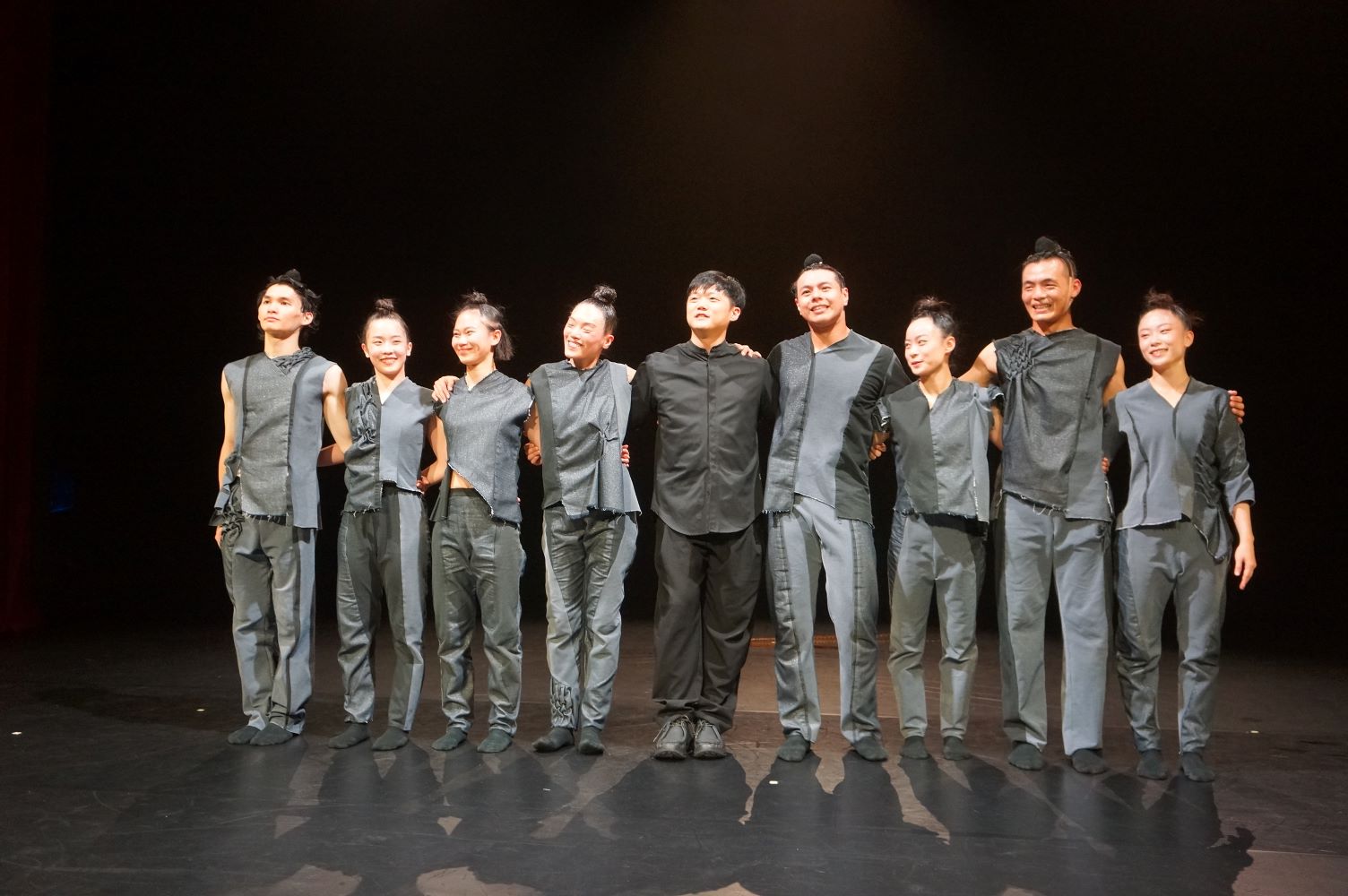
(Photo by: Richard Ren/LAPost)
As the performance ended, Lai and the eight dancers stood at center stage and received a standing ovation. The long feathers that had moved throughout the production were still, but the questions raised by the work—about flight, freedom and constraint—continued in conversations among audience members as they left the auditorium.
The performance was presented by USC Visions and Voices, with the USC Glorya Kaufman School of Dance as co-organizer. The Taiwan Academy in Los Angeles and Taiwan’s Ministry of Culture provided support.
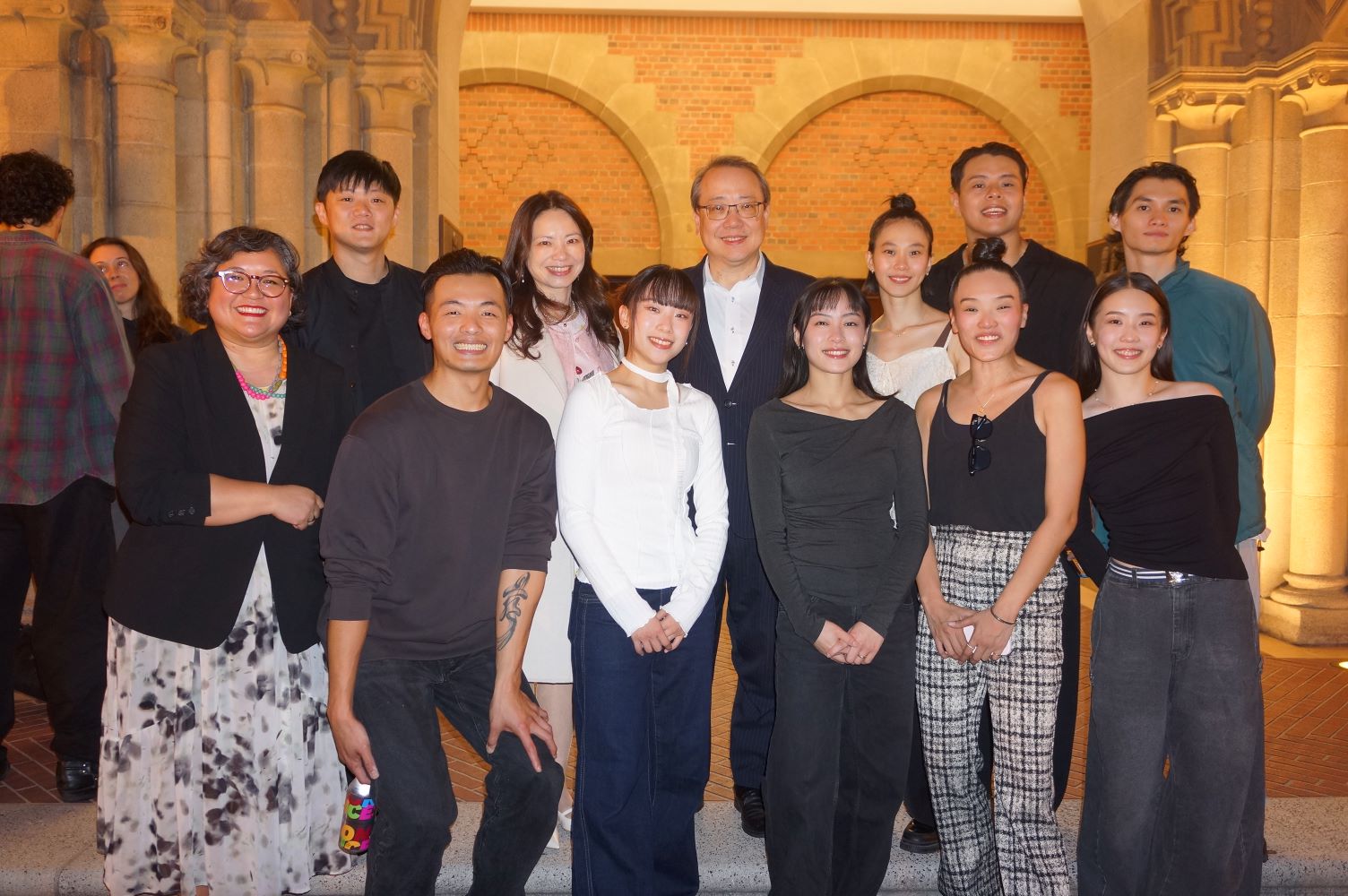
Ma Bo-yuan, director of the Taipei Economic and Cultural Office in Los Angeles, and his wife pose for a photo with members of HUNG DANCE after the performance. (Photo by Richard Ren/LAPost)
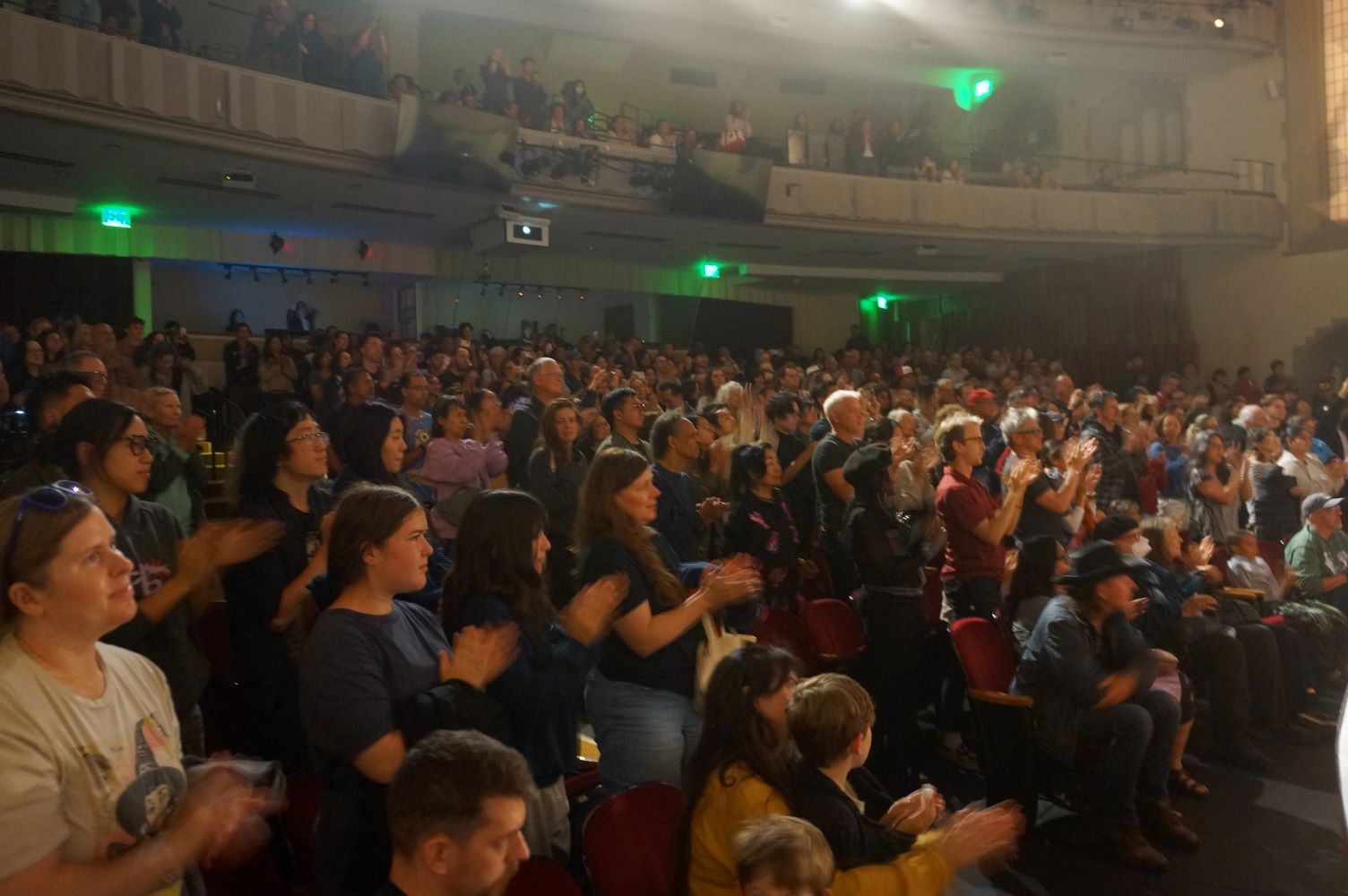
(Photo by: Richard Ren/LAPost)
(Photo by: Richard Ren/LAPost)
(Photo by: Richard Ren/LAPost)
(Photo by: Richard Ren/LAPost)
(Photo by: Richard Ren/LAPost)
(Photo by: Richard Ren/LAPost)