From Peking Opera Feathers to the Contemporary Stage: Lai Hung-chung on the Creative Philosophy and International Journey of BIRDY
An interview following Taiwan’s HUNG DANCE Los Angeles debut at USC: Choreographer blends traditional culture, Tai Chi Dao Yin and contemporary movement to create a distinctive dance language.
LAPost/Los Angeles, CA (October 30, 2026) — By: Richard Ren/LAPost
How can a feather ornament from traditional Peking opera evolve from a decorative element worn by theatrical characters into an extension of a dancer’s body—and ultimately become an artistic medium for exploring freedom, dreams and the limitations of life? Taiwanese contemporary dance choreographer Lai Hung-chung offers his answer through BIRDY (《羽人》).
On the evening of Oct. 29, Taiwan-based contemporary dance company HUNG DANCE made its Los Angeles debut at the University of Southern California’s historic Bovard Auditorium. Presented by USC Visions and Voices, with the USC Glorya Kaufman School of Dance as co-organizer and support from the Taiwan Academy in Los Angeles and Taiwan’s Ministry of Culture, the performance also marked the opening stop of the company’s fall 2026 North American tour.
Featuring eight dancers in an approximately 60-minute uninterrupted performance, BIRDY brings together Peking opera feather ornaments, Tai Chi movement principles and contemporary dance. Through turns, leaps, tilts and intricate physical control, the dancers transform the long feathers into lines that are at times delicate and graceful, at others sharp and forceful. Images of birds gathering and dispersing, individuals seeking freedom and bodies negotiating spatial constraints emerge throughout the work.
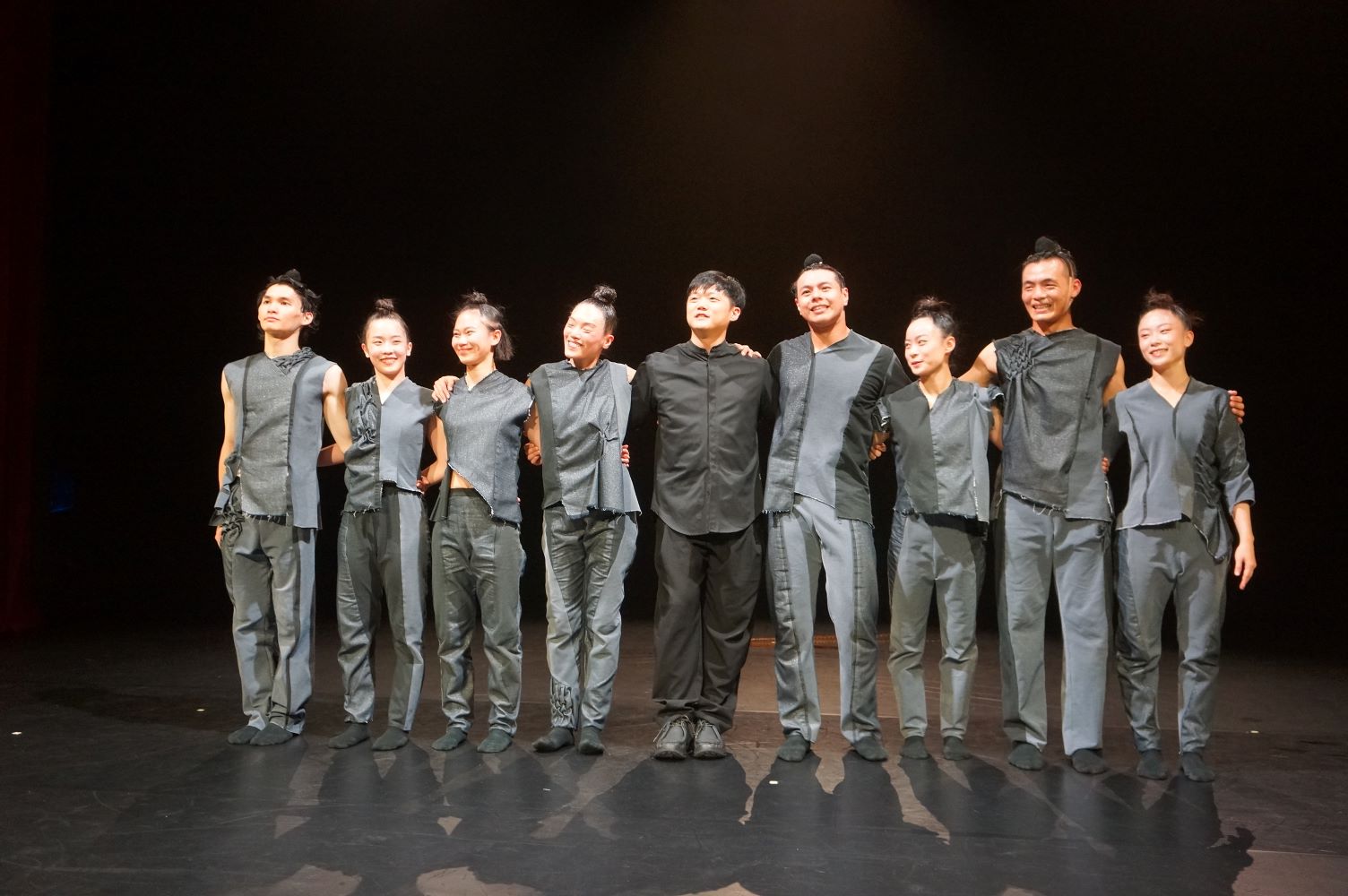
Lai Hung-chung(Middle)(Photo by: Richard Ren/LAPost)
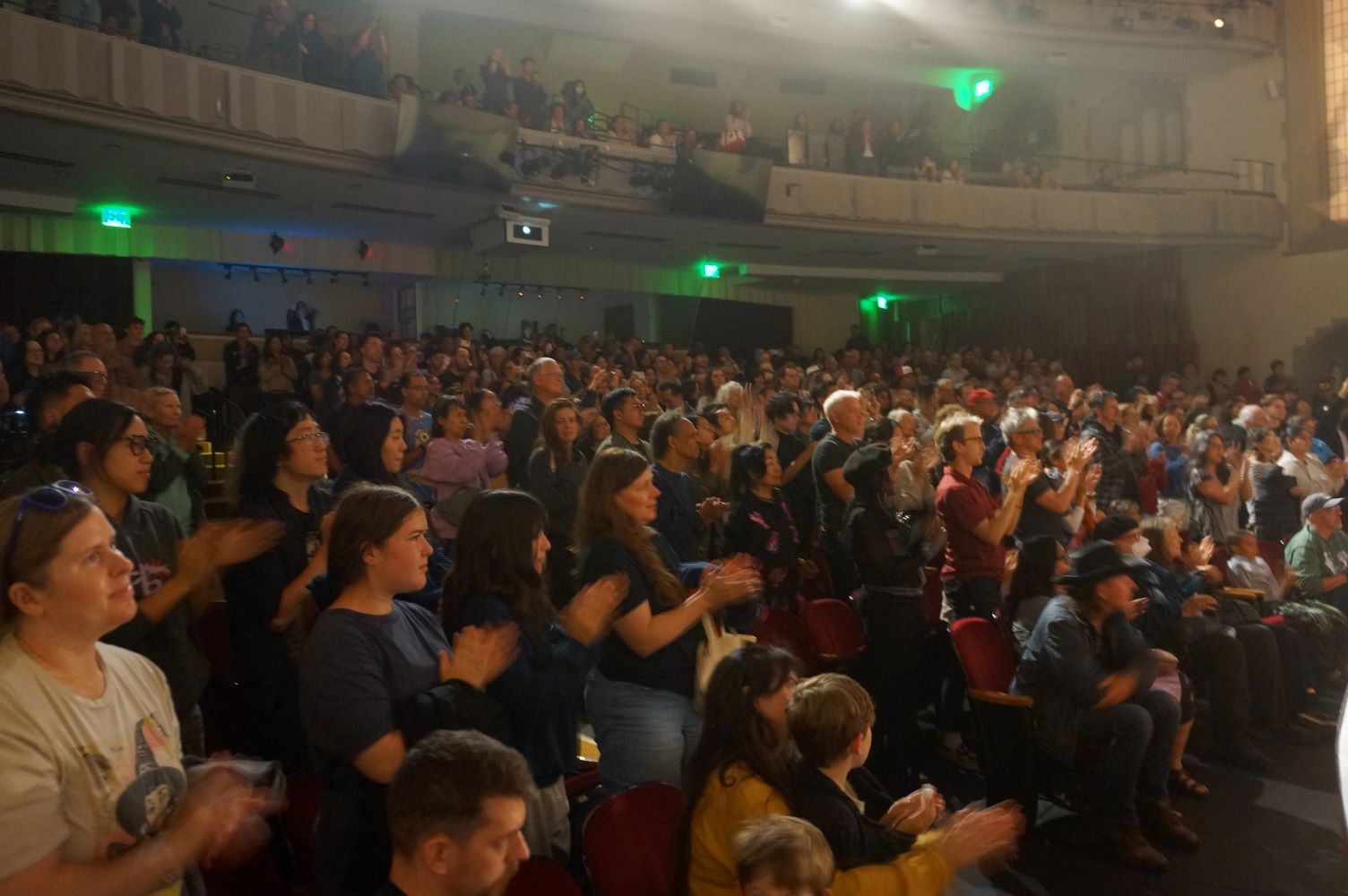
At the conclusion of the performance, the audience rose to its feet in prolonged, enthusiastic applause. Lai and the dancers returned to the stage for several bows. The production demonstrated not only the company’s physical precision and ensemble choreography, but also Lai’s ability to transform elements from different cultural traditions into a distinctive contemporary dance language.
In an interview with LAPost, Lai discussed the origins of the work and how an initial experiment with a single feather gradually developed into the artistic concept, movement system and stage aesthetics of BIRDY.
Starting with a Single Feather: A Cultural Symbol Becomes an Expression of a Dream
Lai said the original concept for BIRDY was relatively simple: it began with the feather ornaments used in Peking opera.
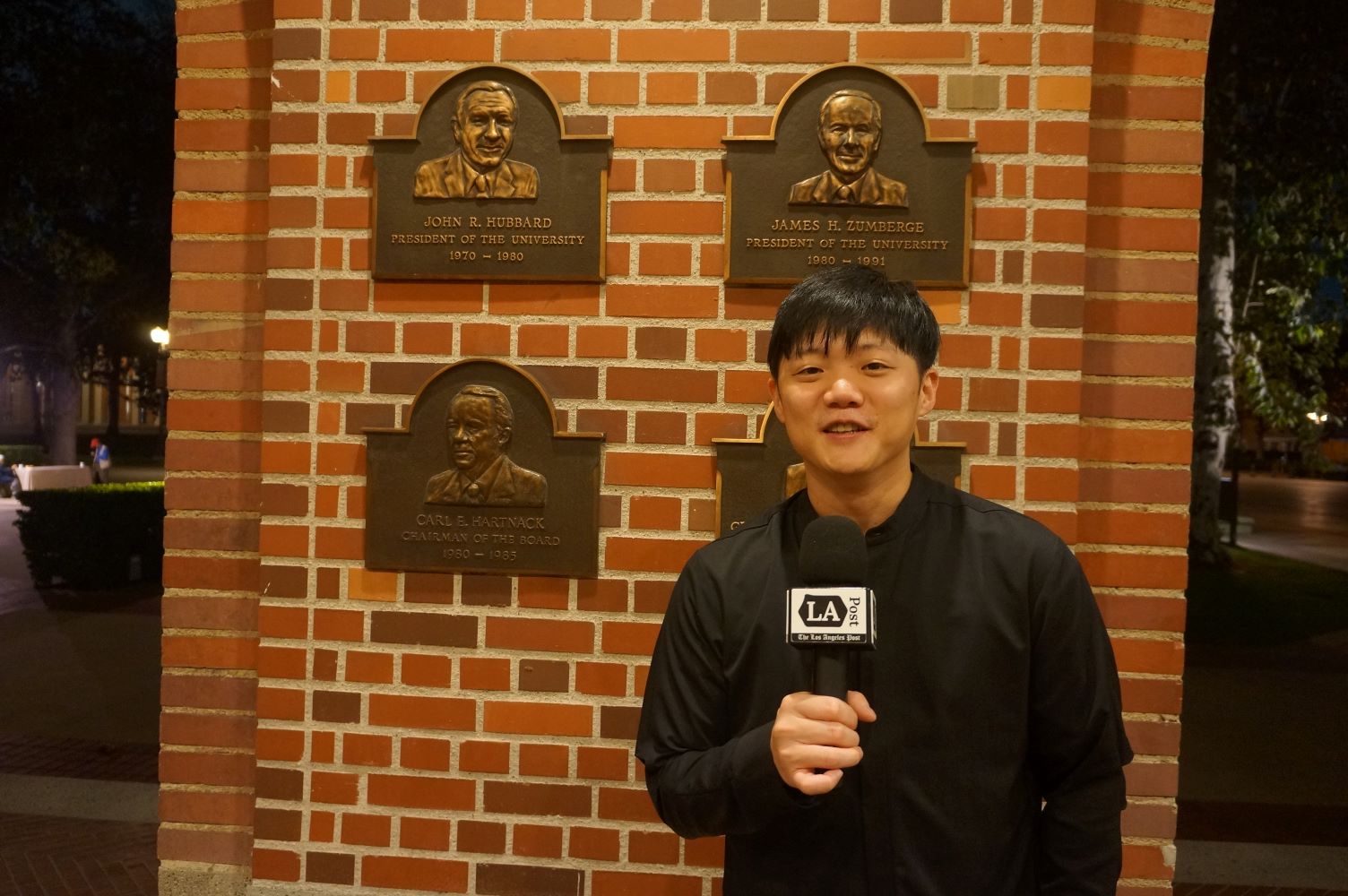
Choreographer Lai Hung-chung 賴翃中 (Photo by: Richard Ren/LAPost)
“I was thinking about what could represent my culture and what could represent a dream,” he said. His Chinese given name, Hung (翃), carries an association with flight. The imagery of feathers and flying gradually connected his personal identity, cultural background and artistic vision.
He began experimenting with Peking opera feathers. Traditionally, these long ornaments are worn in pairs on either side of the helmets of military characters. Lai, however, decided to explore a different approach, using a single feather as an extension of the dancer’s body.
“I realized that it looked very much like our spine, almost as if it were an extension of the spine,” he said.
That observation became an important turning point in the creative process. Lai began connecting the feather with Tai Chi Dao Yin, a movement system practiced in Taiwan that emphasizes using the spine to initiate and guide bodily movement. He then explored how the feather could extend the force generated by the body.
Lai compared the process to ripples spreading across water. When a ball is thrown, the force itself cannot be seen, but its impact travels outward, creating waves. In a similar way, when dancers use the spine to guide the feather, an otherwise invisible physical force becomes visible through its movement.
This ability to discover new physical possibilities in a traditional theatrical prop is one of the defining creative features of BIRDY. Rather than simply bringing Peking opera elements onto a contemporary stage, Lai examines the physical properties of the object and reconsiders the relationship among the body, force and space. A single feather ultimately becomes the visual centerpiece of the work.
Inspiration from Film and Painting: Freedom and Constraint Can Coexist
Beyond Peking opera and Tai Chi Dao Yin, film and painting also influenced the conceptual development of BIRDY.
Lai cited British filmmaker Alan Parker’s 1984 film Birdy as an inspiration for the work’s title and central ideas. The film portrays a character constrained by reality but consumed by a desire to fly like a bird. Despite setbacks, the character refuses to abandon the dream.
“For me, freedom and constraint can have different interpretations,” Lai said. People live within particular physical spaces, social structures and rules. These frameworks may impose limitations, but individuals can still find their own ways to express themselves and pursue their dreams.
Another important influence was British painter Francis Bacon. Lai was drawn to the strong lines and structures in Bacon’s paintings, as well as the way human emotions and darker aspects of human nature seem to flow through those structures.
This visual approach is reflected in the stage design of BIRDY. Linear installations and geometric structures create a framework through which the dancers move. Lighting repeatedly shifts and divides the stage, giving the impression of entering one space after another.
Lai said he also thought about the experience of people moving from the outdoors into a theater and then into the performance space itself. As time passes, people move through different stages and experiences. The transitions between spaces and the passage of life became part of the work’s visual concept.
From the dream of flight in film to the structural lines of painting, and from Peking opera feathers to Tai Chi Dao Yin, Lai brings seemingly unrelated artistic influences into a coherent creative vision. This interdisciplinary approach gives BIRDY a conceptual dimension beyond its physical and technical demands.
Transforming Tradition Rather Than Reproducing It
One of the most distinctive aspects of BIRDY is its use of recognizable traditional cultural elements without directly reproducing established Peking opera or martial arts movements.
Lai said that when dancers first encounter Peking opera feathers, martial arts or Tai Chi elements, they may instinctively adopt the physical style associated with traditional performance, such as deliberately emphasizing a combination of strength and softness. He wanted to avoid allowing the work to become a formal imitation of those traditions.
“Instead, I ask the dancers not to put those elements so far in the foreground at first. I want them to begin with movements that are more contemporary and closer to everyday life,” he said.
In Lai’s choreographic approach, the feather does not necessarily need to be treated as a traditional theatrical prop. It can instead be approached as an object that requires balance and responds to movement through swaying and momentum. The dancers begin with natural physical reactions, then gradually explore how the spine, center of gravity and application of force can produce different movements.
To achieve clearer physical responses, Lai also deliberately selected thicker feathers that could remain more upright, rather than the softer varieties that tend to droop. This allows the dancers’ movements to produce more direct and visible reactions, creating clearer directions and lines in the air.
The pole-like structures onstage also have cultural origins. Lai explained that some of the designs were inspired by the double-ended spears used in Peking opera. While teaching, he once noticed several damaged practice spears in a classroom corner. Their outer fabric coverings had fallen away, exposing the underlying structures. He found the objects interesting because they were both sturdy and flexible, and incorporated that quality into the stage design.
From redesigning the feather to repurposing traditional spear elements, Lai demonstrates a keen sensitivity to the physical characteristics of objects. He draws materials from traditional culture and gives familiar symbols new meanings through different forms of use.
Developing a Training System to Preserve Precision at High Speed
BIRDY places demanding requirements on the dancers’ physical control. As the long feathers move with the dancers through turns, jumps and tilts, they must remain synchronized with the body while maintaining precise direction, rhythm and force. Helping the dancers retain control of every movement detail at high speed is a central challenge of the rehearsal process.
Lai said the company places particular emphasis on its training methods, adapting principles of Tai Chi Dao Yin into a physical training system of its own.
He compared the approach to the way ballet dancers undergo regular ballet training. Every dance company, he explained, needs a method for developing its performers’ technique and physical abilities. HUNG DANCE approaches this by examining different parts of the body and breaking movements down into smaller components, training the control and coordination of the head, arms, spine and other areas.
“We break down the body’s movements and ask the dancers to examine every detail at a very slow pace,” he said.
During slow training, dancers pay close attention to how their center of gravity shifts as they move from one position to another, how force is transferred and how different parts of the body work together in a continuous sequence. Once they understand these processes, they can accelerate and combine the movements into complete sequences while maintaining clarity and precision.
Lai noted that people generally walk with a natural rhythm without consciously noticing the subtle physical changes involved. Slowing a movement down many times, however, makes it possible to observe what is happening in the body at every stage.
The training method is evident in BIRDY. Even during rapid turns, sudden changes of direction and complex group formations, the dancers maintain continuity and control over the feathers. The integration of physical training, prop manipulation and choreographic structure demonstrates that Lai’s strengths extend beyond creative conception to the practical realization of an artistic vision onstage.
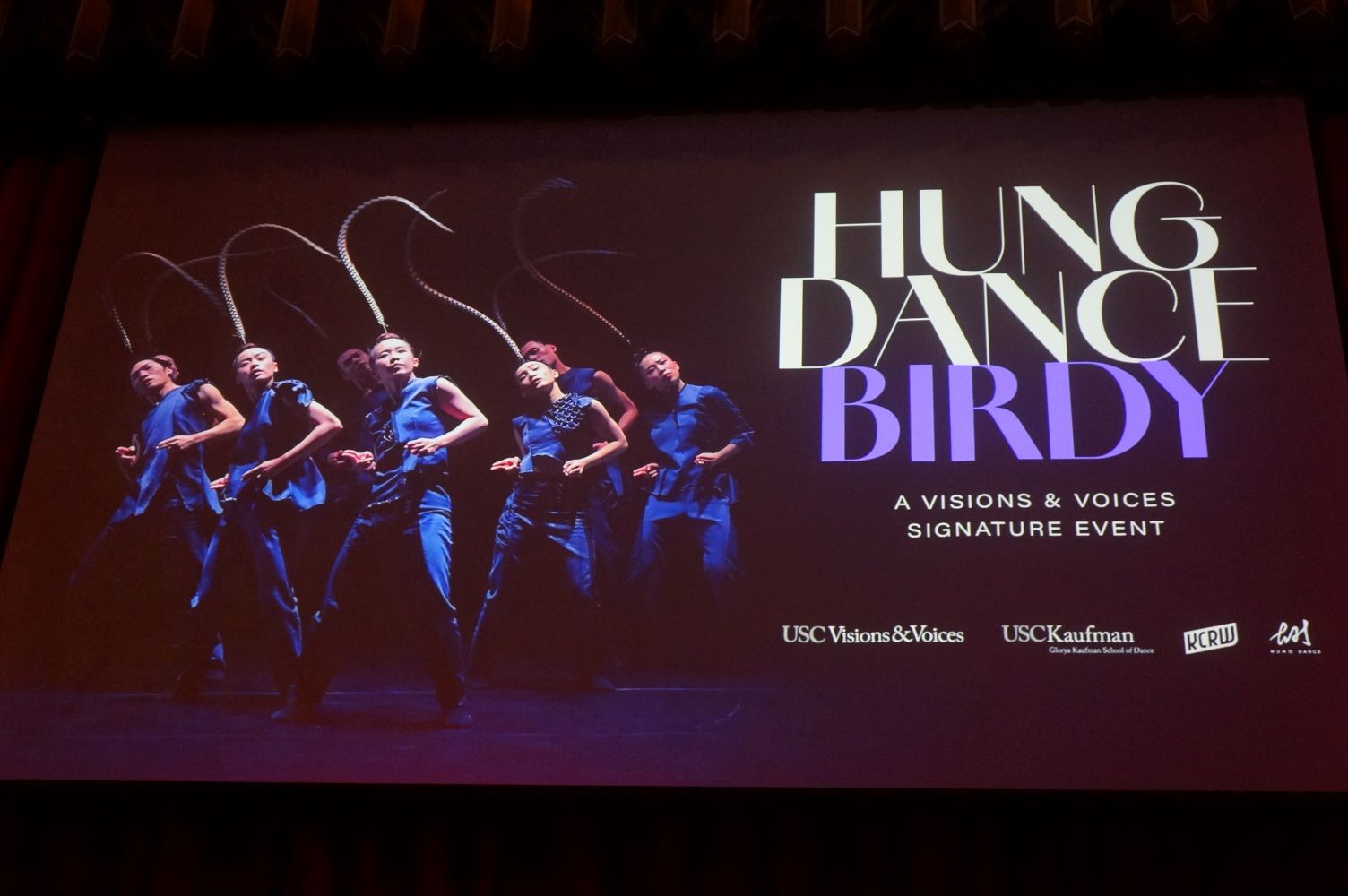
(Photo by: Richard Ren/LAPost)
From Independent Promotion to International Touring: Building a North American Presence
BIRDY premiered in 2024. Discussing the company’s international development, Lai said HUNG DANCE began building its North American touring experience in late 2025 and continued expanding its performance schedule in 2026. The current tour is planned to visit nine cities in the United States and Canada, with workshops and arts exchange activities providing opportunities to engage with local communities.
He acknowledged that entering the international market is not easy. When he first began promoting the company’s work, he handled nearly everything himself, serving as both the creator and his own agent.
To introduce HUNG DANCE to the international arts community, Lai personally attended arts fairs and performance showcases in different regions, seeking opportunities on both the East and West coasts and presenting the company’s work to curators and industry professionals. Through those efforts, he gradually developed professional connections and eventually began working with an agent, helping the company establish a more consistent touring process.
“Opening up the international market is really not easy. It takes continuous effort and accumulated experience,” he said.
Looking ahead, Lai revealed that the company is considering returning to North America in 2027, potentially in March or April and again toward the end of the year. He also hopes that continued touring, workshops and cross-cultural exchanges will introduce HUNG DANCE’s work to audiences from an even wider range of backgrounds.
Breaking Boundaries Through Creativity: Bringing Taiwan’s Dance to the World
Beginning with a Peking opera feather and incorporating Tai Chi Dao Yin, contemporary dance, cinematic imagery and visual art, Lai has established a distinctive creative approach in BIRDY. Rather than being bound by traditional forms or relying on cultural symbols for their surface appeal, he carefully examines the relationships among the body, objects, space and physical force, then recombines these elements into a new artistic language.
This approach gives BIRDY a recognizable visual identity while allowing the work to explore questions of freedom, constraint and individual experience beyond its technical demands.
(Photo by: Richard Ren/LAPost)
At USC’s Bovard Auditorium, the eight dancers used precise physical control to transform the long feathers into flowing lines and visually compelling images. Through his choreography and stage concepts, Lai organized these seemingly simple movement elements into a cohesive artistic narrative.
From the initial idea of a single feather to bringing a full production to North American stages, Lai’s creative journey points to one possibility for contemporary Taiwanese dance on the international stage: beginning with one’s own cultural heritage, continuing through experimentation and cross-cultural dialogue, and developing an artistic language that is distinctly one’s own.