‘Dead to Rights’ Brings Nanjing Massacre Story to Life in Powerful L.A. Premiere
By Richard Ren / LAPost — Los Angeles, August 12, 2025
MONTEREY PARK, CA — It was a night heavy with history and cinematic ambition. On August 11, the AMC in Monterey Park rolled out its red carpet for the U.S. premiere of Dead to Rights (Nanjing Photo Studio), a searing wartime drama set during the Nanjing Massacre of 1937. Nearly 200 guests — a mix of Hollywood filmmakers, critics, Chinese community leaders, and cultural diplomats — filled the theater to capacity, ready to confront one of the darkest chapters of 20th-century history through the lens of Chinese director Shen Ao.
Among the first to greet the audience was Acting Chinese Consul General Huang Hongjiang, joined by Deputy Consul General Li Zhiqiang and Cultural Counselor Wang Taiyu. Huang’s remarks before the screening cut through the room — at one point, his voice broke as he recited lines recalling the atrocities:
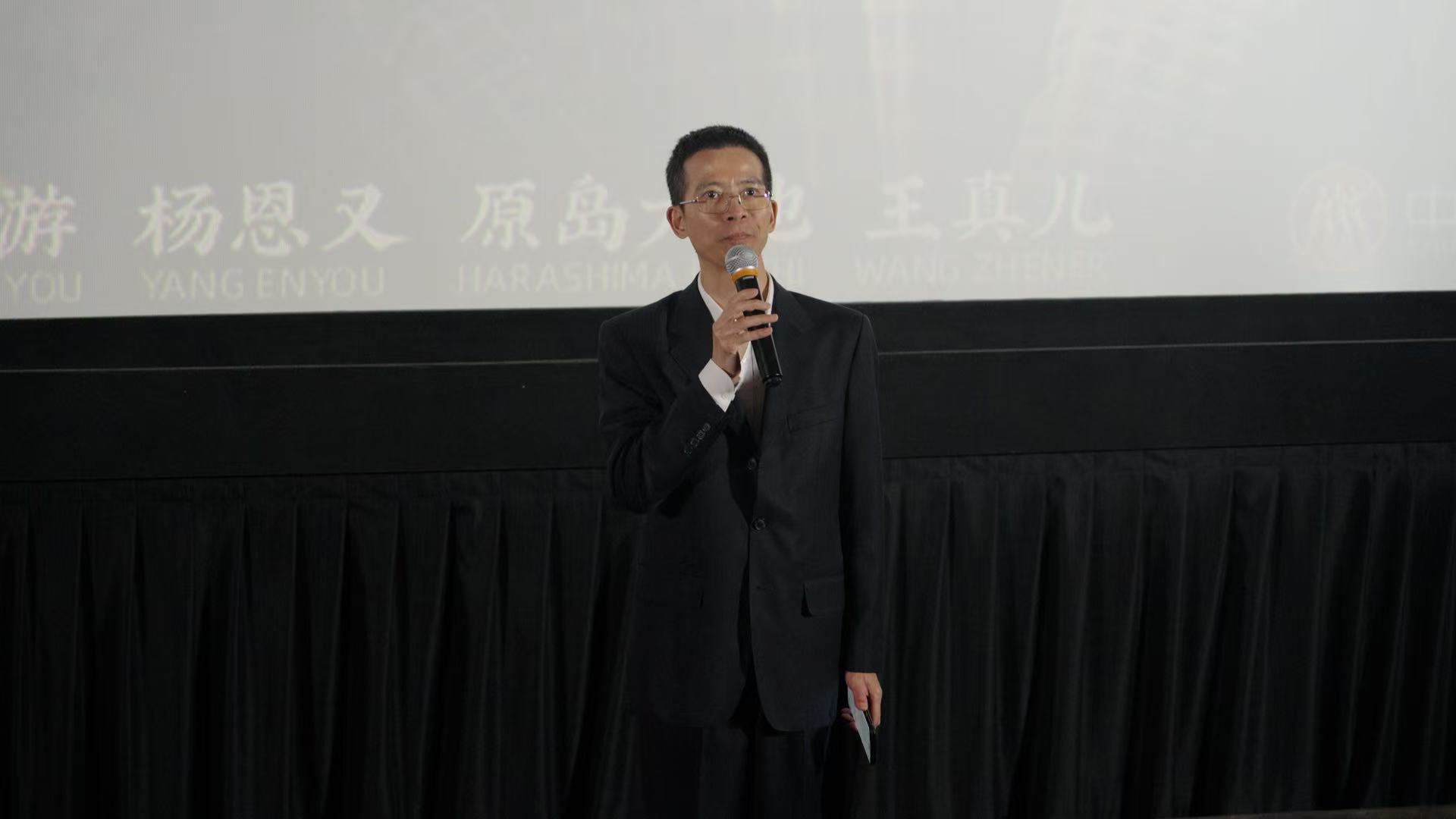
Acting Chinese Consul General Huang Hongjiang (LAPost)
“Eighty-eight years ago… the iron hooves of the Japanese invaders trampled Nanjing; they burned, killed, and committed barbaric atrocities — six weeks of slaughter took 300,000 lives, a tragedy beyond words.”
The consul made it clear: remembering this history is not about prolonging hatred, but about honoring sacrifice and standing guard against distortion or denial.
When the lights dimmed, the crowd leaned in — and for the next two hours, Dead to Rights pulled them deep into the cramped quarters of the “Jixiang Photo Studio,” where ordinary citizens evolve from quiet survivors to awakened resisters, even as Japanese troops wage a campaign of “cultural plunder” alongside physical destruction.

Huang Hongjiang (2nd from left), Cultural Counselor Wang Taiyu (2nd from right) and representatives from the film’s distributor, Niu Vision Media (Photo by: Richard Ren/LAPost)
A Premiere with Star Power and Strategy
This wasn’t a casual screening. The Los Angeles Chinese Expert Film Viewing Group worked hand-in-glove with the film’s distributor to ensure a high-impact rollout. They brought in nearly 60 Hollywood insiders — screenwriters, critics, veteran journalists, and high-profile influencers — and seeded social media ahead of time with reviews, behind-the-scenes insights, and viewing guides.

毒角Show (Photo by: Richard Ren/LAPost)
One of those influencers was Jiaojiao (“@毒角Show”), a Chinese-language YouTuber with nearly 50 million followers. Fresh off a flight from China, he told LAPost he’d been waiting for this film: “The scene of a mother sacrificing herself to save her child… it’s unforgettable.” His team captured the premiere from every angle, framing it not just as a film release, but as a cultural moment.
The Reviews Land Fast
By midnight, the Los Angeles Post published an English-language review headlined: “Dead to Rights”: Bearing Witness Through the Lens to Suffering and Dignity. The piece praised Shen Ao’s choice to focus not on battlefields but on civilians, and to spotlight the rarely discussed cultural theft by Japanese forces. The review called it a gap-filler in Chinese war cinema — emotionally potent and historically fresh.
Hollywood veterans in attendance agreed. WGA West president Bob Underwood called the film “emotionally honest” with “characters that feel lived-in.” Actor John Sutton admitted his WWII knowledge had been almost entirely Western Front–focused. “This is as horrific as the Holocaust,” he said, adding that even with subtitles, the film’s emotional punch was undiminished.

(Photo by: Richard Ren/LAPost)
Behind the Scenes of the Premiere
Hollywood’s own young director Shi Tanxuan spent two weeks wrangling logistics — coordinating press crews, securing equipment, and assembling the guest list. CGTN anchor Sean Callebs and Chinese American journalist Yan Ziqi co-hosted the evening, keeping the mood respectful but electric.
Yan noted a visible shift in audience energy from before to after the screening — particularly among non-Chinese viewers, who left the theater subdued and reflective. Production designer Fang Yiming praised the film’s obsessive attention to historical detail, crediting a “massive, meticulous” art department.
German-Chinese actor Leander Claussen admitted he’d known nothing about the massacre before watching. “It’s heavy,” he said, “but it’s necessary.” Cross-cultural producer Taye Cuui pointed to the mother’s sacrifice scene as her emotional breaking point: “Our generation has to value peace more than ever.”
A Benchmark for Chinese Cinema Abroad
By the night’s end, one thing was clear: Dead to Rights had achieved more than just a screening. With its combination of high-level diplomacy, targeted influencer engagement, and professional-grade event production, the premiere earned quiet nods from industry veterans as one of the most successful Chinese film launches on U.S. soil to date.