Title: U.S. Vaccine Policy Shifts Stir Confusion and Concern Among Families and Health Experts
LAPost/Los Angeles, March. 19, 2026 — A series of recent changes in U.S. vaccine policy—from COVID-19 guidance to routine childhood immunizations—has sparked growing debate among medical professionals and parents alike. For many families, particularly within immigrant communities, questions around “whether to vaccinate, which vaccines are necessary, school requirements, and insurance coverage” have become increasingly complex.
Against a backdrop of political controversy and fragmented information, what was once a relatively clear vaccination pathway is now marked by uncertainty.
Expert Briefing Highlights Erosion of Public Trust
In response to mounting concerns, the American Community Media (ACoM) hosted a virtual news briefing on Feb. 20 titled “Mapping the Vaccine Landscape.” The event featured Richard Besser, CEO of the Robert Wood Johnson Foundation and former acting director of the Centers for Disease Control and Prevention (CDC).
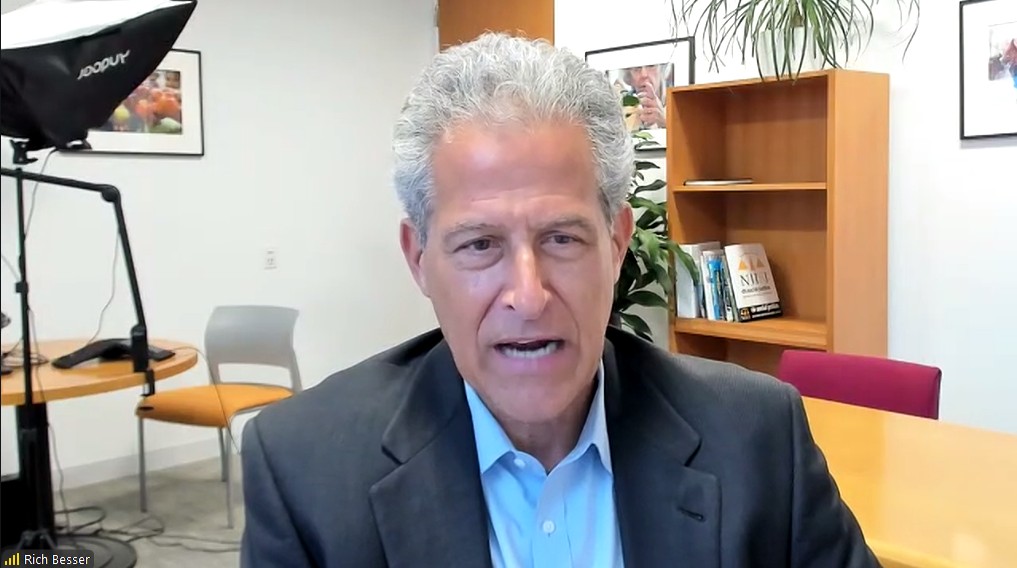
Besser, a pediatrician with over three decades of experience, delivered a stark assessment of the current landscape, citing declining public trust and controversial policy shifts.
“It is absolutely heartbreaking,” Besser said. “I worked at the CDC for 13 years with dedicated employees. But I do not recommend looking to the CDC for information around vaccines.”
Policy Upheaval and Advisory Committee Controversy
Much of the current uncertainty stems from changes to the Advisory Committee on Immunization Practices (ACIP), whose recommendations traditionally guide CDC policy and influence insurance coverage.
Last year, U.S. Health and Human Services Secretary Robert F. Kennedy Jr. dismissed all 17 ACIP members and appointed a new panel. Besser criticized the move, alleging that the new group includes individuals with anti-vaccine leanings and limited public health expertise.
The committee’s late-February meeting—expected to address influenza, RSV, and COVID-19 vaccines—was ultimately canceled, further deepening public concern.
Measles Resurgence Raises Alarm
Once declared eliminated in 2000, measles is now re-emerging in the United States amid declining vaccination rates. Data from the Johns Hopkins Bloomberg School of Public Health reports 1,099 measles cases in the first two months of 2026 alone, including a major outbreak in South Carolina.
By comparison, 2,213 cases were recorded for all of 2025, with significant outbreaks in Texas, Utah, South Carolina, and Arizona.
Besser warned that efforts to roll back school vaccination requirements could have serious consequences:
“If you vaccinate your child, you no longer know whether they’re sitting next to an unvaccinated child who could transmit a serious disease.”
Legal Challenges Mount
Legal battles are also unfolding. The American Academy of Pediatrics (AAP) filed a lawsuit on Jan. 13, arguing that recent CDC vaccine guidance bypassed established scientific review processes and was not evidence-based.
AAP President Andrew D. Racine stated that federal decisions have “abandoned rigorous, transparent science,” creating confusion, limiting access to life-saving vaccines, and weakening community protection.
The lawsuit seeks to restore the immunization schedule to its April 15, 2025 version, prior to the ACIP overhaul. Several state attorneys general filed similar lawsuits in late February.
Diverging Recommendations Add to Confusion
Historically aligned with ACIP, AAP issued its own 2026 immunization schedule with notable differences. These include recommendations on Hepatitis A and B, COVID-19, RSV, and the MMRV (measles, mumps, rubella, varicella) vaccines.
Besser urged parents to rely on AAP guidance and consult trusted healthcare providers rather than political sources.
Key Scientific Concerns
Besser emphasized three core principles:
-
Science-based policymaking: Vaccine recommendations must be grounded in transparent and rigorous scientific review.
-
Risk reduction, not elimination: Vaccines significantly reduce severe illness, hospitalization, and death—even if they do not fully prevent infection.
-
Invisible success of public health: The benefits of vaccination are often unnoticed—until declining rates lead to disease resurgence.
He also noted that during the COVID-19 pandemic, limited direct communication from the CDC allowed political narratives to frame evolving scientific guidance as inconsistency, eroding public trust.
“Changing recommendations doesn’t mean we were wrong—it means we’ve learned more,” he said.
Controversial Changes to Vaccine Strategy
Recent policy discussions have included:
-
Reclassifying some vaccines under “shared decision-making”
-
Making polio and measles vaccines optional (proposed by ACIP Chair Kirk Milhoan)
-
Removing the universal recommendation for newborn Hepatitis B vaccination
Besser strongly opposed the Hepatitis B change, calling the vaccine “remarkable” for its dual role in preventing infection and reducing liver cancer and cirrhosis.
“It is, in effect, an anti-cancer vaccine,” he said, warning that reduced uptake could lead to increased cancer rates decades later.
Barriers for Immigrant Communities
The briefing also highlighted disparities affecting immigrant and minority populations. Besser noted that increased immigration enforcement by U.S. Immigration and Customs Enforcement (ICE) has made some families hesitant to seek medical care.
Although federally qualified health centers do not typically collect or share immigration status, “fear itself has become a barrier,” he said.
Additionally, declining access to primary care physicians—particularly among underserved populations—further complicates informed decision-making.
Implications for Chinese American Families
Within Chinese American communities, vaccine attitudes are also shifting. While historically supportive of routine immunization, some parents are now taking a “wait-and-see” approach amid conflicting information and policy changes.
“It’s not that we oppose vaccines,” one parent noted. “We just want to wait a bit longer.”
Besser concluded with a clear message: amid policy shifts and public debate, the most reliable guidance still comes from trusted healthcare providers—doctors, nurses, and pharmacists.
Outlook: Uncertainty Ahead
As future ACIP meetings and seasonal vaccine recommendations remain in flux, the direction of U.S. vaccine policy continues to draw national attention. Whether public trust can be rebuilt will play a decisive role in shaping community health outcomes in the years ahead.