Tibetan Buddhist Teacher Kunzang Chapdal Lundup Rinpoche: Connecting Eastern and Western Hearts Through Compassion and Meditation
LAPost/Los Angeles (May 23, 2026) — Among Southern California’s social elites, high-tech professionals, and younger generations, concerns surrounding mental health and emotional stress have risen significantly in recent years. Faced with high-pressure careers, identity anxiety, and fast-paced lifestyles, more people are seeking inner healing and spiritual support.
Against this backdrop, Tibetan Buddhist teacher the H.H. Gurdag Dragmar Khentrul Rinpoche, has gradually gained attention in recent years. In addition to providing meditation guidance and spiritual counseling, he has earned recognition within Los Angeles’ Chinese American and multicultural communities for his deep study of Buddhist philosophy and his approach to integrating Tibetan Buddhist wisdom with traditional Eastern spiritual practices.
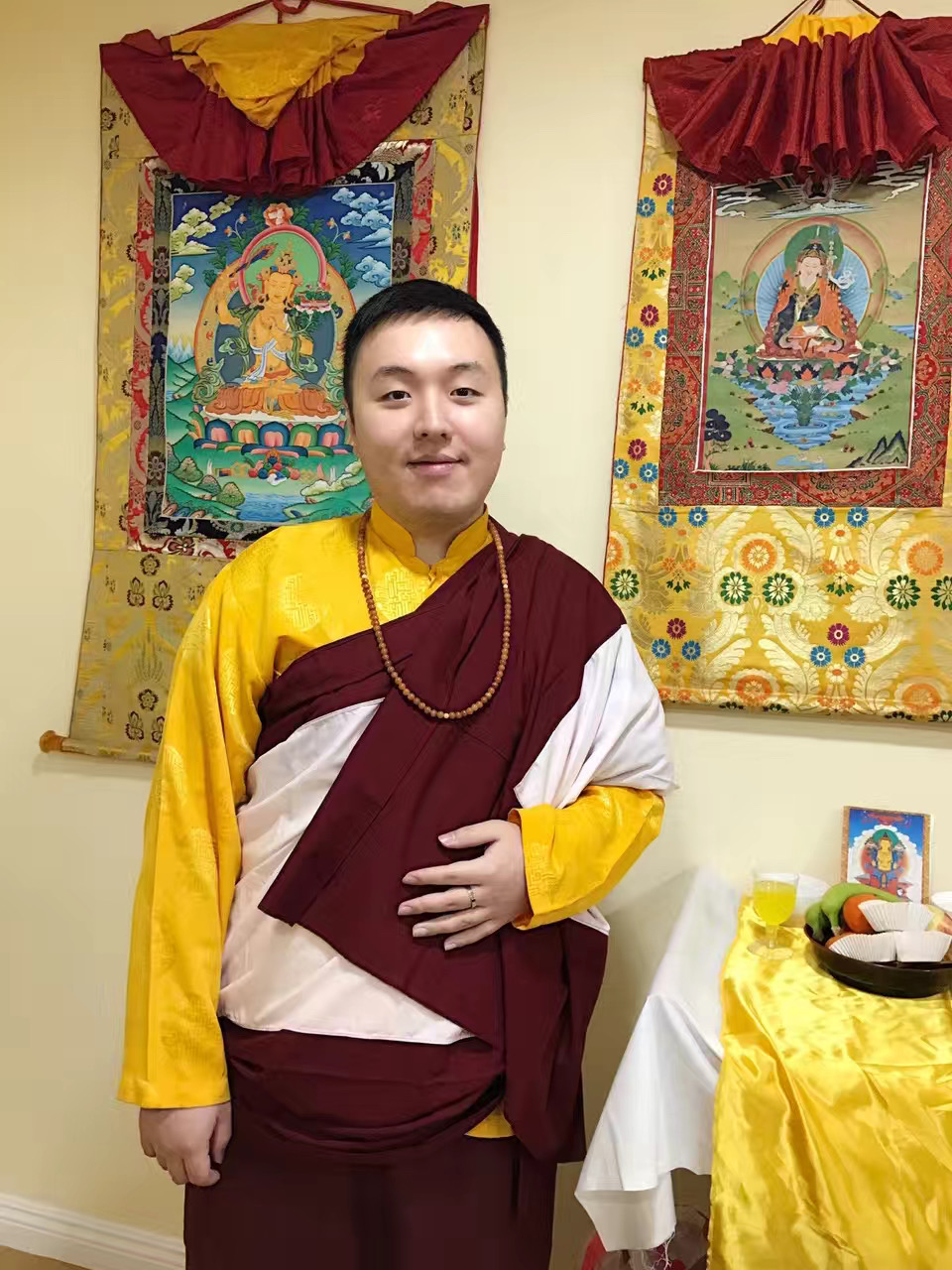
H.H. Gurdag Dragmar Khentrul Rinpoche
At the invitation of LAPost, H.H. Gurdag Dragmar Khentrul Rinpoche recently sat down for an exclusive interview to discuss his spiritual journey, Buddhist philosophy, and his observations on modern anxiety and emotional struggles.
Rinpoche was born into a Buddhist family near Putuo Mountain, one of China’s most sacred Buddhist sites. He shared that both his grandmother and mother were devoted Buddhists, and that he began studying Buddhism from an early age.
“When I came to the United States at age 16 to study, the cultural changes and language barriers caused me tremendous anxiety,” he recalled. During one of the most confusing periods of his life, he visited a nearby temple seeking inner peace and met his spiritual teacher, H.H. Gurdag Dragmar Khentrul Rinpoche.
“My teacher told me that I had a deep karmic connection with Buddhism and that benefiting sentient beings through Dharma was the path I was meant to follow,” he said. Rinpoche recalled that his teacher presented him with a full set of lama robes, a moment he described as bringing an overwhelming sense of joy and calling.
“Later, I gradually realized that this was not a path I chose — it was a path I was remembering.”
As a practitioner within the Nyingma lineage of Tibetan Vajrayana Buddhism, Rinpoche completed the traditional “three years and three months” retreat, considered one of the most rigorous forms of long-term spiritual training in Tibetan Buddhism.
“Retreat is not an escape,” he said. “It is truly a return home.”
He explained that the experience helped him deeply understand how attachment creates suffering, while letting go brings genuine peace.
Following years of retreat and meditation practice, Rinpoche said his sense of compassion and responsibility toward others became increasingly real and grounded.
Speaking about the Nyingma tradition, he described it as the oldest lineage in Tibetan Buddhism, originally introduced to Tibet by Guru Padmasambhava.
“It emphasizes directly recognizing the true nature of the mind,” he explained. “Luminosity, emptiness, and compassion already exist within every person.”
Throughout his teachings, Rinpoche consistently emphasizes the importance of “pure motivation.”
“If one practices only for fame, self-satisfaction, or escape from reality, it is difficult to cultivate true merit,” he said. “True practice is the aspiration to benefit all beings.”
As mental health awareness continues to grow in American society, meditation and Eastern spiritual practices have increasingly entered the lives of younger generations.
According to Rinpoche, what modern people lack most is “the ability to be present with themselves.”
“People are constantly chasing outward distractions while rarely returning inward,” he said. “That is why anxiety, depression, and confusion have become so widespread.”
For beginners interested in meditation, he recommends starting simply with breathing exercises.
“Even five to ten minutes a day is enough,” he said. “The key is gentleness and consistency, not force.”
In his view, the greatest value of Buddhism and meditation is not eliminating all suffering, but cultivating awareness.
“When you learn to observe your emotions without drowning in them, you gain true freedom.”
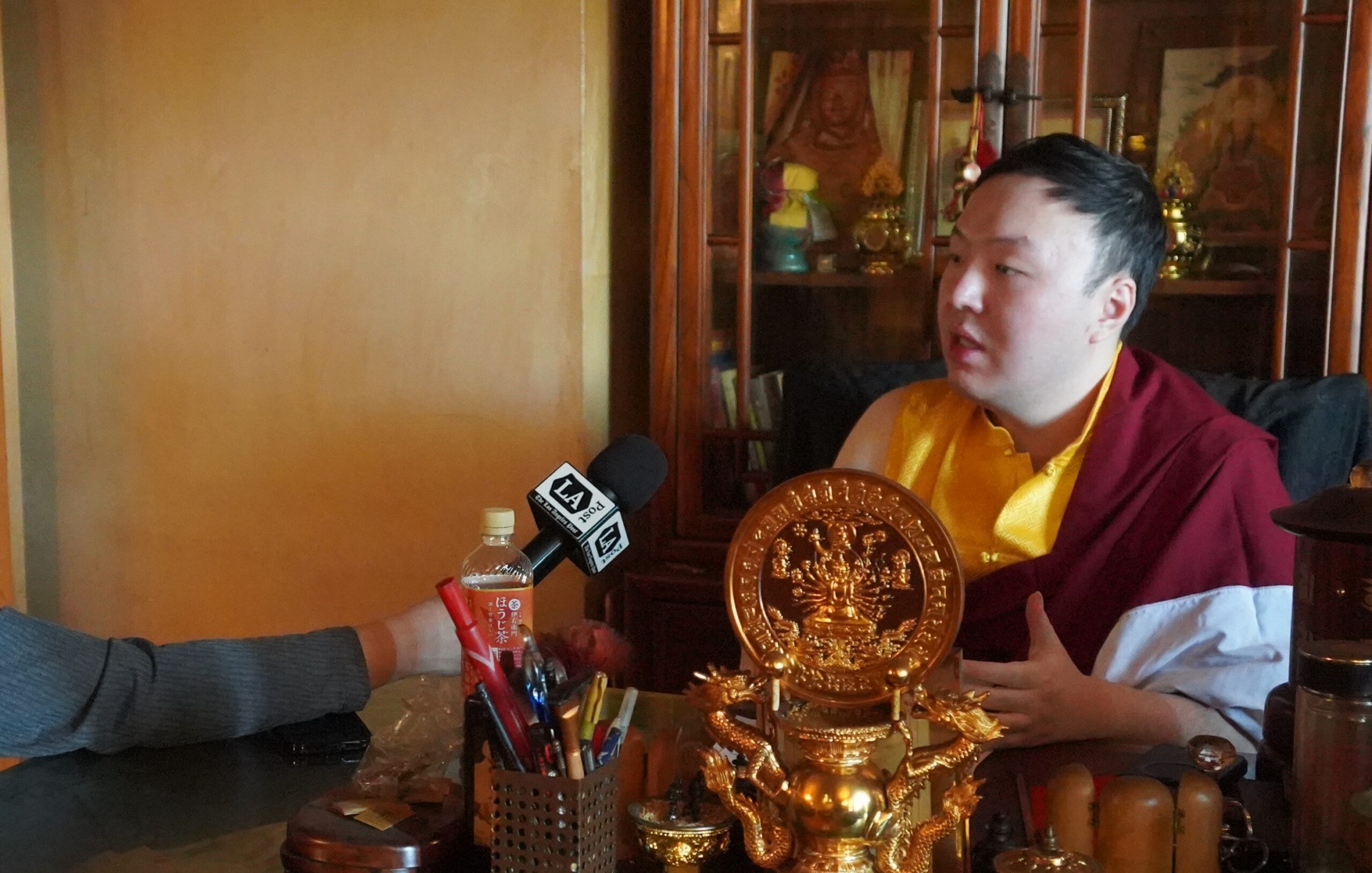
H.H. Gurdag Dragmar Khentrul Rinpoche, during an interview with LAPost (Photo by: YT Liu/LAPost)
Currently, the Gongsang Buddha Center Foundation and ManYuan Buddhist Temple founded by Rinpoche continue to offer meditation classes, Dharma teachings, compassion training camps, and community outreach programs throughout Southern California.
In addition to spiritual counseling, the organizations actively participate in community service, including support for the homeless, companionship programs for seniors, and environmental initiatives. During the pandemic, the organization donated more than 5,000 masks to local fire departments and police departments.
“True Buddhism does not exist only inside temples,” he said. “It should live within communities and within kindness between people.”
Looking ahead, Rinpoche hopes to establish more systematic Buddhist and meditation training programs in the United States and organize workshops and retreats across California, allowing more people to experience Eastern wisdom firsthand.
At the conclusion of the interview, when asked what he would like to say to young people struggling with anxiety and uncertainty, Rinpoche paused before responding:
“Dear child, your heart is inherently luminous. It is only temporarily covered by clouds. Be gentle with yourself. Return to your breath. Return to the present moment. You are not alone.”
He summarized his understanding of Buddhism in one sentence:
“Deep within your heart, there is a light that has never gone out. Buddhism is the path that helps you find that light — and use it to illuminate yourself and others.”
Drawing from his own spiritual experience, Rinpoche also explained the relationship between Buddhism and Taoist practices. In his view, while both belong to Eastern spiritual traditions, Buddhism focuses more on inner cultivation and transformation, while Taoist practices tend to address practical and worldly concerns more directly.
Within Buddhism, he explained, the emphasis lies on karma and inner transformation. When facing relationship conflicts or emotional difficulties, Buddhist practice focuses less on changing external circumstances and more on transforming one’s own mind through chanting, repentance, and spiritual cultivation.
By contrast, Taoist practices often focus on direct adjustment of physical, emotional, or environmental conditions through rituals or energy-balancing methods.
Rinpoche also noted that after the pandemic, the demand for emotional healing and inner restoration has grown significantly, especially among younger generations. He believes meditation and Buddhist practices can help relieve anxiety and emotional stress.
“Even short periods of quiet meditation, combined with spending a little time in sunlight around midday, can help stabilize emotions and promote relaxation,” he said.
(By: Richard Ren/LAPost)