Cheng Li-Wen Concludes U.S. Tour in Los Angeles, Calls for Institutionalized Cross-Strait Peace and Stronger U.S. Role
by admin · Published · Updated
LAPost | Los Angeles (June 14, 2026) — Chinese Kuomintang (KMT) Chairwoman Cheng Li-Wen held an international press conference Sunday afternoon at The Westin Bonaventure Hotel in downtown Los Angeles, marking the final stop of her two-week U.S. “Peace and Prosperity Tour.” During the event, she outlined her vision for cross-strait relations, Taiwan’s political future, and the role of the United States in maintaining stability in the Indo-Pacific region.
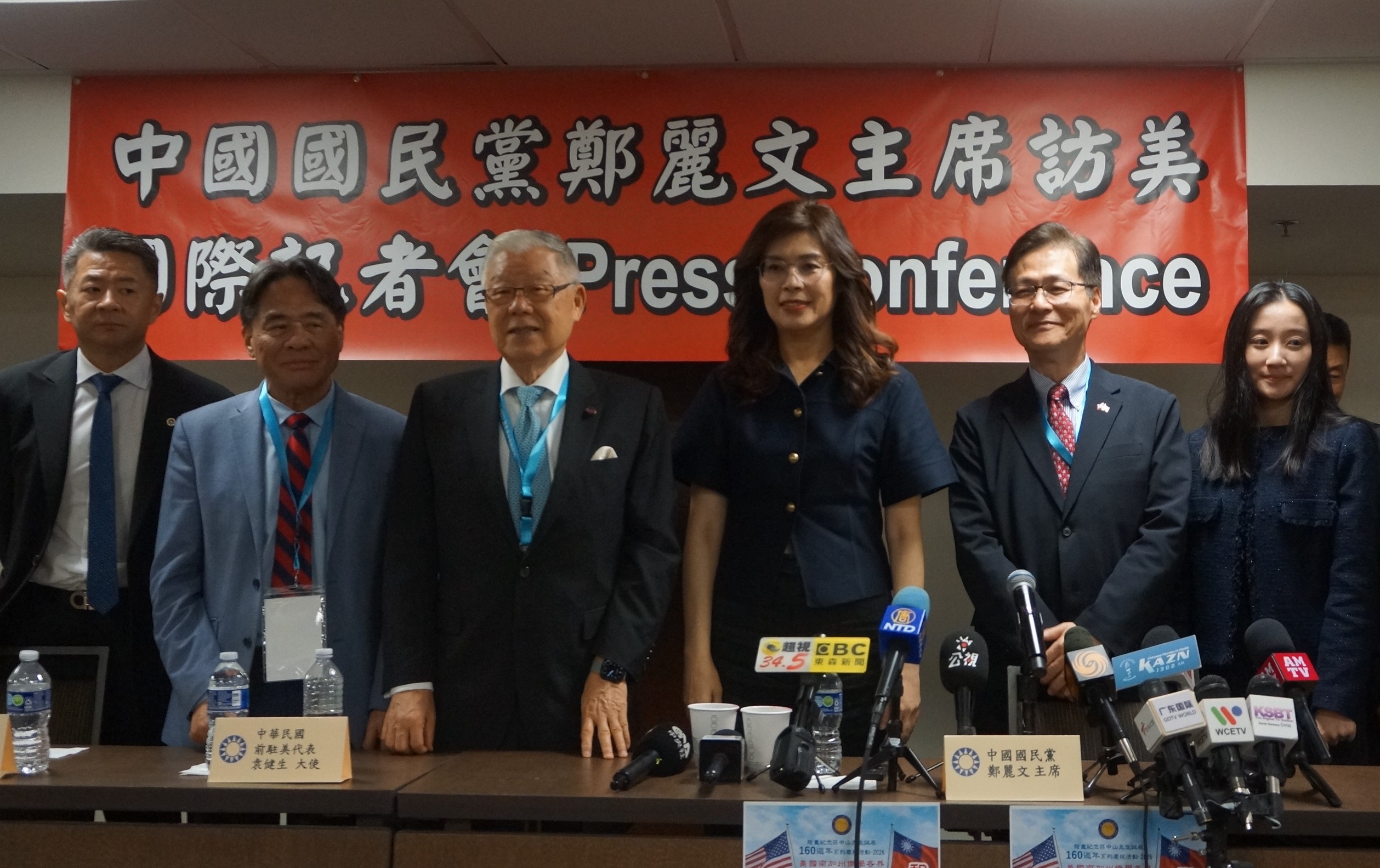
(Photo by: Richard Ren/LAPost)
Cheng said the tour took her to five major American cities, where she met with overseas Chinese communities, academics, policymakers, and business leaders. She described the response as overwhelmingly positive and said she was encouraged by the strong interest in reducing tensions across the Taiwan Strait and pursuing long-term peace.
According to Cheng, easing cross-strait tensions has been the central mission of her leadership since assuming the KMT chairmanship. She noted that one of her key campaign pledges was to reopen channels of communication between the two sides and seek a sustainable path toward peace. She highlighted the resumption of KMT–Chinese Communist Party exchanges after a decade-long suspension and her April visit to Beijing, including a summit meeting with Chinese leader Xi Jinping, as important milestones in that effort.
Cheng emphasized that the United States plays an indispensable role in shaping the future security environment of East Asia. She welcomed the recent Trump-Xi summit, saying it sent a positive signal that dialogue and engagement remain preferable to confrontation. In her view, cooperation between the world’s two largest powers is essential to preventing conflict and preserving regional stability.
Several journalists questioned Cheng about concerns among American policymakers and scholars regarding the KMT’s cross-strait approach and national defense policies. In response, Cheng argued that as an opposition party, the KMT often lacks access to information necessary to formulate comprehensive defense proposals. She criticized the ruling Democratic Progressive Party (DPP) for what she described as insufficient transparency in major defense initiatives and budget planning.
Cheng rejected accusations that advocating dialogue with Beijing means weakening Taiwan’s defense capabilities.
“Reopening dialogue across the Strait does not mean abandoning national defense, nor does it mean sacrificing democracy, freedom, or security,” she said.
She added that the KMT continues to support strengthening Taiwan’s self-defense capabilities, including investments in domestic defense industries, drone development, and military modernization. Cheng also indicated that she is considering proposing more detailed defense policies to better communicate the KMT’s positions to both domestic and international audiences.
Asked what questions she encountered most frequently from American political and academic circles, Cheng said many observers were curious about whether a realistic alternative exists to the current trajectory of escalating tensions.
She argued that peace should not depend solely on temporary goodwill but should instead be institutionalized through mechanisms that provide long-term stability and reduce the risk of military conflict. According to Cheng, both Taiwan and the broader international community would benefit from a durable framework that can preserve peace for decades rather than years.
When asked about the upcoming Rim of the Pacific (RIMPAC) military exercises, Cheng acknowledged that military preparedness and defense cooperation are normal practices among nations. However, she stressed that true peace ultimately requires confidence-building measures and sustained dialogue to reduce tensions and prevent miscalculations.
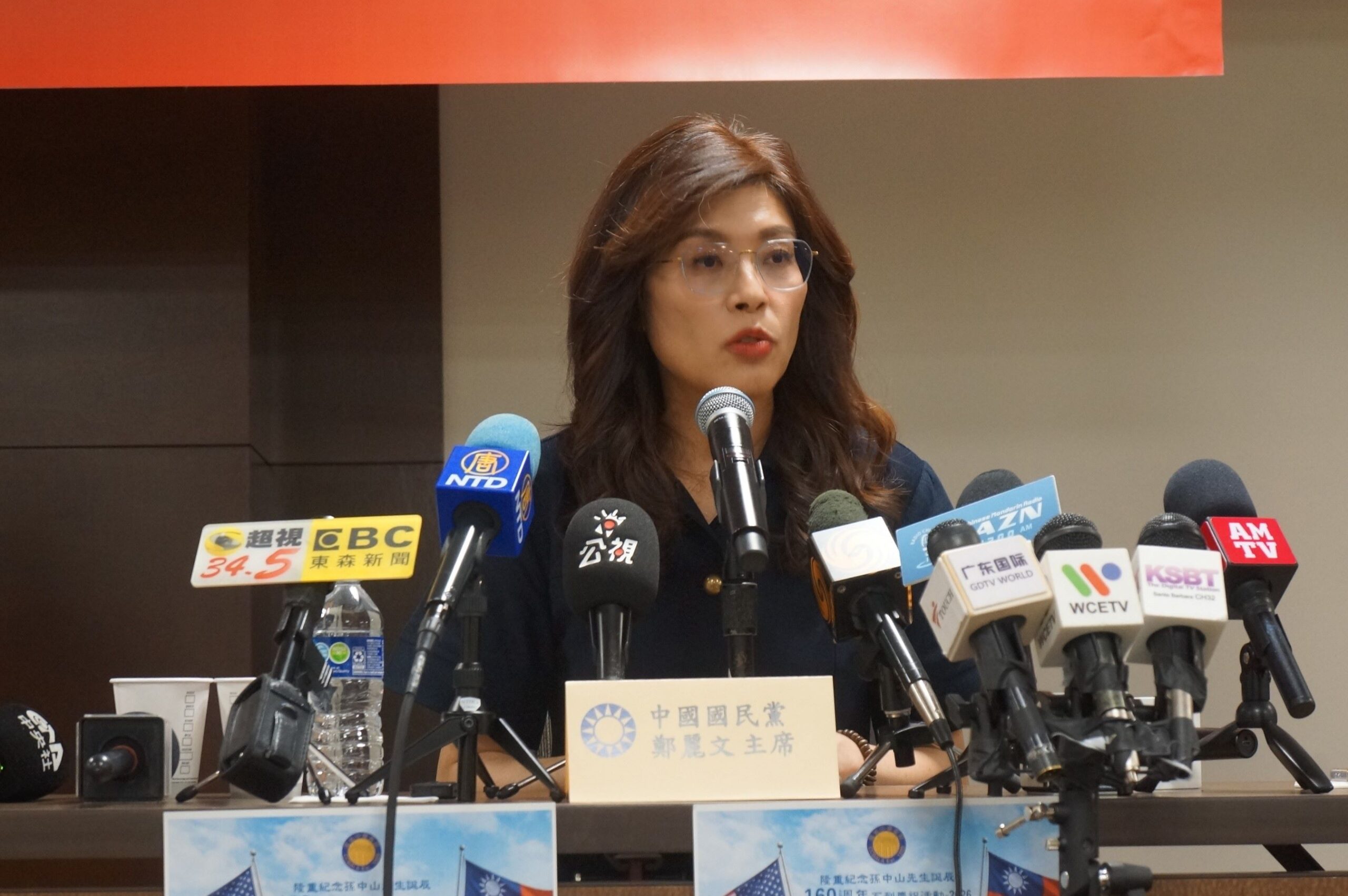
(Photo by: Richard Ren/LAPost)
A question from LAPost focused on the message Cheng most wanted to convey to the American public during her visit.
In response, Cheng said she hopes Americans will move beyond Cold War-era thinking and embrace a new vision for the Indo-Pacific region. She proposed transforming the “First Island Chain” into what she called a “Chain of Peace and Prosperity,” emphasizing collaboration in technology, talent development, investment, and innovation.
Cheng noted that countries and regions stretching from Japan and Taiwan to Southeast Asia possess enormous economic and technological potential. She argued that the United States, by leveraging its leadership role, could help facilitate greater regional cooperation and unlock opportunities for mutual growth.
“Instead of a zero-sum competition where one side wins and another loses, we should pursue a blue-ocean strategy in which everyone benefits,” Cheng said. “Peace and prosperity are not mutually exclusive. In fact, they reinforce each other.”
She said that message resonated strongly with scientists, entrepreneurs, economists, and technology leaders she met during the trip, particularly in Silicon Valley.
The press conference also featured a lighter moment when Cheng was asked about songs and music videos inspired by her that have circulated online. She responded by praising the creativity of internet users and said music can help bridge divides and express a shared desire for peace.
“I hope drones carry milk tea rather than missiles,” she remarked, drawing laughter from the audience.
Looking ahead to the 2028 election in the Republic of China (Taiwan), Cheng described the contest as a choice between “war and peace.” She argued that a majority of people do not want to see military conflict across the Strait and instead favor resolving differences through dialogue and engagement.
She reiterated her support for restoring tourism, student exchanges, academic cooperation, and broader people-to-people interactions, saying such exchanges can help reduce hostility and strengthen mutual understanding.
As the event concluded, a reporter asked what had impressed her most during her return visit to the United States after nearly two decades.
Cheng jokingly replied that American food still seemed “a bit too salty and too sweet” for her taste. More seriously, she said she was inspired by visits to leading American universities and academic institutions.
“Seeing places like Harvard and MIT makes me admire the academic environment here,” she said. “It even made me wonder what life might have been like if I had stayed in the United States to pursue an academic career.”
Following the press conference, Cheng was scheduled to attend a large community banquet before departing Los Angeles later that night, bringing her two-week U.S. tour to a close.
(By: Richard Ren/LAPost)