Xiangdong Kong Performs at Nixon Presidential Library, Rhapsody in Blue Earns Standing Ovation
by admin · Published · Updated
LAPost | Yorba Linda, California (June 30, 2026) — By Richard Ren
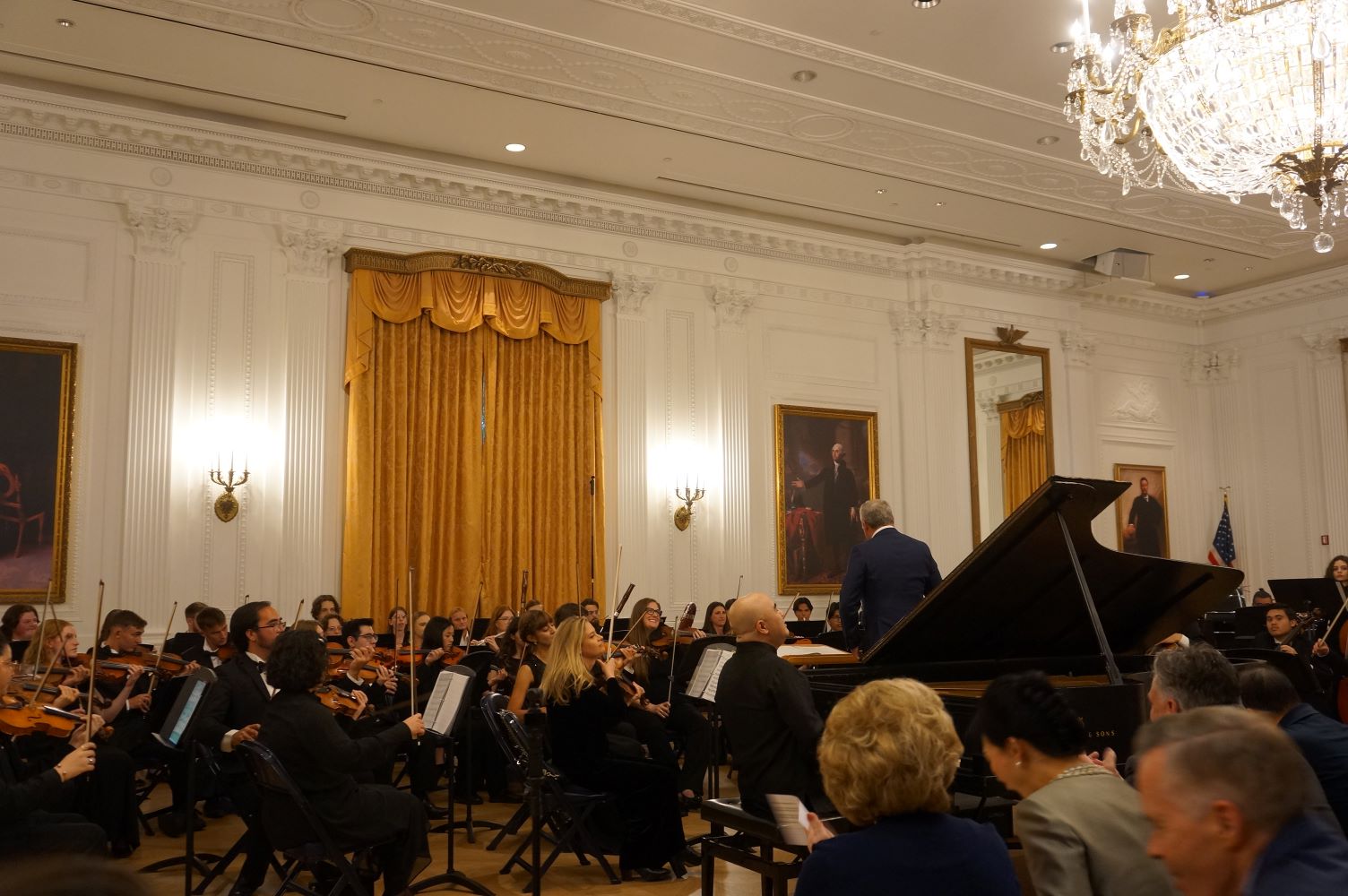
Renowned Chinese pianist Xiangdong Kong was invited to appear as the featured piano soloist at a charity concert held on the evening of June 30 at the East Room of the Richard Nixon Presidential Library & Museum in Yorba Linda, California. Kong performed in collaboration with the Concordia University Irvine Student Symphony Orchestra, presenting George Gershwin’s American classic Rhapsody in Blue, and later returning to the stage with an improvised encore based on Li Shutong’s Farewell, earning prolonged and enthusiastic applause from the audience.
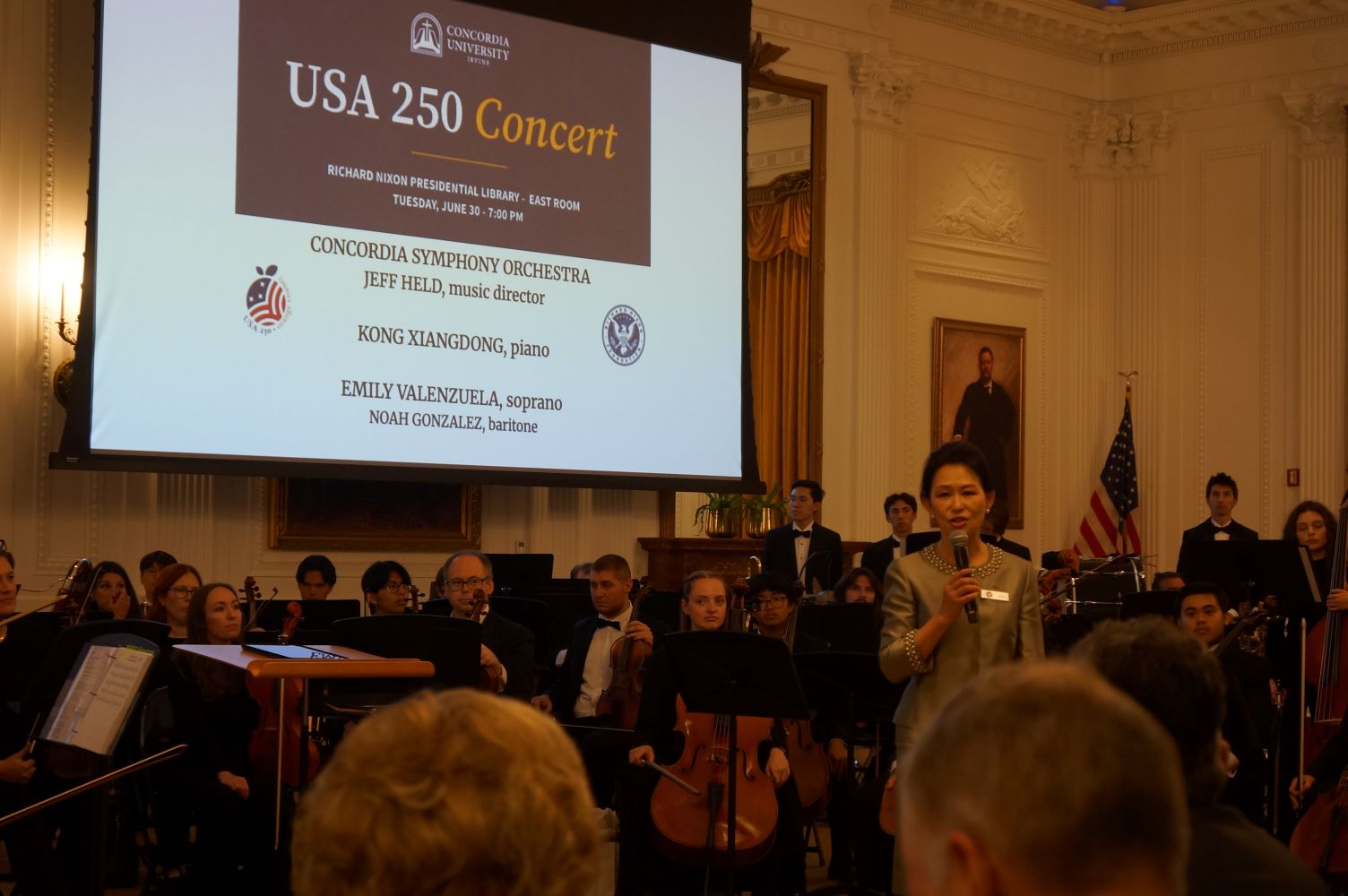
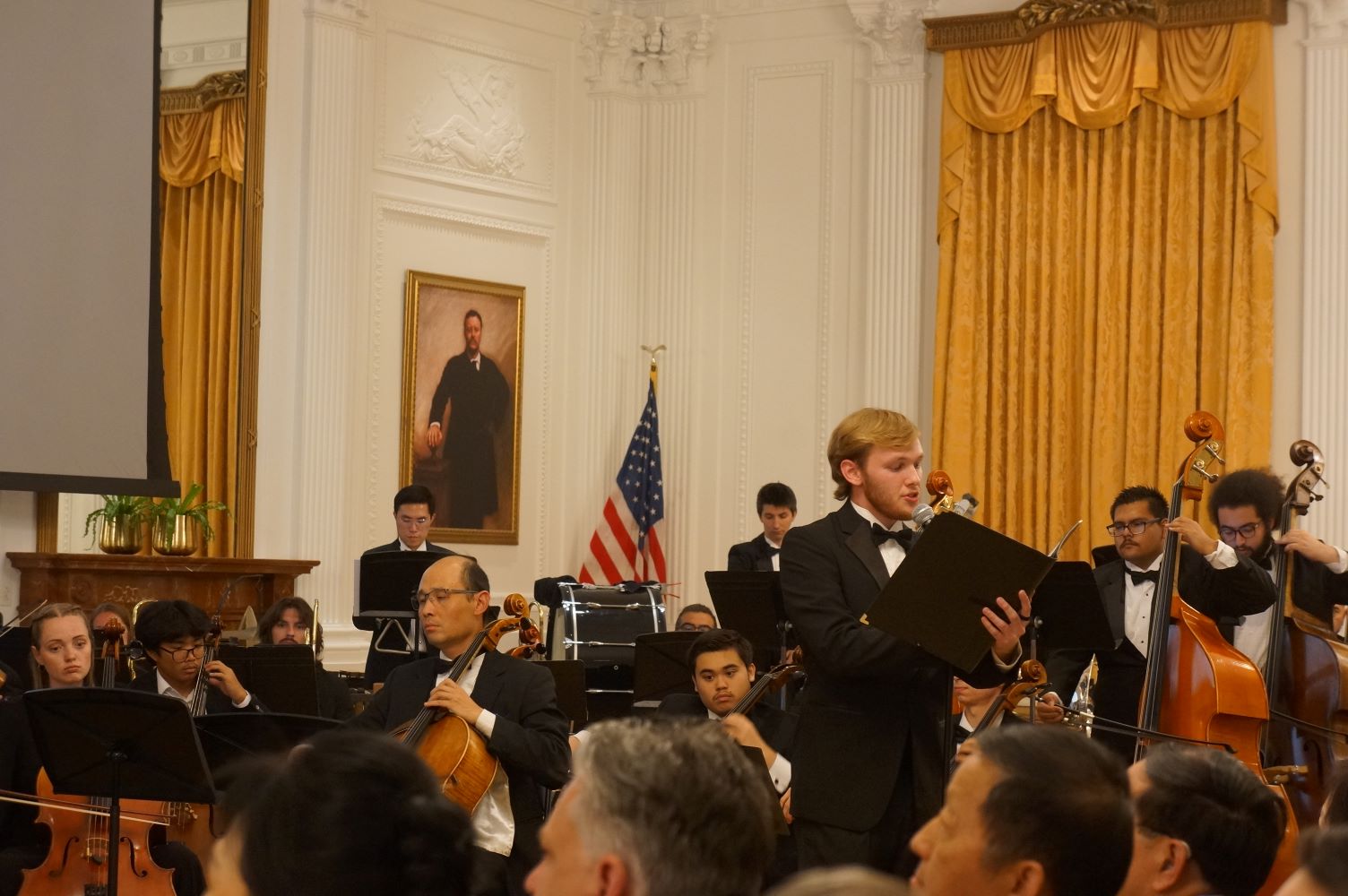
The concert was jointly presented by the Richard Nixon Foundation, USA250 Orange County, and Concordia University Irvine, and formed part of the official commemorative events marking the 250th anniversary of the founding of the United States. The performance was conducted by Jeff Held, with American soprano Emily Valenzuela also featured.
(Photo by Richard Ren/LAPost)
Originally designed to accommodate approximately 600 guests, the East Room was filled to capacity on the night of the performance. Organizers added additional seating, yet hundreds of audience members still stood throughout the concert, bringing total attendance to more than 800. At the conclusion of Kong’s performance, the entire audience rose in a standing ovation, with applause continuing for an extended period—one of the most memorable moments of the evening.
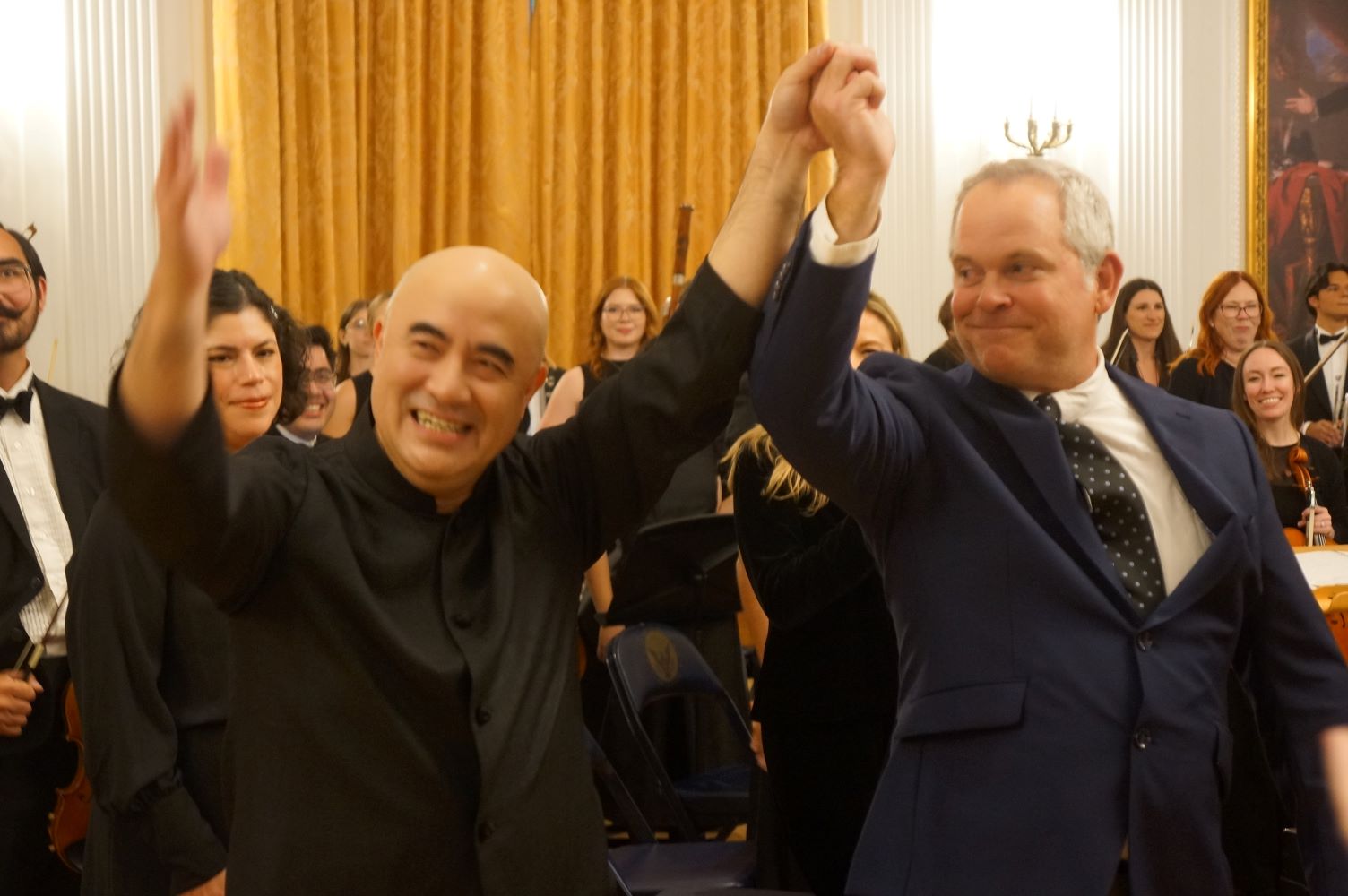
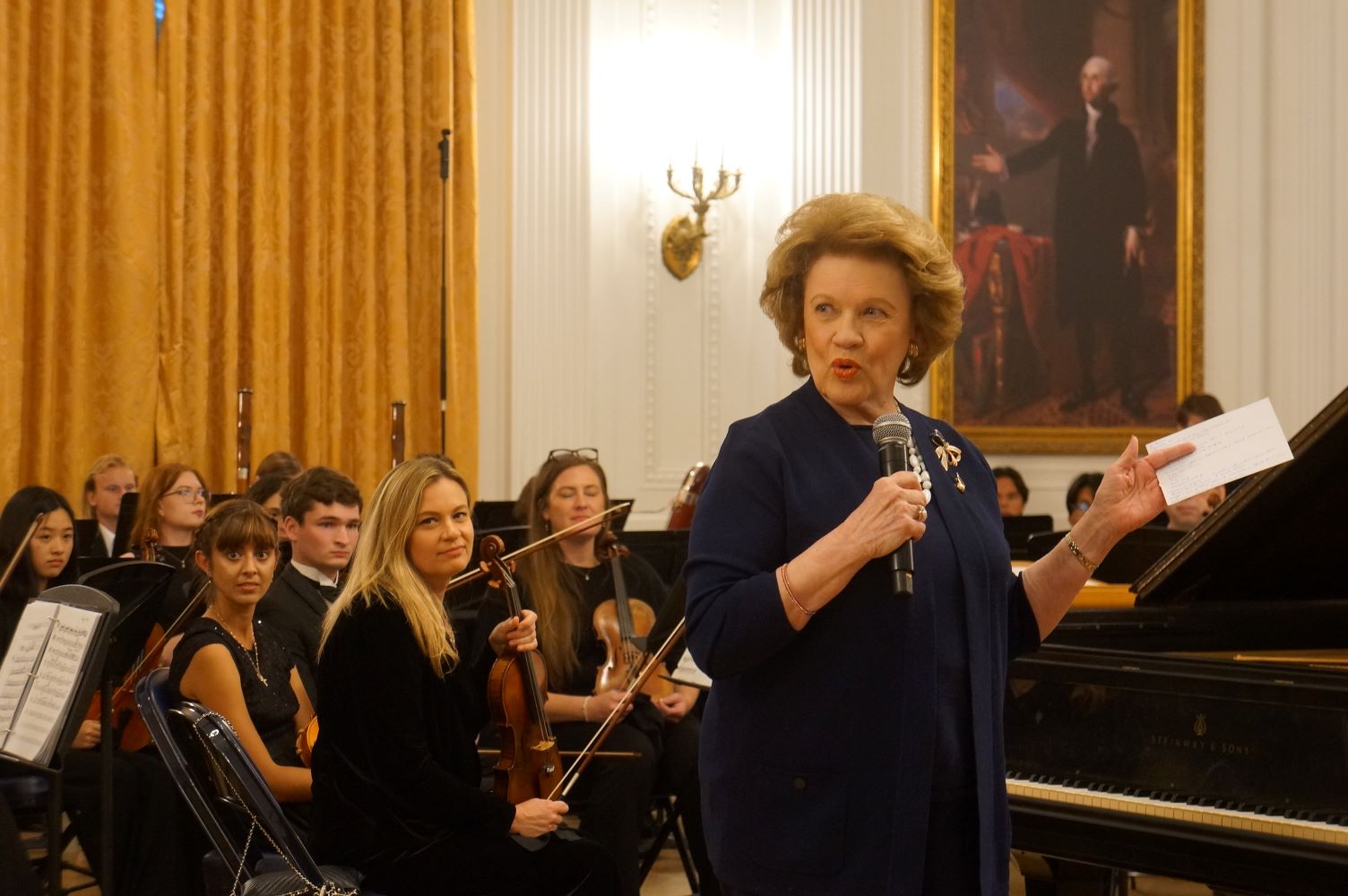
Right: conductor Jeff Held (Photo by Richard Ren/LAPost)
Before the concert, conductor Jeff Held introduced Kong to the audience, describing Rhapsody in Blue as one of the most iconic works in American music. He noted that the piece masterfully blends jazz and classical idioms, reflecting the historical development of America’s multicultural identity, and said Kong was the ideal artist to interpret the work.
Held praised Kong not only as “one of China’s most distinguished pianists,” but also as a musician deeply committed to humanitarian and charitable work. He further described him as “an artist of exceptional talent and remarkable personal charisma,” expressing hope that the audience would experience the full emotional impact of his performance.
Performance
During the performance, Kong delivered a highly refined interpretation of Rhapsody in Blue, marked by precise yet flexible rhythmic control. He seamlessly integrated the improvisatory spirit of jazz with the symphonic structure of the work, shaping a performance that was both structurally disciplined and emotionally free-flowing. His delicate touch and rich tonal palette revealed both dazzling virtuosity and profound expressive depth.
In dialogue with the orchestra, Kong’s piano line alternated between leading and responding, creating a dynamic musical conversation filled with dramatic tension and organic flow. The result brought renewed vitality to Gershwin’s early 20th-century masterpiece—an enduring symbol of American cultural fusion. The audience remained fully immersed throughout the performance, and at its conclusion, the hall erupted into sustained, thunderous applause.
Historic Piano and Encore Remarks
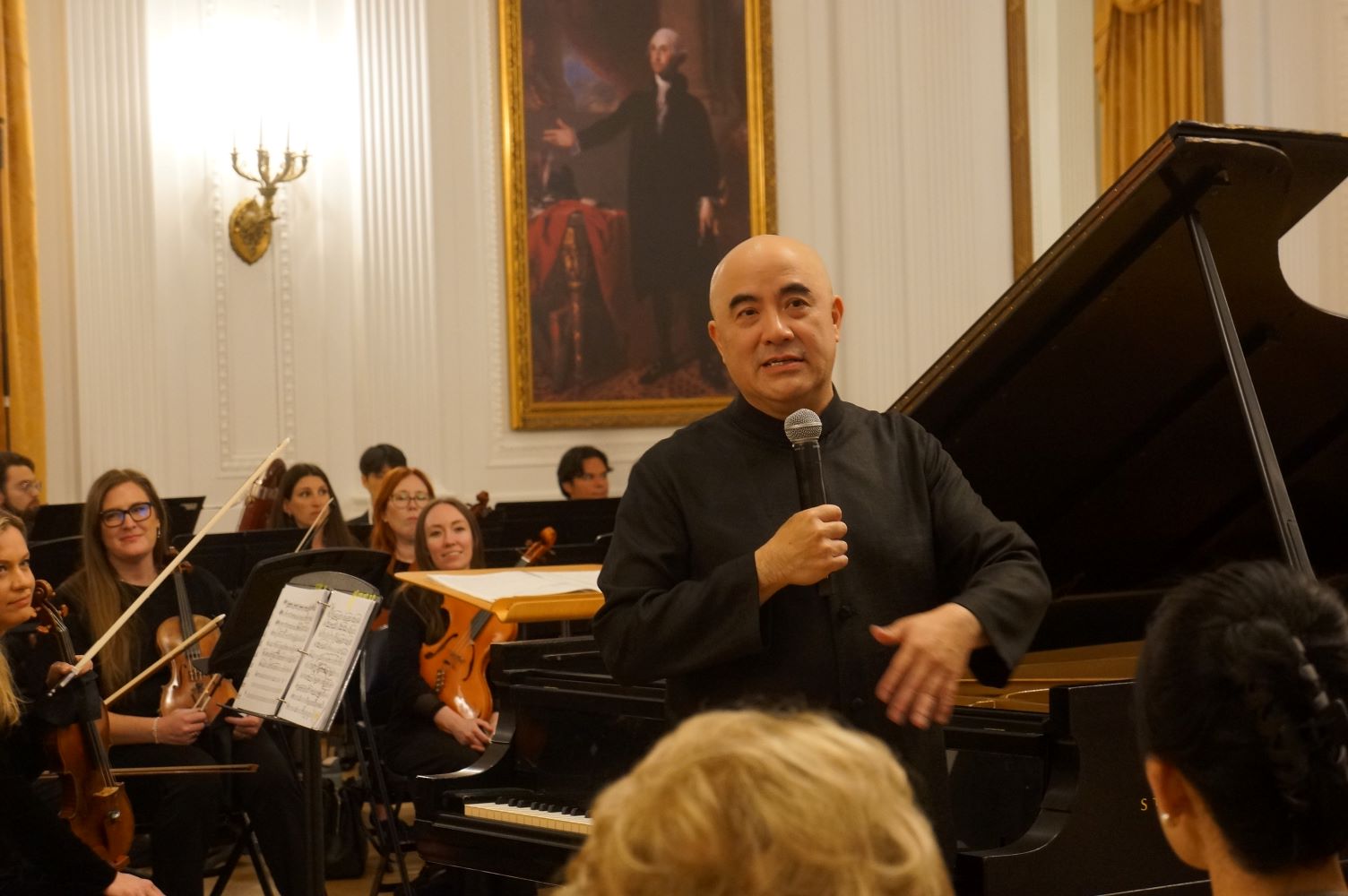
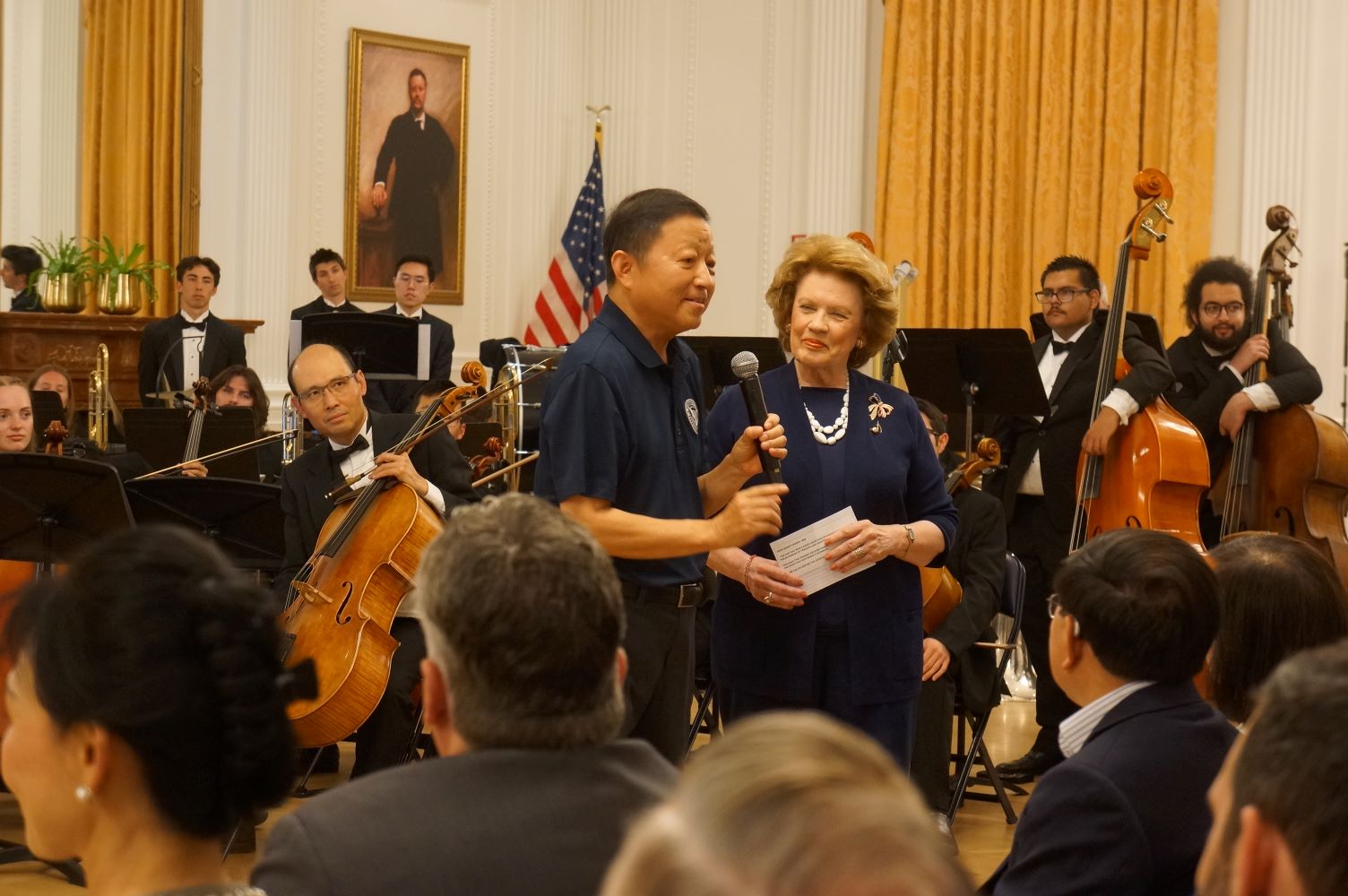
In his encore remarks, Kong also introduced the historic piano used for the performance. He noted that the instrument holds special historical significance, having once been played in concert by legendary pianist Arthur Rubinstein during his U.S. tours. The piano was later acquired by American businessman Brother Williams and ultimately donated to the Richard Nixon Presidential Library, where it is preserved today.
Kong further revealed that one of the piano’s E-flat keys had malfunctioned shortly before the concert began, briefly causing concern. Fortunately, technicians quickly resolved the issue, allowing the performance to proceed smoothly. He remarked humorously that performing on such an instrument—rich with musical history—made him feel as though he were engaged in a “cross-temporal musical dialogue with Rubinstein.”
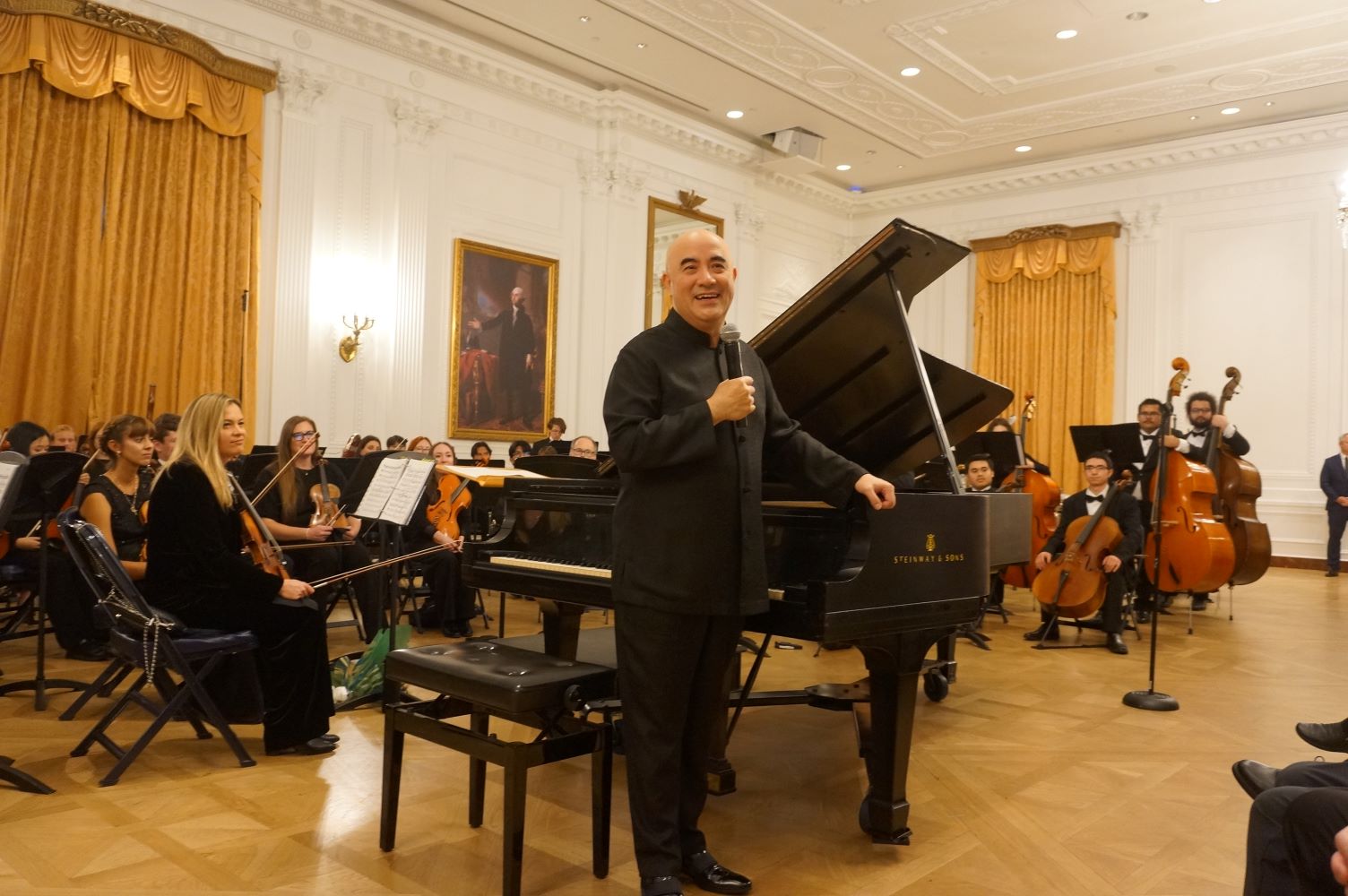
Xiangdong Kong (Photo by Richard Ren/LAPost)
He then introduced the historical background of his encore piece, Farewell, noting that its melody traces back to the 1868 American folk song Dreaming of Home and Mother by composer John Pond Ordway, later adapted with Chinese lyrics by Li Shutong to become one of China’s most beloved songs.
Kong reflected that performing the piece at the Nixon Presidential Library—a symbolic site in the history of U.S.-China relations—carried special meaning. He said he hoped the music would convey a message that transcends politics and geography:
“No matter how politics or geography may change, human hearts remain connected through beauty. Music transcends language, race, and national borders.”
Audience Response and Commentary
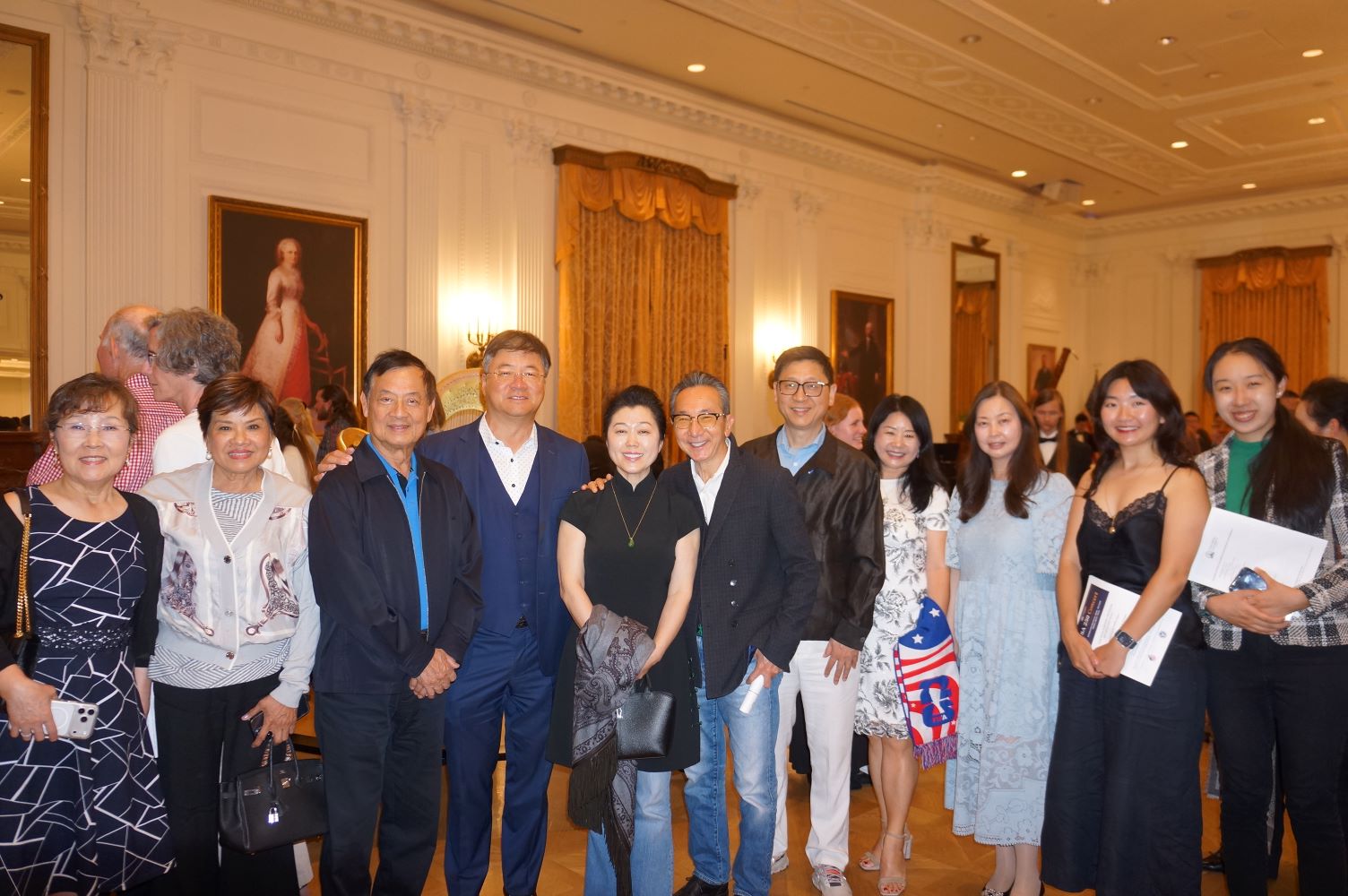
The performance resonated deeply with many members of the audience, particularly Chinese American attendees.
Liu Hao, a Shanghai-born pianist currently pursuing a Doctor of Musical Arts degree at the University of Southern California, drove nearly two hours to attend the concert. She said the program was thoughtfully curated around the USA250 theme, with works by Gershwin, Copland, and other American composers clearly reflecting the evolution of American music and the country’s spirit of diversity, openness, and cultural fusion.
She particularly noted that Rhapsody in Blue is itself a landmark work combining jazz and classical traditions. Kong’s passionate and compelling performance, she said, vividly embodied the work’s spirit of freedom, vitality, and inclusiveness, while continuously energizing the audience and bringing the music to life.
Regarding the encore Farewell, Liu described it as the emotional highlight of the evening. She noted that the piece carries shared cultural memory for Chinese audiences while originating from an American melody, making it a powerful symbol of cultural exchange between the two nations. During the performance, many Chinese audience members were heard softly singing along to the familiar lyrics, creating a powerful emotional resonance and transforming the concert hall into a space of shared cultural connection.
Veteran arts critic and columnist Richard Ren observed that Kong, one of the most influential Chinese pianists on today’s international stage, demonstrated exceptional artistic command in his collaboration with the university orchestra.
He noted that Kong avoided mere technical display, instead focusing on tonal control, rhythmic flexibility, and layered musical shaping. By naturally integrating the improvisational freedom of jazz with the structural rigor of classical composition, Kong delivered a performance that was both architecturally balanced and emotionally rich. His musical dialogue with the orchestra reflected a mature artistic sensibility in which the solo piano both led and supported the ensemble as a unified whole.
Ren further wrote that the most memorable aspect of the evening was not only technical excellence, but the humanistic depth Kong brought to the music. From Rhapsody in Blue to Farewell, the two works—representing American musical innovation and the long history of U.S.-China cultural exchange—formed a seamless artistic continuum in his interpretation, creating what Ren described as a century-spanning cultural dialogue. The performance ultimately conveyed music’s profound capacity to “move the human spirit.”
In an era of deepening people-to-people exchanges between China and the United States, Kong’s appearance at the Nixon Presidential Library went beyond a single concert. By pairing an American masterpiece with a work deeply embedded in shared cultural memory, he transformed the evening into a highlight of the USA250 celebrations and reaffirmed the enduring power of art to transcend borders, foster understanding, and connect humanity.
(By Richard Ren / LAPost)
(Photo by Richard Ren/LAPost)
(Photo by Richard Ren/LAPost)
(Photo by Richard Ren/LAPost)
(Photo by Richard Ren/LAPost)
(Photo by Richard Ren/LAPost)
(Photo by Richard Ren/LAPost)
(Photo by Richard Ren/LAPost)
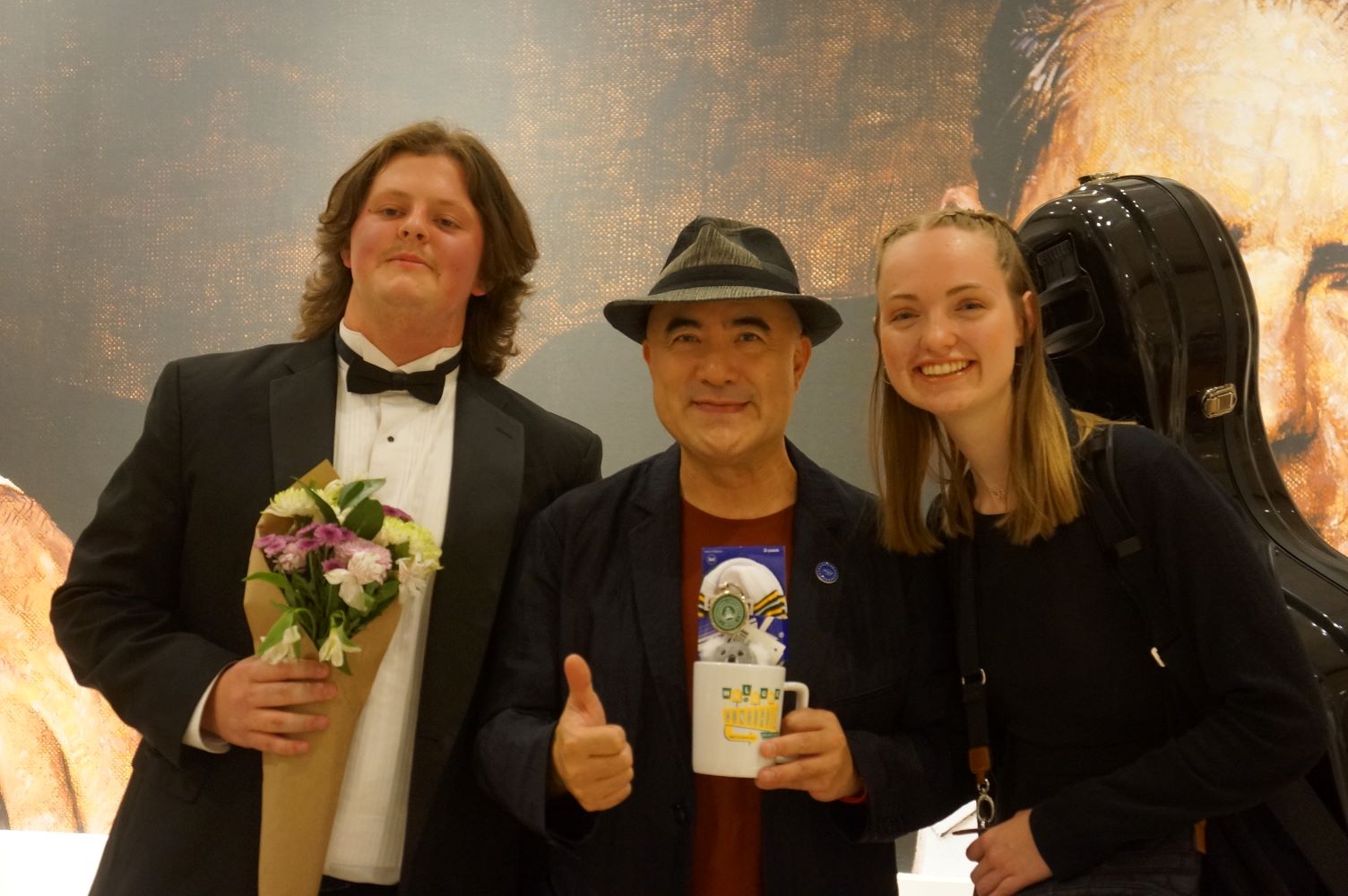
(Photo by Richard Ren/LAPost)