From Penglai to Los Angeles: ‘The Eight Immortals!’ Tests a New Path for Chinese Animation Abroad
LAPost/Los Angeles, CA (Sept. 5, 2026)
By: Richard Ren/LAPost
In recent years, it has been relatively uncommon for the creative teams behind Chinese films to travel to Los Angeles — the self-described “world capital of cinema” — to promote their films and speak directly with audiences and industry professionals.
On Sept. 5, the animated fantasy film “The Eight Immortals!” brought its Los Angeles roadshow to the city, with screenwriter and director Mou Zhengyang and executive producer Ying Xujun appearing in person to discuss the film and its creative journey.
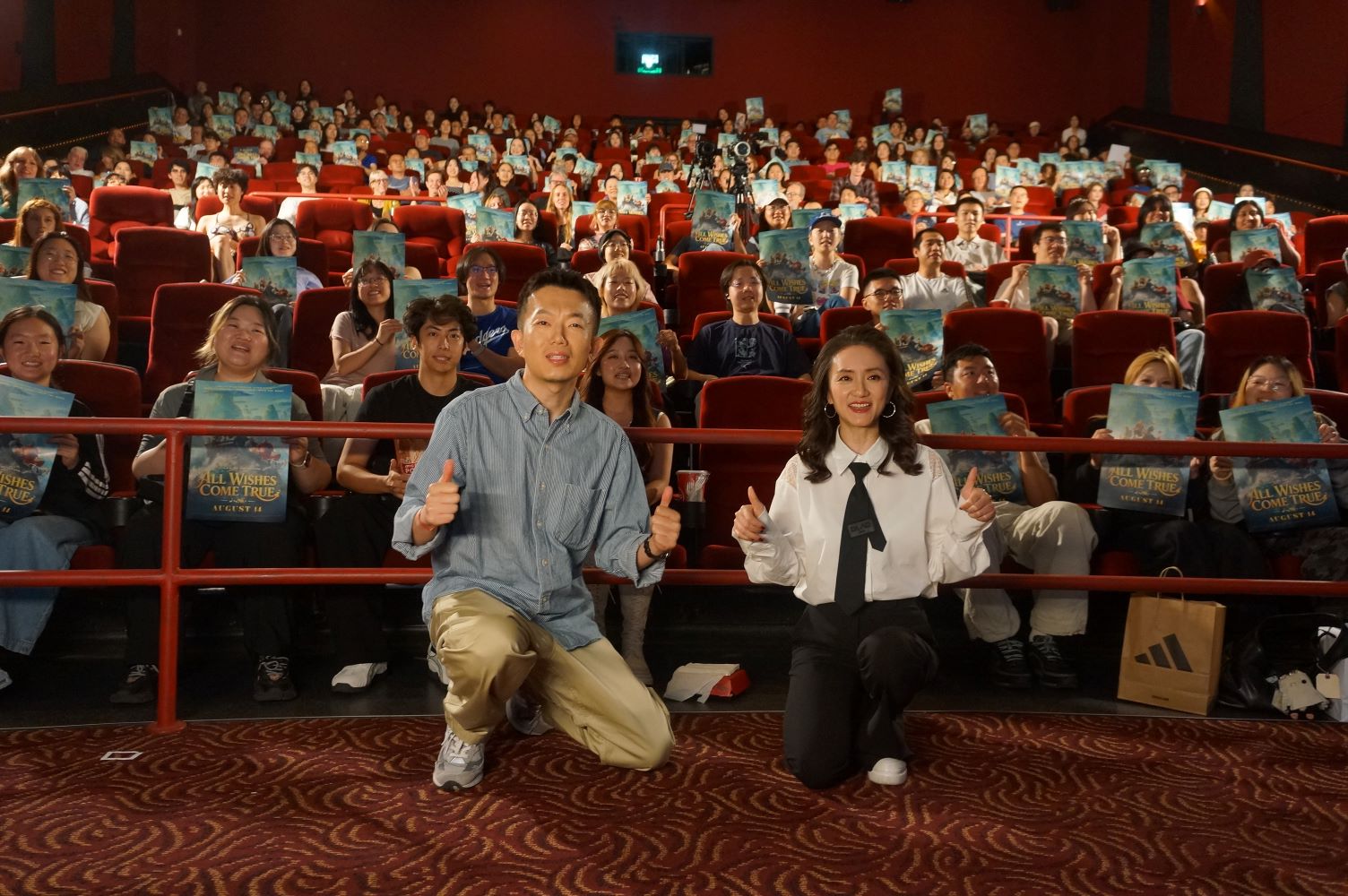
Screenwriter and director Mou Zhengyang and executive producer Ying Xujun(Photo by: Richard Ren/LAPost)
The post-screening conversation was moderated by Michael Berry (白睿文), director of the UCLA Center for Chinese Studies and a scholar of Chinese literature and film. Ellen Eliasoph (艾秋兴), founder of Warner China and a veteran film producer, joined the discussion with other industry guests. Wang Taiyu, cultural counselor of the Chinese Consulate General in Los Angeles, also attended the screening.
For a film rooted in traditional Chinese mythology, the Los Angeles event was about more than promotion. It offered an opportunity to ask a larger question: Can a story deeply familiar to Chinese audiences cross cultural boundaries and connect with viewers who grew up with very different myths, heroes and cinematic traditions?
Why Tell an Ancient Story Again?
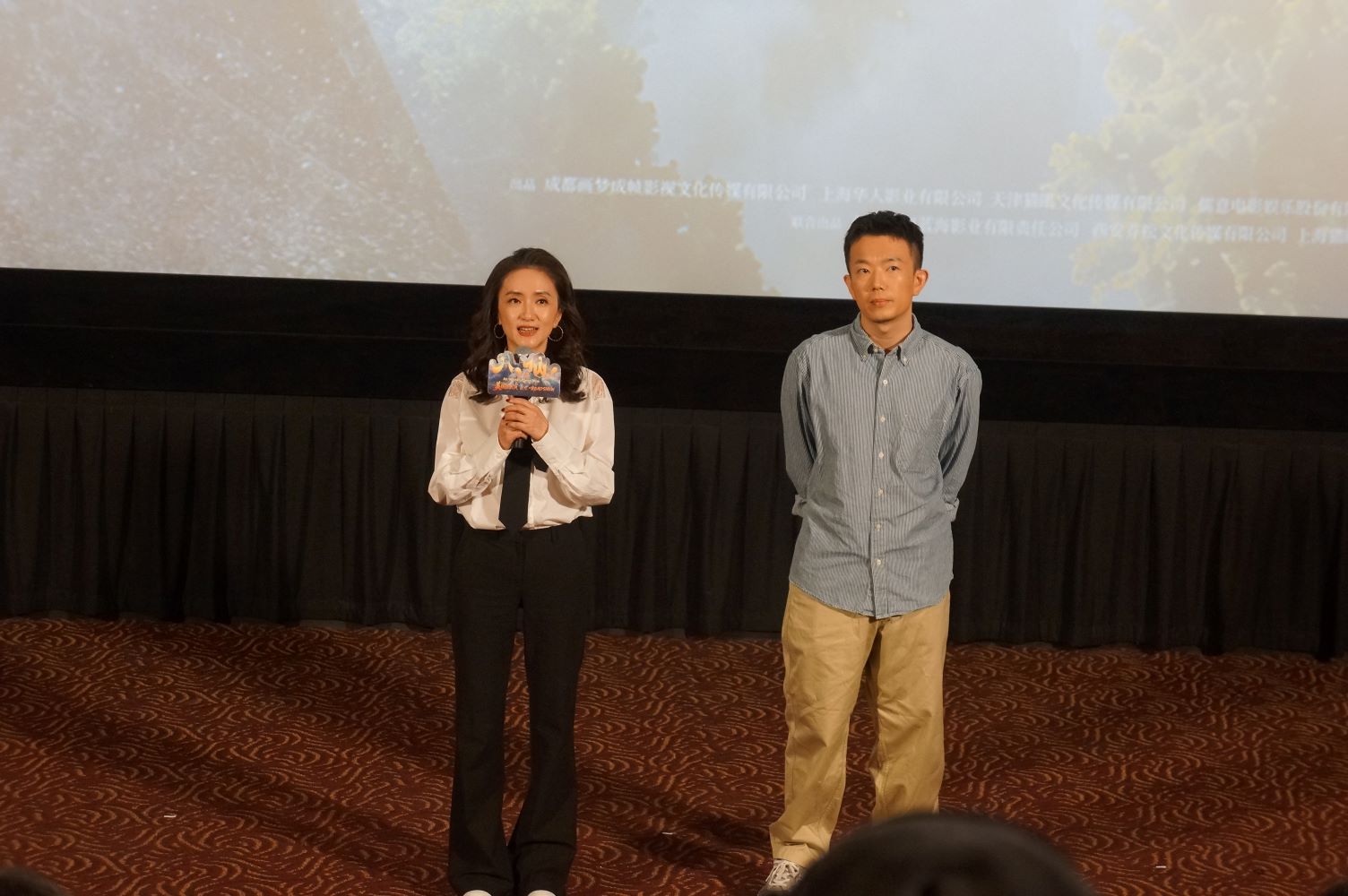
Screenwriter and director Mou Zhengyang and executive producer Ying Xujun(Photo by: Richard Ren/LAPost)
Berry opened the discussion by asking Ying when the project first came to her attention and what persuaded her to become involved.
Ying said she was initially drawn to the project by its humor, comedic elements and the intelligence of its overall concept.
The Eight Immortals are among the most recognizable figures in Chinese mythology. Yet bringing them to the big screen is not easy. Chinese animation companies have attempted to develop the story before, she said, but the material is both difficult to adapt and difficult to tell well.
What attracted her to this project was the director’s approach: rather than simply reproducing a familiar legend, the film seeks to revive an old cultural memory through contemporary animation technology and introduce it to a new generation of viewers.
Eight Characters, Eight Identities
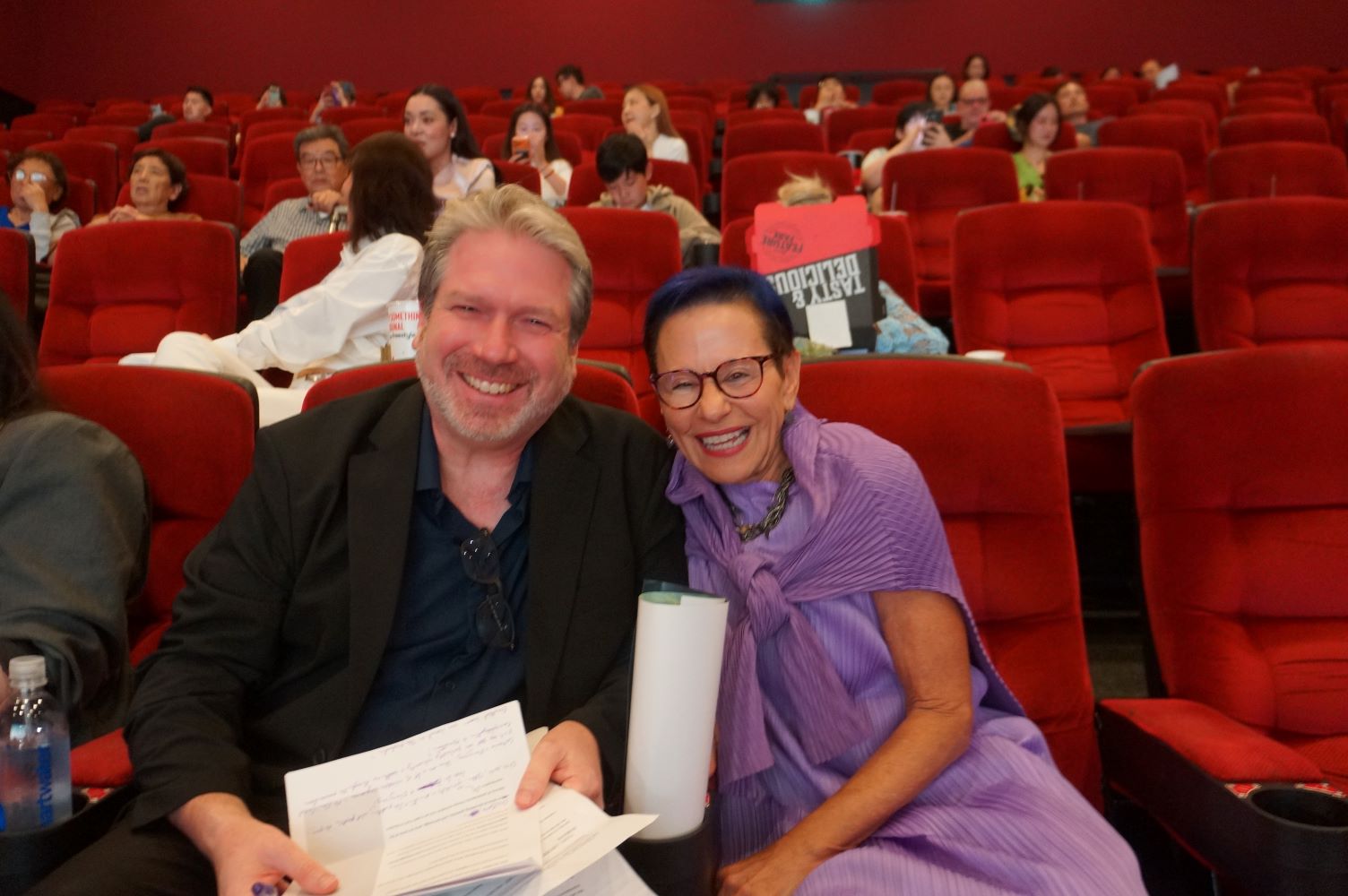
Michael Berry (白睿文) and Ellen Eliasoph (艾秋兴)(Photo by: Richard Ren/LAPost)
Berry also focused on one of the film’s central creative challenges: how to make eight principal characters distinctive enough that audiences can remember them after a nearly two-and-a-half-hour film.
Mou said the filmmakers began with the personalities already embedded in traditional depictions of the Eight Immortals. Their enduring popularity, he noted, comes partly from the fact that the eight figures come from different backgrounds and possess sharply contrasting personalities.
The filmmakers nevertheless had to find ways to make those distinctions work within the structure of a modern animated feature.
From a storytelling perspective, the film places particular emphasis on Zhongli Quan, Lü Dongbin and He Xiangu, who carry much of the film’s central thematic message — the transmission of kindness and the question of what it means to do what is right.
Mou described the relationship between the main and supporting characters as less a competition than “a flame and a mirror.”
The production team also differentiated the characters visually, giving each a distinctive silhouette and outline. Drawing on the traditional Chinese “five-color” aesthetic, the filmmakers assigned different color palettes to the characters so that audiences could distinguish them visually.
The voice cast was similarly chosen for contrast, with eight performers whose vocal qualities differ significantly.
“We have always believed that every character should be unique,” Mou said. The goal, he added, is for audiences around the world — not only in China — to remember who each of the eight characters is.
Building a Film Around Storyboards
The film’s scale and complex narrative also required an unusually intensive development process.
Asked how the production moved from script to finished animation, Mou said the team followed a mature animation-production workflow involving three major rounds of storyboard revisions.
Because he served as both writer and director, he said, the creative process could move relatively quickly from script development to visual execution.
But storyboards became particularly important because of his focus on pacing.
“I was very focused on one thing in this film: rhythm,” Mou said.
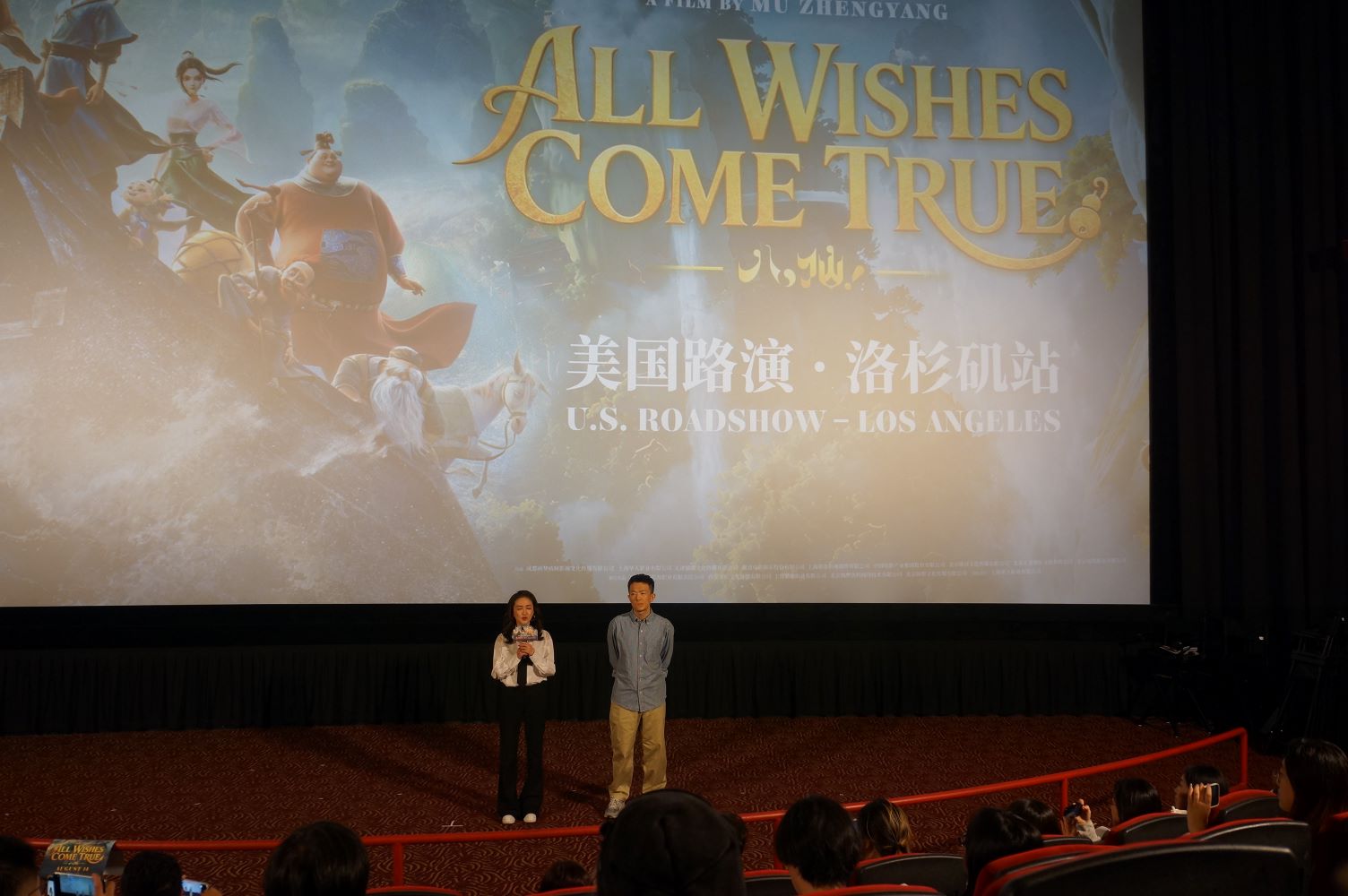
Screenwriter and director Mou Zhengyang and executive producer Ying Xujun(Photo by: Richard Ren/LAPost)
The filmmakers began establishing the film’s overall rhythm and approximate shot count during the earliest storyboard stages. After three rounds of revisions, they settled on the structure that would guide the production team through the final stages.
For an animated feature, much of what audiences ultimately experience — the pacing, visual rhythm and emotional transitions — is determined long before the final animation is rendered.
What Happens When Chinese Immortals Meet Western Superheroes?
During the audience Q&A, one young viewer offered perhaps the most distinctly Los Angeles question of the evening.
The child said he had grown up in the United States and was familiar with Western mythology and superhero movies. After seeing a story about Chinese immortals, he wondered what would happen if the Eight Immortals entered the same universe as Western gods and superheroes.
Mou admitted that he had not previously considered exactly what such an encounter would look like.
But he told the young viewer that growing up between Chinese and American cultural traditions could make him uniquely suited to tell that story one day.
He encouraged the child to become a filmmaker himself and make a movie about Chinese immortals meeting Western heroes.
Another audience member asked whether the filmmakers might eventually develop a Chinese mythology universe similar to Marvel or DC, with individual films introducing different legendary figures before bringing them together.
Mou’s answer was brief and unequivocal:
“Yes. Yes.”
Bringing Traditional Chinese Aesthetics Into Animation
Another audience question focused on the film’s visual language and whether traditional Chinese painting and artistic techniques influenced its design.
Mou said traditional Chinese art played an important role, particularly in the creation of the film’s depiction of Penglai, the legendary island paradise associated with immortals.
The filmmakers spent considerable time asking what Penglai should look like — its colors, textures and sense of space.
They eventually drew heavily from the tradition of blue-and-green landscape painting, using its approach to atmospheric perspective and spatial depth to construct the animated world.
The team also studied traditional artworks associated with the Palace Museum in Beijing, seeking to capture some of the ornate, luminous and fantastical qualities of classical Chinese art.
The result was intended to make Penglai more than a fantasy backdrop. It became one of the film’s principal visual bridges between traditional Chinese aesthetics and contemporary animation.
“Believe in Your Story and Your Culture”
At the end of the discussion, Berry asked Ying what she considered the most meaningful lesson from completing the film.
Ying said she felt fortunate to have worked on the project at a time when Chinese animation is undergoing rapid development.
Advances in technology, she said, have given Chinese filmmakers new tools to reinterpret traditional mythology and bring those stories back to contemporary audiences in ways that are more accessible.
She also pointed to the emergence of a younger generation of Chinese filmmakers.
“They are courageous, confident and talented,” Ying said. “They believe in their stories, they believe in their culture, and they believe in their work.”
That confidence, she suggested, is essential if Chinese stories are to reach audiences beyond China.
For Ying, the experience also offered an opportunity to reconsider her own relationship with Chinese culture.
She described the film as deeply rooted in its cultural origins while also possessing the ambition to reach an international audience.
A Conversation That Extends Beyond the Film
The Los Angeles roadshow was also notable for the diversity of its audience.
Los Angeles-based Chinese film critic and Chinese American Experts Film Viewing Group organizer Richard Ren said on social media that bringing the filmmakers personally to Los Angeles represented more than a promotional stop.
For a Chinese animated film, he said, meeting North American audiences and members of the local film industry in person is also a sign of respect for the audience and for Los Angeles as a center of the global film business.
The journey from a Chinese myth to a North American theater is ultimately not only a question of distribution. It is a question of whether a story born from one cultural tradition can create enough curiosity, emotion and imagination to belong to audiences somewhere else.
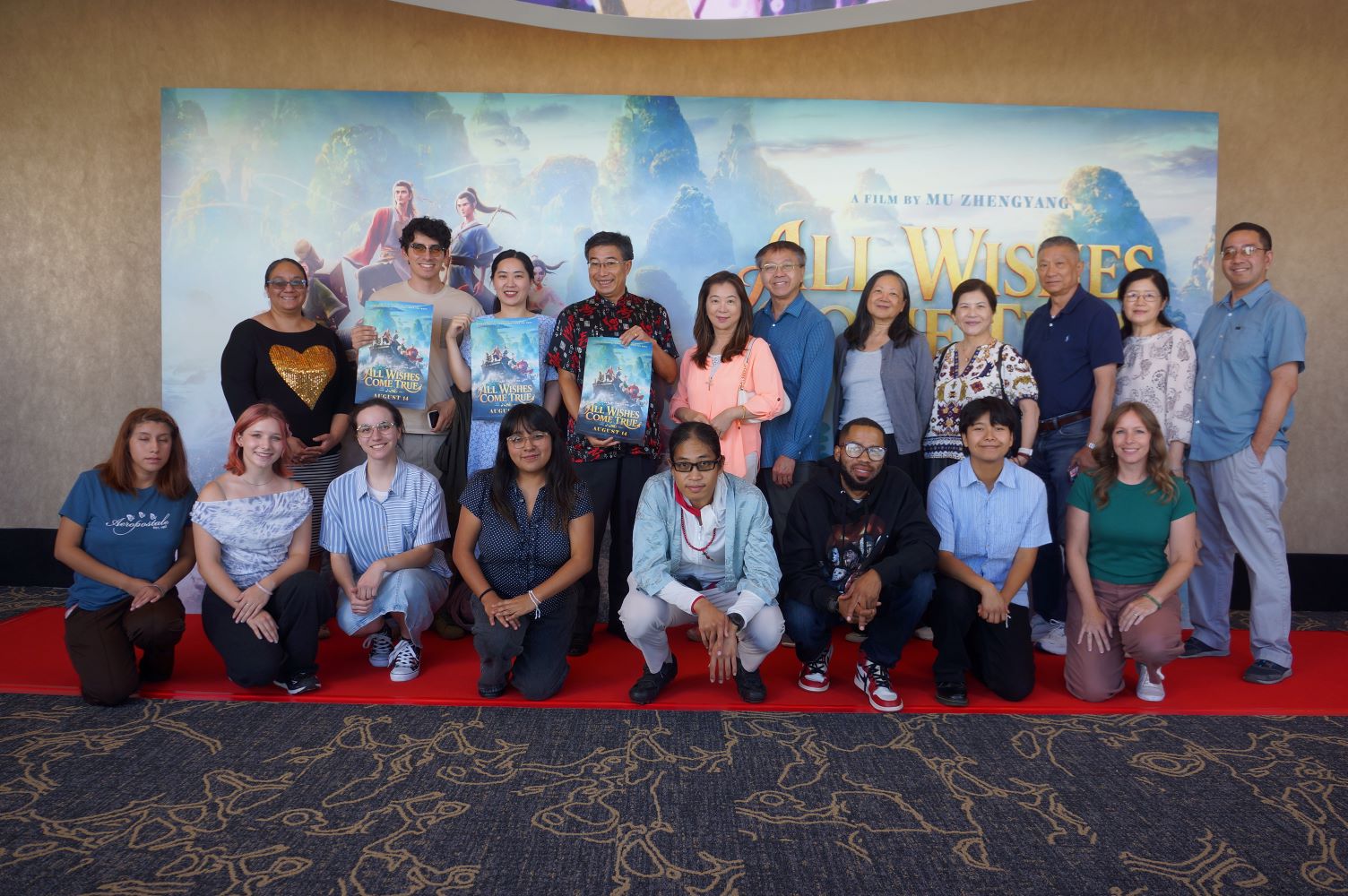
Robert Liu (刘荣文), a Chinese-language professor at East Los Angeles College, and his students (Photo by: Richard Ren/LAPost)
Robert Liu (刘荣文), a Chinese-language professor at East Los Angeles College, brought nearly 20 students to the screening, many of whom have grown up in the United States and encounter Chinese culture through both American and Chinese cultural frameworks.
For them, “The Eight Immortals!” was not simply an animated adaptation of a familiar Chinese legend. It offered a chance to see how a traditional story might be translated into a contemporary cinematic language.
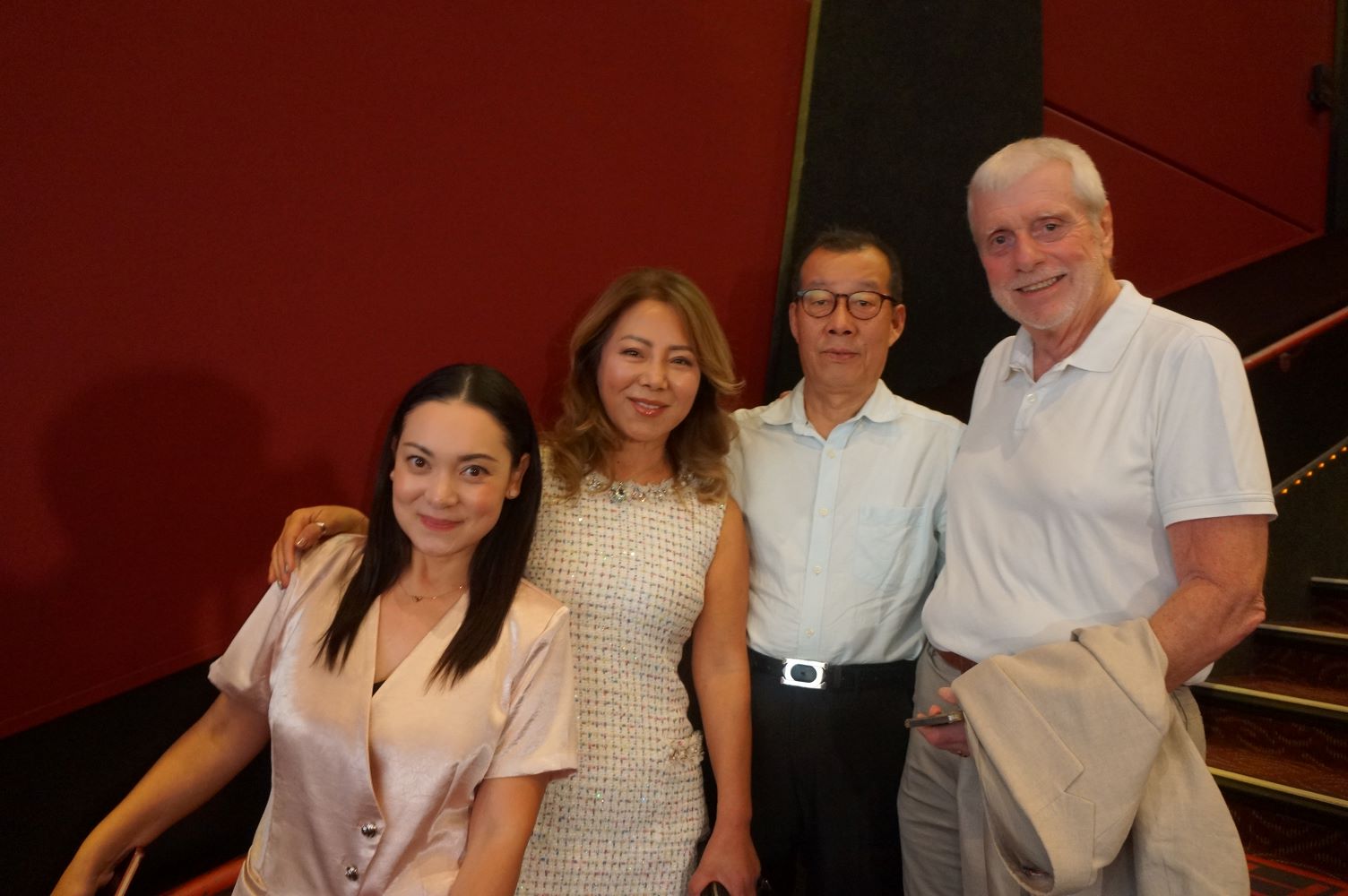
From Left:Yang Yang、Kathy Hao、Taiyu Wang、Andre E. Morgan(Photo by: Richard Ren/LAPost)
Kathy Hao (郝琦) and Andre E. Morgan (麦礼安) were also among those connected with the Los Angeles event and its broader cultural and film-industry exchange.
On Sept. 5, in a city where Hollywood has spent more than a century turning stories from around the world into movies, “The Eight Immortals!” offered its own answer — not through a declaration, but through a conversation.
And Ying left the audience with a message that reached beyond animation and mythology:
“Follow your heart. Do what is right. Be a kind person.”
Even when the reward is not immediately visible, she said, filmmakers should not hesitate to believe in what they are doing — and to believe that kindness will eventually find its way back into their lives.