When AI Enters Hollywood, the Hardest Part May Be Knowing What to Create
LAPost/Los Angeles, CA (September 12, 2026) — How will artificial intelligence change filmmaking? Will future directors still need traditional cameras? And as more people gain the ability to generate visual content with AI, what skills will become truly scarce for creators?
Those questions were at the center of “AI MODELS X HOLLYWOOD FILMMAKING,” held Sept. 12 at the City Club in Los Angeles. Rather than offering simple answers, the event brought Hollywood filmmaking, AI video generation and the rapidly growing creator economy into the same room, giving filmmakers, AI entrepreneurs and emerging creators an opportunity to discuss a transformation already underway:
AI is lowering the barriers to content production, but it is also redefining what is worth producing in the first place.
The event was organized by AI platform Alibaba Cloud, Retina Imageworks and WAN3.0 Creator Lab. More than a straightforward showcase of AI tools, the gathering functioned as a live experiment in what the future of the content industry might look like.
AI Is Making Creation More Accessible — But Not Everyone Becomes a Creator
One clear idea emerged from the discussions: AI is rapidly democratizing production capabilities, but knowing how to make something and having something meaningful to express remain two different things.
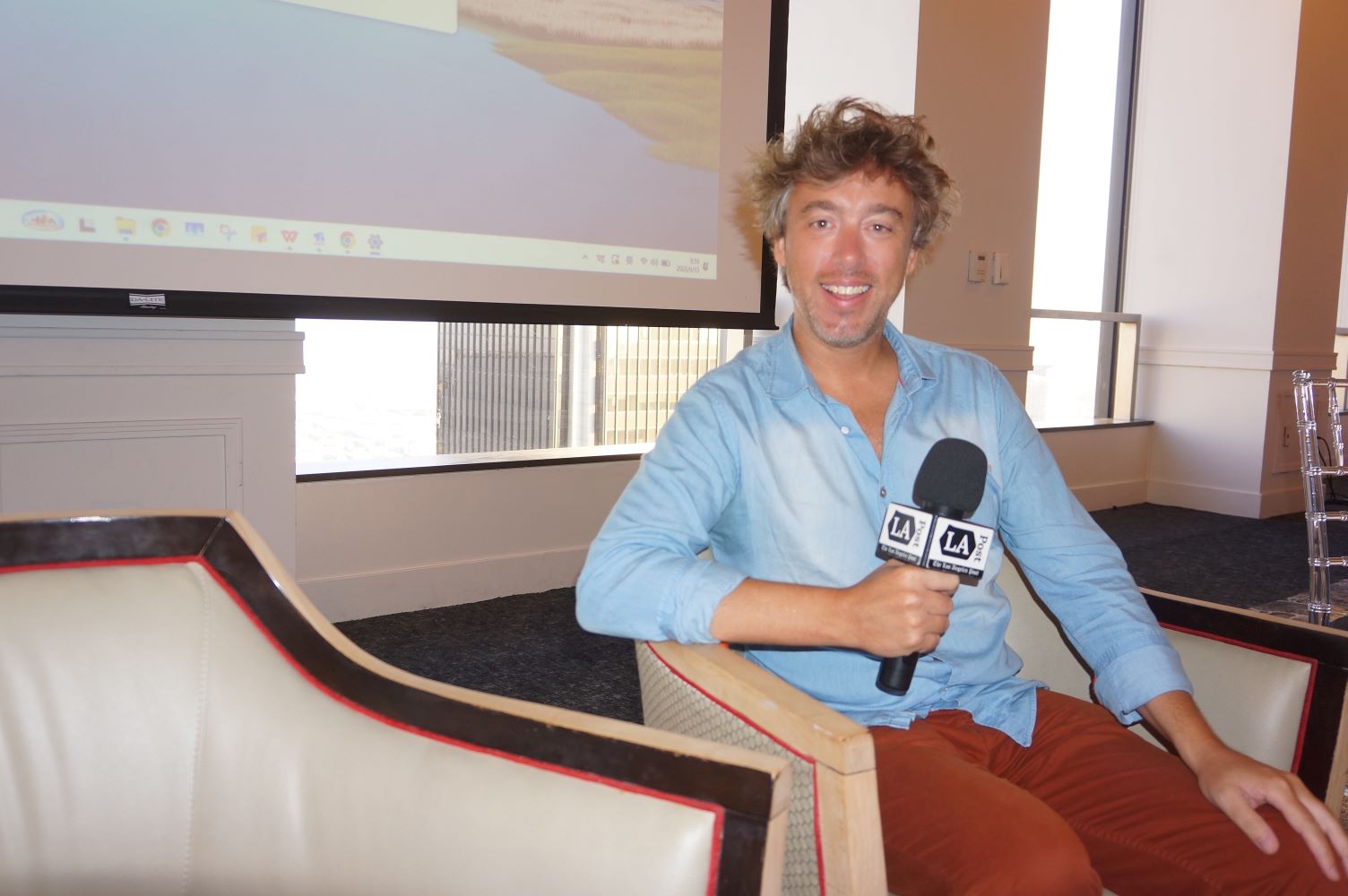
Jonny Zeller (Photo by: Richard Ren/LAPost)
Director, Storyverse Architect and World Builder Jonny Zeller compared the transformation to the invention of the pencil in an interview with LAPost.
A pencil allowed more people to write, he said, but it did not turn everyone into a great writer. AI works in much the same way. It can make ideas that were previously impossible to realize because of budget constraints more achievable, but it does not automatically make someone a better director or creator.
That is one of the paradoxes of the AI era.
For decades, one of the biggest barriers to filmmaking has been cost. Cameras, lighting, actors, locations, post-production and large crews all contributed to the high threshold for entering the industry. AI is rapidly reducing some of those costs.
But as “making something” becomes easier, why it should be made becomes more important.
Zeller offered a practical suggestion for young creators: Instead of simply producing speculative demo reels with no real-world purpose, they could start with small businesses in their communities and create content that a friend or family member could actually use.
The value is not simply in practicing a technical skill. It is also in gaining a real client, a real brand case study and a tangible piece of work that can become part of a professional portfolio.
In the AI era, the value of a piece of content may increasingly depend less on whether it can be made and more on whether it solves a real problem.
From “Tool” to “Medium”: A Different Kind of Creative Revolution
While traditional filmmakers tend to focus primarily on the creative process, AI entrepreneurs see another transformation taking shape: the emergence of an entirely new content ecosystem.
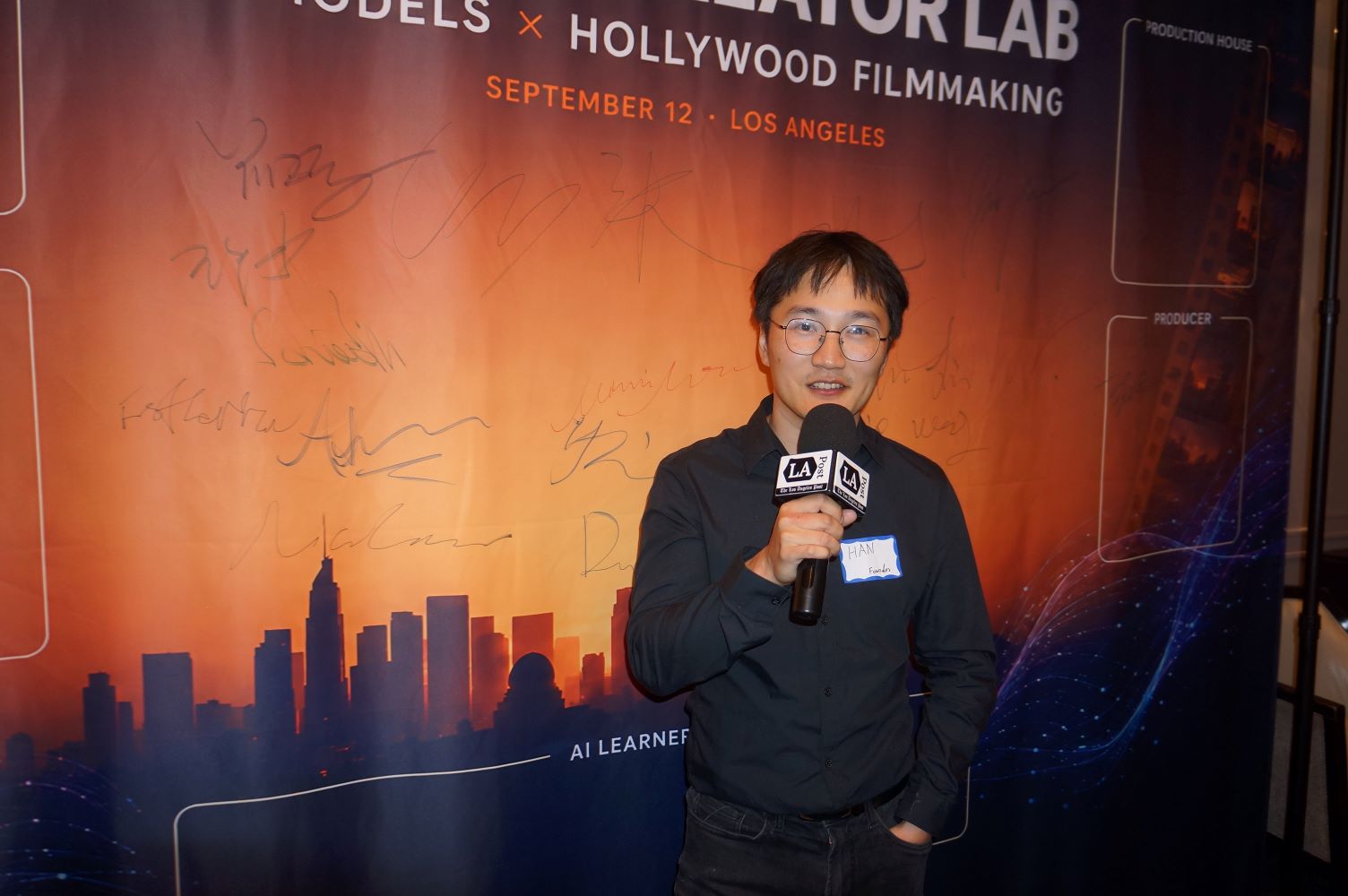
HANS (Photo by: Richard Ren/LAPost)
Event host Hans told LAPost that AI creators currently “have no good way to monetize AI content.” He said there is a need for a creator platform where AI creators can have their own channels and build revenue models around their content.
That idea reflects a broader shift in the media landscape.
Over the past decade, social platforms gave ordinary people something they had never previously possessed at scale: their own “channel.” From YouTube and TikTok to Xiaohongshu, individuals can communicate directly with audiences without relying entirely on traditional media or the distribution systems of the film and television industry.
Hans sees the AI era as potentially triggering a similar restructuring.
If the previous stage was about everyone having their own channel, the next stage could be about everyone having their own AI-powered content production system.
More importantly, Hans does not view AI simply as a “tool.”
He sees it increasingly as a new medium.
The traditional “tool” model assumes that the creator is responsible for the creative work while AI functions like a hammer or screwdriver, helping execute the idea. But as AI capabilities continue to improve, more of the actual creative process may also be handled by AI.
So what remains for humans?
Hans’ answer: the steering wheel.
Creators will still need to decide where a project should go. But the most important skills may no longer be the ability to personally execute every step. Instead, they may involve knowing what is worth making, what looks good, what audiences want and how to create something that stands apart.
In other words, AI may be shifting the core of “creative ability” from execution toward vision.
“90% of Creativity Will Be Replaced”? What Happens to the Remaining 10%?
The discussion also addressed a sharper question: If AI eventually takes over more and more creative work once performed by humans, could human creativity itself be replaced?
Speakers offered varying degrees of optimism and concern. One particularly notable idea was that the future may not eliminate creativity altogether. Instead, vast amounts of similar and interchangeable content could be produced and quickly disappear, while a smaller number of highly distinctive ideas become more visible.
One speaker suggested that the AI era could produce a situation in which 90% of creativity is replaced while the remaining 10% truly shines.
That does not necessarily mean only a small group of people will be able to create. Quite the opposite.
Once everyone can create, what becomes scarce is personal experience.
A unique life story, a family experience no one else has lived, a distinctive aesthetic, a particular cultural background or even an unconventional personal interest may become precisely the elements that AI cannot simply invent on someone’s behalf.
AI can quickly generate “a cool story,” but it may not know why that story needs to be told by you.
That may be one reason personal brands could become even more important as generative AI becomes increasingly widespread.
The Real Competition in AI Video Is Not Simply Who Can Generate the Most Realistic Image
Another speaker, Archie Prakash, works as a virtual vertical-drama producer creating micro-dramas primarily for platforms such as TikTok and YouTube. One of the topics he explored was “brain rot” culture and how this distinctive form of internet content is influencing the distribution and reception of AI-generated video.
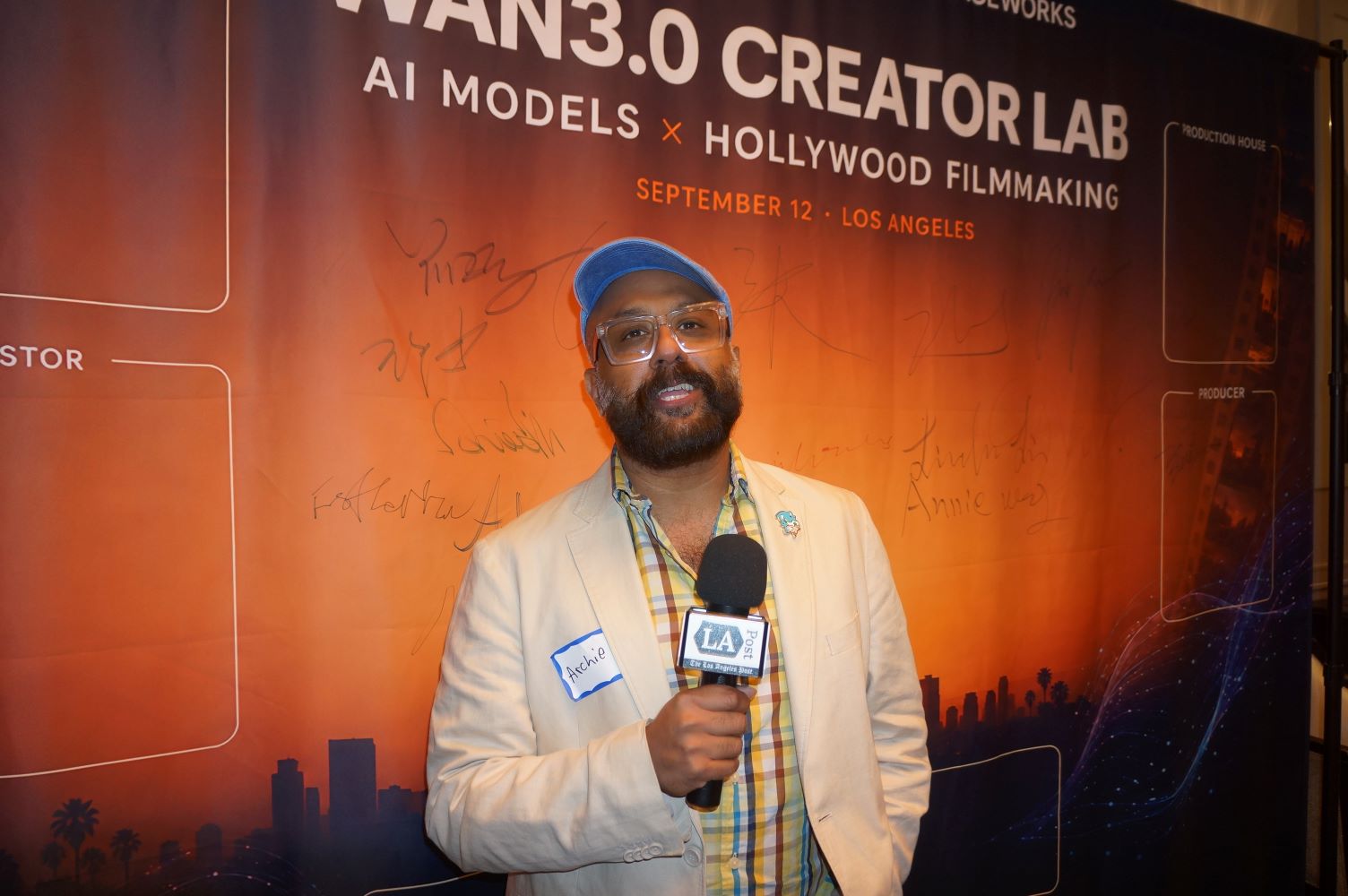
Archie Prakash(Photo by: Richard Ren/LAPost)
His perspective points to a practical reality of the emerging AI content industry:
AI is not developing in a vacuum. It is merging with an already highly mature short-form video ecosystem built around TikTok, YouTube Shorts and Instagram Reels.
In traditional filmmaking, projects are often evaluated through story, actors, cinematography, directing and production quality. In the short-video era, another variable has become increasingly important: attention.
What makes viewers stop scrolling? What image can be understood within seconds? What absurd, strange or even seemingly meaningless content can spread rapidly?
AI dramatically lowers the cost of producing such material.
In the past, someone might imagine a visual scene that would be impossible or prohibitively expensive to shoot in the real world. Today, that concept might become a video within minutes.
This suggests that competition in the content industry may gradually shift from who owns the biggest production machine to who understands audiences best.
Monetization May Become a Bigger Problem Than Technology
If AI reduces the cost of producing content while the volume of content grows exponentially, creators’ biggest anxiety could soon shift from “I don’t know how to make this” to:
“Once I make it, who is going to watch it — and who is going to pay for it?”
Platforms, distribution, personal branding and business models are therefore becoming unavoidable parts of the AI creator economy.
Hans also emphasized the importance of offline interaction. The event was designed not only to bring AI creators together but also to allow them to share experiences, lessons and the “pitfalls” they have encountered.
That demand reflects how early the AI content industry remains.
The tools are changing so quickly that a workflow that worked yesterday may already be outdated today. A new model or generation capability can rapidly change how content is produced.
For creators, simply mastering a particular AI tool may therefore become less meaningful over time.
What matters more may be the ability to learn quickly, exercise aesthetic judgment and adapt.
What Hollywood May Really Need Is Not “AI Films”
Notably, the event did not simply frame the future as AI replacing Hollywood.
Instead, drawing on experiences from filmmaking and practical applications in advertising, a more realistic direction is emerging: hybrid production.
At a time when audiences remain cautious about fully AI-generated content, combining live actors, real-world photography, traditional cinematic language and AI-generated technology could become a more accessible transition for the market.
That may help explain why Hollywood’s relationship with AI is so complicated.
For producers, AI can mean lower production costs, faster visualization and more visual possibilities that were previously difficult or impossible to achieve. For creators, it can mean greater expressive freedom.
But audiences still care about one very traditional question:
Is the story good?
One audience member noted that viewers sometimes react negatively in the comments as soon as they realize a video was clearly made using AI.
That reaction suggests that technological acceptance will ultimately be determined by audiences.
AI can change how content is made. It cannot force audiences to embrace a new aesthetic.
For creators who want to enter the commercial market, therefore, “Can it be generated?” may be only the first question.
“Will people want to watch it?” may be the more important one.
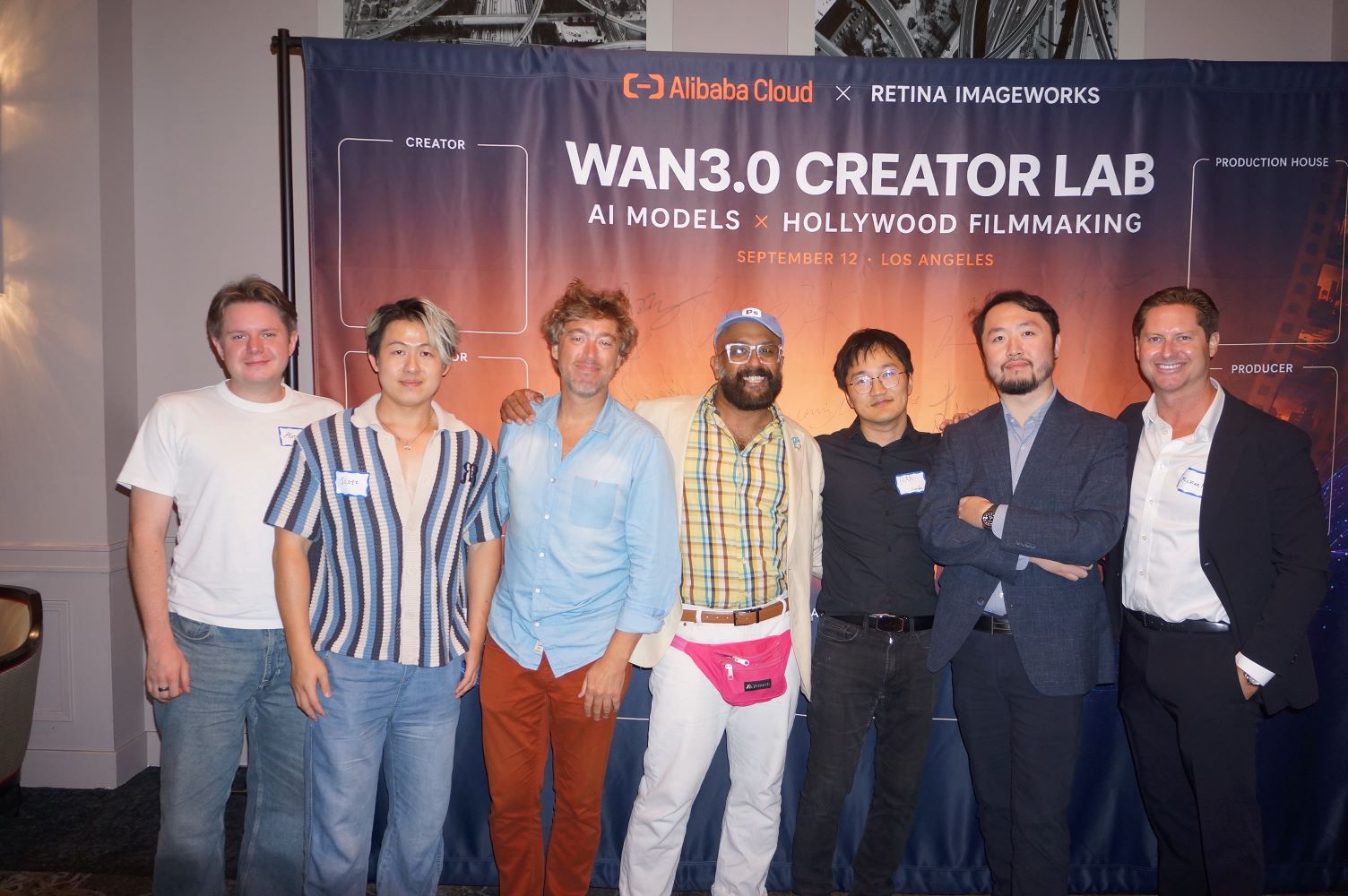
(Photo by: Richard Ren/LAPost)
What Should AI Actually Do for Humans?
If the event left participants with one broadly shared question, it was this:
What should AI actually do for humans?
Some creators said they would like AI to handle repetitive, mechanical and time-consuming tasks that offer little creative satisfaction — such as organizing information, processing emails, repetitive aspects of character modeling and retopology.
What they want to preserve is the creative work itself.
The idea may sound traditional, but it reveals one of the deepest tensions of the AI revolution:
Humans have spent decades developing technology to reduce the amount of work they have to do. Yet when technology enters the creative field, people may discover that the work they are least willing to give up is precisely the part that feels most creative.
The more meaningful question in the AI era may therefore not be whether AI will replace directors, but how much work future directors will delegate to AI — and what they will choose to spend their own time doing.
A New Creator Class Taking Shape
The formal forum did not immediately bring the evening to an end.
Over Wagyu beef, lobster, champagne and wine, people from filmmaking, advertising, AI and content entrepreneurship continued their conversations.
In some ways, this networking portion was as important as the discussions onstage.
In a rapidly changing industry, knowledge does not come only from presentations. It also comes from connections between people.
A young creator might meet a director. An AI entrepreneur might find a potential collaborator. Someone building a personal brand might gain a clearer understanding of the relationship between AI avatars, AI video and content monetization.
That made the Sept. 12 gathering more than a technology presentation.
It offered a glimpse of an ecosystem taking shape at the intersection of Hollywood’s traditional production capabilities, generative AI’s technological capabilities, short-form platforms’ distribution power, and the business potential of personal brands and the creator economy.
Future filmmakers may still need to understand story, cinematography, performance and audiences. But they may also need to understand models, platforms and personal branding — and perhaps even how to operate their own digital content channels.
For young people entering the industry, the biggest change may not simply be that AI has lowered the barriers to entry.
It is what happens after those barriers come down.
When everyone can enter the arena, what determines who stays is what you can see, what you have to say, and whether you can turn your ideas into content that people want to watch, share and ultimately pay for.
By Richard Ren/LAPost