Daniel Hu on the Hardest Deal a Business Owner Will Ever Face: How to Value, Transition and Exit a Company Gracefully
LAPost/Los Angeles, CA (September 20, 2026) — A company that has been built over two or three decades can be difficult to sell for reasons that have little to do with its machinery, office, customer list or bank account.
What is often hardest to let go of is the owner himself.
Business owners may have spent half their lives building their companies. Employees have become longtime partners, customers have become decades-old relationships, and nearly every process, decision — even every dollar of revenue — may be closely tied to the owner.
So when retirement finally approaches, a seemingly simple question can become surprisingly complicated:
What happens to the company when the owner is no longer running it?
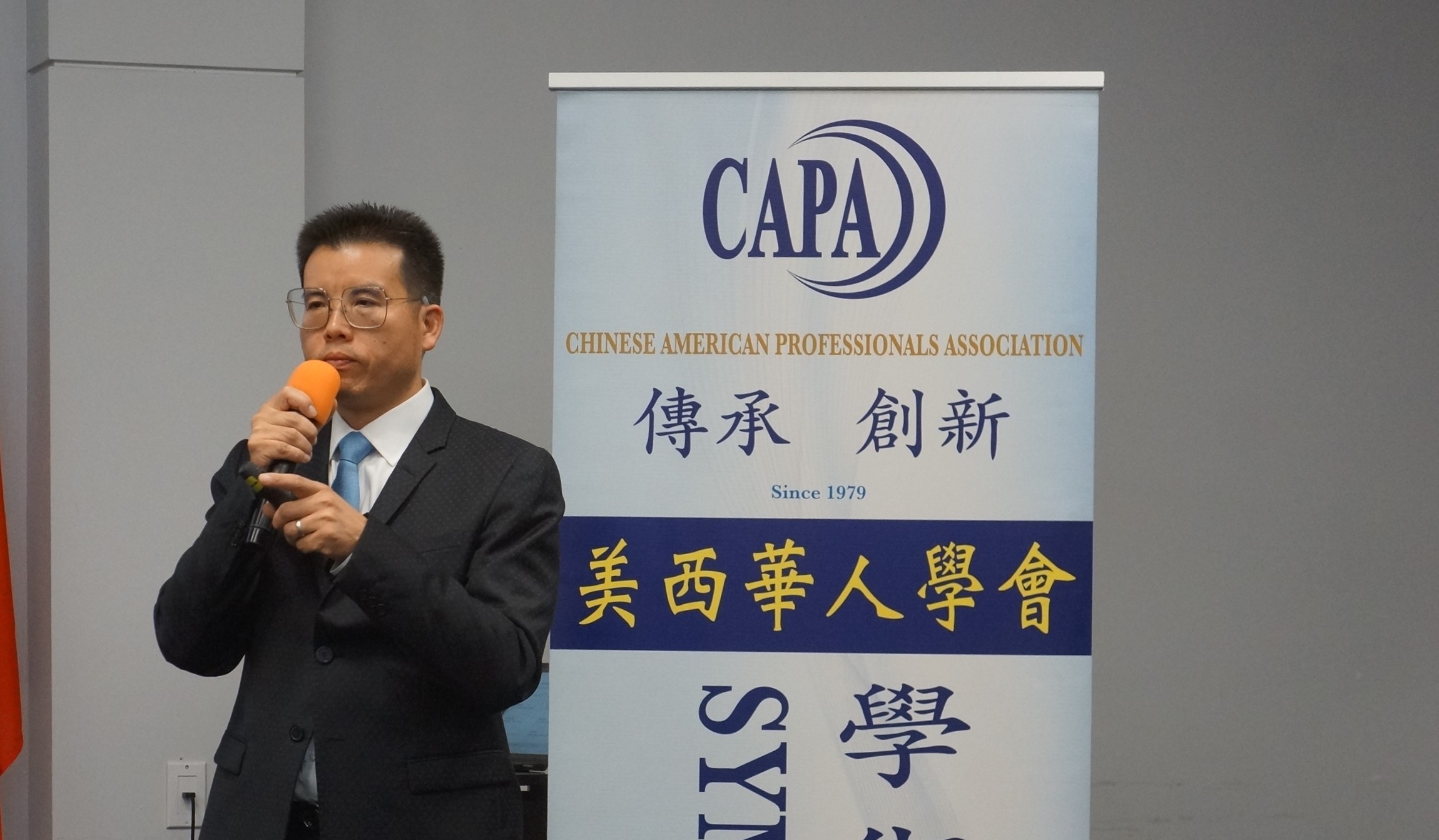
Daniel Hu (Photo by: Richard Ren/LAPost)
On the afternoon of Sept. 20, business M&A and exit adviser Daniel Hu brought that question to the forefront during a financial seminar at the Los Angeles Chinese Cultural Center.
Organized by the Chinese-American Professionals Association, the seminar was titled “How Can a Business You Worked a Lifetime to Build Make a Graceful Exit?”
Hu holds an MBA from USC Marshall School of Business and is a Certified Exit Planning Advisor (CEPA). He is also the founder of Crestory Capital, a firm focused on business valuation, buying and selling companies, mergers and acquisitions, and exit planning.
In Hu’s view, selling a business is never simply a matter of “finding a buyer.”
It is also a process in which a business owner renegotiates his or her relationship with a company that may have defined decades of life.
The Hardest Part Is Not Valuation — It Is Letting Go of Control
“I think the hardest part is letting go of the sense of control and dealing with the uncertainty after the exit,” Hu said in an interview with LAPost when asked about the most common psychological obstacle he sees among business owners.
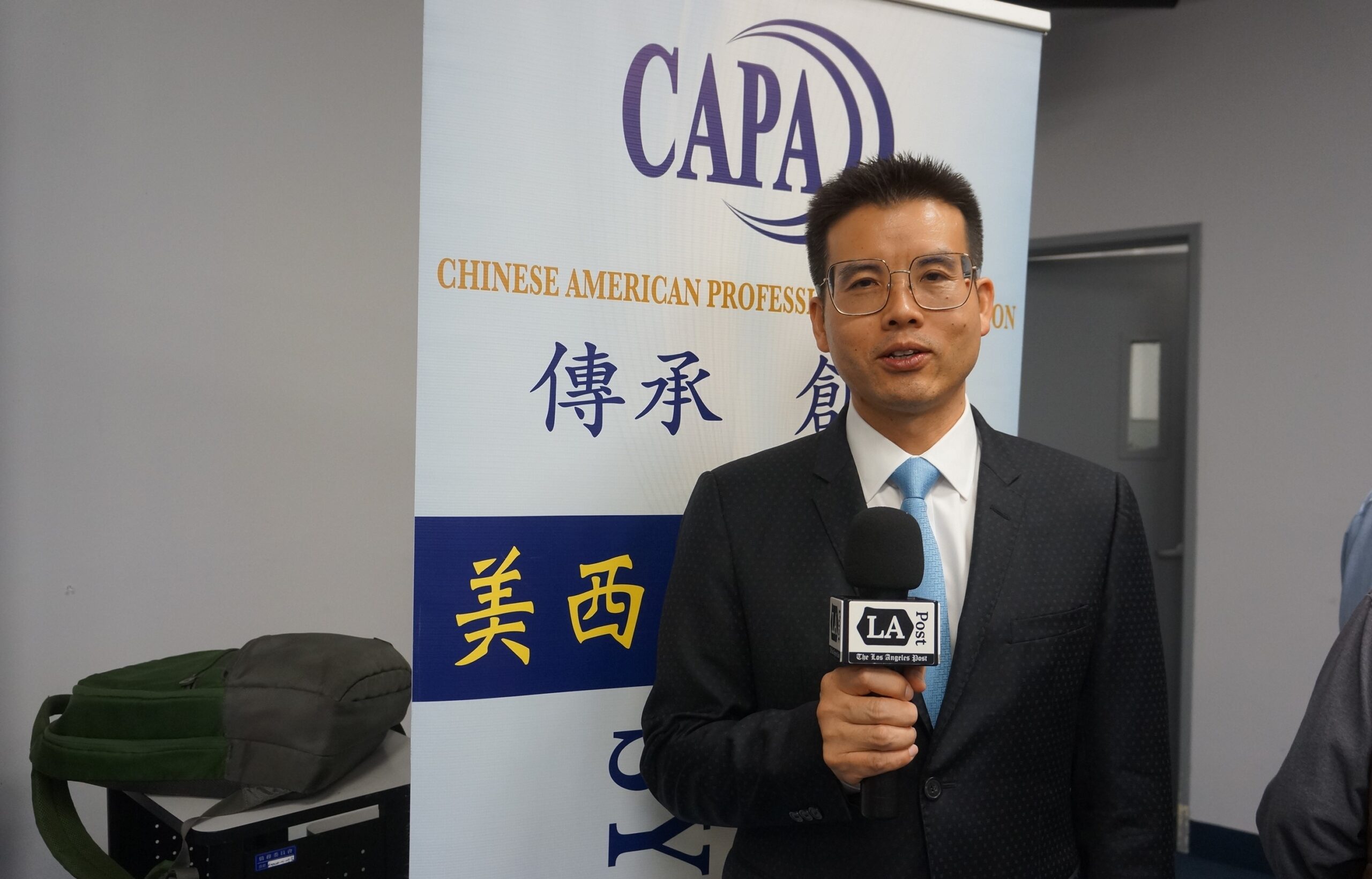
Daniel Hu (Photo by: Richard Ren/LAPost)
After 20 or 30 years, a company can become part of an owner’s identity. Even when someone is willing to make an offer, owners may still ask themselves: Will the buyer be able to run the company successfully? What will happen to the employees? Will customers stay? And will the proceeds from the sale be enough to support retirement?
There is another question that is often overlooked: Do the children actually want to take over?
In the United States, second- and third-generation family members do not necessarily want to inherit their parents’ businesses. Hu said some of the business owners he works with have children who would rather build their own careers and businesses than join a company their parents have operated for decades.
That means the seemingly natural answer — passing the business to the next generation — is not always available.
That is why Hu recommends that business owners begin thinking about an exit well before retirement.
A serious exit plan should ideally begin two to three years in advance.
Owners should first determine how much money they will need after retirement, when they want to step away and whether they still want to remain involved in the business. They can then work backward to prepare the company itself.
What a Company Is Worth Depends on What the Buyer Sees After Taking Over
If the owner’s main question is, “After all these years, how much is my company worth?” the buyer is looking at a different question:
“Will this business continue to make money after I take over?”
For Hu, that is at the heart of business valuation.
Stable revenue and gross margins, verifiable earnings, sustainable cash flow, diversified customers, a mature management team, clear financial records and realistic opportunities for growth all influence a buyer’s assessment.
The opposite is also true.
A company that depends heavily on the owner, or derives most of its revenue from one or two customers, carries greater risk.
Messy books can create similar problems.
Hu particularly cautioned business owners who routinely put personal expenses through their companies as part of their efforts to reduce taxable income. That practice can have unintended consequences when the business eventually goes on the market.
“Many business owners want their income to be as low as possible when they file their taxes,” he said.
But the situation is completely different when it is time to sell.
Buyers and lenders want to see earnings that can be verified. If tax returns show very little profit and the owner’s claimed “actual income” is not supported by complete records, those earnings may not be fully recognized by either the buyer or the bank.
Tax savings achieved during the operating years can potentially become a reduction in business value at the time of sale.
Hu therefore recommends keeping personal and business finances separate, maintaining complete bank, income and expense records, and ensuring that actual earnings are reasonably reflected in the company’s financial and tax documentation.
A $4.8 Million Listing Drew Nearly 200 Inquiries in 10 Days
During the seminar, Hu shared a recent example.
An aerospace-related machining company had been in business for more than 20 years. It had only about seven employees but generated roughly $1 million in annual profit. Crestory Capital listed the company for $4.8 million.
Within about 10 days, nearly 200 prospective buyers had made inquiries.
The response illustrates a factor that is sometimes overlooked in the U.S. small-business transaction market: There can be significant buyer interest in companies with stable cash flow and solid operating fundamentals.
But having money does not automatically qualify someone to buy a business.
Because the company operated in the highly specialized aerospace sector, Hu’s team required prospective buyers to have relevant industry experience and undergo a review of their financial capacity.
In Hu’s view, buyers are ultimately paying for a system that can continue to operate and generate earnings in the future.
They examine tax returns, financial statements, bank records and cash flow. They want to know who will manage the company after the owner leaves. They also assess whether there is room for future growth.
Some professional investment groups may acquire companies, expand them and eventually seek a return through another transaction.
A company’s value, therefore, is not found only in today’s profit figure. It also lies in what a buyer believes the company can generate in the future.
SDE: Recalculating How Much the Owner Really Earns
For small-business valuation, Hu devoted considerable attention to SDE — Seller’s Discretionary Earnings.
In simple terms, a company’s reported net income does not necessarily represent the full economic benefit available to its owner. Where appropriate and supportable, certain expenses — such as owner compensation, interest, depreciation and amortization, certain retirement expenses and one-time costs — may be analyzed as add-backs when calculating normalized earnings.
In the teaching example presented at the seminar, a company had approximately $600,000 in reported net income. After adjustments for qualifying items, its SDE could reach roughly $1 million.
Hu used a 3x SDE multiple as a teaching-market assumption. Under that example, the business could have a base valuation of approximately $3 million, with inventory and other transaction-specific items potentially calculated separately depending on the deal structure.
But he emphasized that 3x SDE was only an assumption used for the educational example, not a fixed multiple applicable to every business.
Industry, company size, risk, customer concentration, management depth and growth prospects can all affect an actual valuation.
Just as important, add-backs must be explainable and verifiable.
This becomes particularly important when the buyer needs financing. Banks will not automatically accept every adjustment proposed by a seller.
Why SBA Financing Can Change the Logic of a Deal
Another example in Hu’s presentation helped illustrate how acquisitions work in the U.S. small-business market: A buyer does not necessarily have to bring the entire purchase price in cash.
For example, if a company were purchased for $3 million, a buyer might hypothetically contribute 10%, or approximately $300,000, while financing the remainder through an SBA loan.
Under the teaching model presented by Hu, if the company continues to generate approximately $1 million in operating earnings, it could still produce substantial cash flow after debt service.
That helps explain why some buyers are willing to acquire small businesses that already have stable cash flow.
Hu also cautioned, however, that financing structures depend heavily on the company’s actual financials, lender underwriting, and the loan policies and conditions in effect at the time. The example should not be interpreted to mean that every business would qualify for financing on the same terms.
For sellers, the key is to make sure the company’s earnings can withstand lender scrutiny.
To sell a business successfully, the first step is to make other people believe that the business truly makes money.
Sell to the Children, Turn It Over to Professional Management or Sell to an Outside Buyer?
Once an owner decides to leave, an even more complicated question follows: Who should take over the business?
Hu outlined several common paths.
The first is family succession. If the next generation genuinely wants to take over and has the ability to operate the business, succession can preserve the company’s culture and continuity.
But succession is not as simple as transferring shares to a child. The next generation may need training, authority and performance evaluation. Families may also need to address ownership, fairness among family members and retirement funding for the parents.
The second option is to bring in a professional management team.
If the children do not want to take over, the owner may retain some equity while allowing professional managers to operate the company, enabling the business to continue generating profits.
The third is an outright sale to an outside buyer.
That is a common exit route in the U.S. small-business market, allowing the owner to convert the business into financial assets while a new operator takes over.
There can also be a gradual exit: The owner transfers management responsibilities to a team over time, reduces day-to-day involvement and eventually decides whether to sell the remaining ownership stake.
“The most appropriate path should take into account the continuity of the business, the needs of the family and the owner’s next stage of life,” Hu said.
The Biggest Risk in a Sale May Be That When the Owner Leaves, the Business Leaves With Him
In Hu’s view, what needs to change before a sale is not necessarily the company’s sign, but the way the company operates.
If every customer knows only the owner, every major decision requires the owner’s approval, and all key relationships exist primarily through the owner, a buyer may worry that revenue will decline as soon as the owner walks away.
Hu therefore recommends building a management team, developing standard operating procedures, giving employees greater authority and using tools such as CRM systems to manage customer relationships.
Reducing customer concentration is equally important.
If most of a company’s revenue comes from one or two customers, the loss of a major account could directly affect the company’s value.
Owners should therefore gradually broaden their customer base before a sale, reducing the company’s dependence on a single customer or on the owner’s personal relationships.
In a sense, this is also about “de-ownerizing” the business — making the company less dependent on the person who built it.
A Business Transaction Requires More Than a Broker
Hu founded Crestory Capital, which focuses on mergers and acquisitions, business sales, valuation and transaction advisory services, helping business owners and prospective buyers navigate transactions and related advisory work.
Its services include M&A and business-sale brokerage, cash-flow and business-value assessment, marketing and negotiation coordination, as well as investment-target screening and risk management.
Hu describes business transactions as somewhat similar to real estate transactions, but considerably more complicated.
From the initial consultation and NDA to financial analysis, valuation, confidential marketing, buyer screening, letters of intent, due diligence, definitive agreements, escrow closing and post-closing training and transition, a transaction can take several months.
During that process, business owners may need to work with CPAs, tax advisers, attorneys, lenders and escrow professionals.
The business broker or M&A adviser helps connect these different pieces.
“Confidentiality” May Be the Two Most Important Words in Selling a Business
When a house is listed for sale, sellers generally want as many people as possible to see the property.
Selling a business is almost the opposite.
If employees learn that the owner is trying to sell, they may become anxious. Customers may worry about disruptions in service. Suppliers may reassess their relationships.
That is why Hu emphasizes confidentiality when Crestory Capital takes a business to market.
Prospective buyers generally first sign an NDA, then provide proof of funds or loan preapproval and, depending on the nature of the business, demonstrate relevant industry experience. Only after screening do they move gradually into due diligence.
Even during due diligence, the seller does not necessarily hand over every trade secret immediately.
Hu recalled a situation in which a prospective buyer asked a software company to provide its source code before the transaction had been completed.
“We represent the seller, and we also need to protect the seller’s interests,” Hu said.
Until a deal actually closes, the buyer and seller are balancing competing needs: The buyer needs enough information to determine whether the business is worth purchasing, while the seller must make sure its trade secrets do not become exposed through a transaction that may never be completed.
Closing the Deal Does Not Mean the Owner Can Disappear the Next Day
After a business is sold, the transition may still involve assets, employees, customers and management responsibilities.
In some transactions, the former owner is required to remain for a period of time to train the buyer. Licenses, leases, government contracts and other specialized qualifications can also affect the structure of a transaction.
Hu explained that common transaction structures include an Asset Purchase Agreement (APA) and a Stock Purchase Agreement (SPA). Which structure is appropriate depends on the circumstances of the particular business.
For companies with specialized licenses or government contracts, the transaction structure can directly affect whether the business can continue operating smoothly.
In that sense, the real end of a business transaction is not necessarily the day the documents are signed.
It is when the buyer can take over, employees can adjust, customers remain with the company and the business continues to operate.
Giving Yourself Two or Three Years Also Means Giving Yourself Choices
At the end of the seminar, Hu reduced the complicated process of business exit planning to several straightforward questions:
Are the financial records clear?
Are the earnings real, stable and verifiable?
Is the business overly dependent on the owner?
Is the customer base too concentrated?
Does the next generation genuinely want to take over?
If the owner walked away today, could the company continue operating on its own?
These questions may appear unrelated to valuation, but ultimately they can all affect valuation.
And the earlier an owner begins answering them, the less likely the owner will be forced into a decision when the time comes to sell.
Hu recommends beginning preparations at least one to two years ahead, and ideally two to three years before the intended exit. That gives an owner the opportunity to make decisions while healthy, while the business is operating normally and while market conditions are still manageable — rather than waiting until a family issue, health concern or sudden change in the business environment creates pressure to sell.
For business owners who have spent decades building a company, a “graceful exit” may not simply mean finding the highest offer.
It is more like a carefully planned transition — allowing a company to continue beyond its founder’s control, while finally giving the person who spent a lifetime building it the opportunity to give some of that time back to himself.
By: Richard Ren/LAPost