Bing Xie on Opportunities and Challenges for Chinese Professionals: From “High IQ” to Greater Influence
LAPost/City of Industry, CA (September 26, 2026) — By: Richard Ren/LAPost
Chinese professionals in the U.S. are not short on talent, technical expertise or professional knowledge. But turning those strengths into greater influence, building meaningful workplace relationships, and moving from being someone who simply “gets the job done” to someone who can influence organizations and decisions remain important challenges for many Chinese professionals.
On September 26, during the 10th anniversary celebration of the U.S. Alumni Association of Xidian University and the university’s 95th anniversary celebration in the City of Industry, the Distinguished U.S. Alumni Speaker Series and “Frontiers in Artificial Intelligence and Technology Innovation Forum” brought together alumni from across the United States.
Bing Xie, former Senior Vice President and Executive Director of Texas Instruments (TI), and currently a Director and Co-CEO of SILERGY, delivered the keynote address, titled “Opportunities and Challenges for Chinese Professionals in the Workplace.” Drawing on decades of experience in global technology companies and corporate management, Xie discussed the strengths Chinese professionals bring to the American workplace, the impact of cultural differences, and some of the less visible challenges that can affect career advancement.

Bing Xie(Photo by: Richard Ren/LAPost)
As a Xidian alumnus, Xie began his speech with a personal memory from his student days.
He recalled taking Bus No. 6 to Bianjiacun Station while studying at Xidian and jokingly remembered that the first phrase of Shaanxi dialect he learned came from a bus conductor: “关门走,” or “Close the door and go.”
For Xie, however, Xidian gave him much more than technical knowledge. It also instilled a set of values that have continued to influence his career.
He specifically referred to “Hou De,” or “virtue and integrity,” from Xidian’s motto. Over the years, whether working in marketing, sales or corporate management, Xie has managed global teams numbering in the thousands. One principle he has tried to maintain throughout his career, he said, is not to make promises casually—and once he makes a commitment to a customer, to do everything possible to fulfill it.
“Over the years, I found that this very principle helped me build long-term relationships with many customers and teams,” he said.
Xie also recalled advice from one of his professors. The professor once told him that a person might not be able to drink much alcohol, but should always “drink with character.”
To Xie, such seemingly simple lessons represented an important part of a Xidian education: learning not only how to study and solve technical problems, but also how to conduct oneself and work with others.
A Generation of Chinese Americans: Witnessing China’s Rise While Building New Lives in the U.S.
Xie placed his professional experience within a broader generational context.
Many Chinese Americans in the audience, he said, belong to the first generation of immigrants who witnessed China’s transformation since the reform and opening-up era—from a relatively less-developed economy into a major global industrial and technological force.
At the same time, the first generation built new lives in the United States, progressing from education and employment to entrepreneurship and professional careers, and achieving significant accomplishments in technology, business, education and research.
Xie said the strong emphasis Chinese families place on education has been an important factor in that success. Even when first-generation immigrants faced difficult circumstances themselves, many continued to place a high priority on providing educational opportunities for their children.
But while recognizing these achievements, Xie raised a broader question:
Chinese professionals have achieved significant success in education, technology and technical fields. Why, then, do they remain relatively underrepresented in the highest levels of management at major U.S. companies?
He emphasized that this does not mean Chinese professionals are doing poorly. On the contrary, he said, their technical expertise, ability to learn and intellectual capabilities are highly competitive.
But as a professional moves from technical expertise toward management, leadership and organizational decision-making, the criteria for success also change.
“The issue is not that we lack ability,” Xie said. “The question is how we can better turn those abilities into influence in the workplace.”
From Problem-Solving to Judgment, Influence and Leadership
Xie said one of the strengths of Xidian and Chinese engineering education is its emphasis on identifying problems, defining them, analyzing them and finding solutions.
But as professionals move higher within an organization, simply being able to solve problems is no longer enough.
“As you move further up in your career, what you need more of is judgment, influence, and the impact you can create for the organization,” he said.
Technical professionals are often trained to answer questions such as: What is the problem? How can it be solved?
But once they move into management, they also need to understand who is making the decision, who the real stakeholders are, how decisions are made, and how their own ideas can influence the final outcome.
Xie said this is an area where many Chinese professionals can continue to grow.
How “Humility” Can Be Interpreted Differently Across Cultures
Xie devoted significant attention to cultural differences and how they can affect Chinese professionals in the U.S. workplace.
Chinese culture traditionally values humility and respect for seniority and age. These qualities can be positive in their cultural context, he said, but the same behavior may be interpreted differently in an American business environment.
For example, Chinese professionals may be accustomed to remaining modest after achieving something and avoiding openly emphasizing their own contributions.
But in the American workplace, if someone consistently fails to communicate their accomplishments and capabilities, others may simply not recognize their value—or may interpret the behavior as a lack of confidence.
Xie also noted that younger Chinese professionals may become more reserved when senior executives or experienced leaders are present in a meeting. While this can be viewed as respect in some cultural settings, excessive restraint in an American workplace may instead be interpreted as a lack of confidence.
For Chinese professionals, he said, the challenge is not to abandon their cultural strengths, but to understand how those qualities are perceived in different professional environments and learn how to communicate effectively across cultures.
The “6C” Framework: Building a Broader Set of Career Skills

(Photo by: Richard Ren/LAPost)
During his presentation, Xie also shared a framework of workplace capabilities, emphasizing areas including Competence, Confidence, Corporate/Context Awareness, Communication, and Connection/Relationships.
Among them, he placed particular emphasis on Confidence.
Confidence, he explained, is not simply an internal feeling. It is also communicated through posture, eye contact, tone of voice and the way a person presents ideas.
For example, people raised in Chinese-speaking environments may be less accustomed to sustained eye contact during conversations. In an American business environment, however, appropriate eye contact can signal confidence and engagement.
At the same time, Xie stressed that confidence should not be confused with arrogance. It means being able to express one’s views clearly and being willing to step forward when necessary.
Communication: Lead With the Conclusion, Then Explain the Details
When discussing communication, Xie urged Chinese professionals to reconsider how they present information.
He said many Chinese professionals tend to provide extensive background information, details and data before reaching the main conclusion.
In an American corporate environment, however, senior executives often want to know three things first:
What happened? Why does it matter? What do you recommend?
Xie suggested that professionals begin with the key conclusion and then provide additional details based on the audience’s needs and interests.
Communication should also be adapted to different audiences. A technical team may need detailed technical information, while senior executives may be more interested in business impact, cost, risk and strategic implications.
“Don’t make your audience search through a large amount of information to find your conclusion,” he said.
Mentors Matter, but Sponsors Can Be Critical
Xie also made an important distinction between a mentor and a sponsor.
A mentor is typically someone who provides advice and helps another person grow. A sponsor, however, is someone who understands an employee’s abilities, motivations and leadership potential—and is willing to advocate for that person when important opportunities arise.
In Xie’s view, simply doing a good job is not always enough for someone who wants to move into senior management.
“If nobody speaks for you at the critical moment, it is very difficult to move up,” he said.
Xie recalled his years overseeing talent development programs at TI, when employees from different backgrounds frequently approached him to discuss their career development.
One difference he observed was that some employees were highly proactive. They would initiate conversations with managers about their career goals, development opportunities and next steps.
By contrast, many Chinese professionals tend to wait for others to notice their accomplishments.
Xie said the difference is worth considering.
Doing good work is the foundation, but making sure others understand your capabilities, know your career goals and are willing to support you at critical moments is also important.
Don’t Think So Long That You Miss the Opportunity
Xie also shared a case he had personally witnessed.
An employee had missed a promotion opportunity and later came to him for advice. Xie asked why the employee had not discussed the matter directly with his manager.
The employee said he had thought about it for a long time. He was unsure whether he should bring it up and worried that doing so might create a negative impression.
Xie said this pattern—thinking extensively but hesitating to act—is not uncommon among Chinese professionals.
He was not advocating that people pursue opportunities blindly. Rather, he argued that proactive communication itself is an important part of career development.
Even if a promotion does not materialize, the conversation can provide valuable feedback and help a professional understand what skills or experience may still be needed.
“When you actually talk, act and try, many things begin to happen,” Xie said.
In the AI Era, Technical Skills Still Matter—but Leadership Matters More
In the second half of his speech, Xie turned to artificial intelligence and technological competition between China and the United States.
AI, he said, is changing the way people will learn, work, entertain themselves and live, while competition in artificial intelligence and advanced technologies between China and the United States will continue to influence the global industrial landscape.
Chinese professionals already possess an important foundation for this transformation, he said.
Through his work with global technology companies, Xie has interacted extensively with customers and professionals from China, the United States, India and other parts of the world. In his view, Chinese professionals have demonstrated strong capabilities in technology, engineering, research and other specialized fields.
But he again emphasized that the next step is not simply to become better at technology.
The greater challenge is to turn technical capabilities into products, businesses, organizational influence and leadership.
“Our IQ is certainly not lacking, and our capabilities are certainly not lacking,” Xie said. “What we need to think about is how we can do better in the workplace.”
He cited the rapid development of industries such as new-energy vehicles and drones in China as examples of how Chinese companies have transformed their technological and product capabilities.
In his view, the evolution from catching up to competing in global markets demonstrates what can happen through sustained learning, innovation and execution.
The same lesson, he suggested, can apply to individual careers: professionals need not only to strengthen their technical expertise, but also to learn how to communicate, build relationships, influence decisions and take on greater leadership responsibilities.
“It’s Not That We Are Not Good Enough—We Can Do Even Better”
Xie emphasized that his comments were not intended to diminish the accomplishments of Chinese professionals in the United States.
On the contrary, he said the first and second generations of Chinese Americans have achieved significant accomplishments in education, research, technology and business.
“I’m not saying that we are not good or that we are not capable,” Xie said. “To be honest, we should be proud of what we have accomplished.”
But as the professional environment changes, he encouraged younger generations of Chinese professionals to move beyond cultural and workplace habits that may limit their advancement.
While maintaining their strengths in technical expertise and hard work, he encouraged them to develop greater confidence, improve communication skills, expand professional relationships and learn how to identify people who can genuinely support their career development.
“The abilities and intelligence that we possess are absolutely sufficient for this environment,” he said.
For the younger Xidian alumni attending the forum, Xie’s presentation became more than a career-development talk. It offered a broader discussion about how Chinese professionals can move from technical excellence to greater leadership and influence.
(Photo by: Richard Ren/LAPost)
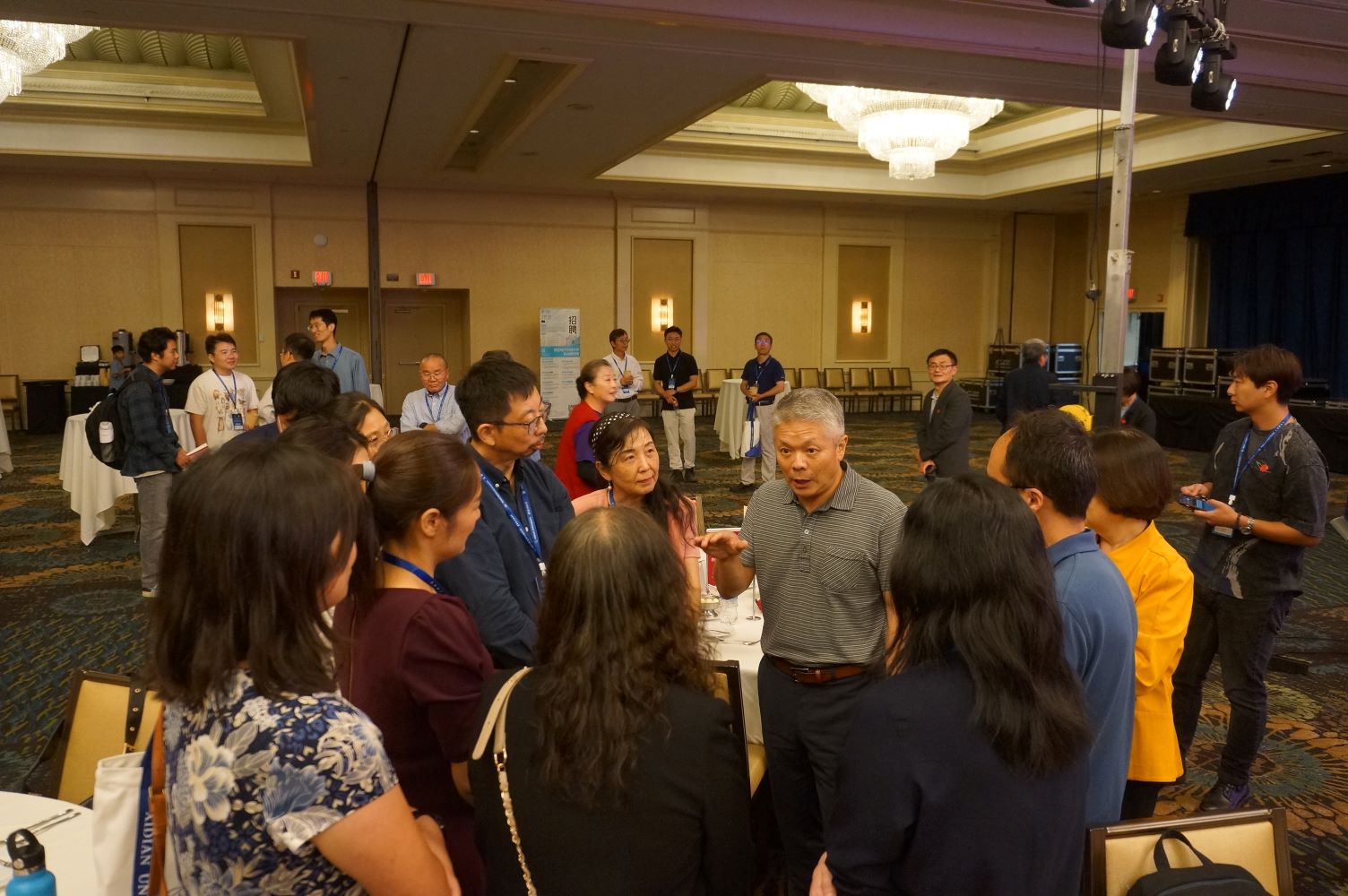
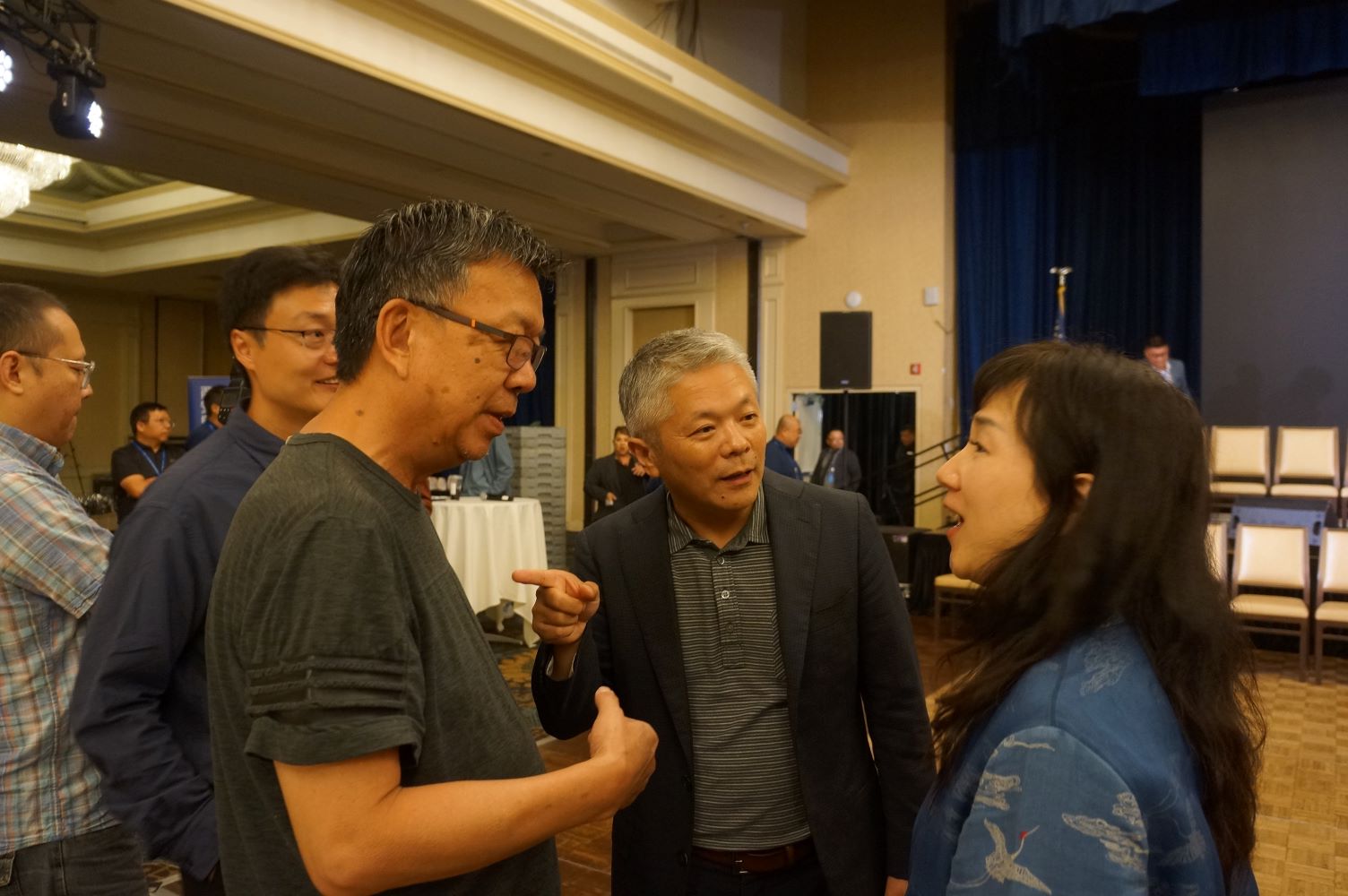
Following his presentation, Xie was surrounded by alumni seeking to speak with him, particularly younger alumni. He also had an opportunity to reconnect with former classmates from his days at Xidian.
(Photo by: Richard Ren/LAPost)
The 10th anniversary celebration of the U.S. Alumni Association of Xidian University and the university’s 95th anniversary brought together alumni from Los Angeles, Irvine, San Diego, Silicon Valley and Northern California, Phoenix, Seattle, Houston, Dallas, San Antonio, Florida, New York, New Jersey, the Greater Washington, D.C. area, North Carolina and Delaware.
Organizers described the gathering as one of the largest overseas anniversary celebrations in Xidian’s history, bringing together alumni from across the United States to reflect on the university’s development and look ahead to the future of artificial intelligence, technology and innovation.

(Photo by: Richard Ren/LAPost)