Building Bridges Through Media: Enabling Two-Way Cultural Exchange Between China and the U.S. — An Interview with Huo Yue, Chief Correspondent of Beijing Radio & Television Station
LAPost/Los Angeles, Ca (December 18, 2025) – In October 2024, Los Angeles basked in gentle autumn sunshine. The figure of Huo Yue, Chief Correspondent of Beijing Radio & Television Station (BRTV), moved between the Bowers Museum’s special exhibition Fantasy Worlds, the live studio of KAZN AM1300 Chinese Radio, and the brilliant lights of the Arcadia Chang’an Lantern Festival. This transpacific cultural journey saw her not only documenting the vivid presence of Chinese culture overseas through her camera and pen, but also—through the professionalism of a journalist and the dedication of a film and media practitioner—building a “bridge of connection” for cultural exchange between China and the United States. The value of this bridge is made even more tangible by her recent work being shortlisted at the China–U.S. Film Festival.
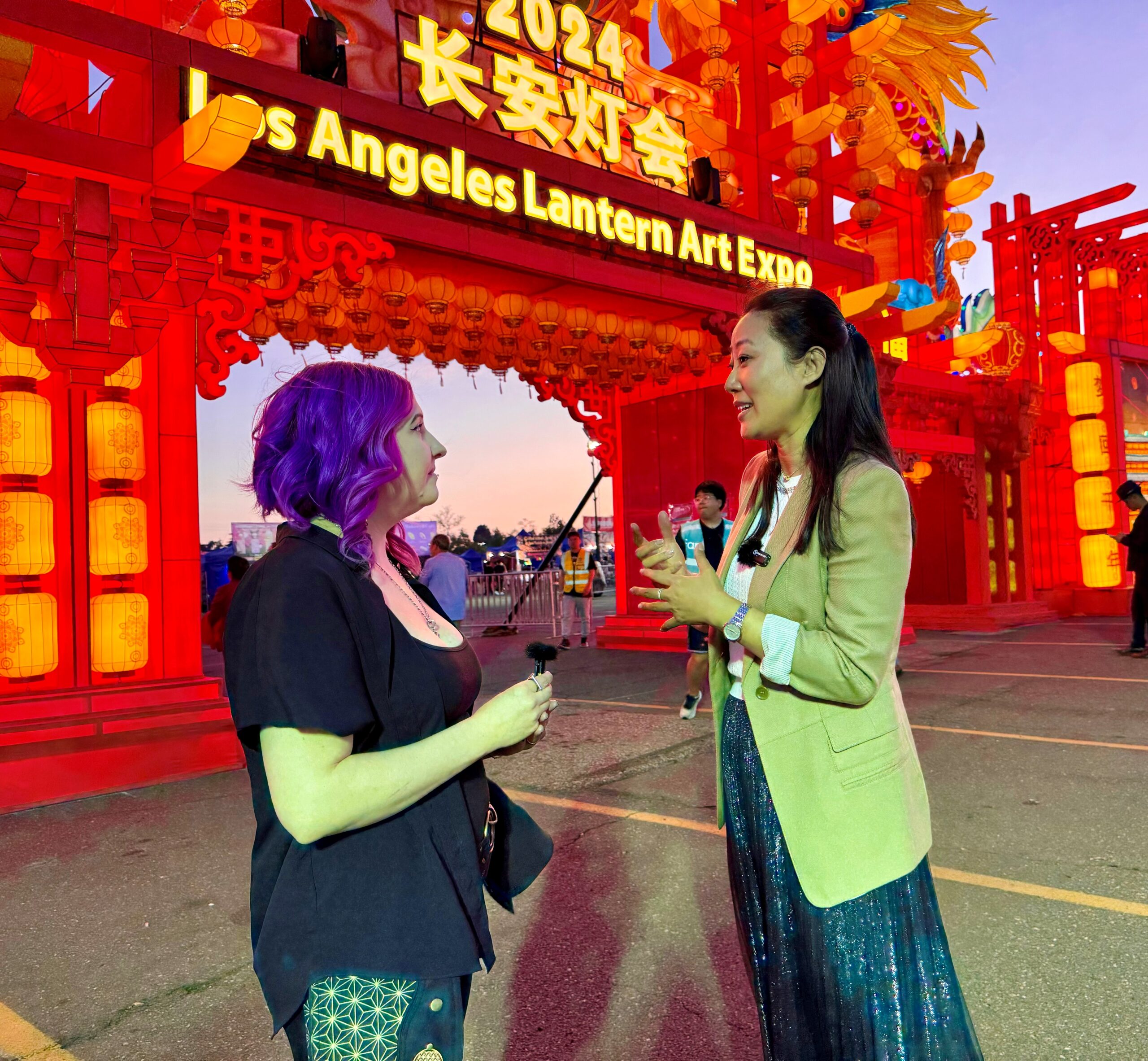
Huo Yue interviewing visitors at the Arcadia Chang’an Lantern Festival
“From my first interview projects on campus focusing on youth perspectives, to standing today at cultural sites in Los Angeles, I have always believed that media is the best ‘loudspeaker’ for culture, and visual storytelling the ‘universal letter’ for dialogue between civilizations,” Huo reflected when speaking about her dual engagement with journalism and film. Her thoughts returned to 2010, when her report The Call from the Mountains, which highlighted the challenges of rural education, was broadcast. That experience allowed her to truly feel the power of content to connect people with society and to spark public awareness. This original aspiration supported her growth from a researcher at the Beijing People’s Radio Research Center into a chief correspondent deeply engaged in public affairs and cultural reporting. Over nearly 20 years of professional experience, she has reported from the National People’s Congress, with her work earning multiple national and provincial-level awards; created widely influential multimedia projects such as Why Beijing and The Most Beautiful Central Axis; and crossed into film production, serving as an executive producer to bring Chinese stories to the international stage.
Since 2022, Huo Yue has worked with her team on the planning and production of the documentary film Fly to the Sky, which focuses on children and adolescents with autism. Over three years of dedicated work, her professionalism and commitment were evident throughout. In the early stages, she proactively coordinated resources and sought investment and sponsorship to lay a solid foundation for filming. During production, she enthusiastically assisted directors and producers with overall coordination, ensuring efficient progress. In post-production, she drew on her long-accumulated expertise and resources in music and audio recording to lead the creation of the film’s theme song—overseeing lyric writing, music production, recording, and final mixing. From refining melodies and lyrics to studio coordination and final synthesis, she maintained rigorous professional standards at every step, ultimately making the film’s music a key emotional highlight for audiences. This dedication bore fruit in November 2024, when Fly to the Sky was shortlisted for the Golden Angel Award for Best Documentary at the China–U.S. Film Festival, earning widespread recognition from Hollywood and the media—and adding another powerful chapter to her efforts in building cultural bridges between China and the U.S.
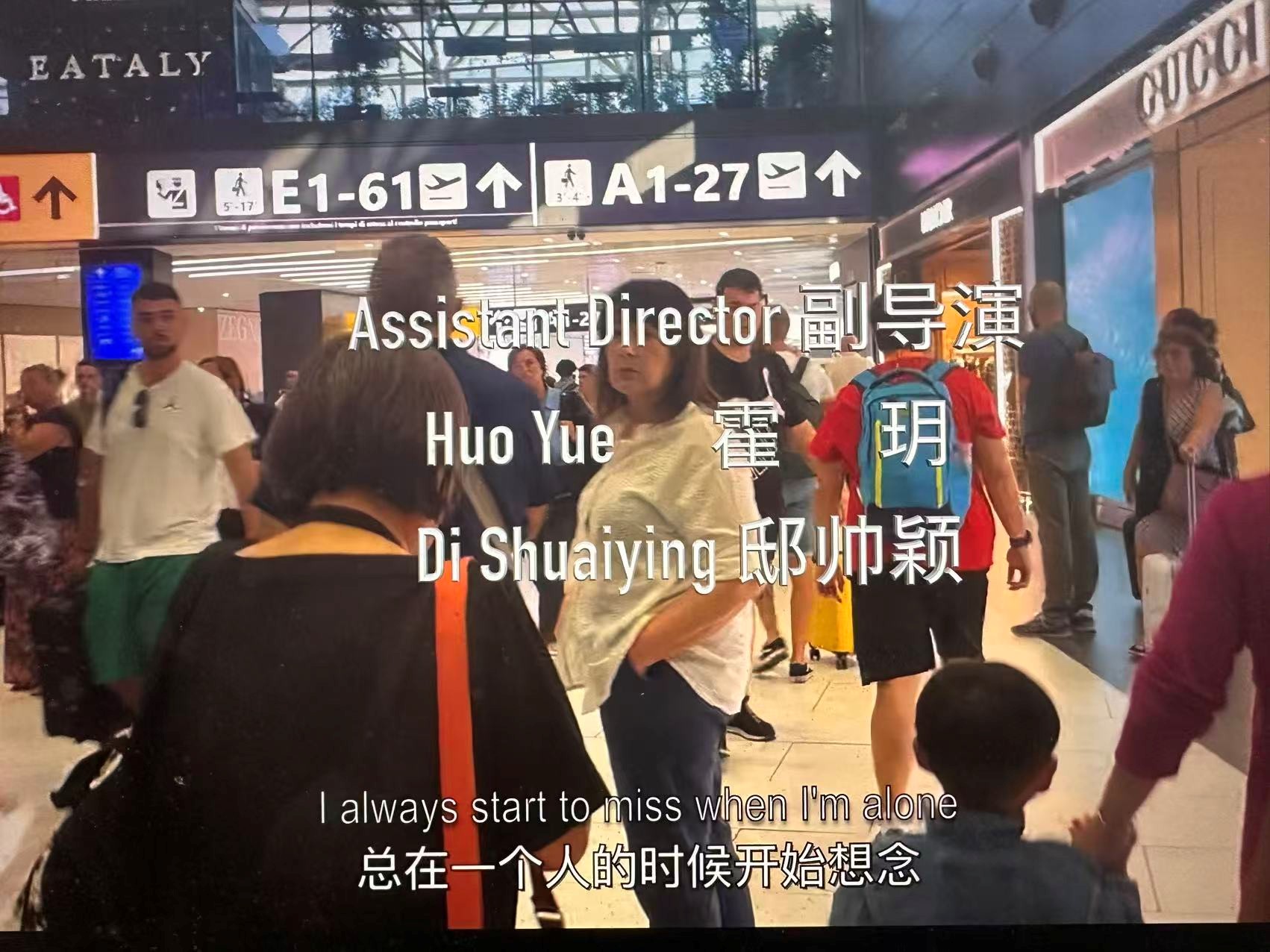
Documentary stills
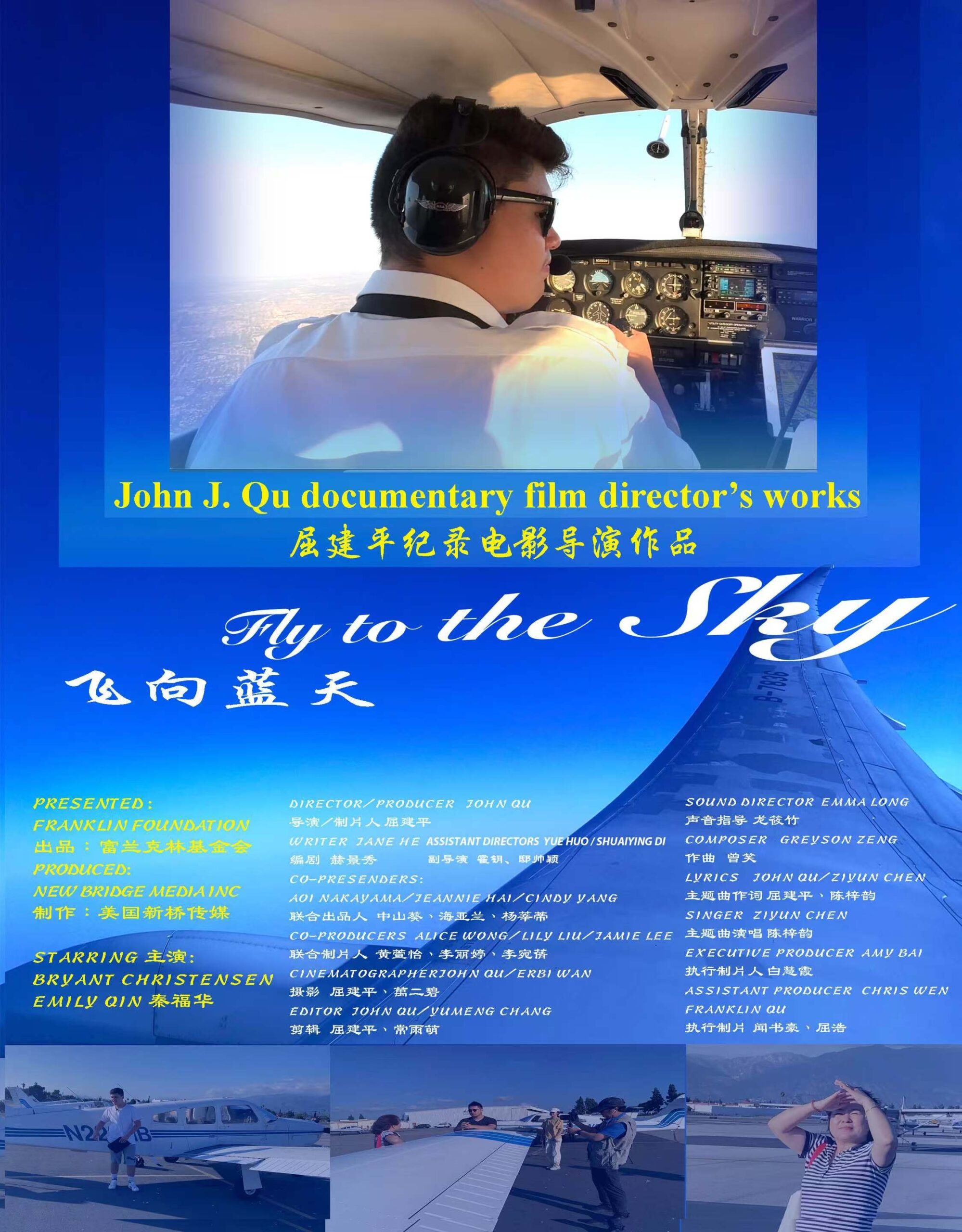
Fly to the Sky promotional poster
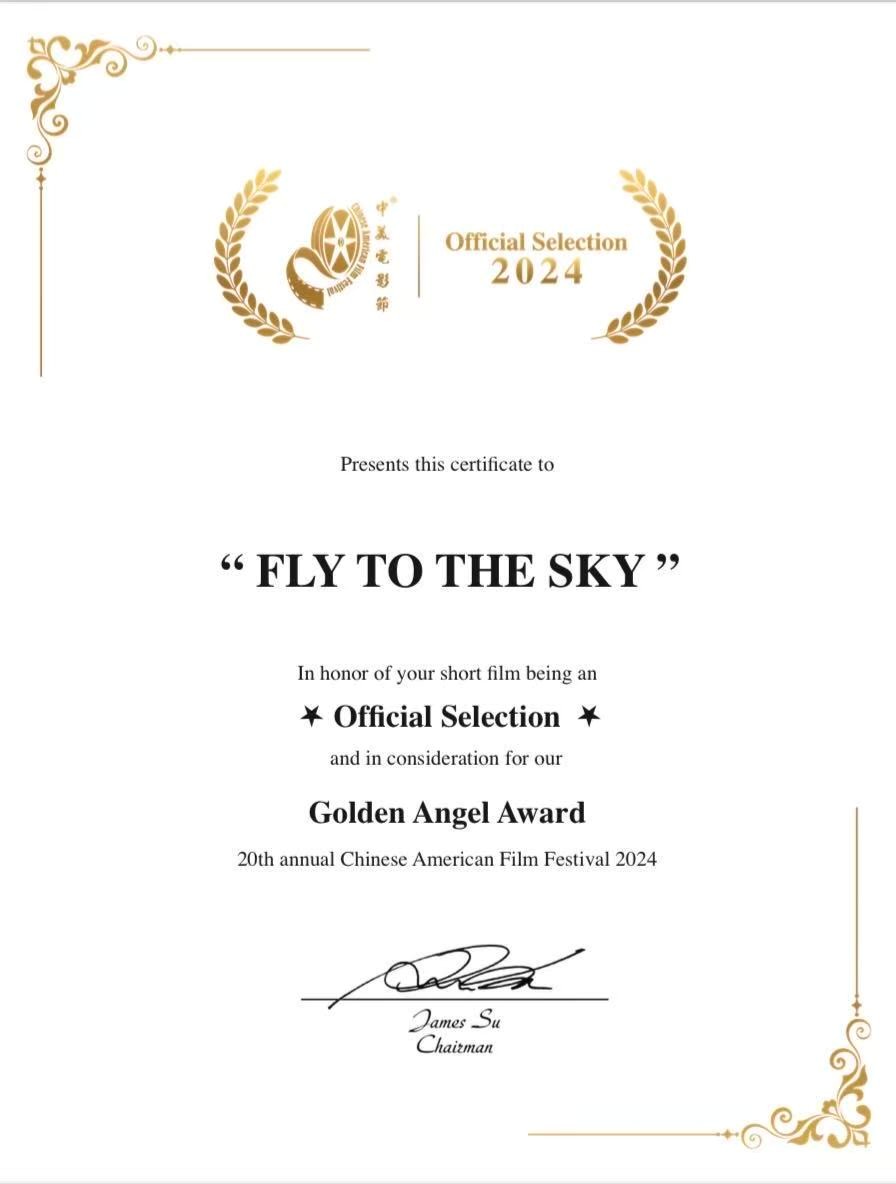
Fly to the Sky award certificate
“The international recognition of Fly to the Sky truly proves that ‘good stories know no borders,’” Huo said candidly. Rather than emphasizing cultural differences, the documentary focuses on universal themes of love and growth. “It’s like the Fantasy Worlds exhibition we saw at the Bowers Museum—One Thousand and One Nights and The Classic of Mountains and Seas come from different civilizations, yet both move audiences through imagination.” At the exhibition, when Professor Matthew Sangster from the University of Glasgow mentioned that he especially liked the museum’s Chinese gallery, Huo keenly sensed a moment of cultural resonance. “China has so many imaginative cultural IPs like The Classic of Mountains and Seas. These can serve as rich sources for fantasy creation. With their unique cultural depth and imagination, and through international collaborations such as joint exhibitions, Chinese fantasy culture can be brought to the world, engaging in dialogue with other cultures and allowing more people to appreciate its distinctive charm.”
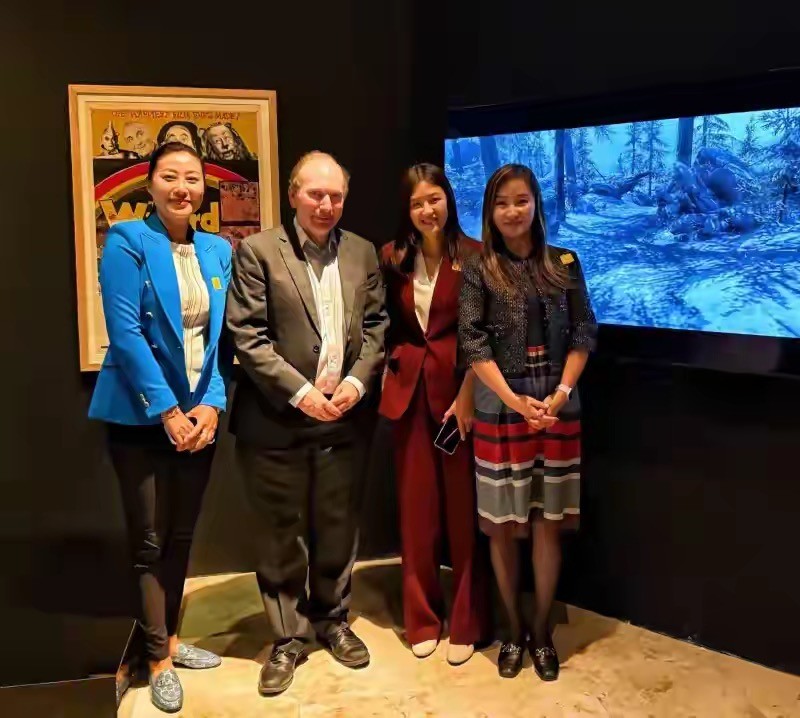
At the Bowers Museum’s Fantasy Worlds exhibition, special guest Professor Matthew Sangster of the University of Glasgow shows Huo Yue the exhibition’s most precious artifact and poses for a photo with her
Huo believes that the exhibition’s use of multimedia technology to “bring classics to life” aligns with the logic of Fly to the Sky in conveying warmth through visual storytelling. Cultural communication, she notes, is never a one-way transmission, but rather about finding shared emotional touchpoints that resonate with audiences both in China and abroad. “China’s traditional culture is profound and rich, with unique value and appeal. It should be presented to the world in ways that are truly accessible and easy to understand. At the same time, cultural outreach must emphasize innovation—preserving the essence of tradition while integrating modern technology and artistic forms, so that traditional culture appears in fresher and more engaging ways.”
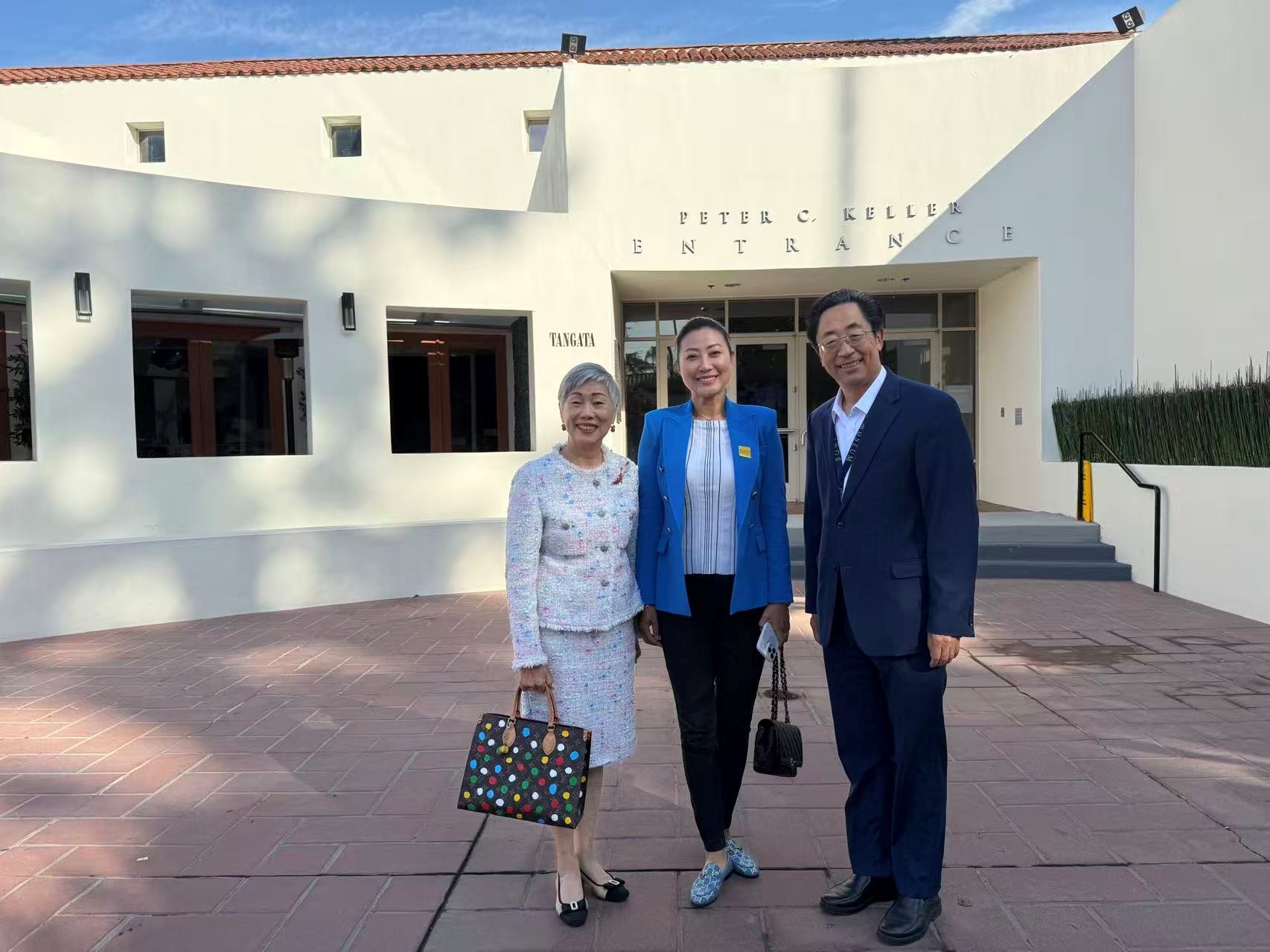
Bowers Museum Chairperson Shi Liu Xiuzhi, Huo Yue, and Deputy Director Jiao Tianlong
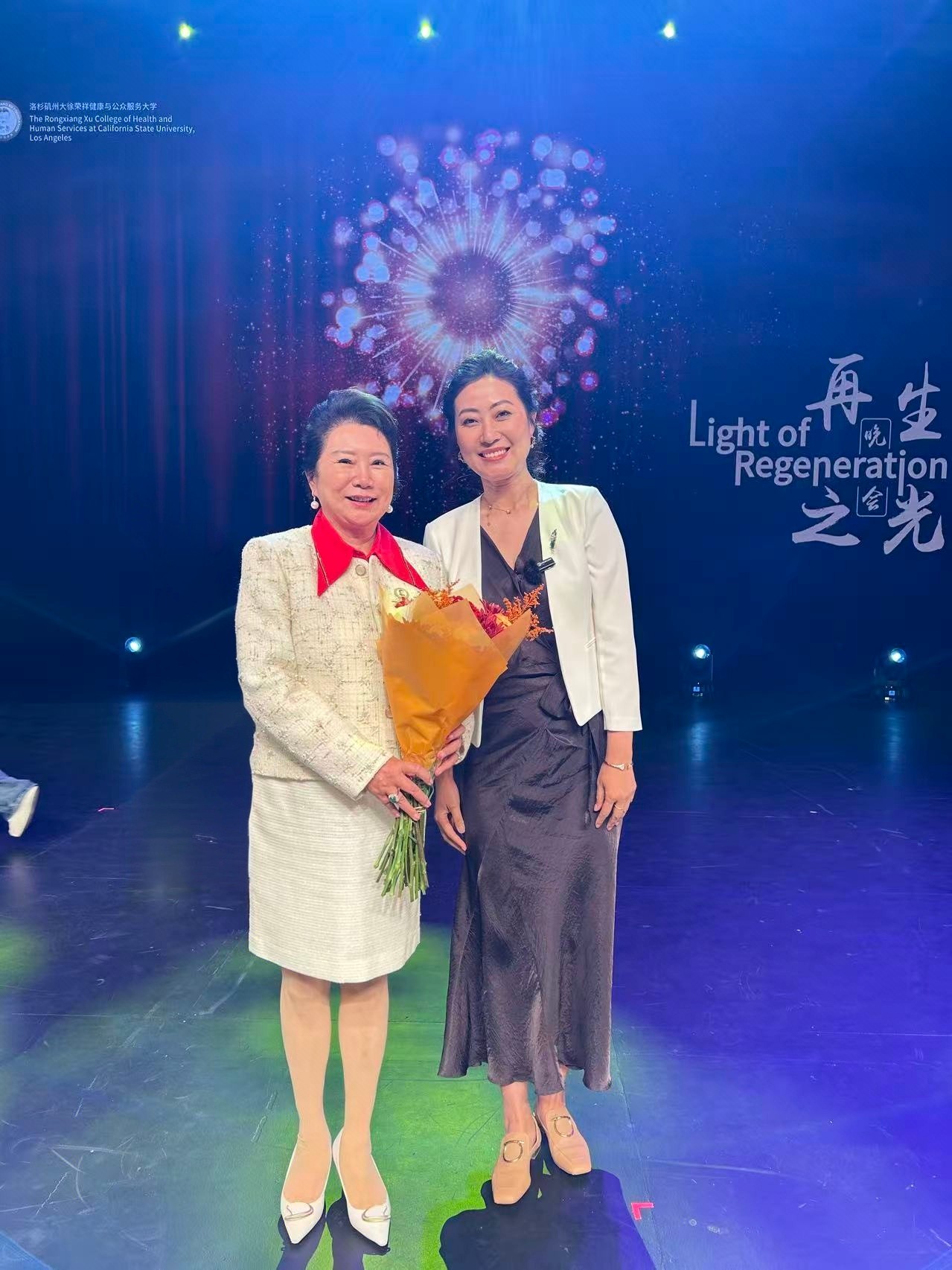
Huo Yue with Li Li, Chairperson of the Xu Rongxiang Foundation, organizer of Light of Rebirth, celebrating a successful performance
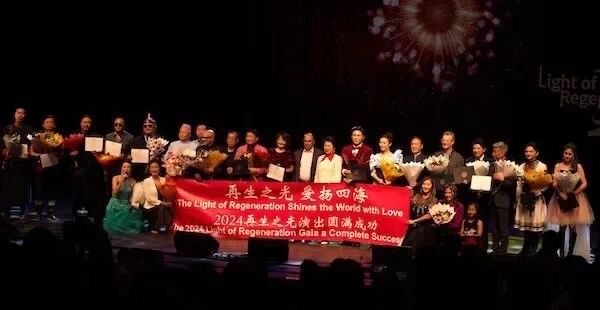
Huo Yue with the full cast and crew of Light of Rebirth as a special correspondent
On KAZN AM1300’s program Go Life, while discussing with host Xiaowei how to enable two-way cultural exchange between China and the U.S., Huo drew on her experience with the Light of Rebirth gala and Fly to the Sky to propose more practical approaches to cultural communication. “Overseas Chinese communities are a natural bridge between the two cultures. We can combine Western popular art forms with Chinese traditional cores. When I previously reported on the China International Fair for Trade in Services, I used a mix of in-depth features and short video highlights—explaining China–U.S. cultural trade cooperation while visually showcasing the fusion of Beijing embroidery, cloisonné, and modern design. Fly to the Sky does the same, telling stories of special communities through an internationally familiar documentary language, which actually sparks broader resonance.” In her view, the key to cultural exchange lies in “speaking in ways the other side can understand and empathize with.”
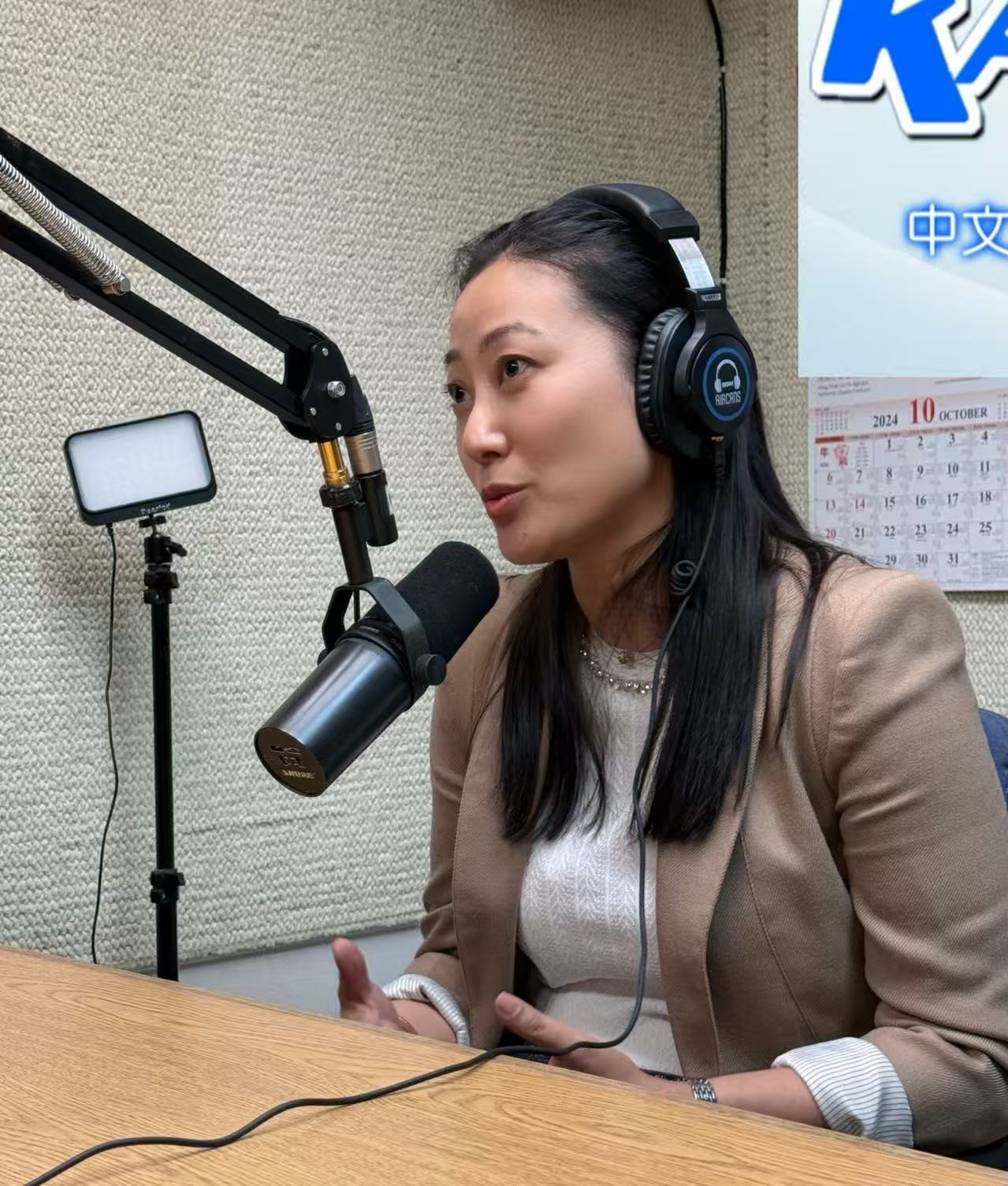
As a journalist, Huo Yue discusses topics with the host on KAZN AM1300’s Go Life program
The 32nd Annual Meeting of the Chinese Association for Science and Technology in the USA and the 2024 Global Innovation Summit were held on October 12, 2024, in San Diego, California. That afternoon featured forums and panel discussions on hot topics in technology, including artificial intelligence, energy materials, life sciences, and global business expansion, attracting active participation from many young scientists and experts.
The AI Forum, hosted by Dr. Yu Bai, an expert in artificial intelligence and computing, invited leading AI scholars such as Professor Zhao Yajie from the University of Southern California to share their latest research. Huo Yue was also invited to participate, engaging in in-depth dialogue with AI experts from the perspective of a media professional deeply involved in cultural communication.
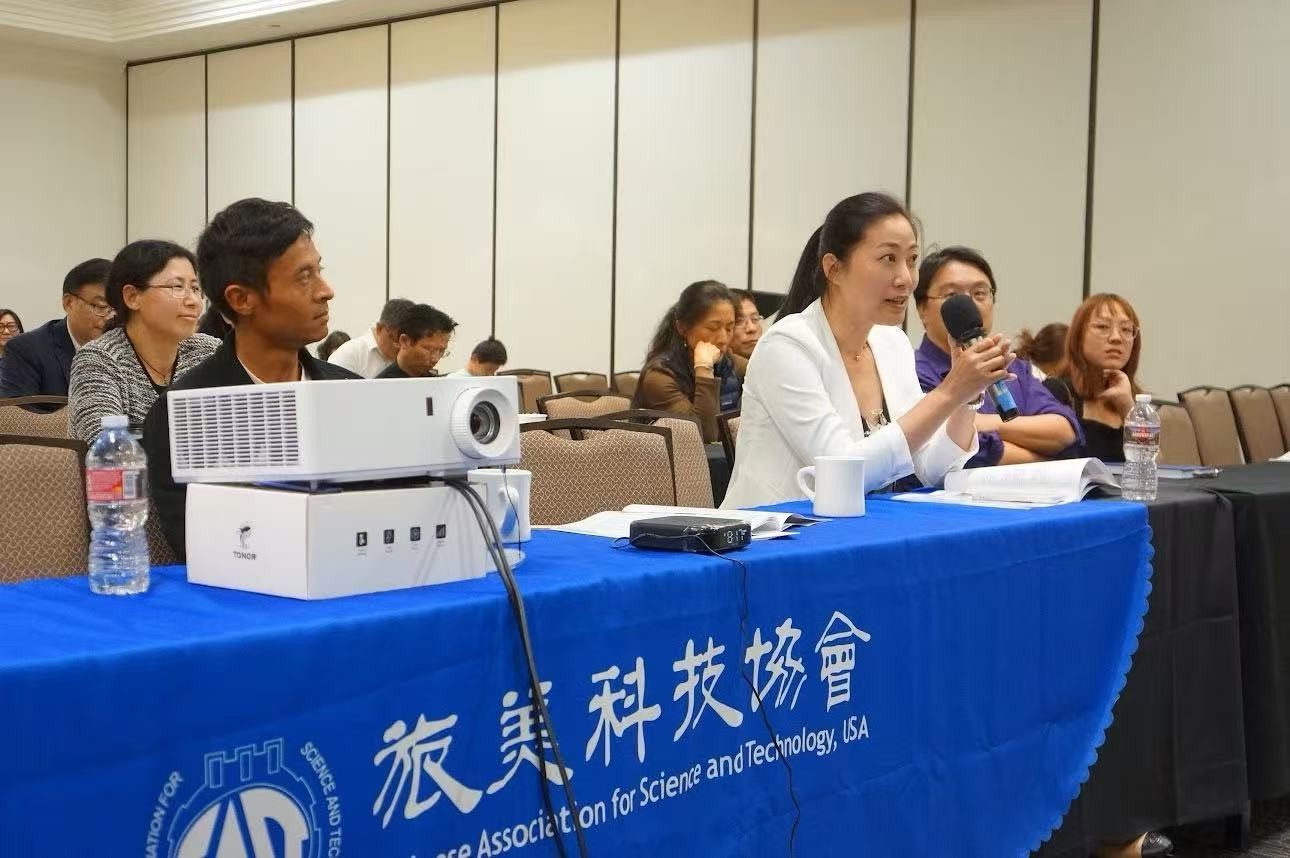
Huo Yue asking a question at the afternoon AI forum
Drawing on her experiences at cultural sites such as the Fantasy Worlds exhibition and the Chang’an Lantern Festival in Los Angeles, Huo proposed that “the development of artificial intelligence depends on the nourishment of cultural soil, while cultural communication likewise needs technological empowerment.” She noted that the fantastical elements of The Classic of Mountains and Seas could inspire AI-generated content, just as Fly to the Sky conveys universal themes of love and growth through an internationally understood visual language. AI technology, she suggested, can become a new “letter” for cross-cultural exchange—using algorithms to optimize the dissemination of cultural content so that the wisdom of different civilizations reaches global audiences in lighter, more emotionally resonant ways.
The experts strongly agreed, noting that breakthroughs in AI are not merely technical iterations, but also require the infusion of diverse cultural perspectives—echoing the summit’s theme of “collaborative innovation, breakthroughs, and heritage.” Cooperation between China and the U.S. in AI, they emphasized, must involve both technical collaboration and cultural mutual learning, so that technological achievements can truly benefit all humanity.
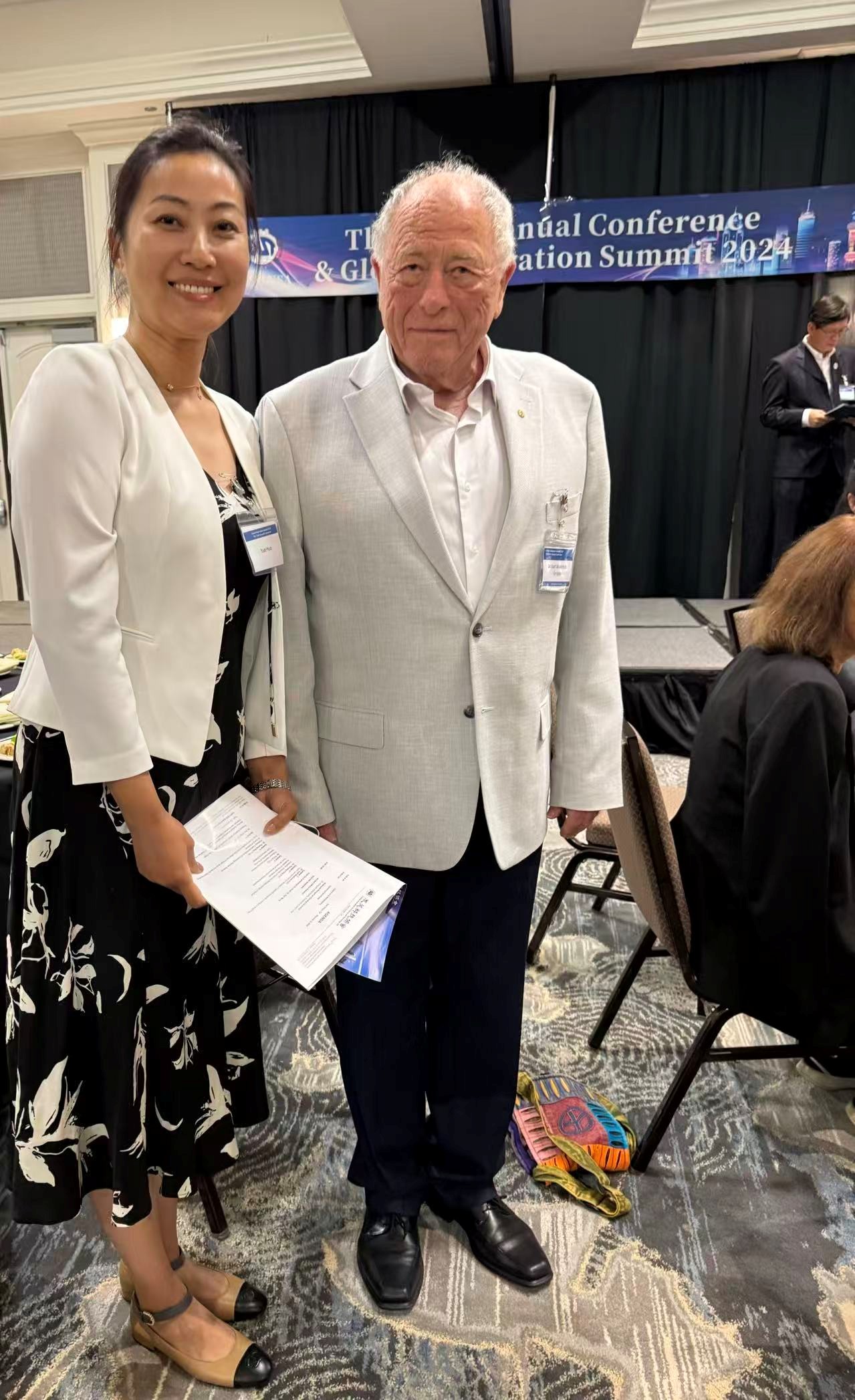
Huo Yue with Dr. Kurt Wüthrich (2002 Nobel Prize in Chemistry)
As the Chang’an Lantern Festival lights illuminated the night and the twin-dragon archway glowed against the sky, Huo was deeply moved hearing American visitors exclaim, “It’s our first time here, and we love Chinese kung fu.” On stage, hip-hop rhythms blended with traditional lanterns, and audiences of different backgrounds swayed together to the music. The scene reminded her of overseas screenings of Fly to the Sky. “Some American viewers told me after watching the film, ‘I didn’t realize Chinese family love is so similar to ours.’ Whether it’s a lantern festival or a film, true cultural connection is never just about ‘going global,’ but about ‘mutual seeing’—American audiences experience the vibrancy of Chinese festivals, and we witness their openness to diverse cultures; international audiences understand the emotions in Chinese stories, and we, in turn, refine how we express them.”
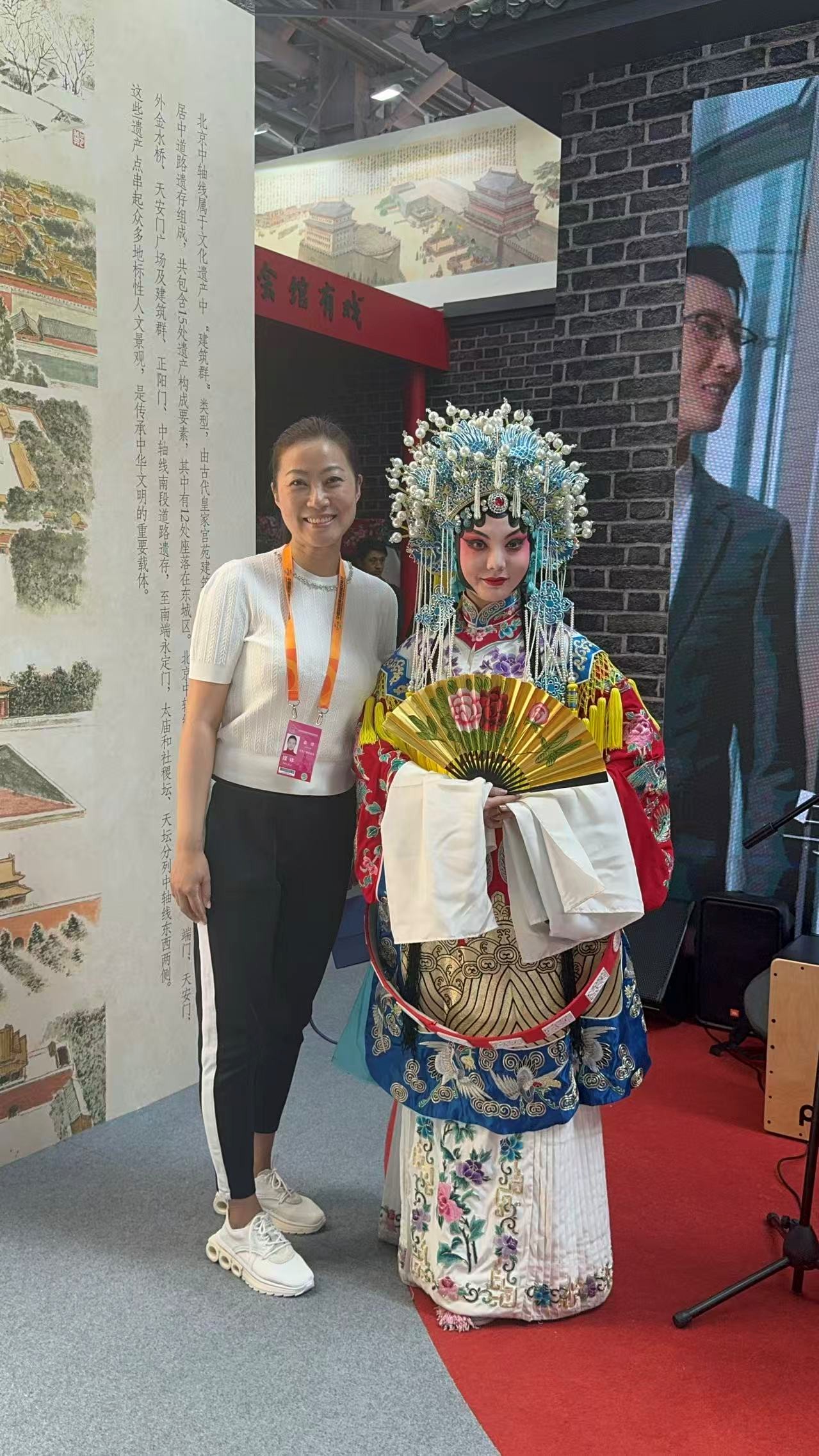
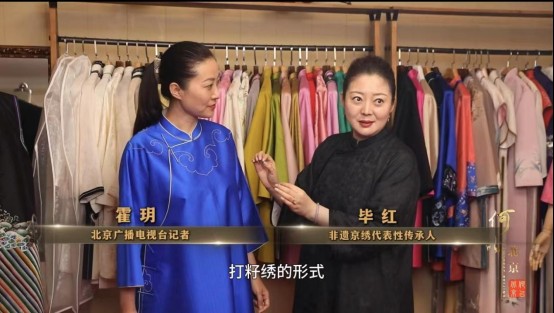
Huo Yue interviewing a Peking Opera performer at the China International Fair for Trade in Services
After nearly two decades in the field, Huo Yue has grown from a “recorder” into a “creator” and “bridge builder.” She has published academic articles such as Innovative Strategies for Radio News Reporting in the Context of Convergent Media, exploring how media can support cultural communication. Today, the international recognition of Fly to the Sky and her cultural exploration in Los Angeles have further strengthened her conviction: “As Chinese media and film professionals, we should bring outstanding American cultural elements back to China, while also telling China’s traditional culture and contemporary stories to the world through reporting and visual storytelling.” Looking ahead, she plans to continue using in-depth journalism, convergent media products, and film production as vehicles to make China–U.S. cultural connections closer and more vibrant. “After all, meaningful cultural exchange allows people in both countries to move beyond labels and see each other’s sincerity. What I hope to do is keep refining this ‘content bridge’ so that sincerity can travel even farther.”
(By Staff Writer: Richard Ren/LAPost)