Bridging Through Language: At a Los Angeles Consulate Open House, Chinese Becomes a Shared Vocabulary of Exchange
by admin · Published · Updated
LAPost | Los Angeles, May 9, 2026 – On a mild Saturday morning in Los Angeles, the language of diplomacy gave way to something more personal: stories, songs, and the quiet determination of students finding their voice across cultures.
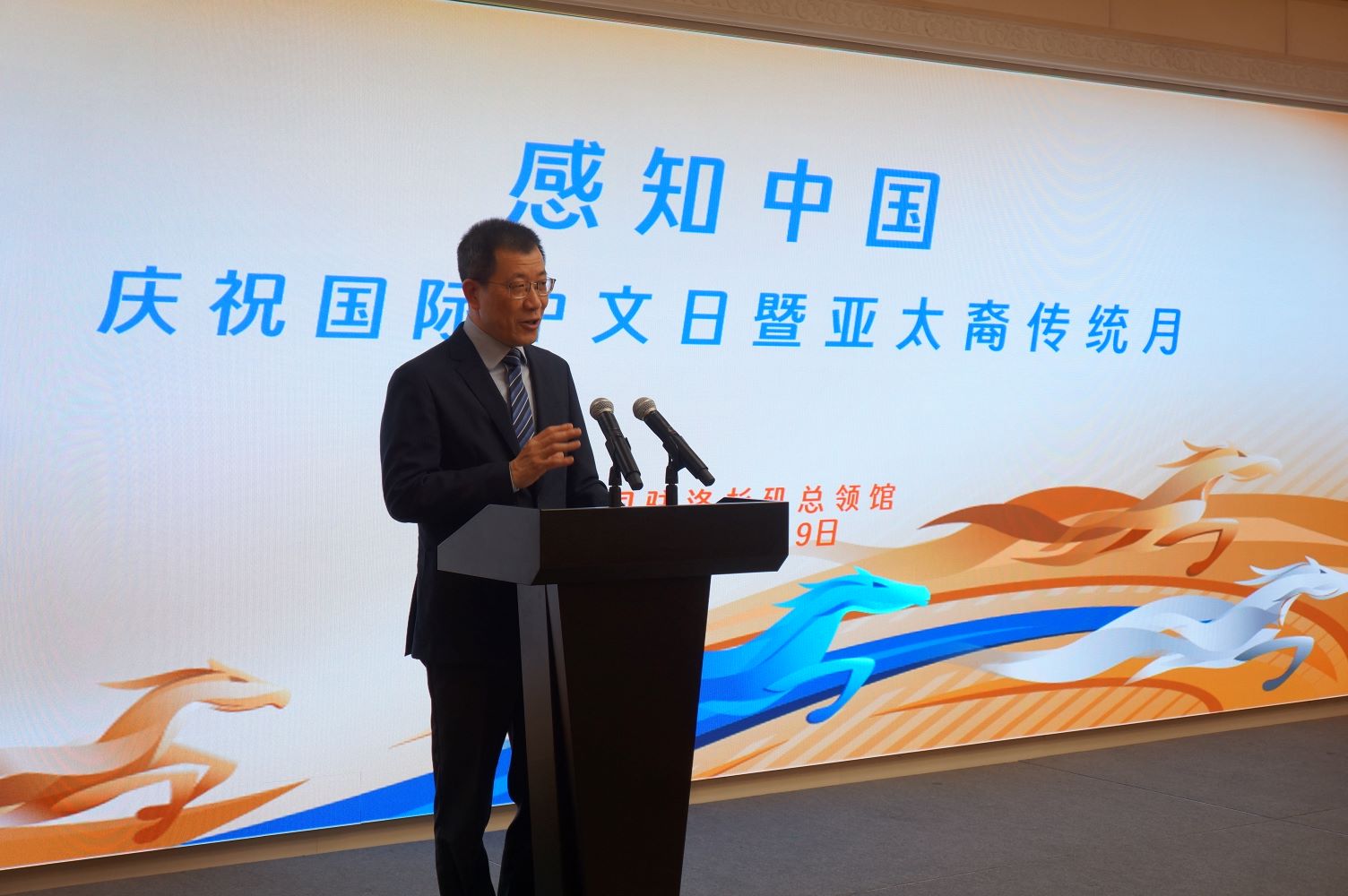
Consul General Guo Shaochun(Photo by: Richard Ren/LAPost)
At the Consulate General of the People’s Republic of China, more than 100 students, parents, and educators from across the American West gathered to mark International Chinese Language Day and Asian American and Pacific Islander Heritage Month. But beneath the performances and cultural demonstrations, the message—delivered most clearly by Consul General Guo Shaochun—was less about celebration than about connection.
“Language,” Guo told the audience, “is not only a means of communication, but a pathway to understanding—and to opportunity.”
His remarks framed the day’s events within a broader global context. Chinese, he noted, is now studied by nearly 210 million learners worldwide, embedded in education systems across more than 90 countries. The numbers reflect more than academic interest; they signal a growing recognition that language is inseparable from how societies understand one another.
Yet Guo’s central argument was philosophical rather than statistical. Drawing on the classical concept of “He Er Bu Tong”—harmony without uniformity, he suggested that difference itself can be constructive. In a world often defined by geopolitical friction, he pointed to U.S.-China relations as a test case for whether coexistence can be built on mutual respect rather than convergence.
“Understanding begins with listening,” he said. “Differences, if approached with openness, can become the foundation for cooperation.”
That idea—of language as both bridge and lens—echoed throughout the morning, particularly in the voices of educators and students whose experiences have turned abstraction into reality.
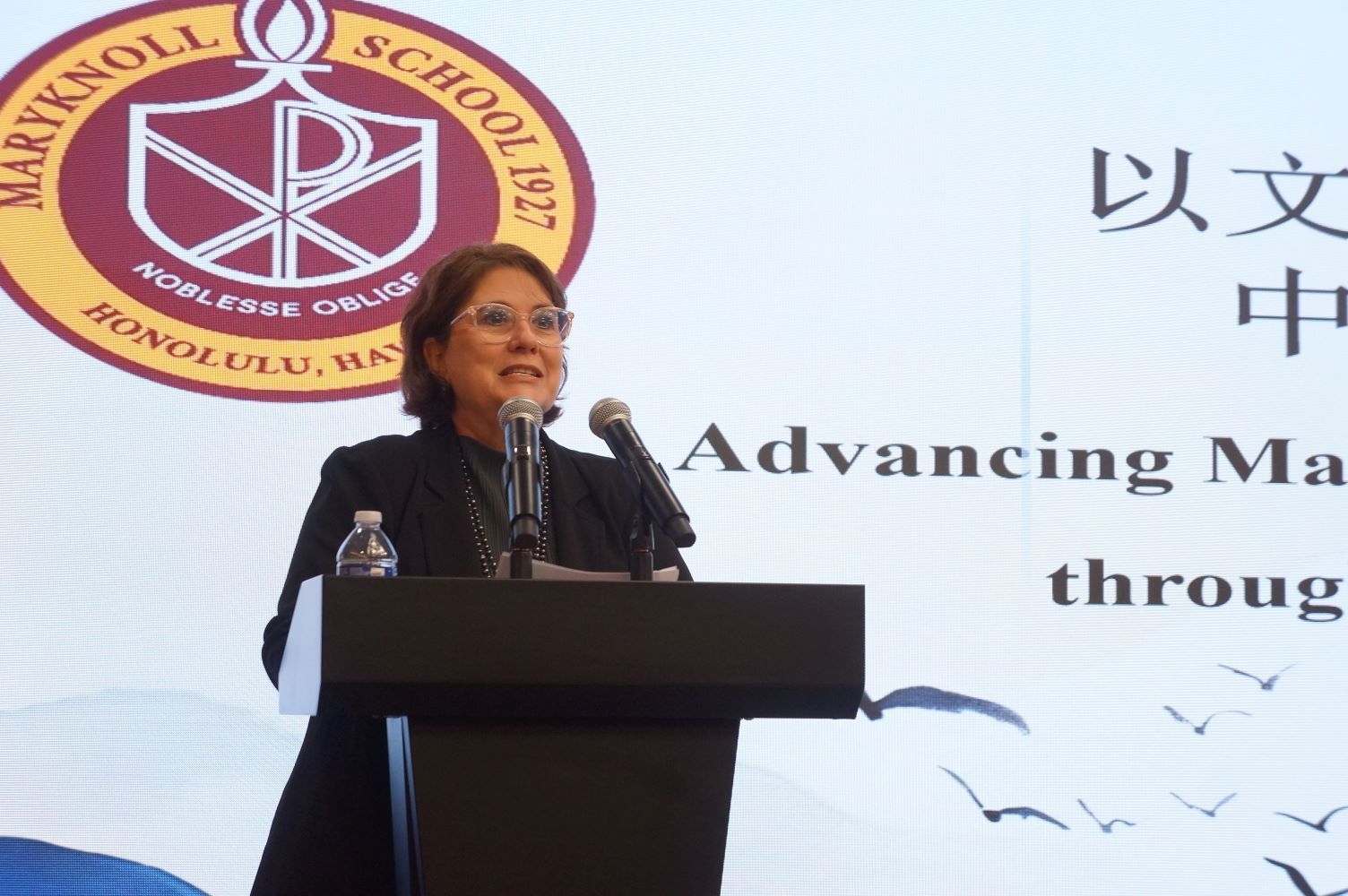
Shana Tong(Photo by: Richard Ren/LAPost)
For Shana Tong, president of Hawaii’s Maryknoll School, the bridge is built in classrooms long before it appears in diplomatic rhetoric. Since launching a Mandarin immersion program in 2017, her school has woven Chinese language instruction into daily academic life, with students learning math and science in Mandarin alongside English.
“The goal is not just fluency,” Tong said, “but connection.”
She described how exchange programs, teacher training, and cultural initiatives have reshaped both curriculum and community. Students travel to China; visiting delegations come to Honolulu. Festivals once observed from afar—Mid-Autumn, Lunar New Year, Lantern Festival—are now lived experiences on campus.
“Through these exchanges,” she said, “the Pacific Ocean is no longer a distance. It becomes a bridge.”
Her remarks offered a practical counterpart to the consul general’s vision: if diplomacy sets the tone, education sustains it.
Nowhere was that more evident than in the reflections of three high school students from Utah, whose journey with Chinese began in the classroom but found meaning abroad.
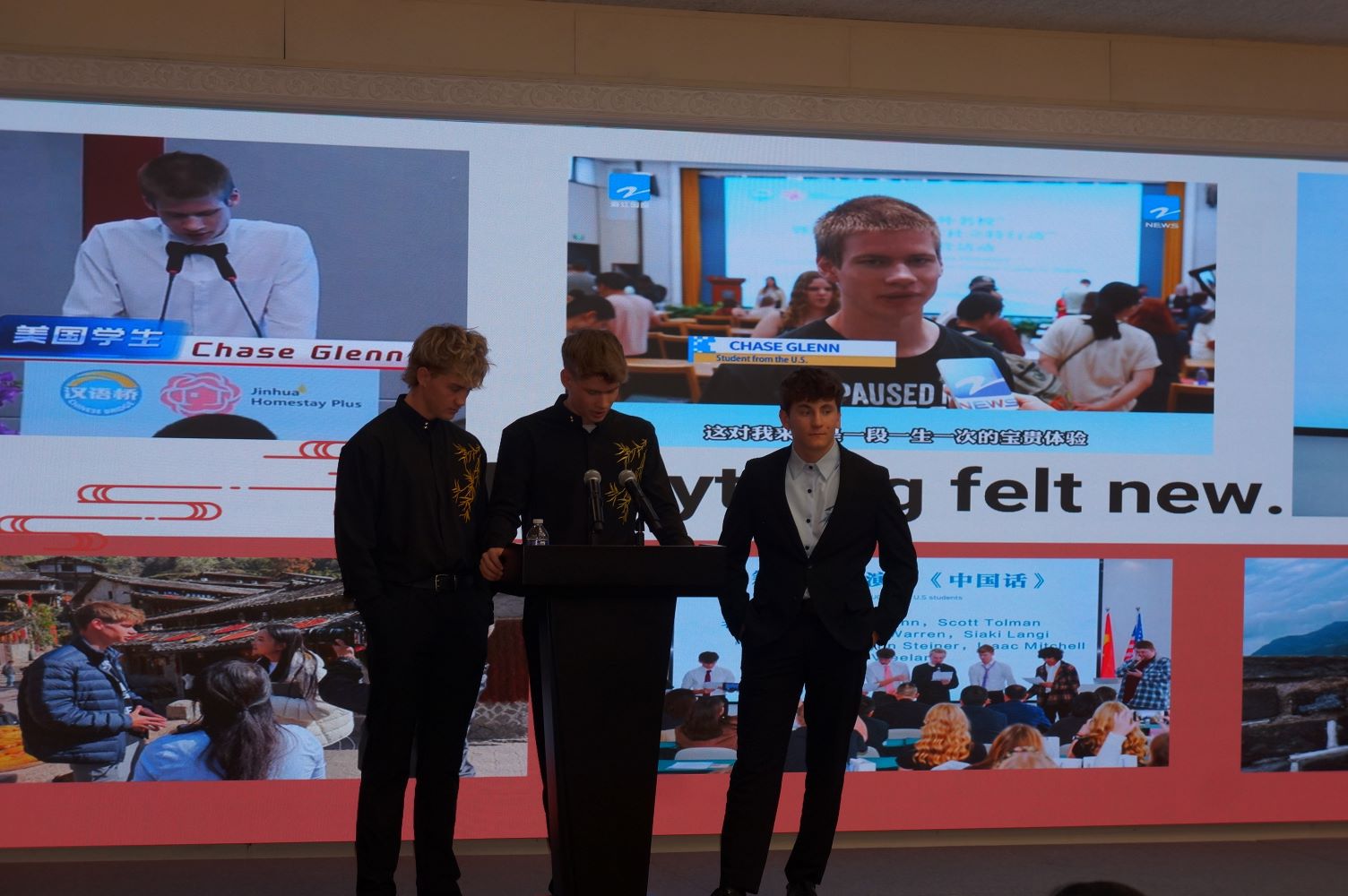
Three high school students from Utah(Photo by: Richard Ren/LAPost)
“For a long time, Chinese was just a subject,” said Chase Gleen, who has studied the language for over a decade. “That changed when I went to China.”
The shift, he explained, came not from textbooks but from lived experience—ordering food, giving speeches, being understood. “That moment changed everything,” he said. “Language became connection.”
His classmate described a similar transformation. Visiting cities like Beijing and Wenzhou, the students encountered not only modern China but its historical depth—handling movable type printing, performing music in Mandarin, and producing a Chinese-language video that later gained national recognition.
“We weren’t just learning Chinese anymore,” he said. “We were using it to create something real.”
Back home, the impact continued. The students began sharing their experiences online, unexpectedly drawing thousands of viewers from China. What started as documentation became dialogue.
“We realized we were part of a global conversation,” he said.
Their teacher, they added, played a critical role—pushing them beyond comfort zones, insisting that language learning demands discipline as much as curiosity. But the outcome extended beyond linguistic skill.
“Chinese didn’t just teach us how to speak,” one student reflected. “It taught us how to listen, how to understand people who are different from us.”
That sentiment aligned closely with Guo’s closing appeal to the audience: that young people, more than policymakers, will shape the future of U.S.-China relations.
“You will be the ambassadors of friendship,” he said.
(Photo by: Richard Ren/LAPost)
(Photo by: Richard Ren/LAPost)
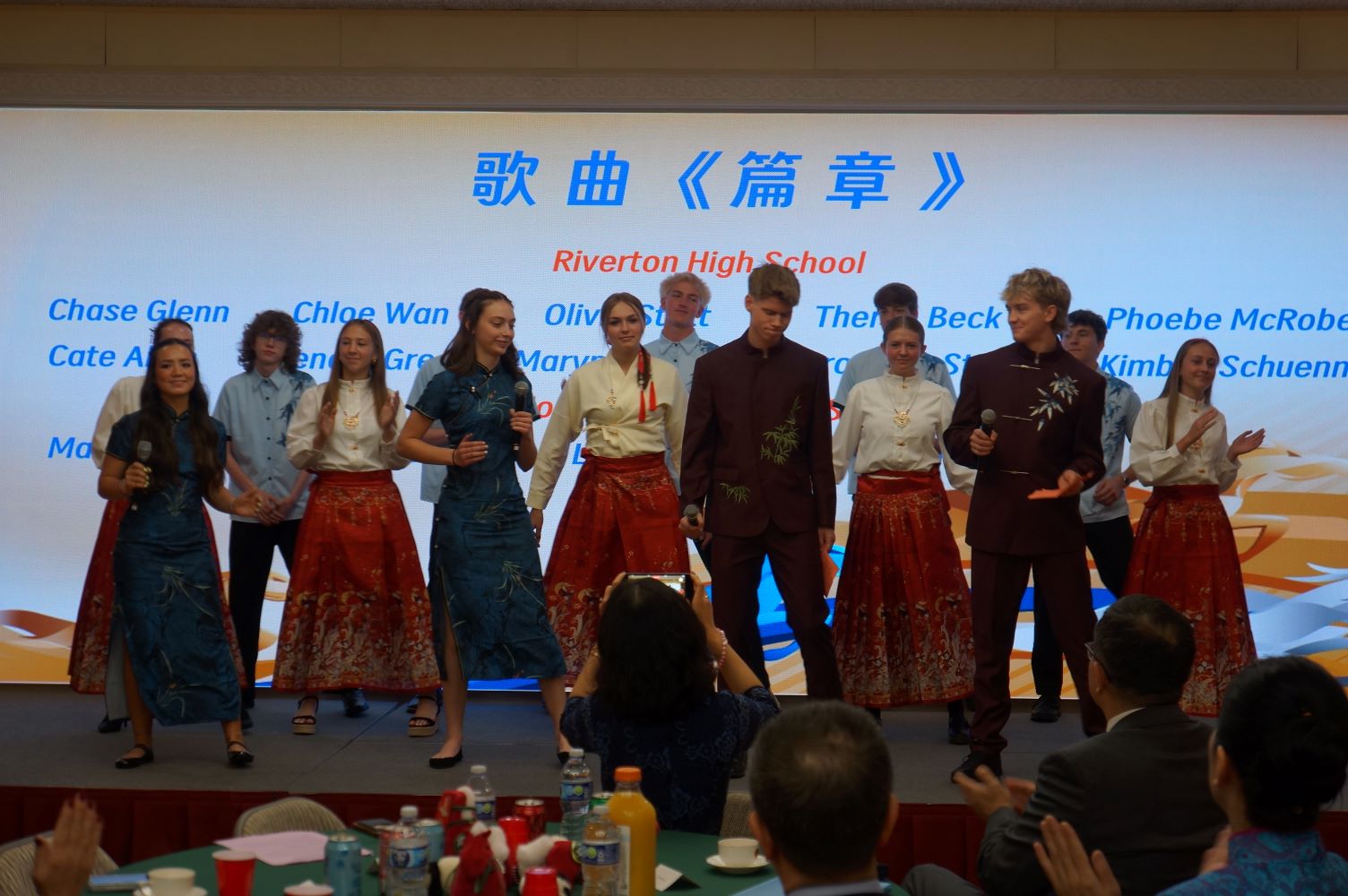
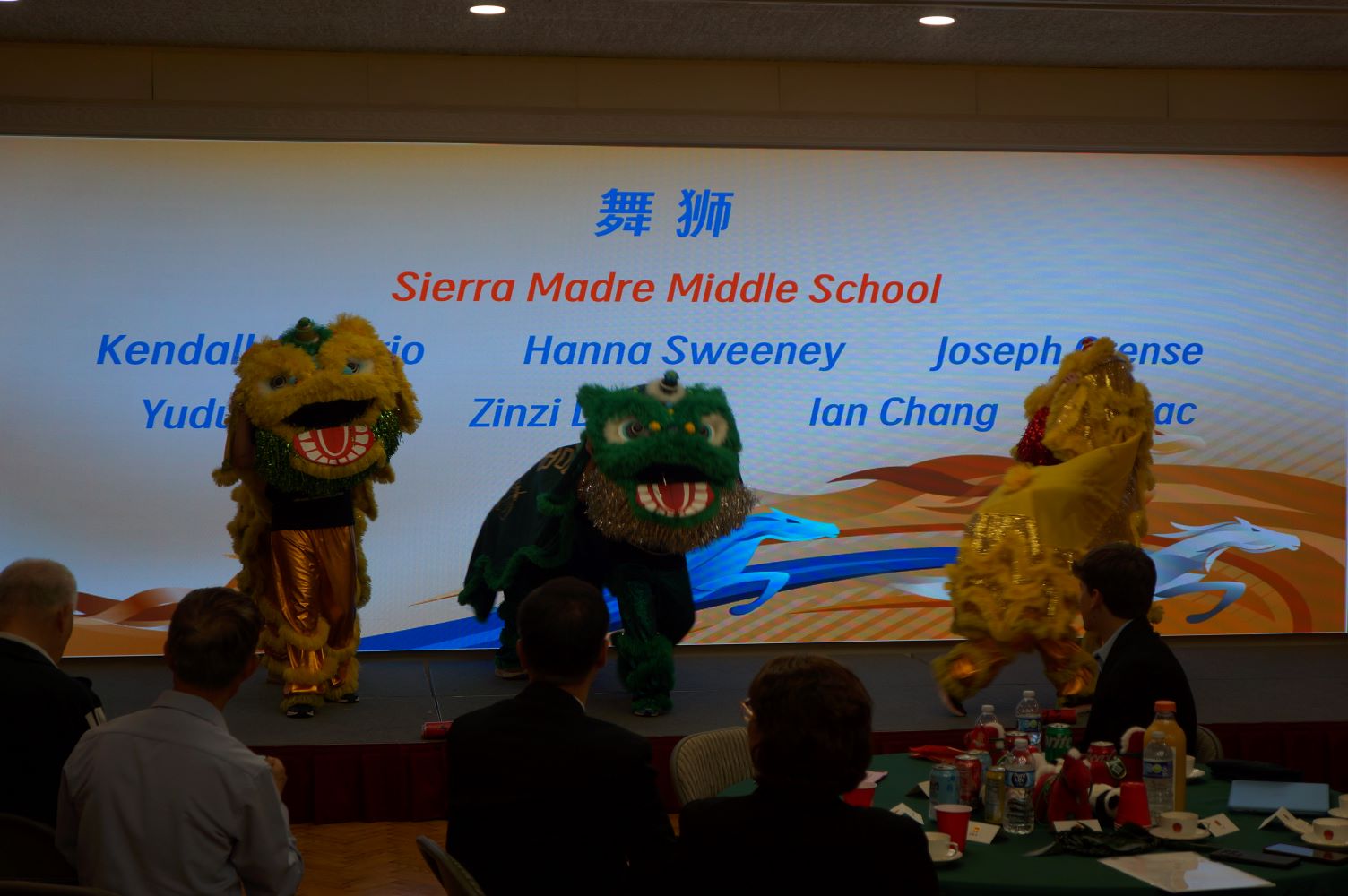
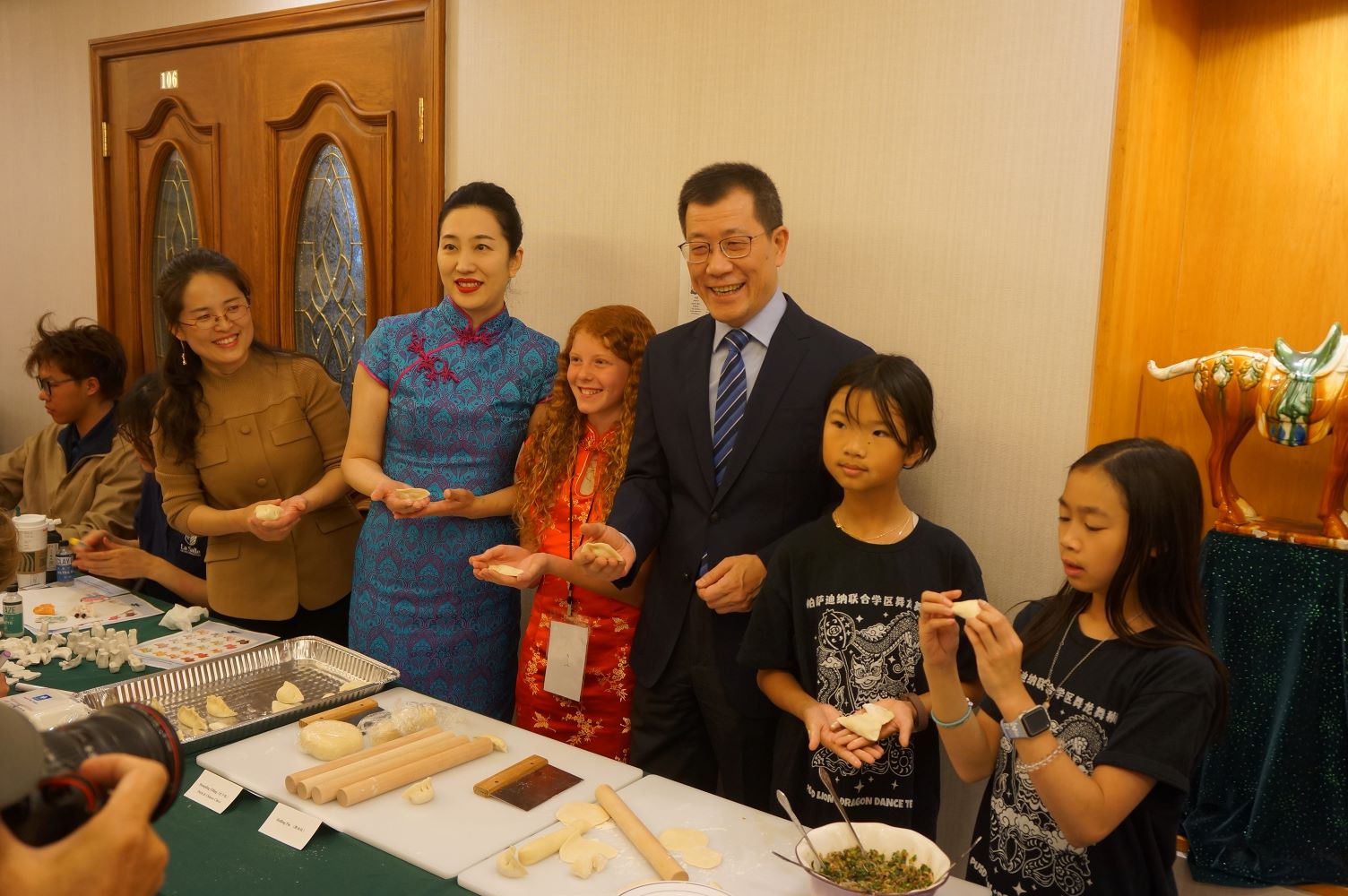
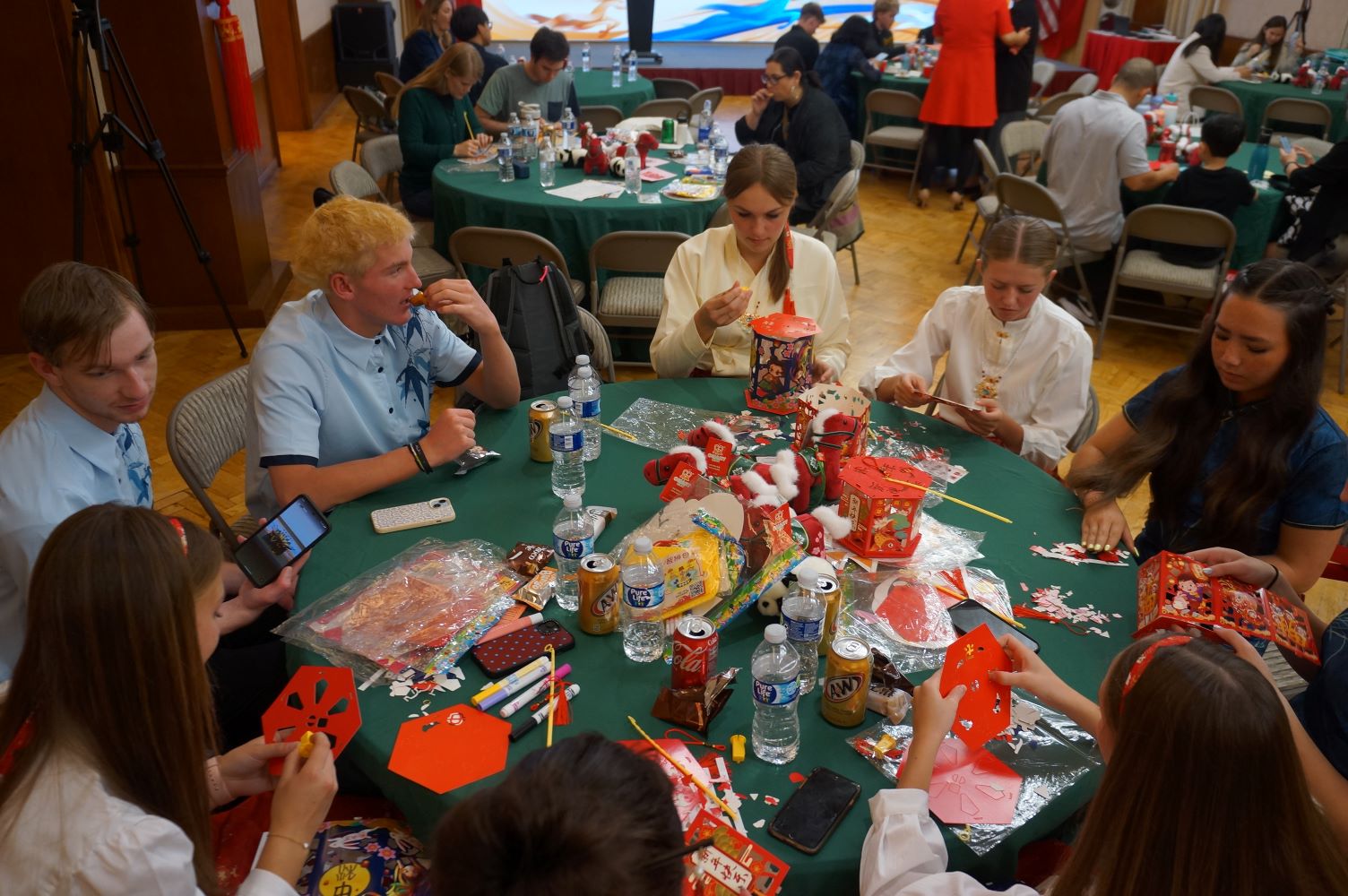
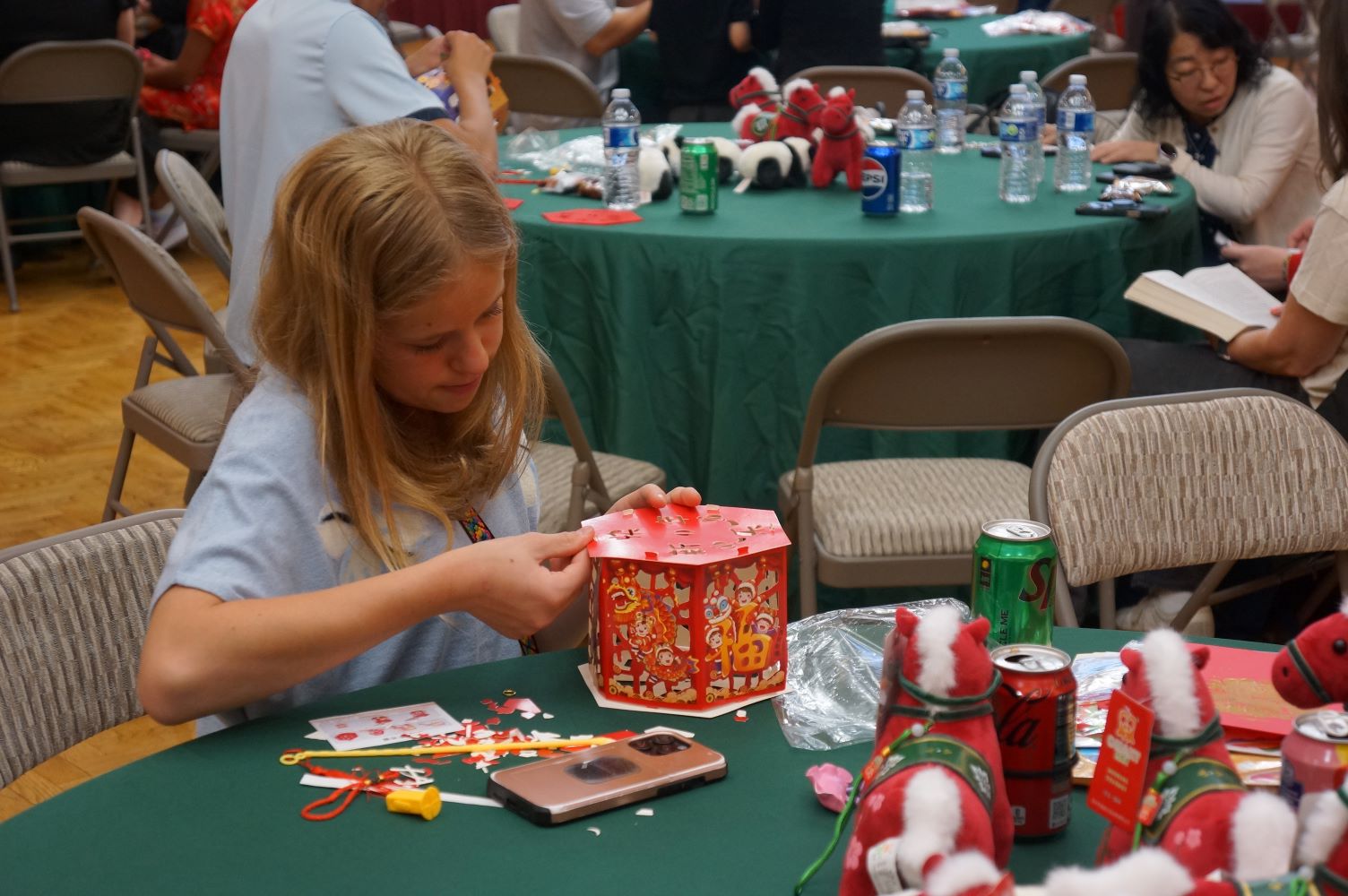
Throughout the day, that future felt tangible. Students crowded around tables learning calligraphy, dumpling-making, and lantern crafting. A group from Sierra Madre Middle School performed a lively lion dance, while visiting students from Utah took the stage in traditional Chinese attire, blending Mandarin songs with contemporary rap.
(Photo by: Richard Ren/LAPost)
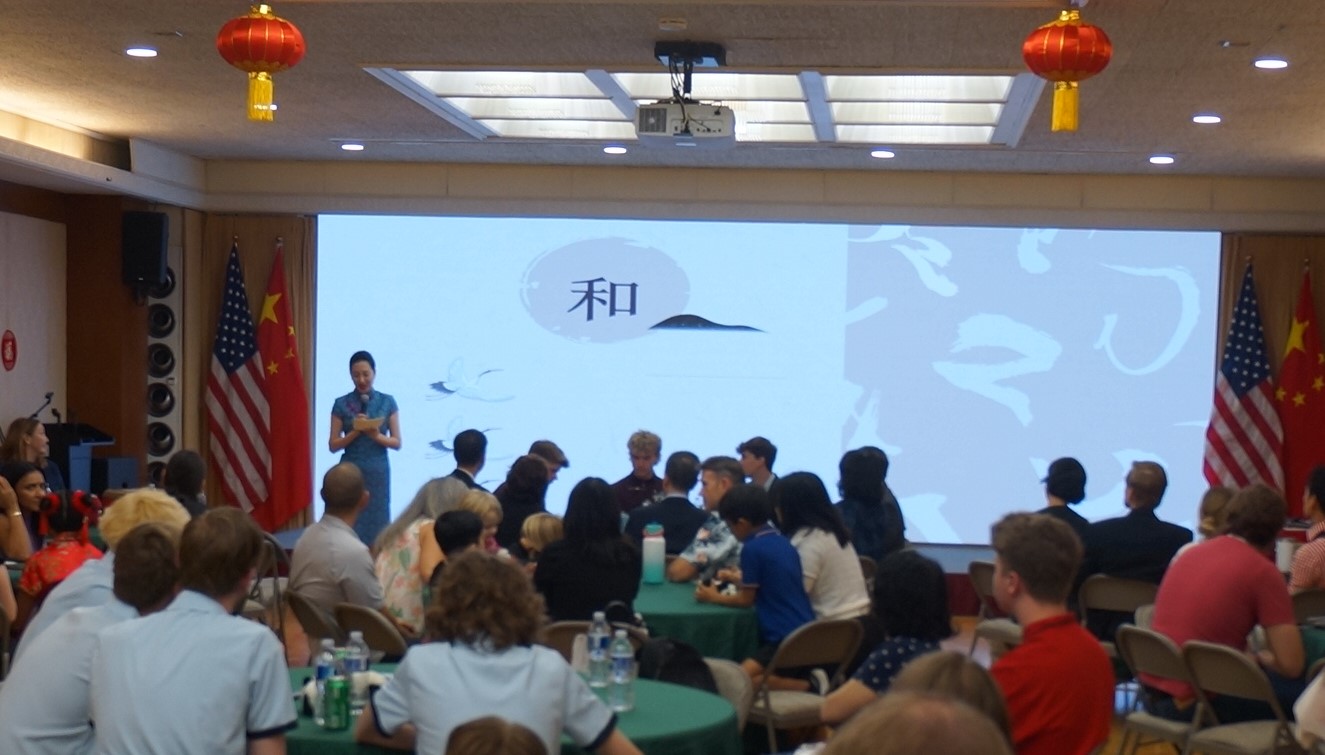
In the same room, Wang Wei, the consul general’s wife, led a cultural workshop earlier centered on the character “和”—harmony—guiding students through its meaning with videos and interactive discussion.
(Photo by: Richard Ren/LAPost)
For many attendees, it was a first encounter with Chinese culture. For others, it was a continuation of years of study. But for all, it was immersive—less a lesson than an experience.
(Photo by: Richard Ren/LAPost)
(Photo by: Richard Ren/LAPost)
There is a Chinese proverb Guo invoked in his speech: “Seeing once is better than hearing a hundred times.”
On this day in Los Angeles, that idea took on a distinctly modern form. Language was not just studied or performed—it was lived, shared, and, in small but meaningful ways, transformed into understanding.