Another Dialogue in the Aroma of Tea: Three Years After Los Angeles’ “Tea for Harmony” Gathering
LAPost/Los Angeles — As the percussion of the Peking opera classic Havoc in Heaven echoed through the main hall of the Chinese Consulate General in Los Angeles, many American guests experiencing Peking opera up close for the first time instinctively raised their phones to record the moment.
Leticia Perez openly admitted during her remarks, “I’m a big fan of Chinese culture.” She added, “This event never fails to deliver a world-class Chinese cultural experience.” It was her third time attending the “Tea for Harmony” gathering.
On the evening of May 2, Guo Shaochun, Chinese Consul General in Los Angeles and his wife Wang Wei hosted the “Tea for Harmony · Elegant Gathering in Los Angeles” at the consulate, inviting political leaders, artists, cultural figures, and community members from across Southern California to immerse themselves in Chinese tea culture. This marked the third consecutive year Los Angeles has hosted the global Chinese tea culture initiative.
Under the evening lights, the consulate had been transformed into a slow-moving, flowing Eastern space.
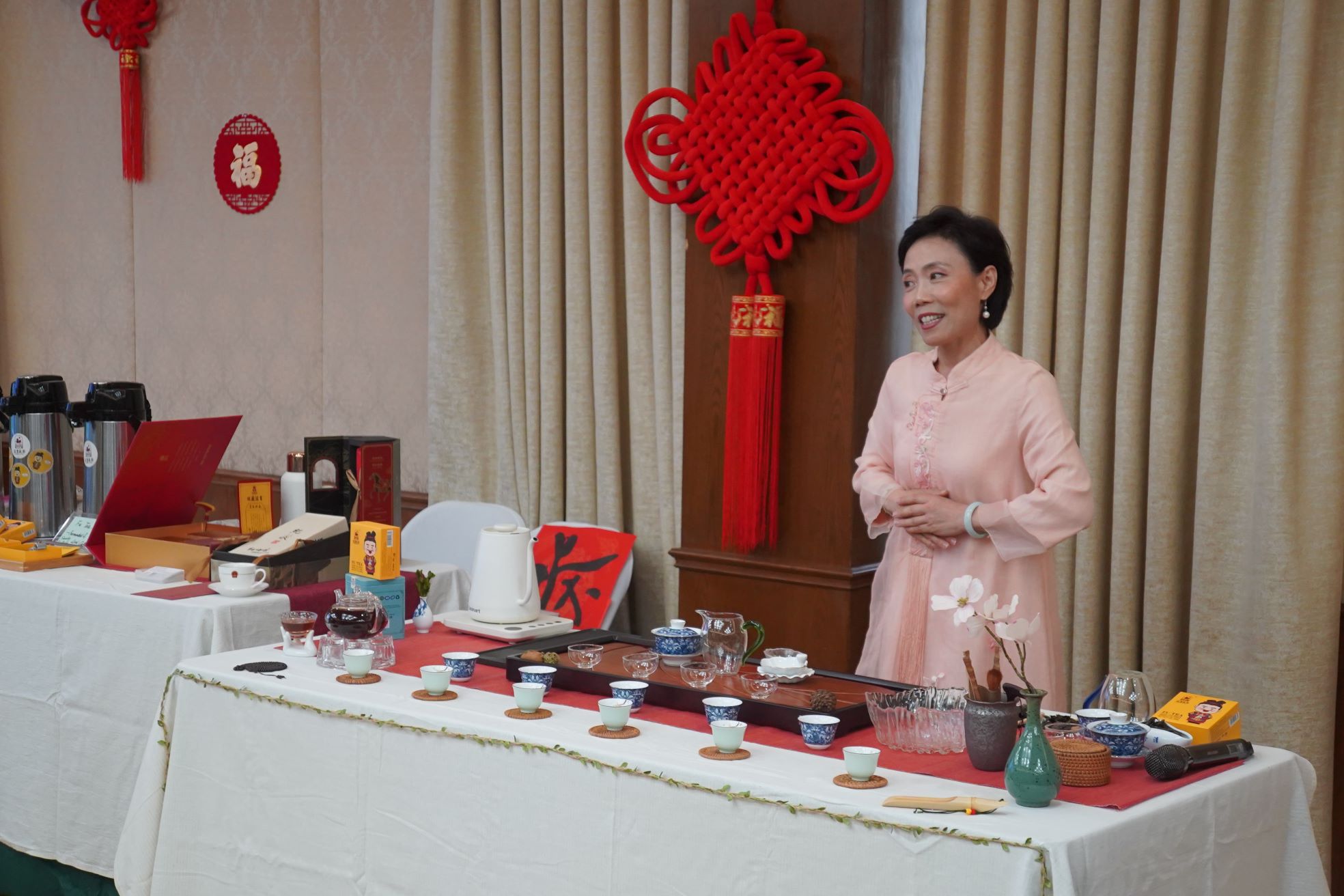
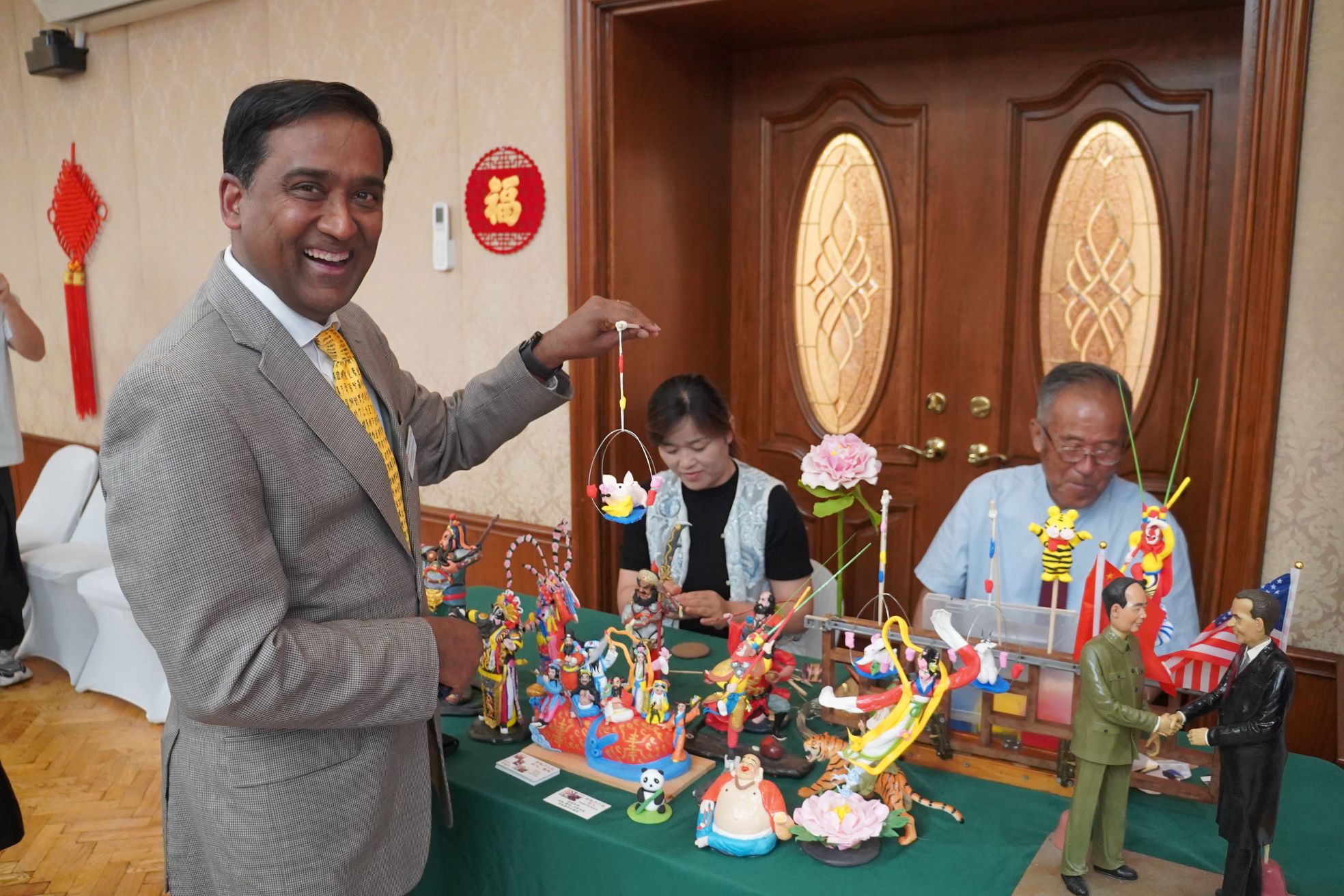
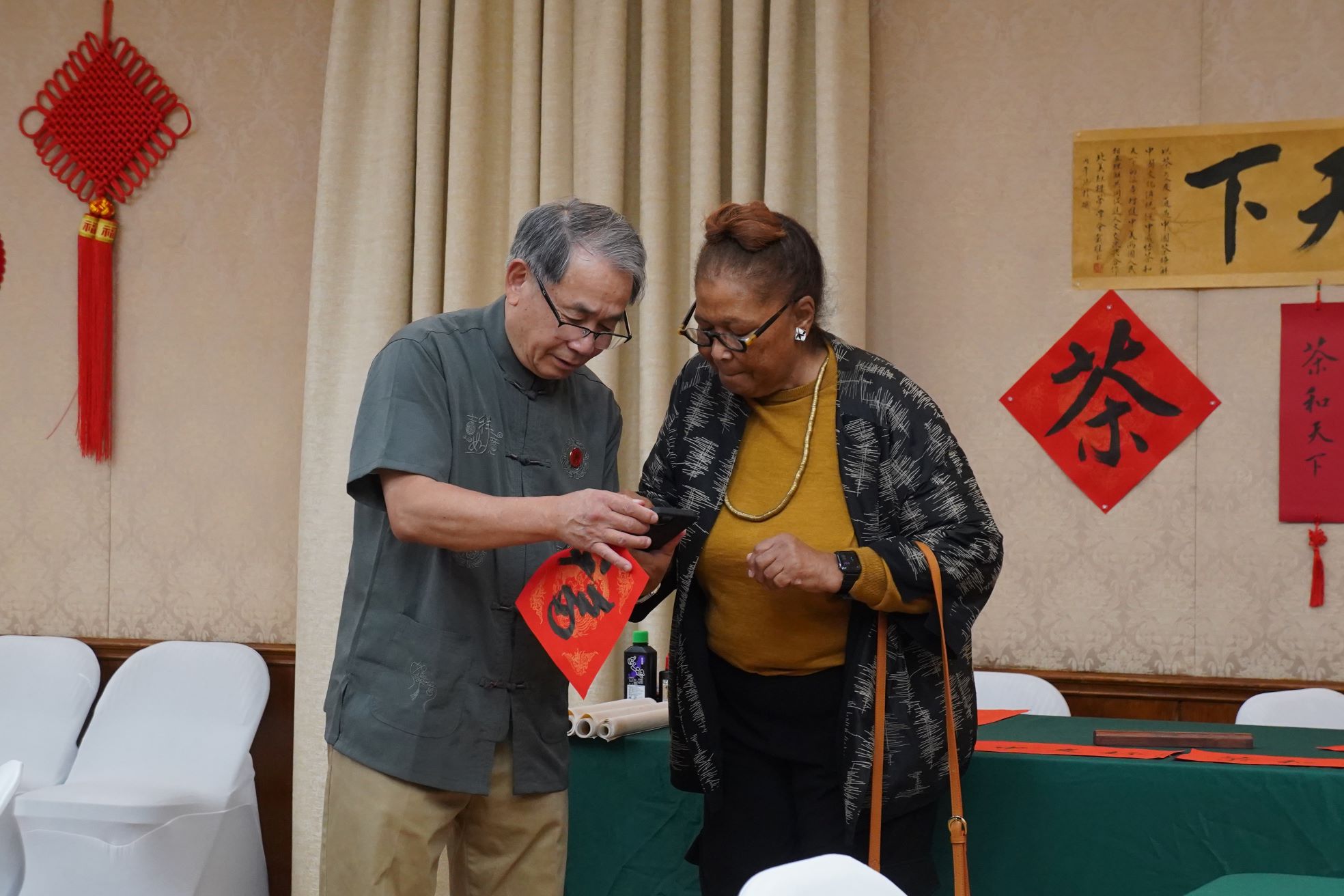
Between tea tables, tea masters brewed tea with almost ceremonial precision; young guests crowded around calligraphy displays taking photos; traditional melodies from guzheng and bamboo flute drifted softly through the hall; dough figurines, traditional crafts, and interactive exhibits continually drew visitors to stop and linger.
Many arrived expecting a conventional cultural event. Instead, they found themselves inside a carefully choreographed sensory experience.
“Tea is not just something you drink,” one guest remarked afterward. “There’s aesthetics in it, rhythm in it, a philosophy of hospitality — even a way of relating to the world.”
That feeling, in many ways, reflected exactly what the organizers hoped to convey.
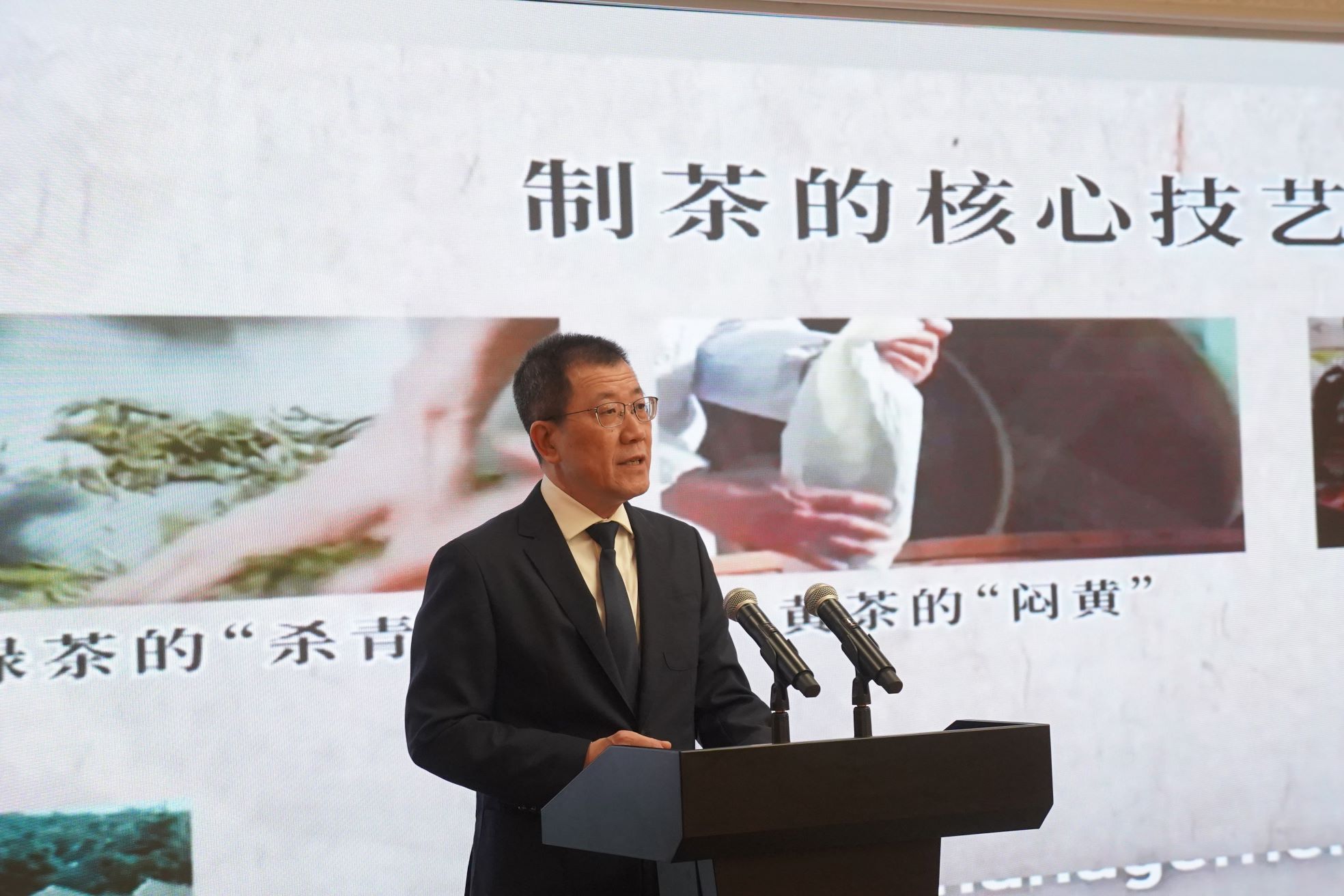
Guo Shaochun, Chinese Consul General in Los Angeles(Photo by: Richard Ren/LAPost)
In his remarks, Consul General Guo noted that tea represents not only traditional Chinese culture, but also plays a growing role in China’s rural revitalization and green economy. Across China, tea-producing regions have increasingly integrated eco-tourism, tea-making experiences, and cultural activities into broader economic development, creating an industry that supports tens of millions of jobs.
“We hope that through tea and through the preservation of Chinese cultural heritage, people can better understand Chinese culture, its inheritance and development, and the Chinese people’s pursuit of a better life,” he said. “Most importantly, we hope to deepen mutual understanding and friendship.”
Yet beyond the larger narratives, it was often the smaller moments that resonated most deeply that evening.
One of them was Ghaffar Pourazar performing as the Monkey King.
For many Americans, Peking opera still carries the image of something distant, ancient, or difficult to understand. But Pourazar — an Iranian-born performer — brought Journey to the West vividly to life in a distinctly cross-cultural way.
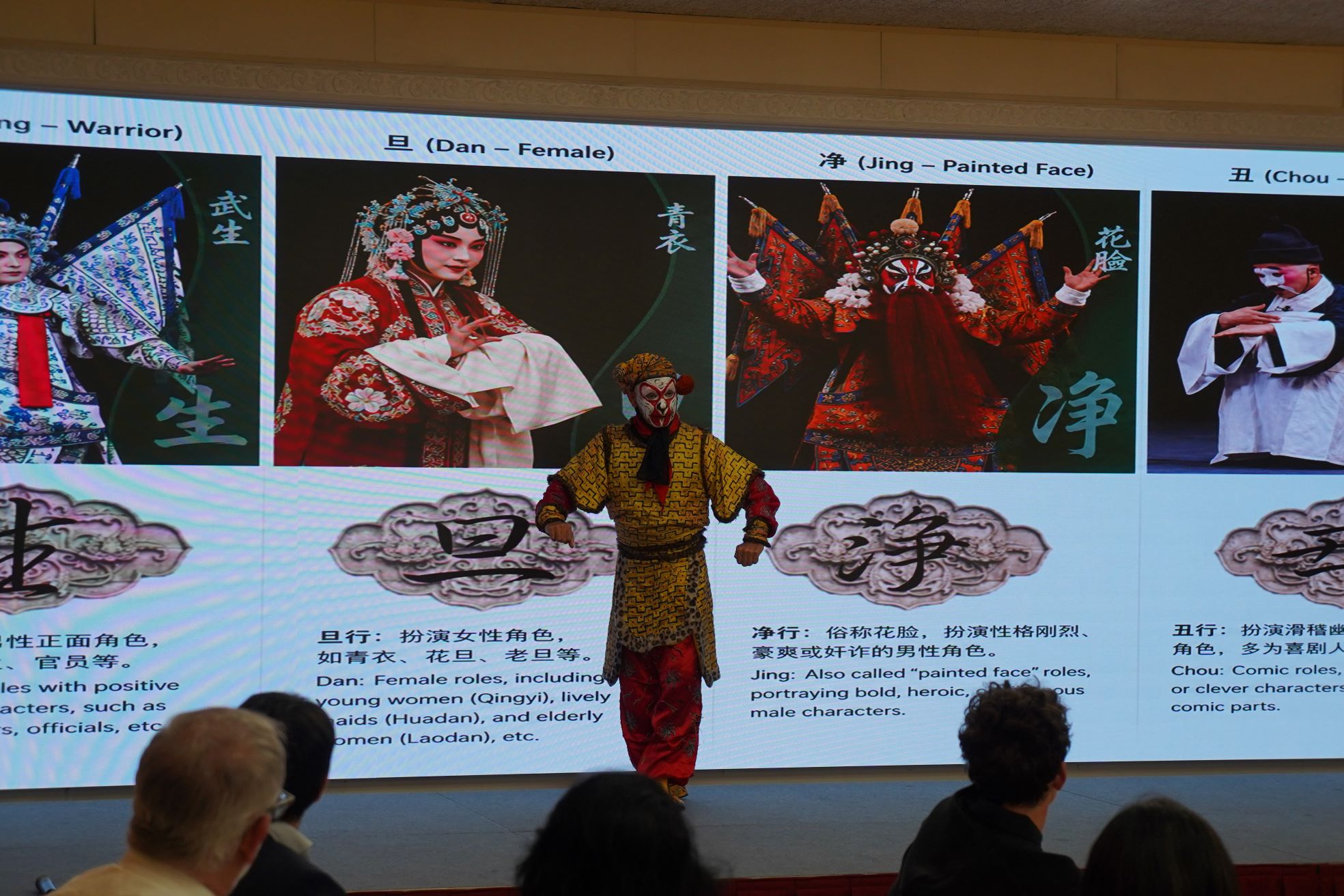
Ghaffar Pourazar(Photo by: Richard Ren/LAPost)
At center stage, Pourazar leapt and spun as his golden staff sliced sharply through the light. Speaking in accented English, he briefly introduced the traditional Peking opera role categories — sheng, dan, jing, mo, and chou — before seamlessly transitioning back into stylized Monkey King movements and martial choreography.
Only moments earlier, guests had been quietly sipping tea and listening to delicate string music. Now applause and laughter filled the hall.
That shift in rhythm became one of the defining qualities of this year’s gathering: it no longer felt like a traditional cultural presentation, but rather a layered exploration of what China actually is.
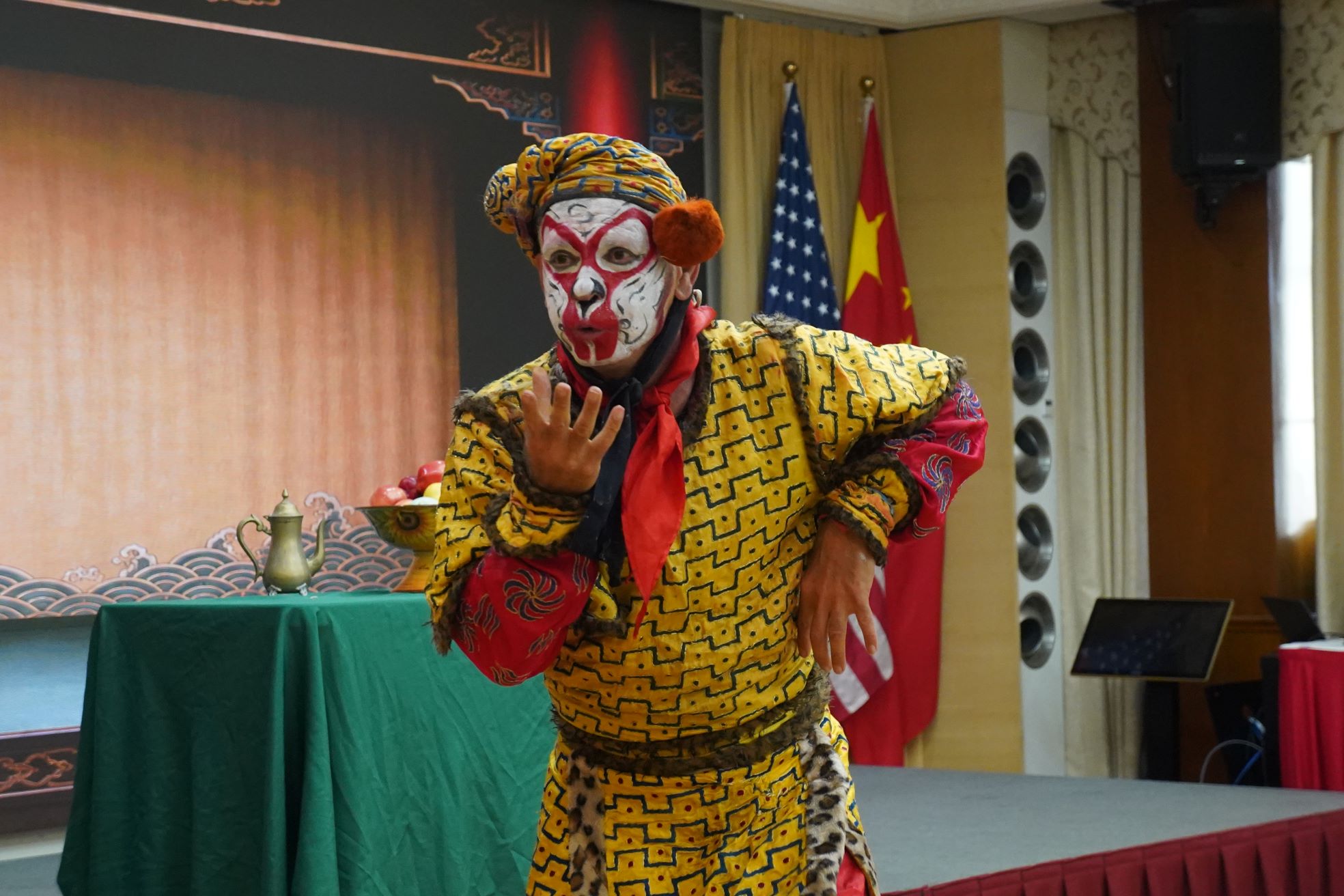
Ghaffar Pourazar(Photo by: Richard Ren/LAPost)
Pourazar also spoke about bringing Peking opera productions around the world over the years, and about his latest musical project — a work inspired by Peking opera elements that tells the story of famed primatologist and environmentalist Jane Goodall.
Soon after, his performance from Havoc in Heaven electrified the room. While many audience members may not have fully understood the formal conventions of Peking opera, they could immediately feel its energy, rhythm, and theatrical force.
That may also reflect one of the clearest changes in this year’s event: rather than trying to “explain China,” it has begun learning how to invite audiences into China.
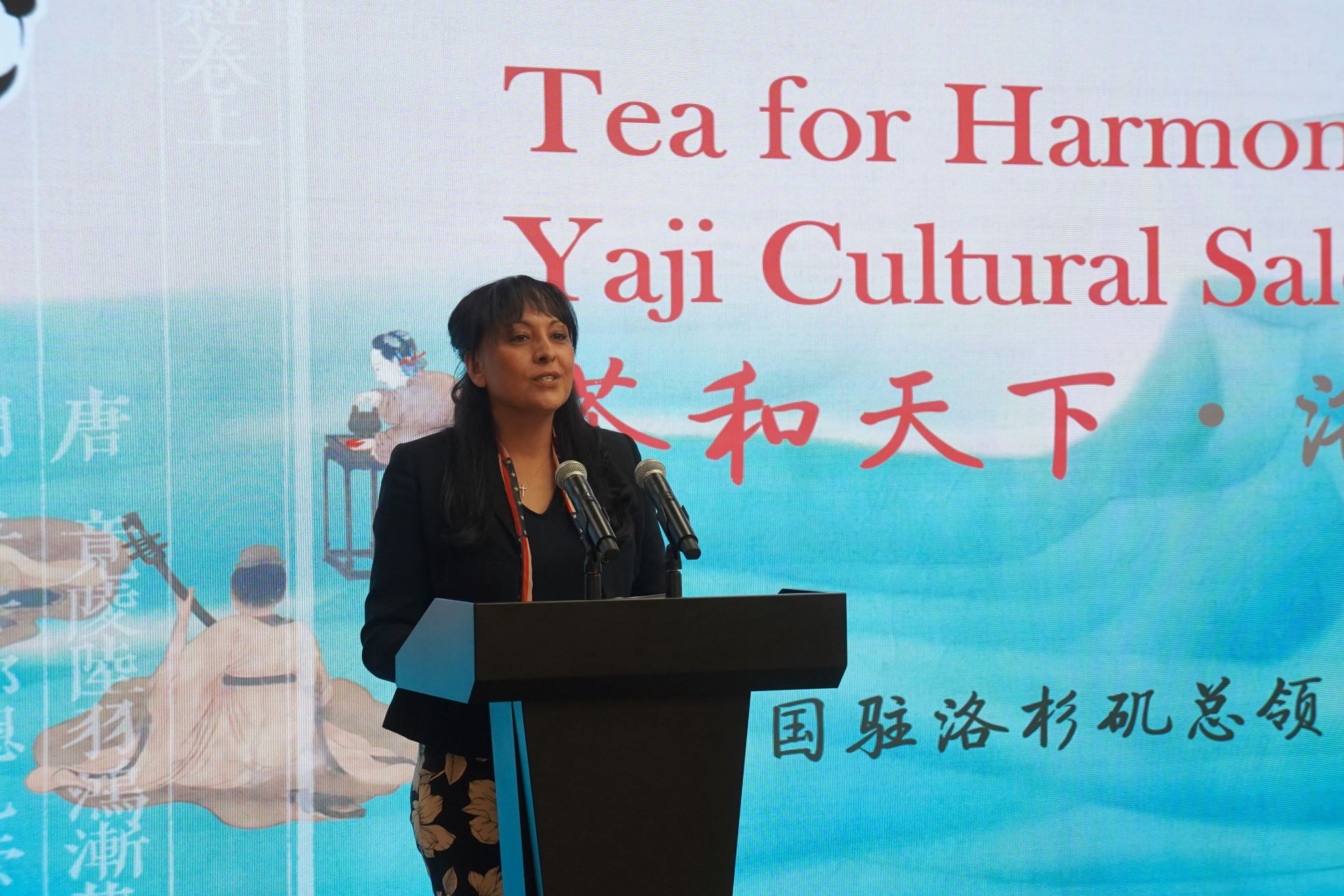
Leticia Perez(Photo by: Richard Ren/LAPost)
During her remarks, Leticia Perez said she continues returning each year not only because China is an important economic partner for California, but because events like these help create genuine human understanding.
“Even during the most difficult moments in international relations, the fact that we are sitting here together tonight proves that efforts toward peace, friendship, and cooperation are not in vain,” she said.
More than political rhetoric, she repeatedly returned to the ideas of “understanding,” “exchange,” and “reimagining China.”
Longtime attendees say they have noticed that shift as well.
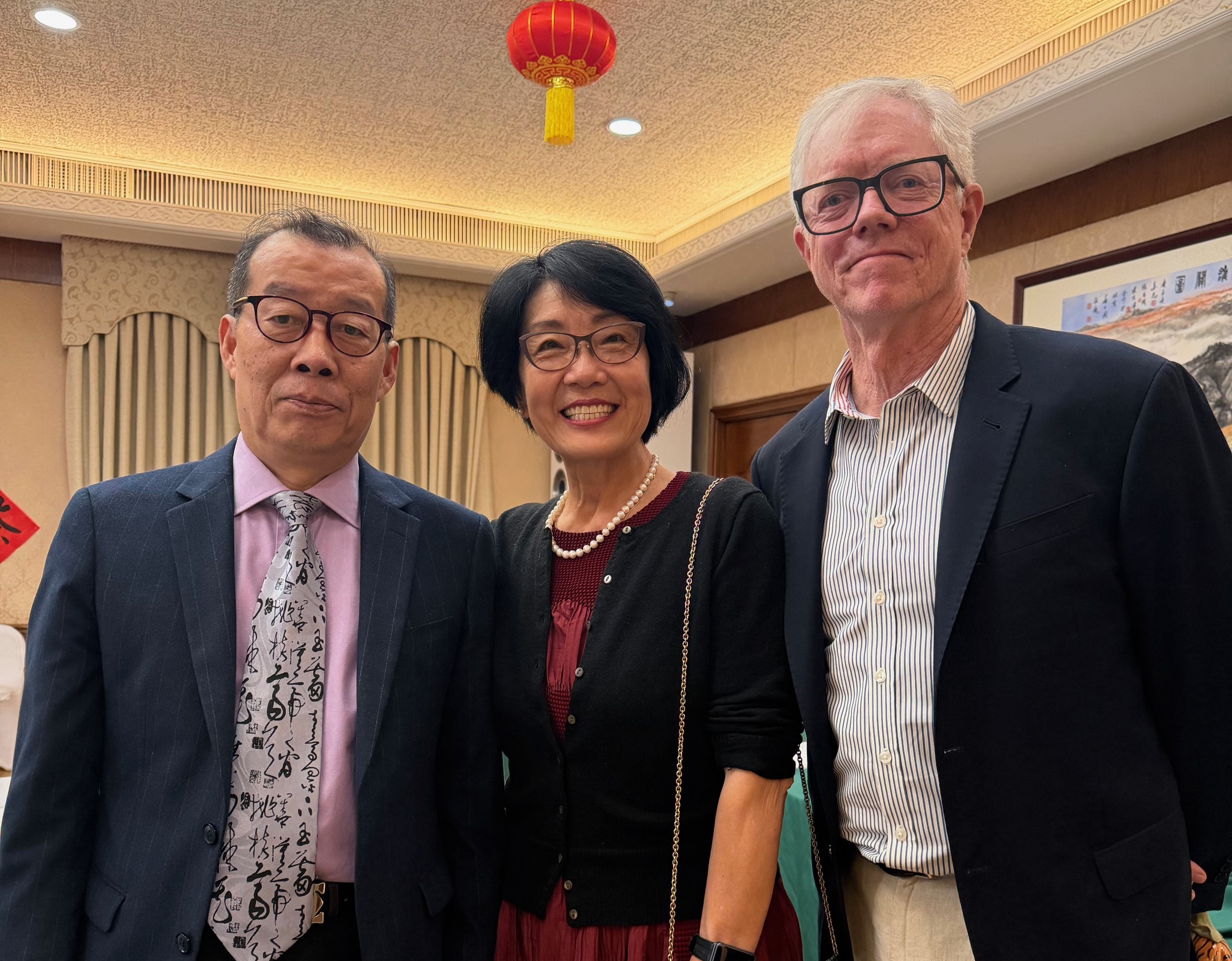
Douglas Hans Smith (Right 1)(Photo by: Richard Ren/LAPost)
Oscar-winning Hollywood visual effects artist Douglas Hans Smith has attended the “Tea for Harmony” event for several consecutive years.
In an interview, he described this year’s edition as “the most successful one yet.”
“It’s successful because it really introduced people to the subtleties of 4,000 years of culture,” he said. “Calligraphy, music, dough sculpture, tea ceremony — everything was naturally woven together. It was a deeply enriching experience.”
More importantly, he emphasized how much the event has evolved over the past three years.
“It’s improved step by step,” he said. “But this year’s event was the one I connected with the most. It felt the most immersive.”
In many ways, his observation helps explain the growing impact “Tea for Harmony” has built in Los Angeles over the past three years.
Its success lies not simply in displaying Chinese cultural elements, but in creating an atmosphere where people from different cultural backgrounds feel willing to approach, stay, and emotionally connect.
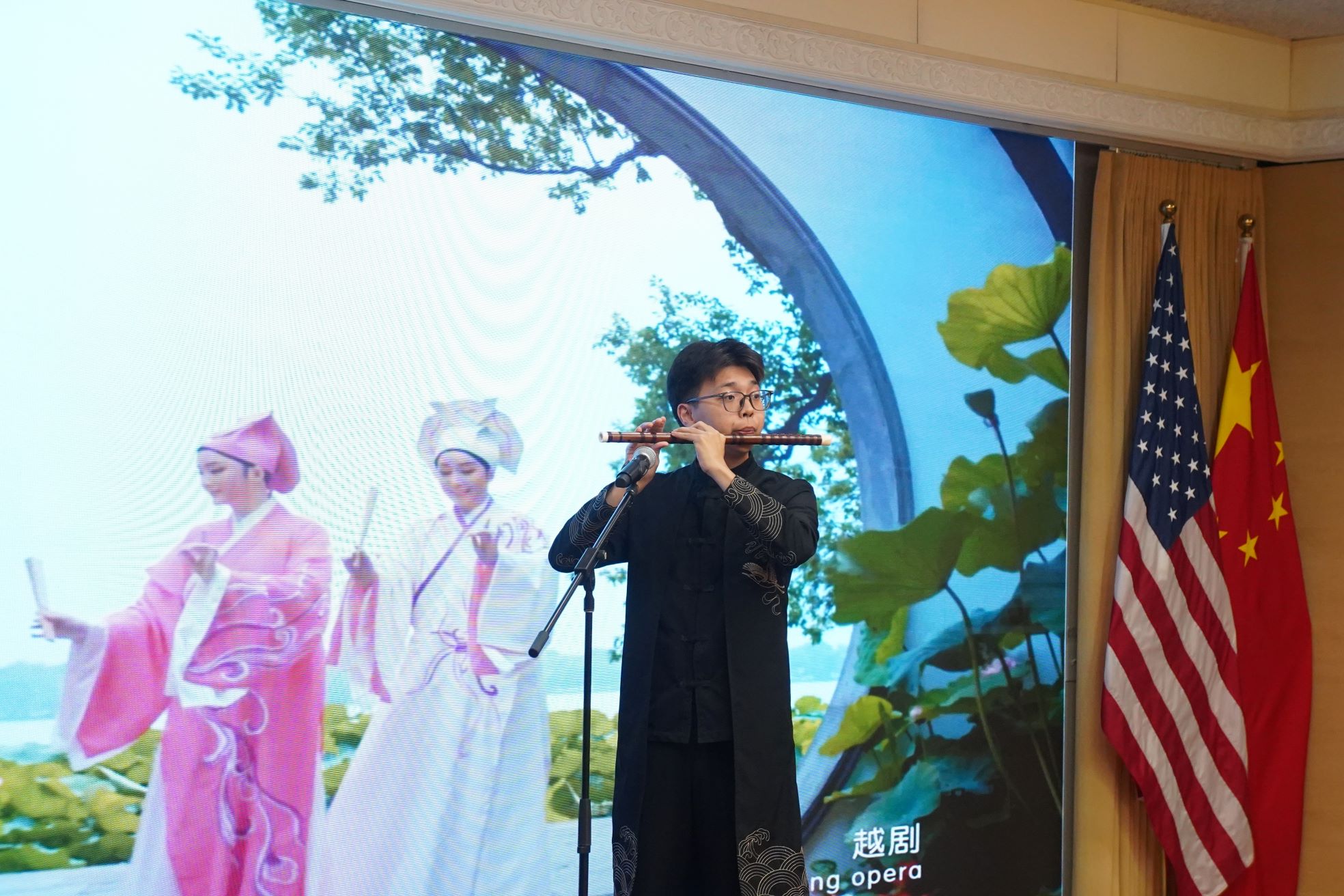
Fan Kailun(Photo by: Richard Ren/LAPost)
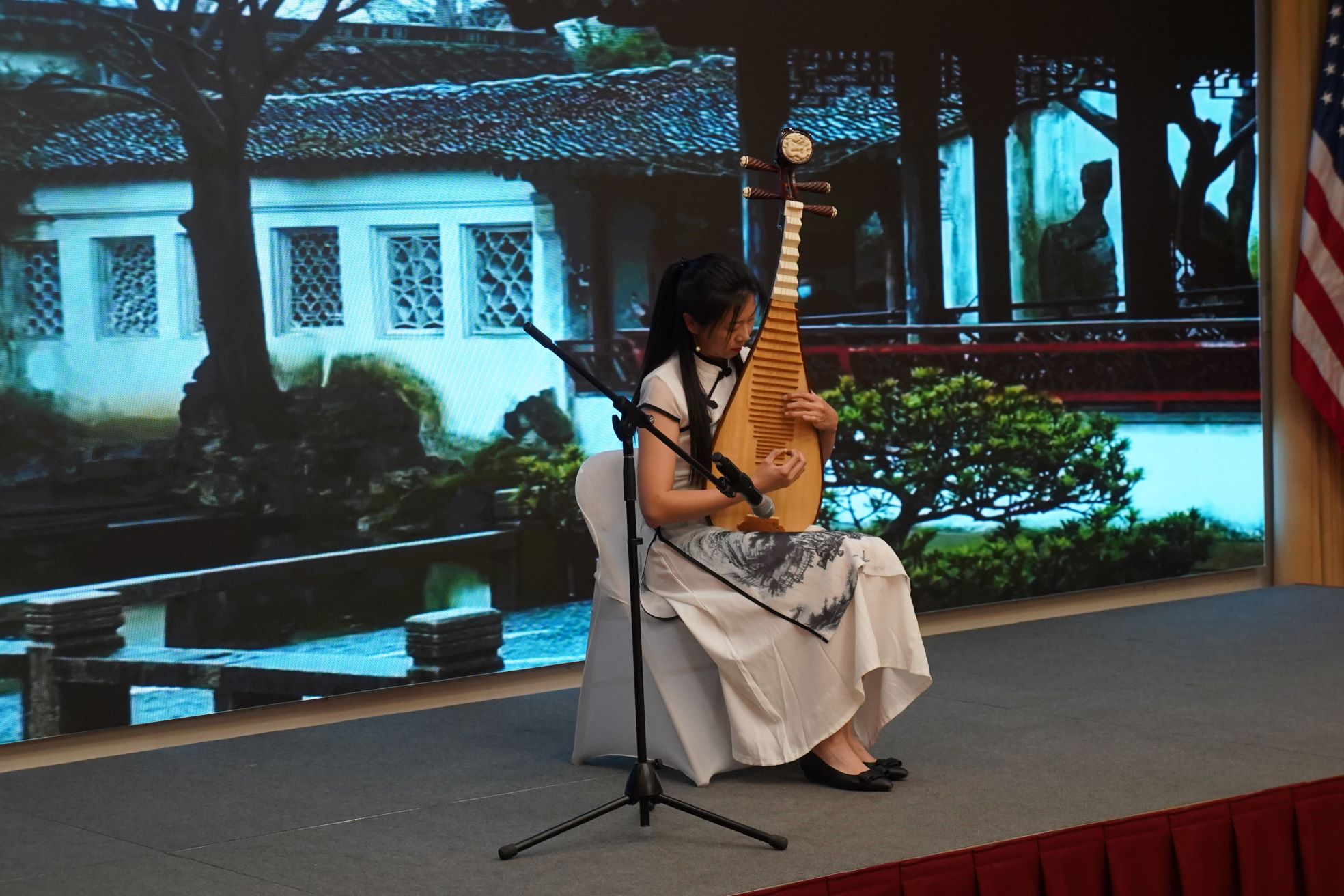
From the pipa solo Spring Rain, to young musician Fan Kailun’s bamboo flute performance Spring Arrives on the Xiang River, to the hulusi piece Moonlight Over the Bamboo Grove; from tea ceremonies to the Monkey King’s dazzling golden staff routine — the evening constantly moved between tradition and modernity, local and international.
And through it all, tea served as the quiet thread connecting everything together.
That evening also drew well-known singer and music producer Yutong Liu, international content creators “DuJiao Show,” Kenan Heppe, Joey Reed, and Laurence Long. For many younger creators, the immersive gathering offered something social media clips often cannot: a slower, more tangible encounter with Chinese culture.
“Tea for Harmony” was launched by China’s Ministry of Culture and Tourism as a global cultural initiative. In 2022, “Traditional Tea Processing Techniques and Associated Social Practices in China” were added to UNESCO’s Representative List of the Intangible Cultural Heritage of Humanity. Since 2023, “Tea for Harmony · Yaji” events have been held in cities around the world to promote cultural exchange through tea.
In Los Angeles, three years of consistent outreach are beginning to show visible results.
At least for one evening, many guests left carrying away more than just the taste of Chinese tea.
They left with the possibility of understanding China in a different way.
(By: Richard Ren/LAPost)
(Photo by: Richard Ren/LAPost)
(Photo by: Richard Ren/LAPost)
(Photo by: Richard Ren/LAPost)
(Photo by: Richard Ren/LAPost)
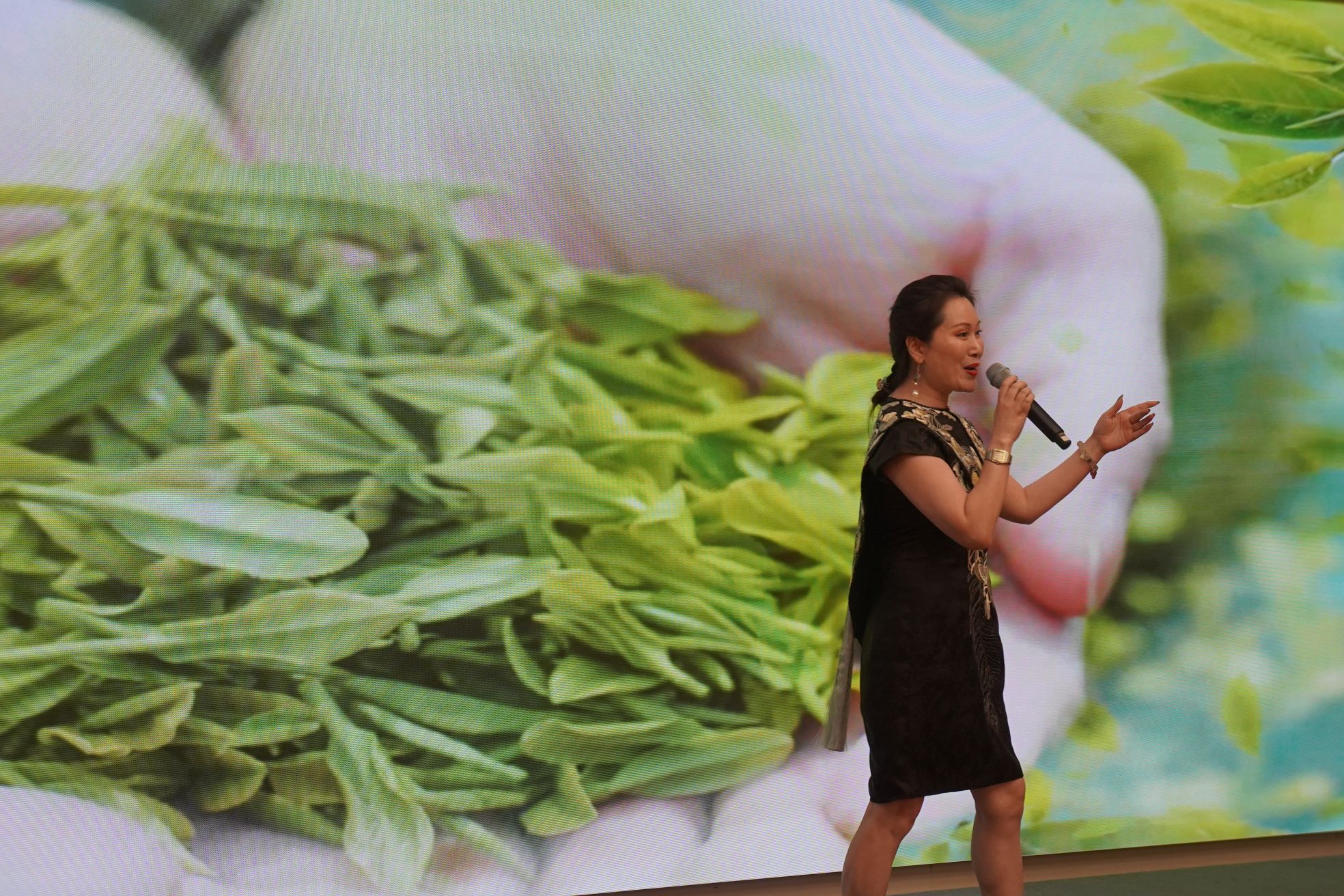
(Photo by: Richard Ren/LAPost)
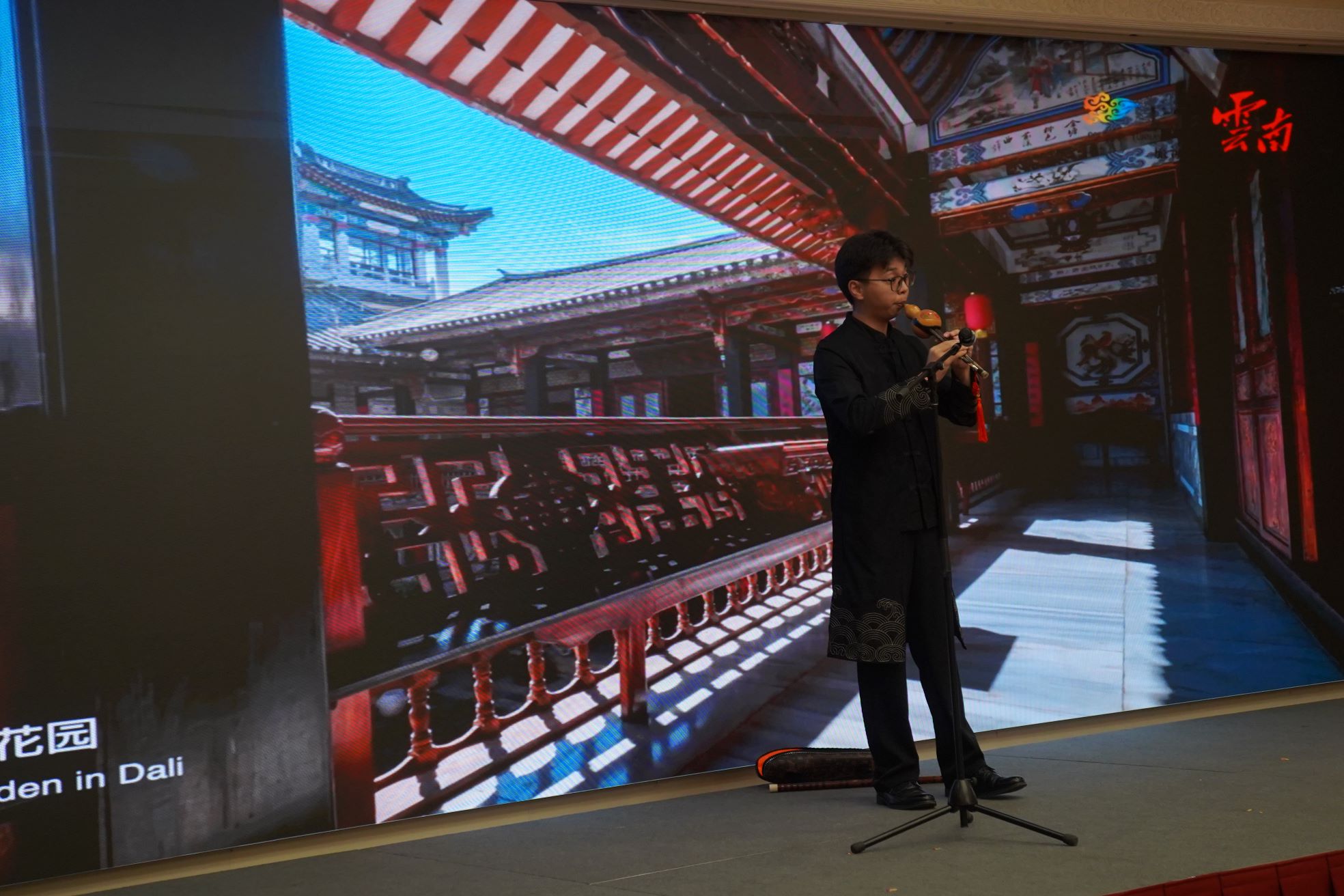
(Photo by: Richard Ren/LAPost)