CONCORD, Calif. — On a hot June afternoon, Sergio Jaime Lopez, the community defense coordinator for the non-profit Safe Center in Contra Costa County, arrives at the Concord Immigration Court.
A hearing is about to begin, and he does his rounds. He gives an update in Spanish to three women related to an asylum seeker waiting in the hallway. Then he delivers instructions to two volunteers on what resources to give people leaving the hearing. He shares hushed words with one man while handing a picture book to a child.
“They just want to be kids. And there’s not anything that they can play with so we just provide books. That way they can be a little bit distracted,” he says. For the parents, he hands out packets. They contain listings of organizations across California that provide free or low-cost legal consultation, and contacts for California Bar Association attorneys.
He finally steps inside the courtroom, where about 30 people await the judge on crowded benches.
This is a snapshot of an immigration process under siege from large asylum backlogs, too few immigration judges and mass hearings designed to speed up deportations.
Transferred cases and heavy caseloads
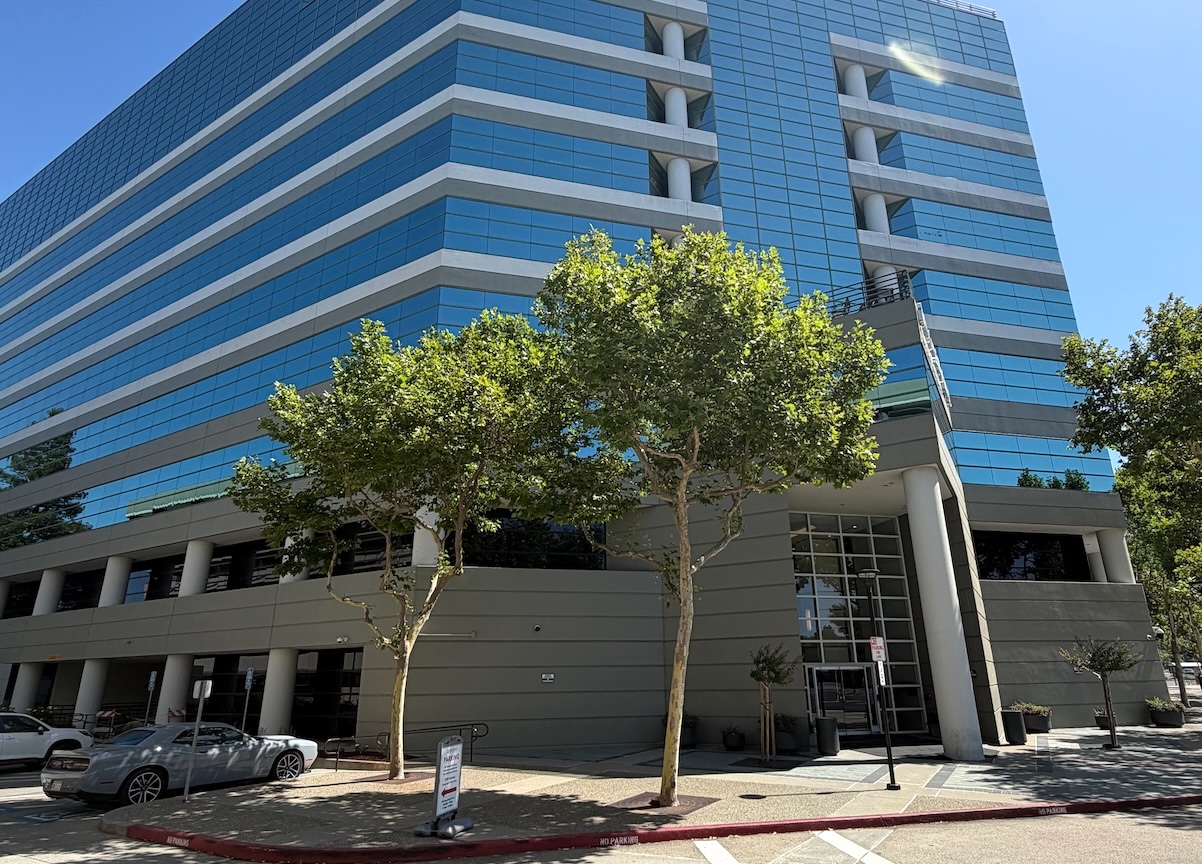
Since the closing of the San Francisco Immigration Court by the Trump administration in May, roughly 100,000 cases have been transferred to a new court in the city of Concord, about 30 miles east.
The move compounded a backlog that already exceeds 58,000 cases. California’s statewide immigration case backlog now stands at 340,000. San Francisco carried 116,800 of those cases before a bulk of them were absorbed by the Concord docket.
At the same time, there has been a sharp reduction of immigration judges. Of the 21 immigration judges who staffed the two downtown San Francisco immigration courthouses at the start of the year, only two remain. Concord, meanwhile, has just eight immigration judges to absorb the surge. With far fewer judges handling far more cases, asylum seekers in the Bay Area face a dismal situation. Their cases will either not get the attention they deserve or be left in legal limbo for years, some rescheduled as far out as 2029.
To manage the volume, a new process is drastically accelerating the amount of cases a judge hears at once. Immigrants are being scheduled for massive master calendar hearings called “mega masters,” where 100 people or more are included in the courtroom at once. In the past usually up to 20 people were heard at a time. Some had their appointments suddenly rescheduled to these mega master hearings on short notice.
“This is a big change. There’s a lot of people coming and most of them had a previous hearing in 2027, 2028, 2029. And they suddenly received a notice a week ago to show in person in Concord for this hearing,” says Jaime Lopez.
The short notice has a chilling effect. “We are starting to see the numbers of people showing up decrease. Like, I can tell you on the second day, there were about 100 people requested to show for their court hearing. But around 40 people showed up,” says Lopez.
Designed for deportations
Chloe Czabaranek is the Immigration Legal Director at the La Raza Community Resource Center in San Francisco. It’s a position she’s held since April.
She says the past year has been very up in the air for clients. She reports prepping clients for every scenario, lining up witnesses, gathering family and community, only to find out at the last minute that the hearing is rescheduled, sometimes without getting a new hearing notice. That leaves her and her attorneys just as much in the dark as their clients.
“So it’s a little frustrating, just to put it lightly,” Czabaranek says. “We just keep checking every week. We check their number and it says there are no upcoming hearings… and we have to sit there with them and just empathize because at the end of the day we don’t know, right? We’re just doing our best to keep them informed.”
“It is very disheartening,” Czabaranek adds, describing how preparing asylum seekers for their cases is not easy as it often brings up trauma during evaluations that they have to process only to let them know that the hearing has been postponed.
Czabaranek and other legal advocates say the Justice Department’s goal of accelerating and grouping up hearings is to issue more deportation orders. Many immigrants do not show up for the mega masters either because of the short notice or the worry that they will be detained or deported. Those who fail to appear are receiving removal orders. Attorneys say the mega masters largely target those without legal representation. The process has restricted due-process rights for immigrants even further.
“It’s terrible because they fired many judges in San Francisco that historically have a really high rate of approval for asylum,” Lopez notes.
Fired for doing our job

Jeremiah Johnson, former immigration judge in San Francisco and Vice President of the National Association of Immigration Judges, discusses his removal and how the ongoing removal of immigration judges is causing immigrants to lose their legal status.
One of those judges is Jeremiah Johnson, fired last year as the San Francisco immigration court was being dismantled. Johnson, now executive vice president of the National Association of Immigration Judges – a former labor union decertified by the first Trump administration – says it was a challenging work environment from the start, but a vibrant one where the judges collaborated and mentored each other.
“The work was meaningful. We were challenged, but yet we felt that we were doing the right thing,” he says. “I think a lot of us were fired, myself included, for doing our job. What we see here is an administration that does not want to hold hearings.”
Johnson saw his caseload increase during his time in San Francisco, from a quota of two cases a day in his first year to six cases a day by the time he was fired in November. Even before mega master hearings, he was setting hearing dates as far out as December 2028..
Johnson described the effect bluntly; more time in legal limbo, and more time spent in uncertainty on whether or not one can remain in the US.
“It’s going to take people here in the Bay Area much longer to have their day in court … and that affects whether you buy a house or not, what school you’re gonna send your kid to. Should I get married or not? Should I have a kid? … You have uncertainty just in today’s climate of fear. Will I make it home from work to see my kid? And a lot of these people are mixed [status] as families, US citizen children, US citizen spouses. Should I go to my kid’s softball game? Should I go to a medical appointment? I’m scared that I might be arrested and never see my family again. That type of uncertainty is what is being exacerbated by these closures.”
Johnson said that he began seeing people opt to self-deport often just to escape or avoid detention.
“Conditions in detention are such that people cannot stand another day,” he said. “I took the bench once and there was a woman who had a valid claim, who had entered the United States lawfully. She didn’t have an attorney, and the first thing she said was she wanted out, that she could not take one more day in detention. So she gave up her case that day and went back to her own country. There was no hearing that day. This is a legal strategy to keep people from having their day in court.”
Paying it forward

Born in Nicaragua, Lopez journeyed north to the U.S. border in 2019 and applied for asylum in San Diego. He wasn’t able to find an attorney, and after a few hearings, he was unexpectedly detained for six months.
“I couldn’t understand why I was detained or in jail for so long. It was terrible for me, because it’s like you’re living in limbo. So you don’t know what to do. You don’t know what the future will be. Especially because I have a family.”
While detained, he began teaching himself the basics of the U.S. immigration system in the detention center’s library. He wrote letters to legal aid organizations and eventually got his case picked up. He made his way to the Bay Area, where his wife and children eventually followed.
That’s a big reason why Sergio Jaime Lopez is at the court every day helping immigrants decipher what has become a kafkaesque immigration court system. He sees it as a way to utilize the knowledge he gained while in immigration jail – to pay it forward to others.
“When I came here to the Bay, a big community supported me, and there’s still a big, big amount of people, community, and interfaith organizations that care for immigrant communities, immigrant families, and they share many, many of the values that I also have right now. And we are really strong together,” he says.
“I’m here as a result of community, because if people didn’t support me in the past, I wouldn’t be here. My situation would be different, probably. I’m a result of my community that supports me and stands beside me.”
Chris Alam is a California Local News Fellow with the UC Berkeley Graduate School of Journalism. This story was produced as part of “Aquí Estamos/Here We Stand,” a collaborative reporting project of American Community Media and community news outlets statewide.