Peter Chan’s The Road Not Taken Makes U.S. Premiere at Asian World Film Festival, Exploring Memory, Family and Life’s Choices
Director Peter Chan brings his latest film to a sold-out screening at the historic Culver City Theatre. Starring Zhou Xun, the drama examines family relationships, generational tensions and life choices through the perspective of a woman living with Alzheimer’s disease.
LAPost/Culver City, CA (November 18, 2026) — By: Richard Ren/LAPost
Chinese-language drama The Road Not Taken (明天,会更好), directed by Peter Ho-Sun Chan, made its U.S. premiere on November 18 as the closing film of the 12th Asian World Film Festival (AWFF), drawing a packed audience to the historic Culver City Theatre. Chan attended the screening and joined a post-screening Q&A, discussing the film’s origins, its narrative approach and his observations of Alzheimer’s disease and family relationships.
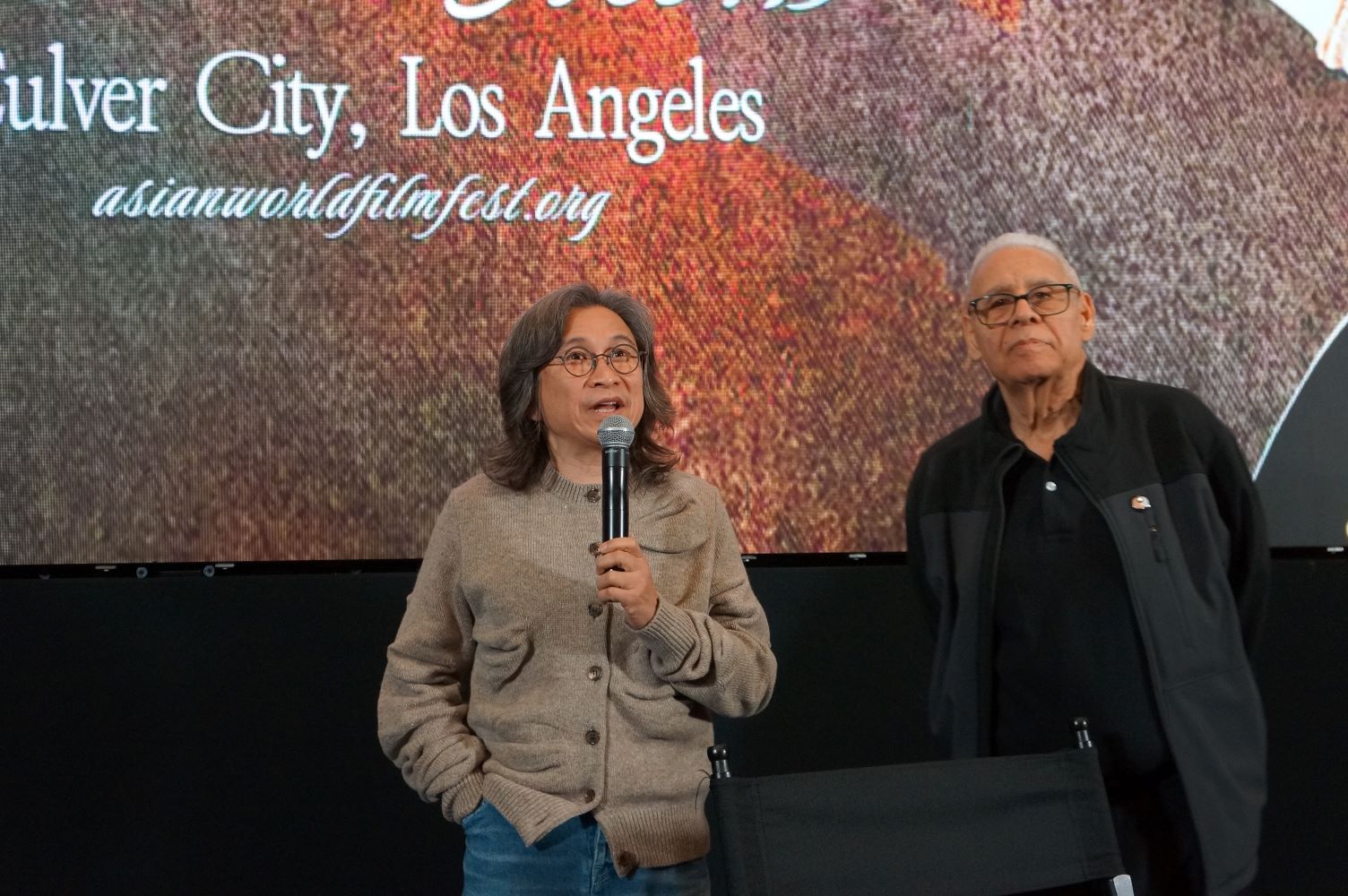
Peter Chan and Georges N. Chamchoum (Photo by Richard Ren/LAPost)
The theater was filled to capacity, with even the aisles occupied by audience members. Guests included Chan, AWFF Executive Chairman Georges N. Chamchoum, and Consulate General of China in Los Angeles officials Chen Fenghua, from the Cultural Affairs Section, and Xia Fan, from the Press Section.
Starring Zhou Xun and Wang Xiao, The Road Not Taken centers on Shen Jia, a middle-aged woman whose memory is gradually deteriorating. As her memories fade, the past begins to overlap with the present, bringing long-standing family tensions, emotional fractures and pivotal life decisions to the surface. Before her memories disappear entirely, she is forced to confront the paths she has taken and those she left unexplored.
From Producer to Writer-Director: A Film Shaped by Personal Observations
During the post-screening discussion, Chan revealed that he initially joined the project as a producer. Although he liked the original screenplay, he did not feel sufficiently connected to the story at the time to direct it himself.

Peter Chan (Photo by Richard Ren/LAPost)
Several directors were considered over the following years. Chan eventually returned to the screenplay and began revising it with a team of writers, incorporating his observations of everyday life, family experiences and intimate relationships.
After 36 years in the film industry, Chan said he had consistently been involved in script development, but this was the first film in which he had taken such a direct role in writing. He felt that the project was one for which he could fully claim both writing and directing credits.
Although Alzheimer’s disease provides the narrative framework, Chan said his primary interest was not the illness itself, but how it transforms a family and the relationships among its members.
He initially envisioned making a film about marriage before expanding the story to explore relationships across generations, including those between children and parents, and between parents and grandparents. While the characters and situations are not directly autobiographical, many were inspired by people, relationships and family dynamics he has observed throughout his life.
The Meaning Behind The Road Not Taken: No Absolutely Right Path in Life
Chan also discussed the relationship between the film’s Chinese and English titles, which approach its central theme from different perspectives.
The inspiration for The Road Not Taken came on the second day of filming, when a scene involving a road reminded him of American poet Robert Frost’s celebrated poem of the same name. The image stayed with him and eventually became the English title.
Chan explained that people constantly face choices in life and often look back wondering whether they made the right decisions or how things might have turned out had they taken another path.
Taking what he described as a somewhat pessimistic perspective, Chan said he does not believe there is an absolutely right road in life. What matters is not necessarily which path people choose, but how they continue walking after making that choice.
Using Cinematic Language to Enter the Patient’s Perspective
The film also departs from conventional family drama through its visual and sound design.
Asked how scenes set in locations such as parking lots and markets help convey the protagonist’s subjective perspective, Chan said he did not want to make another traditional dialogue-driven family drama. Instead, he sought to use cinematic techniques to bring audiences closer to the way a person with Alzheimer’s might experience the world.
Chan acknowledged that he could not determine whether the film’s portrayal accurately reflects the subjective experience of patients. However, visits to various residential care facilities and medical institutions exposed him to the fear and anxiety patients often experience when confronting unfamiliar surroundings and the realities of their condition. Those observations informed the film’s visual approach.
Chan also shared a caregiving principle he learned during his visits: “Go with the Flow.” Family members should avoid constantly correcting patients’ memories or perceptions. Even when patients say things that do not correspond with reality, directly contradicting them can create unnecessary distress.
He noted that placing elderly parents or relatives in professional care facilities can be particularly difficult for Chinese families. However, as the disease progresses, professional facilities may provide a level of care that family members cannot manage on their own, while also easing the emotional and physical demands on caregivers.
Chan described Alzheimer’s patients as moving in and out of periods of clarity and confusion, making it difficult for relatives to manage their own emotions while providing care. Families, he said, need to recognize when professional assistance becomes necessary.
He recalled visiting one facility where a husband shared a room with his wife, who had Alzheimer’s. Initially, he assumed both were patients, but later learned that the husband had chosen to stay there simply to accompany his wife.
Humor Emerges Naturally from a Difficult Subject
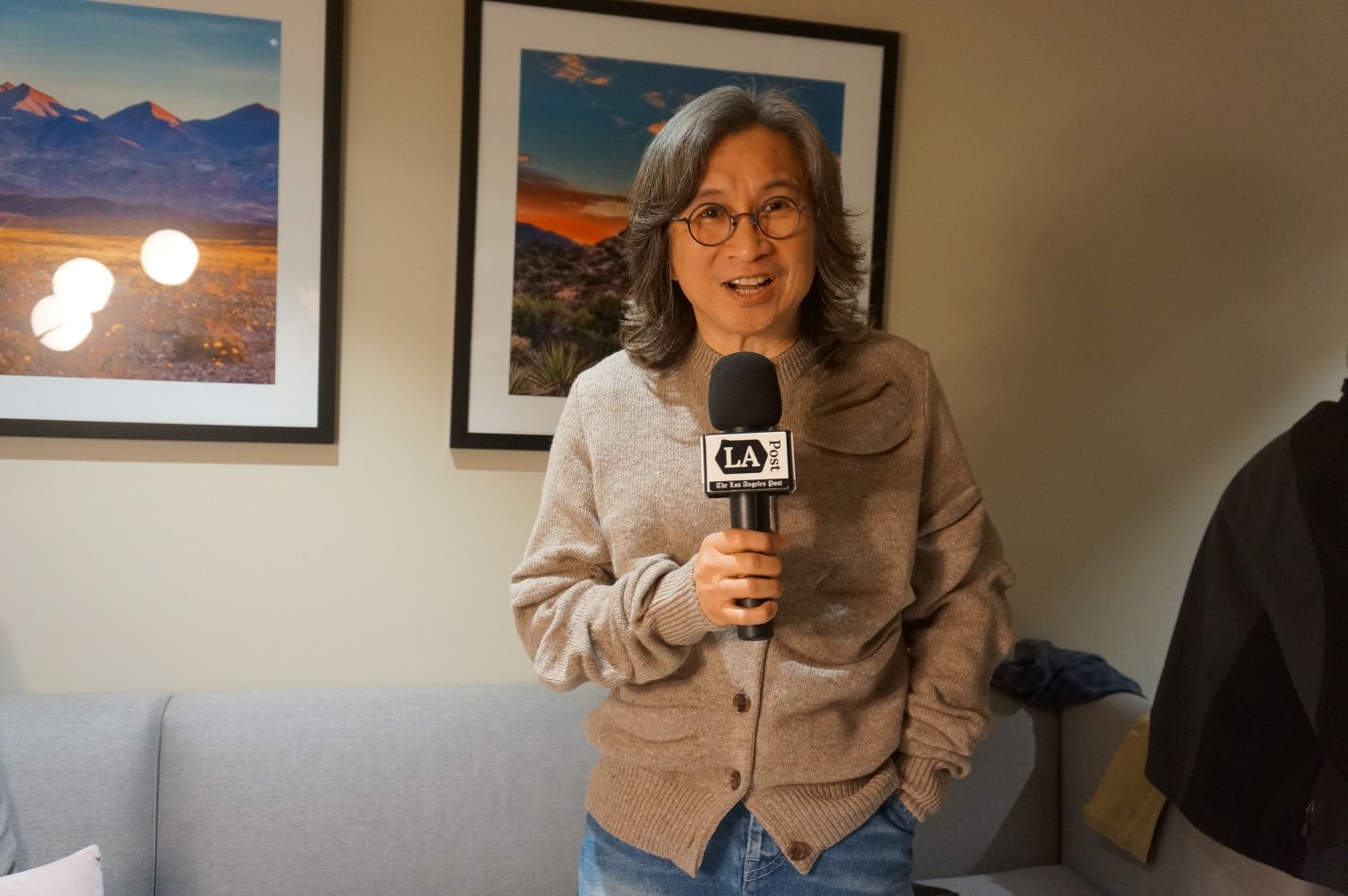
Peter Chan (Photo by Richard Ren/LAPost)
Despite addressing memory loss, illness and family conflict, the film contains several humorous moments.
Asked whether the humor was deliberately incorporated to balance the serious subject matter, Chan said it emerged naturally from the characters and situations rather than being consciously designed.
He had anticipated that only a few scenes would generate laughter, but was surprised by the audience response.
Referring to an earlier screening in Toronto attended by approximately 1,700 people, Chan recalled that laughter filled the theater, with audiences at times responding almost as though they were watching a comedy. He suggested that laughter might have been a way for viewers to relieve the emotional pressure of a film dealing with such a difficult subject.
Filmmakers and Academics Share Their Reactions
The premiere also attracted members of the Chinese-language film community and local cultural circles.
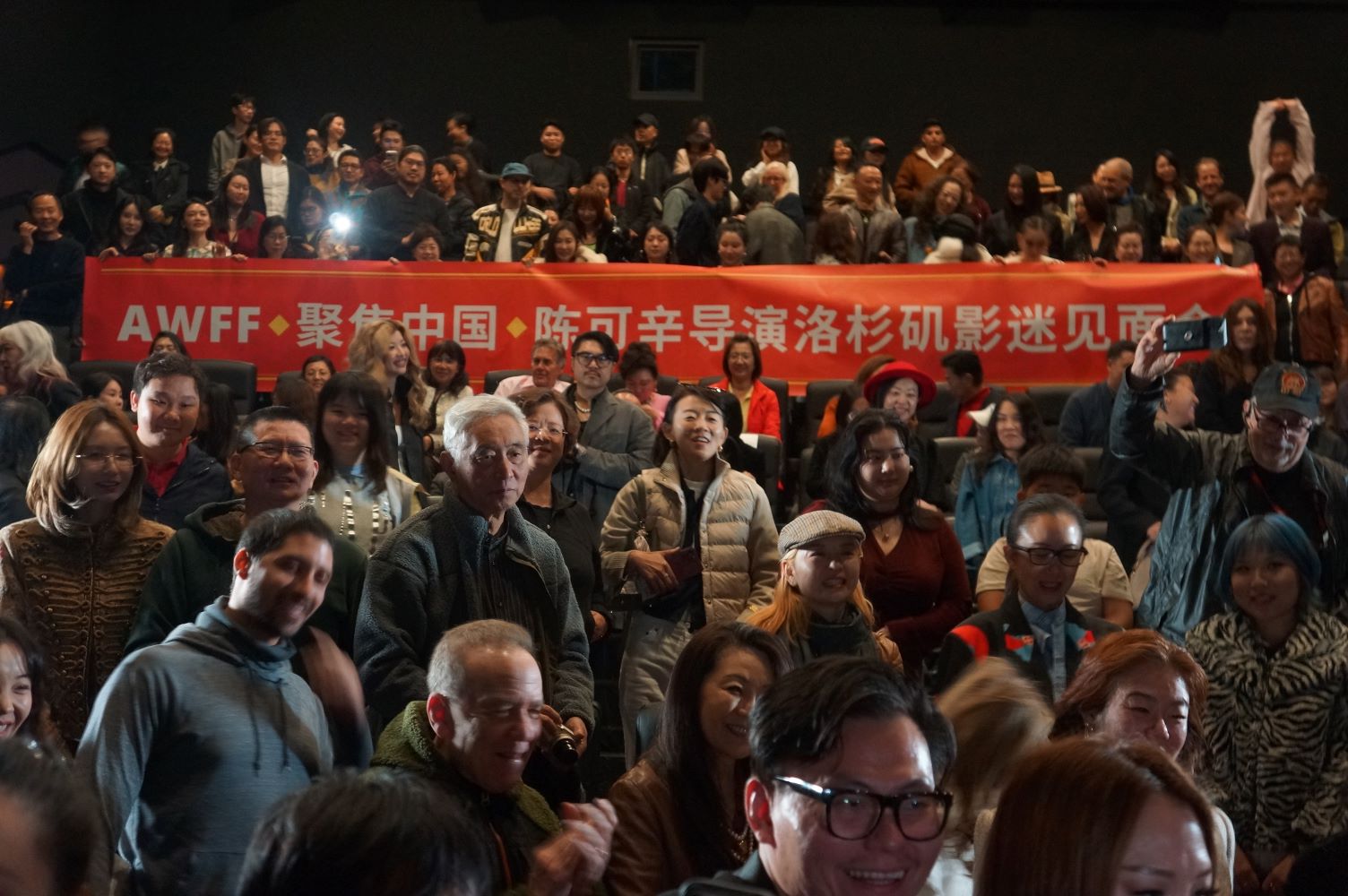
(Photo by Richard Ren/LAPost)
Actress Meng Yao, who previously worked in Hong Kong’s film industry and has known Chan for many years, attended the screening. Afterward, she said the film brought her to tears.
Meng said the film goes beyond treating Alzheimer’s as a medical subject, using the gradual loss of memory to examine how families confront illness, aging and the responsibilities of caring for loved ones. She particularly noted Zhou Xun’s nuanced performance, saying the actress convincingly conveyed the character’s psychological changes as memories and present-day experiences became intertwined.
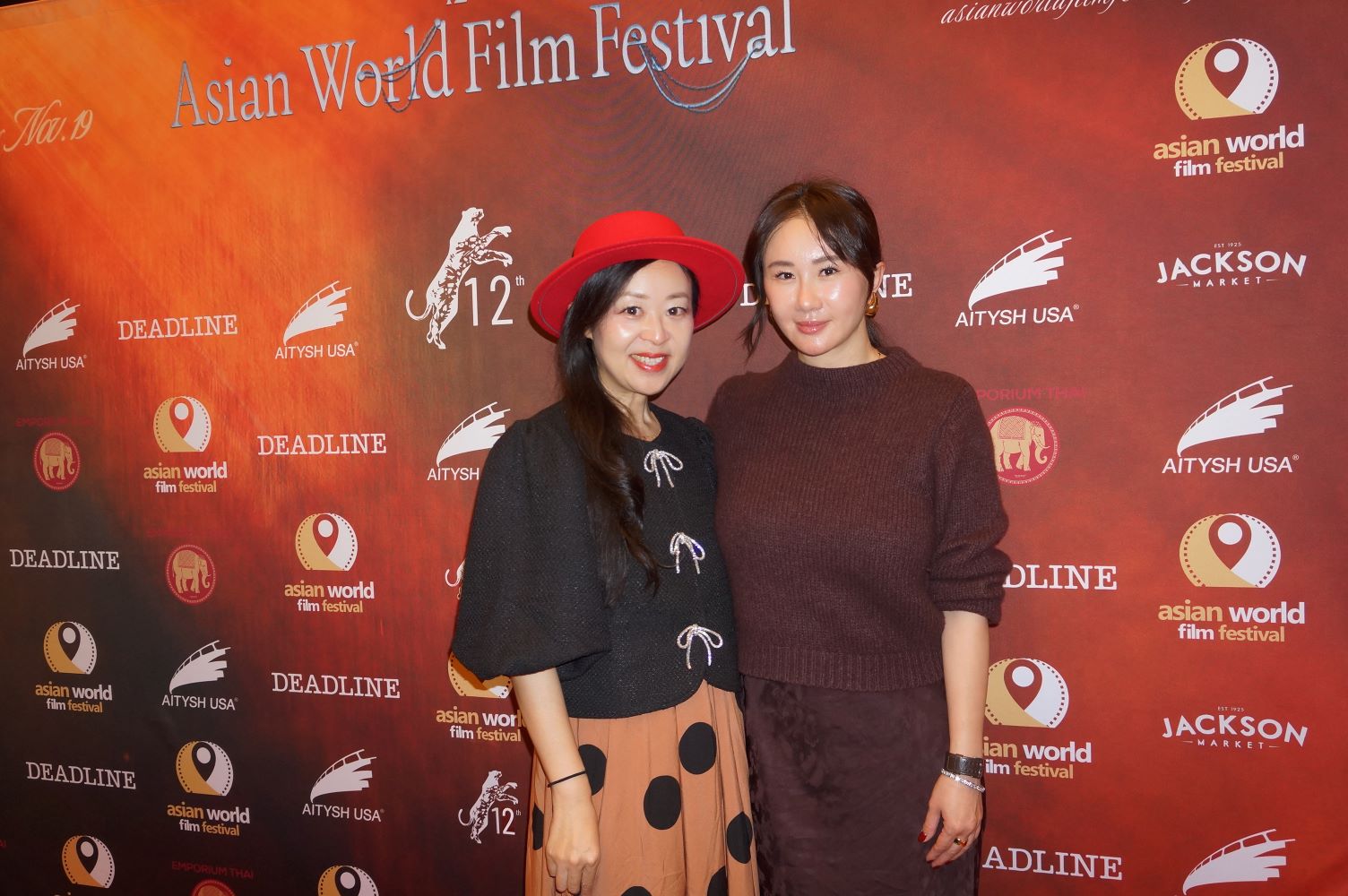
左起: 徐蕾、孟瑶 (Photo by Richard Ren/LAPost)
Dr. Xu Lei, a professor at California State University, Fullerton, said the film explores love, intergenerational relationships and life choices through the experiences of an Alzheimer’s patient and her family. The familiar family dynamics depicted in the story prompted her to reflect on her own relationships and the importance of companionship.
Xu described the film’s emotional storytelling as authentic, praised Chan’s directorial craft and singled out Zhou Xun’s performance for its precise portrayal of the character’s inner world and complex emotions.
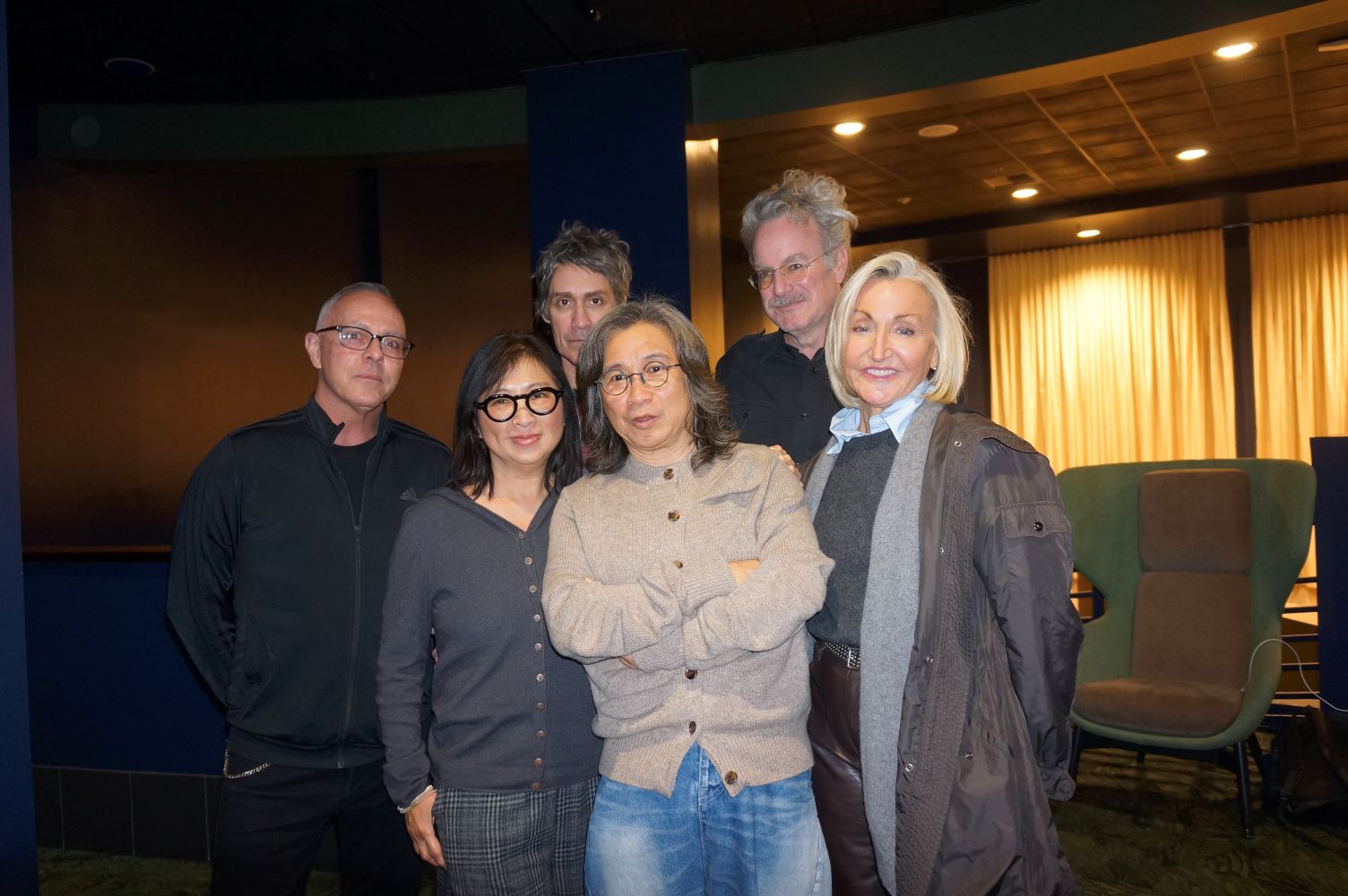
(Photo by Richard Ren/LAPost)
Throughout his career, Chan has explored human relationships and social dynamics across a range of genres and historical settings. His filmography includes Comrades: Almost a Love Story, The Warlords, American Dreams in China and Leap. With The Road Not Taken, he turns his attention to the family, examining how illness reshapes relationships and how people look back on the choices that have defined their lives.
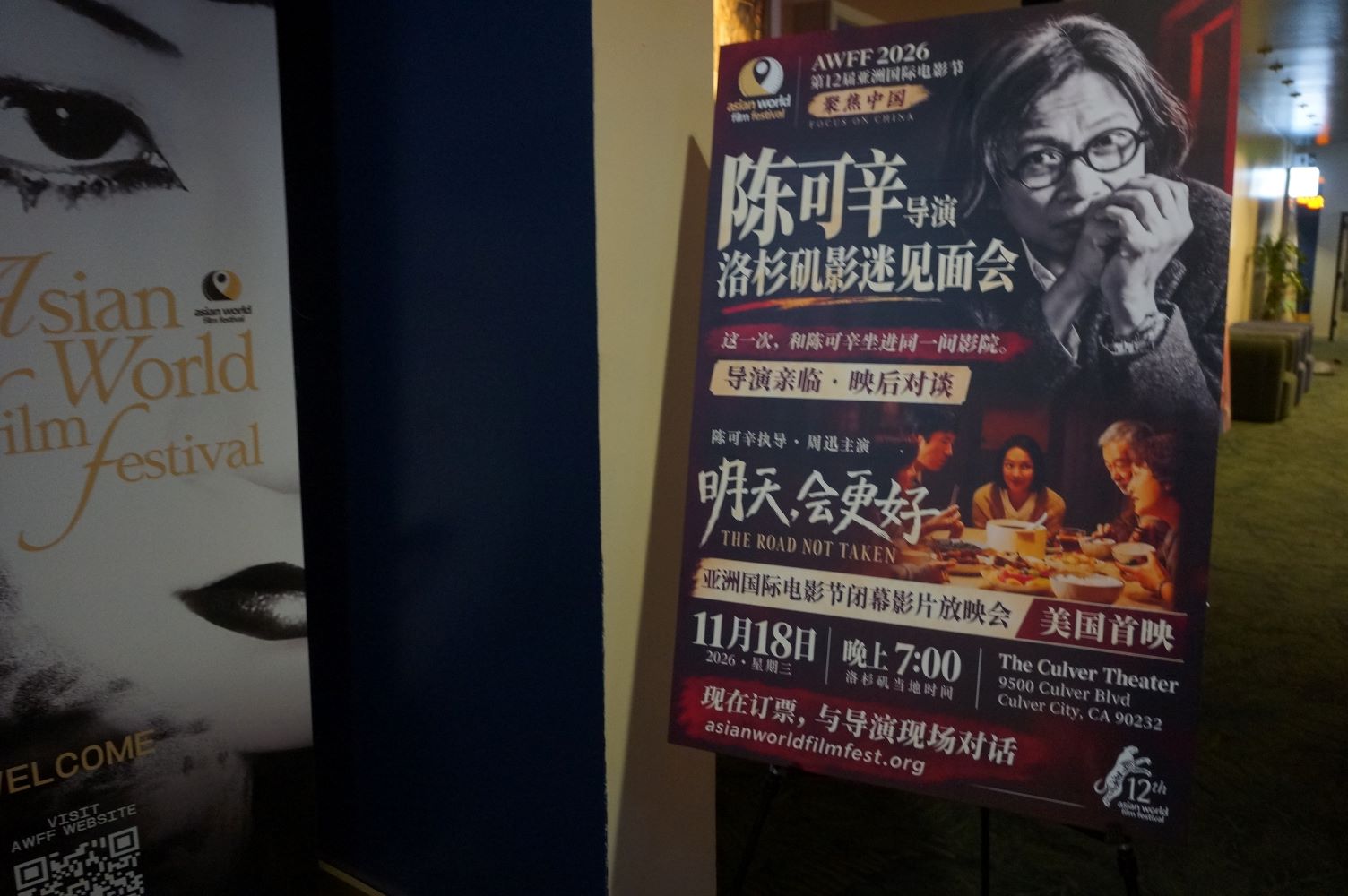
(Photo by Richard Ren/LAPost)
As the closing film of the 12th Asian World Film Festival, the U.S. premiere brought the festival’s Chinese-language film showcase to a close.