Shen Teng Wins Best Actor at Asian World Film Festival; ‘Once Upon a Time in the Middle East’ Takes Best Picture
LAPost/Culver City, CA (November 19, 2026) — By: Richard Ren/LAPost
Chinese actor Shen Teng won the Snow Leopard Award for Best Actor for his performance in Once Upon a Time in the Middle East at the closing ceremony and awards gala of the 12th Asian World Film Festival (AWFF), held in Los Angeles on the evening of November 19. The film also won Best Picture, emerging from a selection of more than 30 films representing Asian countries and regions. Best Actress went to prominent Bangladeshi actress Nazifa Tushi.
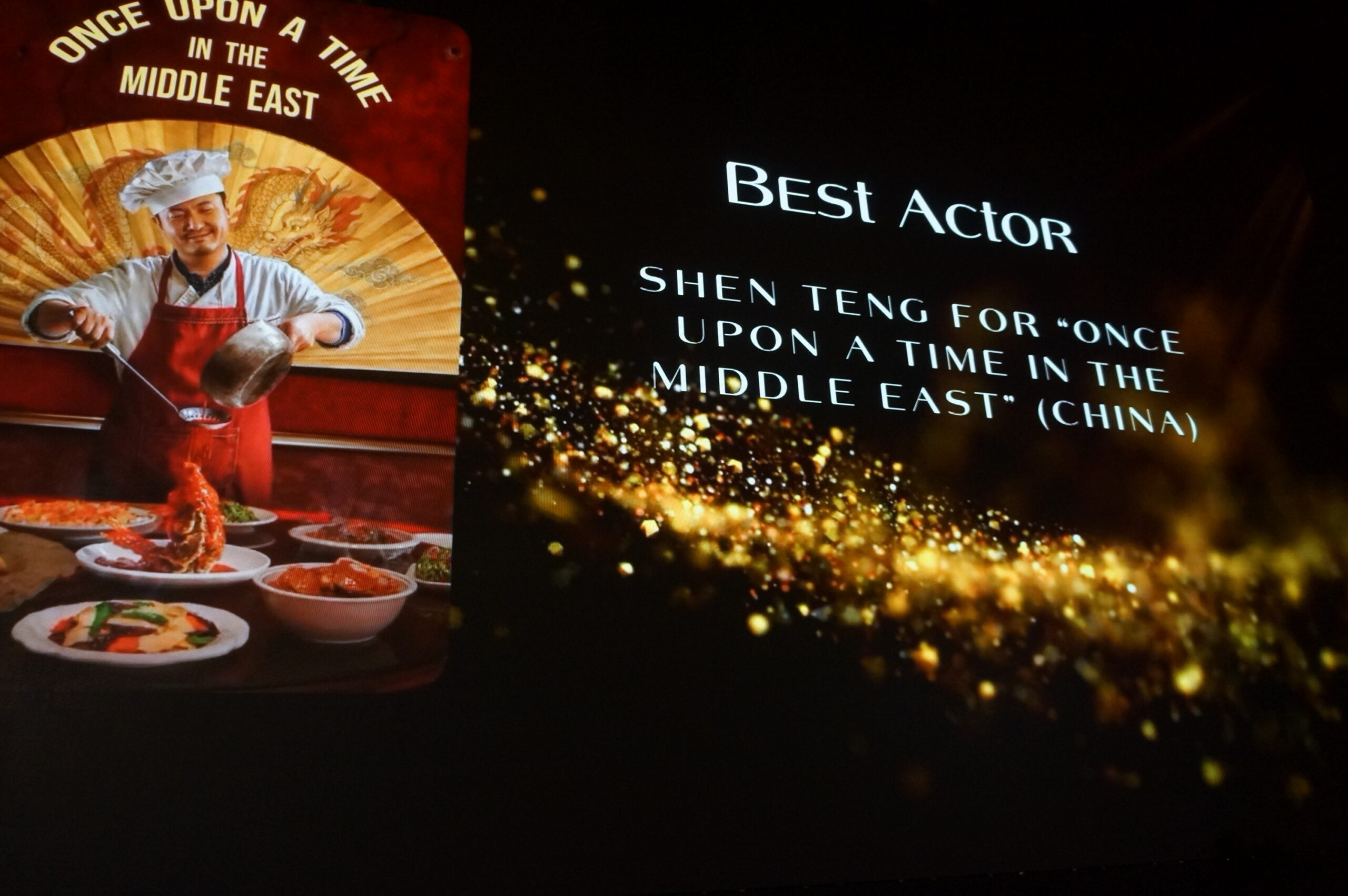
Shen Teng receives the Best Actor award. (Photo by Richard Ren/LAPost)
Consul Chen Fenghua of the Cultural Section and Consul Xia Fan of the Press Section of the Chinese Consulate General in Los Angeles attended the closing ceremony and awards presentation. The two major awards for the Chinese production made Once Upon a Time in the Middle East one of the festival’s notable titles this year.
Directed by Wen Muye, Once Upon a Time in the Middle East is China’s official submission for Best International Feature Film at the 99th Academy Awards. The film screened at AWFF on November 13, with Wen attending in person for a post-screening discussion with the audience.
The role called for a departure from the comedic performances for which Shen Teng is widely known. Set against the backdrop of war, the film required him to portray the character’s everyday circumstances, emotional changes and responses to difficult situations. Through the actor’s interpretation of the role, the film seeks to convey the authentic emotions of an ordinary person rather than relying solely on dramatic plot developments. Shen’s Best Actor award brings additional international festival recognition to his performance.
The award also places a Chinese actor’s work in the spotlight of an international film festival. Set amid conflict in the Middle East, the film uses a Chinese restaurant as a central setting and explores the lives of ordinary people and their moral choices through food, human relationships and encounters among people from different cultural backgrounds.
Festival Emphasizes International Exchange and Independent Selection
The 12th Asian World Film Festival opened on November 12 and ran for eight days, screening films and short films from 35 Asian countries and regions, including works submitted for consideration in the upcoming Academy Awards’ Best International Feature Film category. Daily screenings showcased productions from different countries and regions, attracting Hollywood filmmakers, directors, actors and other international film industry professionals.
Hollywood veteran producer Arthur Sarkissian served as president of the Snow Leopard Competition jury. With more than 30 years of experience in film and television production, Sarkissian’s credits have generated nearly $1 billion in worldwide box office revenue. His credits include the Rush Hour franchise, While You Were Sleeping, The Foreigner and Memory. He is also involved in developing projects including Rush Hour 4.
At the closing ceremony, AWFF Executive Chairman Georges N. Chamchoum, a veteran Hollywood director and producer, underscored the festival’s commitment to independent selection and open international exchange.
Chamchoum said the festival operates independently of political influence and provides filmmakers from different countries and regions with equal opportunities to present their work. He emphasized that AWFF welcomes filmmakers from all backgrounds, particularly those whose work may have fewer opportunities for exposure.
He also thanked the festival’s staff and volunteers for their dedication and announced that the 13th edition of AWFF will take place in November 2027.
Chamchoum further urged audiences to return to movie theaters, emphasizing that the shared experience of watching films on the big screen cannot be replaced by viewing movies at home.
Wen Muye on Cinema: Finding a Glimmer of Humanity Amid the Shadows of War
In an earlier exclusive interview with LAPost, director Wen Muye discussed the creative vision behind Once Upon a Time in the Middle East, describing war and food as two contrasting forces.
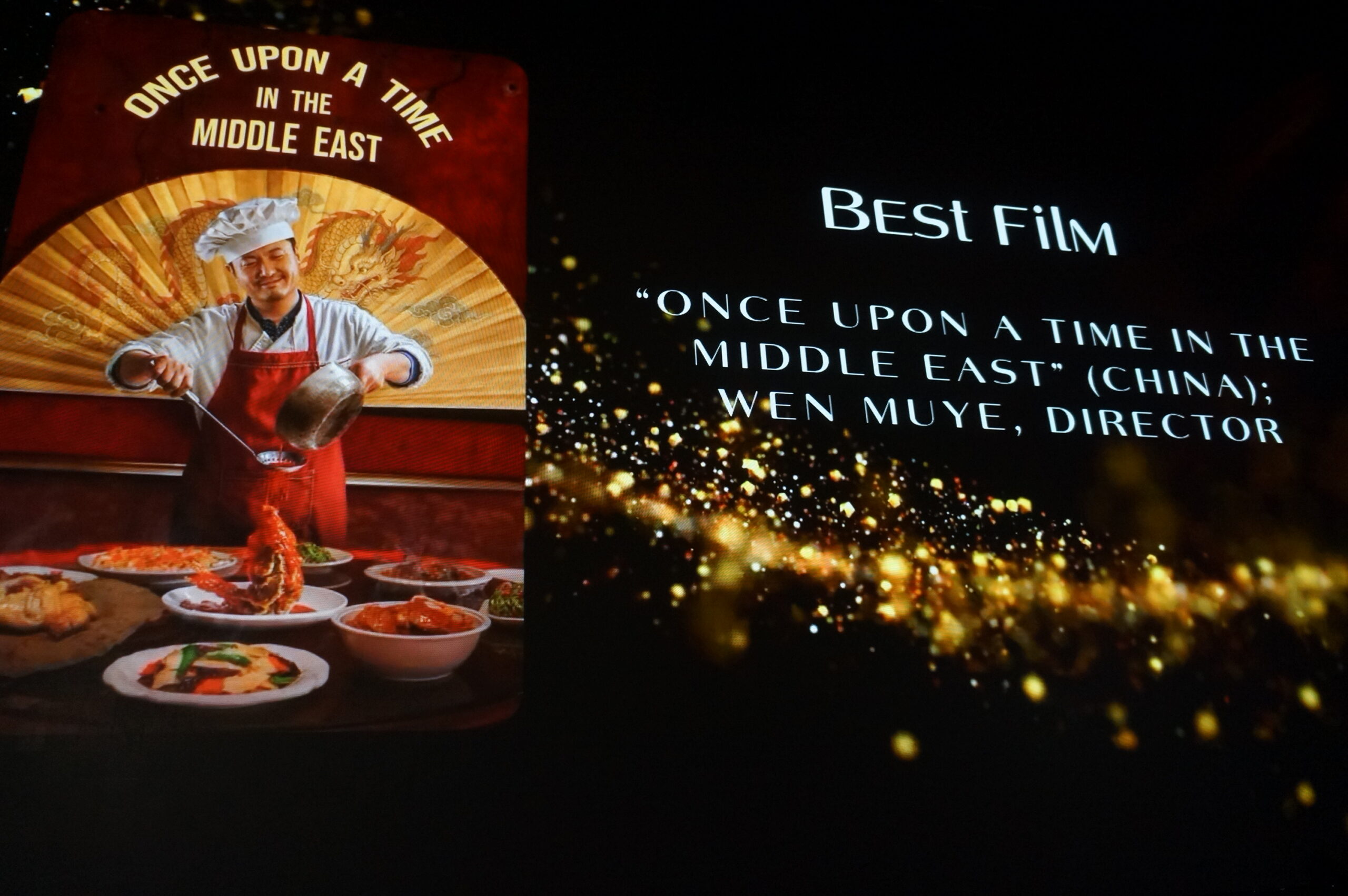
Once Upon a Time in the Middle East receives the Best Picture award at the 12th Asian World Film Festival. (Photo by Richard Ren/LAPost)
Wen said war represents death and darkness, while food represents peace and light. War takes energy away, whereas food gives people energy. This contrast, he explained, was a central starting point for the film.
He also views food as more than a narrative element, describing it as a vehicle for cultural exchange. Chinese cuisine, he said, is a form of soft power that brings happiness to people. Food can represent China while also symbolizing peaceful relations between China and the rest of the world today.
Asked how much cinema can change reality, Wen expressed a measured perspective. He said he did not believe films could directly do very much to change the world, but they could at least allow people to see it.
Cinema, he explained, can help audiences understand what people in different parts of the world are experiencing, creating opportunities for reflection and greater understanding.
That perspective is central to the decision to set Once Upon a Time in the Middle East against the backdrop of conflict in the region. Through the everyday lives of ordinary people and acts of kindness between individuals, Wen seeks to show that even in the darkest circumstances, a small but genuine glimmer of humanity can endure.
By bringing films from across Asia to an international platform, AWFF continues to provide opportunities for cross-cultural exchange. The two major awards for Once Upon a Time in the Middle East—Best Picture and Best Actor—further raise the international profile of China’s Oscar submission.