Cloud Gate Dance Theatre Demonstrates Artistic Excellence at UCLA, Captivating Los Angeles Audiences Through the Power of Movement
From the haunting solitude of New York’s blue-lit nights to the exuberant rhythms of Taiwan’s temple-fair traditions, Artistic Director Cheng Tsung-lung brought two contrasting works to the stage, immersing audiences from diverse cultural backgrounds in the expressive language of contemporary dance. The performance concluded with a nearly 10-minute standing ovation and sustained cheers.
LAPost/Los Angeles, CA (November 21, 2026) — By: Richard Ren/LAPost
As the curtain slowly rose, there was no elaborate stage scenery or musical introduction. Instead, six female dancers in long black dresses stood against a stark white backdrop, their long hair sweeping through the air with each movement. Without a single spoken word or deliberate attempt to guide the audience’s emotions through sound, Cloud Gate Dance Theatre of Taiwan, under the artistic direction of Cheng Tsung-lung, opened the evening with Blue Hour, capturing the attention of the entire auditorium within moments.
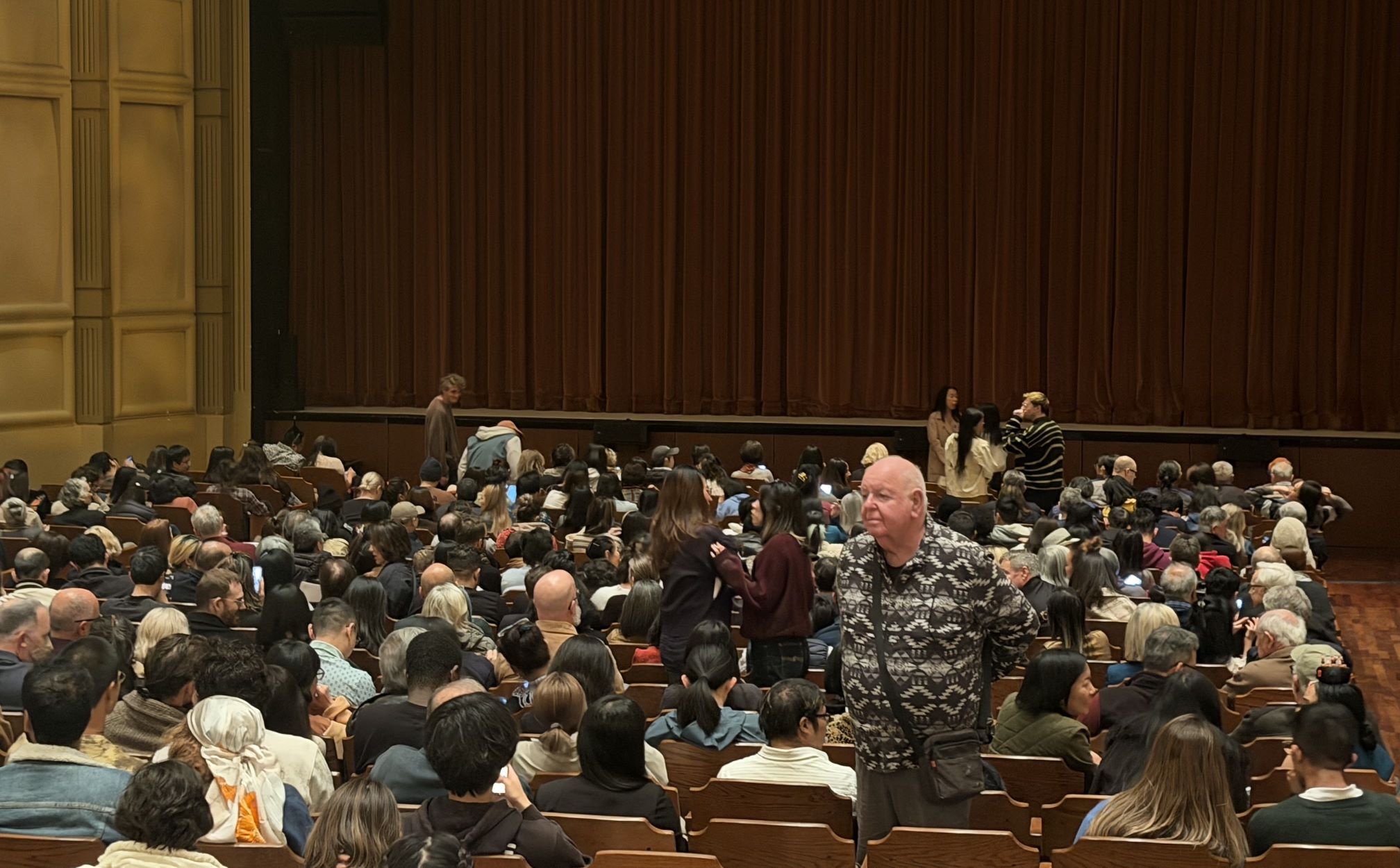
On the evening of November 21, Cloud Gate presented the final performance of its 2026 North American tour at Royce Hall, the landmark performance venue at the University of California, Los Angeles (UCLA). The auditorium was filled to capacity. Asian audience members accounted for approximately 20 percent of the crowd, while the majority came from diverse ethnic backgrounds across the greater Los Angeles community. Despite the deeply Taiwanese cultural roots of the works, the performance transcended cultural differences and resonated with a broad American audience.
Throughout the performance, the theater remained almost completely silent. Even from a seat near the middle of the auditorium, the dancers’ breathing could be heard clearly as they moved through physically demanding sequences. There was no conversation, no illuminated phone screens, and no audible distractions. Every breath and subtle shift of the body became part of the audience’s experience of the performance.
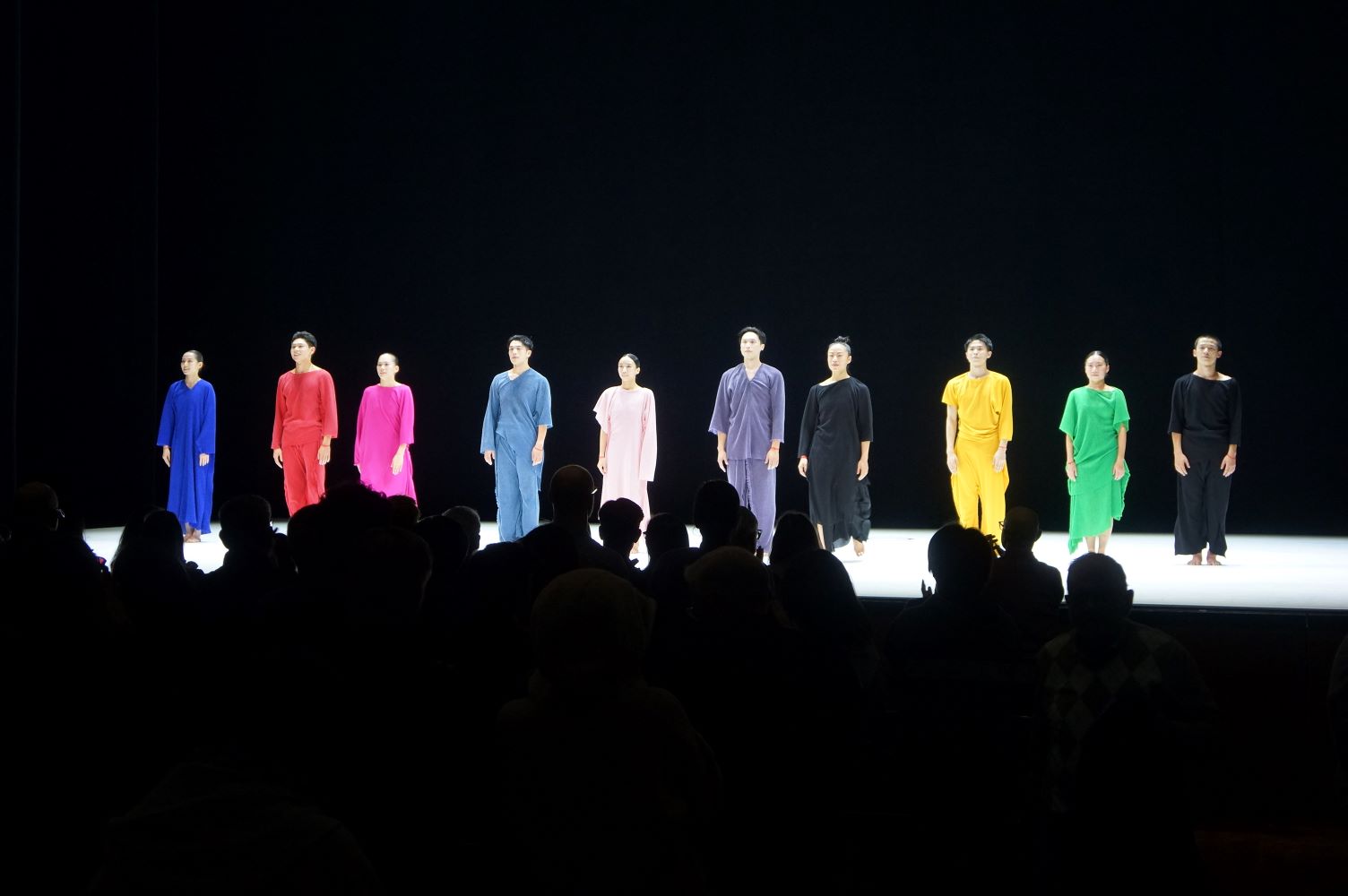
(Photo by Richard Ren/LAPost)
When the final movement ended, the auditorium erupted in applause and cheers. Audience members rose to their feet, sustaining a standing ovation for nearly 10 minutes. The dancers returned to the stage for multiple curtain calls, with the curtain rising and falling three times as the applause continued. The response reflected not only admiration for the dancers’ technical mastery but also the powerful connection the works had established with audiences from a wide range of cultural backgrounds over the course of the evening.
From Inner Solitude to Cultural Memory: Two Distinct Artistic Visions
Led by Cheng, the North American tour featured two works, Blue Hour and Beckoning. Distinct in their stage imagery, music, movement vocabulary and emotional expression, the two pieces together reveal Cheng’s exploration of the relationship between the human body, personal emotions and cultural identity.

Photo provided by: Cloud Gate Dance Theatre
Blue Hour centers on six female dancers. Subtle blue lighting, slow and delicate movements, and the shifting relationships among the performers create an atmosphere of profound solitude. At times, the dancers move toward one another; at others, they drift independently across the stage. Their bodies twist, extend and contract, while their long black hair traces fluid patterns through the air.
Rather than relying on a conventional dramatic storyline, the work invites audiences to recognize emotions through physical expression. Insomnia, anxiety, loneliness and unease—feelings that are often difficult to articulate—gradually emerge through the dancers’ movements.
In an interview with LAPost ahead of the performance, Cheng said Blue Hour was inspired by his experience with insomnia while living in New York. He observed that emotions often precede physical actions. When people become angry, for example, they may instinctively stamp their feet or place their hands on their hips, allowing their bodies to reveal their inner states.
“Sometimes we have an emotion first, and only then does the movement follow,” Cheng said. The work grew out of this observation, seeking to translate internal feelings into a physical vocabulary and explore how emotions can be expressed through the body.
In contrast, Beckoning turns its attention outward, from the individual’s inner world to the broader landscape of cultural identity.
The work opens with the back of a male dancer. As the stage gradually unfolds, male and female performers in brightly colored costumes enter, creating a dynamic sequence of fragmented physical narratives, rapid transitions and group interactions. The atmosphere shifts away from the restrained emotional exploration of Blue Hour toward a vibrant, carnival-like spectacle.

Photo provided by: Cloud Gate Dance Theatre
Movements drawn from the Eight Generals (Ba Jia Jiang), the gestures of spirit mediums, the postures of Taoist deities and the physical vocabulary of Taiwanese temple processions and folk religious rituals are deconstructed and reimagined through contemporary dance.
Near the end of the work, familiar Taiwanese temple-fair music fills the theater, transforming the rhythm and atmosphere of the stage. The performance brings to Los Angeles the exuberance, spontaneity and vitality associated with the traditional temple-fair culture of Taiwan.
Cheng explained that Beckoning draws on his observations of Taiwanese temple culture, including temple architecture, colors, deity birthday celebrations, religious processions and the distinctive postures of Taoist statues. He sought to discover new forms of contemporary movement by studying these traditional cultural elements.
“One work explores inwardly, looking for feelings within ourselves and seeing whether they can be translated into dance. The other looks outward toward culture, learning from temples, Taoism and the postures of deities,” Cheng said in describing the creative directions behind the two pieces.
From the personal emotions explored in Blue Hour to the collective cultural memories embodied in Beckoning, the two works form an artistic journey from within to the outside world, demonstrating the expressive range and depth that contemporary dance can achieve.
Audiences from Diverse Backgrounds Respond to the Power of Movement
Audience reactions after the performance offered another perspective on the impact of the evening.
Taryn Vander Hoop, chair of the Dance Department at Loyola Marymount University (LMU), described the performance as extraordinary in every respect.
“That was exquisite in every possible way,” she said, praising the development of ideas, the dancers’ technique and the precision of the execution.
Vander Hoop said she had expected a high-caliber performance from Cloud Gate, but the actual experience exceeded her expectations. The artistic development of the works and the dancers’ precision left a particularly strong impression.
Kobina Hagan, a theater director from the California Institute of the Arts (CalArts), said this was his first experience seeing Cloud Gate Dance Theatre.
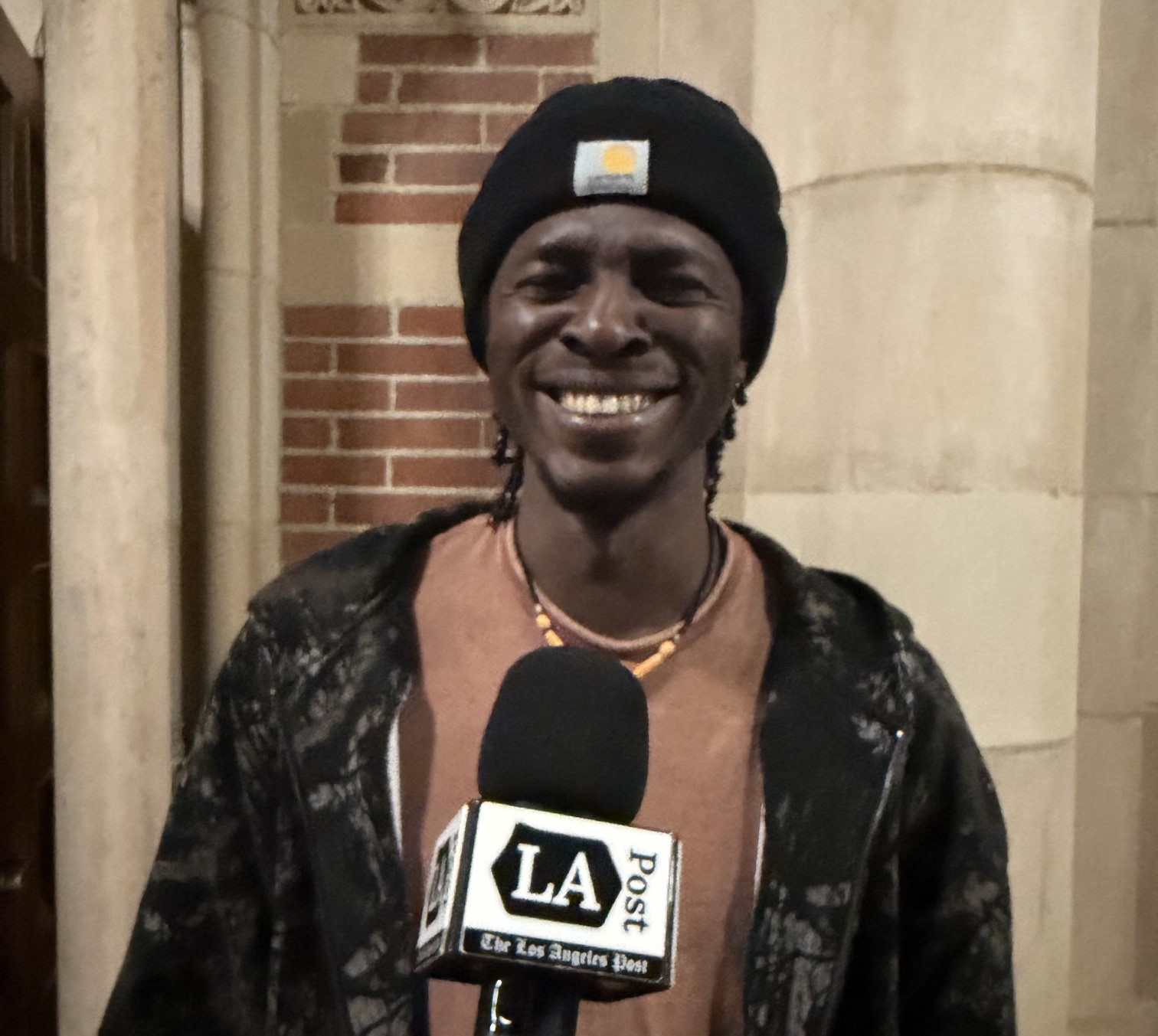
Kobina Hagan Director/CalArts (Photo by Richard Ren/LAPost)
“I had never seen this company perform before. Tonight, I was completely blown away,” he said.
Hagan singled out the dancers’ entrances and exits, the connections between movements and the visual impact created by their physical gestures as particularly impressive.
For him, the performance was more than an evening of entertainment; it was a source of creative inspiration.
“As an artist, I’m inspired to get into the studio and just make work,” he said.
He also noted that the work contained numerous small, independent narrative threads. Although he could not necessarily interpret every storyline, he recognized a clear beginning, middle and end, with smaller stories unfolding throughout the performance and inviting his own interpretations.
Zelia ZZ Tan, a student from Hong Kong with experience related to the City Contemporary Dance Company of Hong Kong, is a choreographer, director and media artist. She said she was particularly impressed by the structure of Cloud Gate’s works and the performers’ stage presence.
She paid close attention to how the dancers directed their attention toward one another, the subtle connections expressed in the duets, and the close relationship between the choreography and the original musical compositions.
“I found myself immersed in those flows,” she said. The performance also brought back memories of her visits to Taiwan, including images of its streets and dreams associated with those experiences.
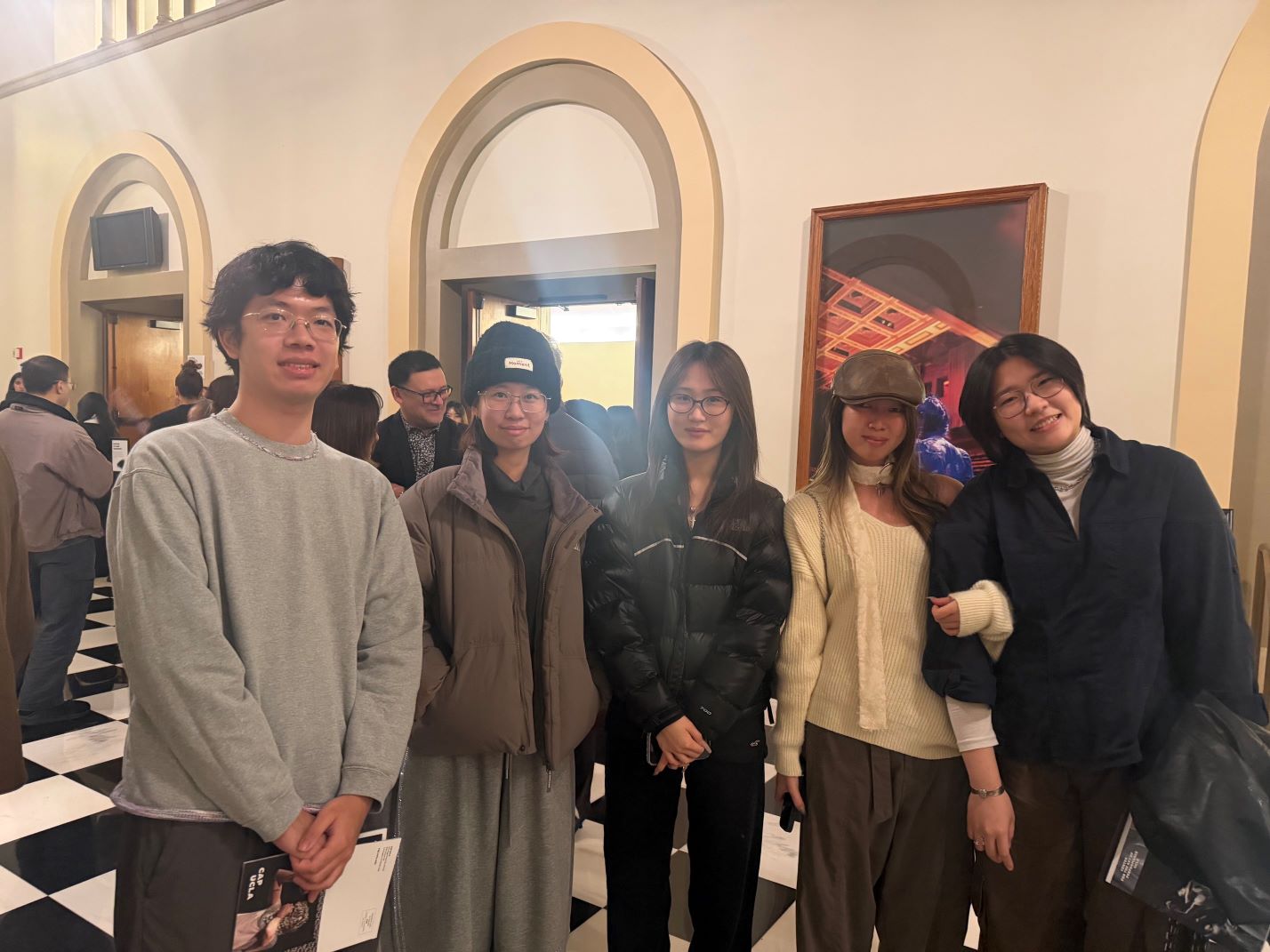
Thomas Chen (Right 1) with his classmates (Photo by Richard Ren/LAPost)
Thomas Chen, a first-year graduate student in the film program at CalArts who is originally from Taiwan, said he was excited to see Cloud Gate perform in Los Angeles. Having previously watched the company in Taiwan, he found the new works particularly refreshing.
He highlighted the physical representations of the moon and natural imagery, which offered him new visual perspectives and left him looking forward to seeing more of the company’s future productions.
Audience members of different ages, cultural backgrounds and artistic disciplines each found something distinctive in the performance. Some were drawn to the dancers’ technical abilities, others found creative inspiration, while some recognized familiar Taiwanese cultural imagery and personal memories.
Together, these responses demonstrated how contemporary dance can communicate across linguistic and cultural boundaries.
Bringing Taiwan’s Temple-Fair Atmosphere to Royce Hall
To give audiences a more immersive experience of the Taiwanese temple-fair culture explored in Beckoning, Cloud Gate extended the evening’s cultural presentation beyond the stage.
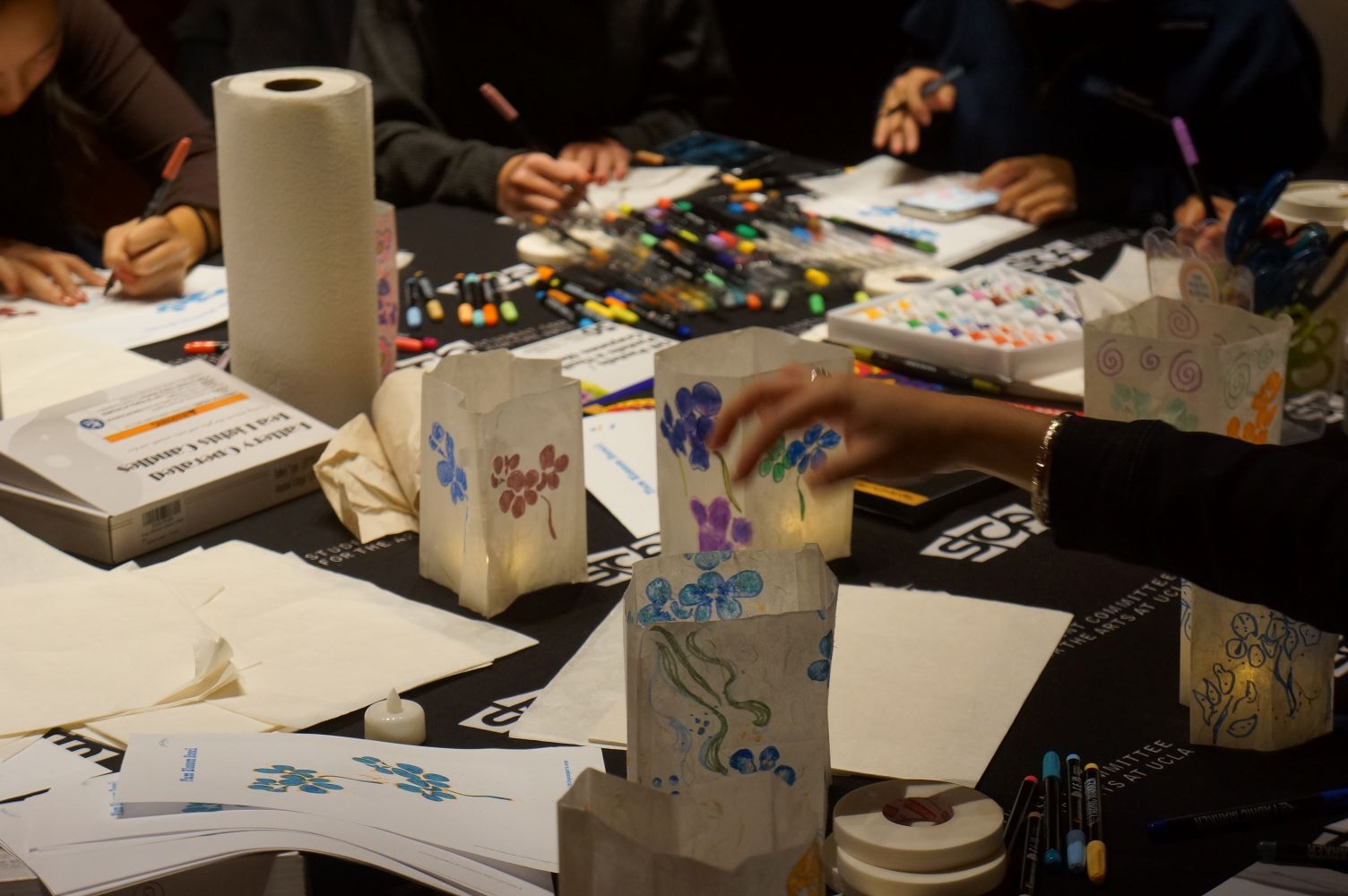
(Photo by Richard Ren/LAPost)
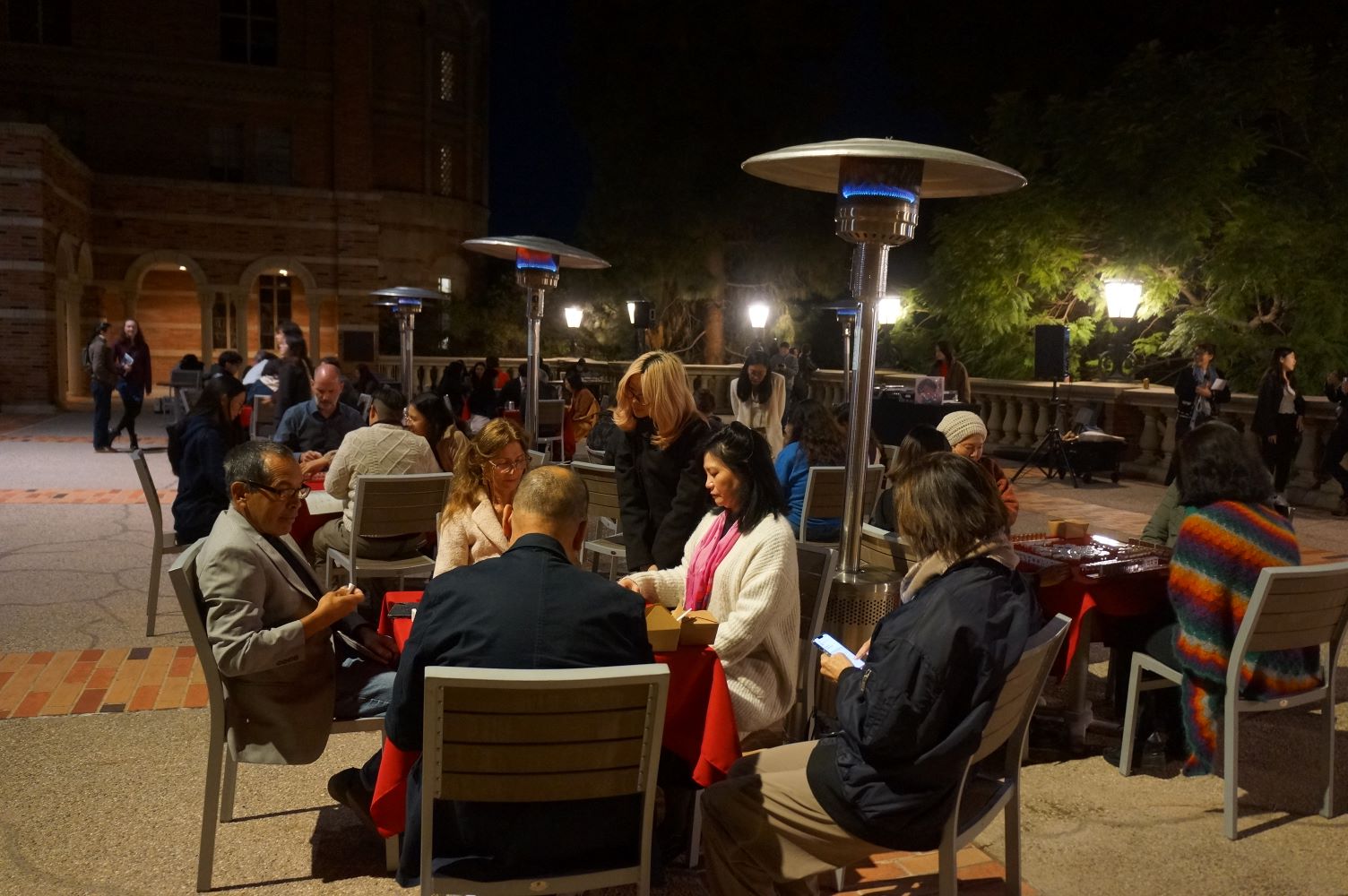
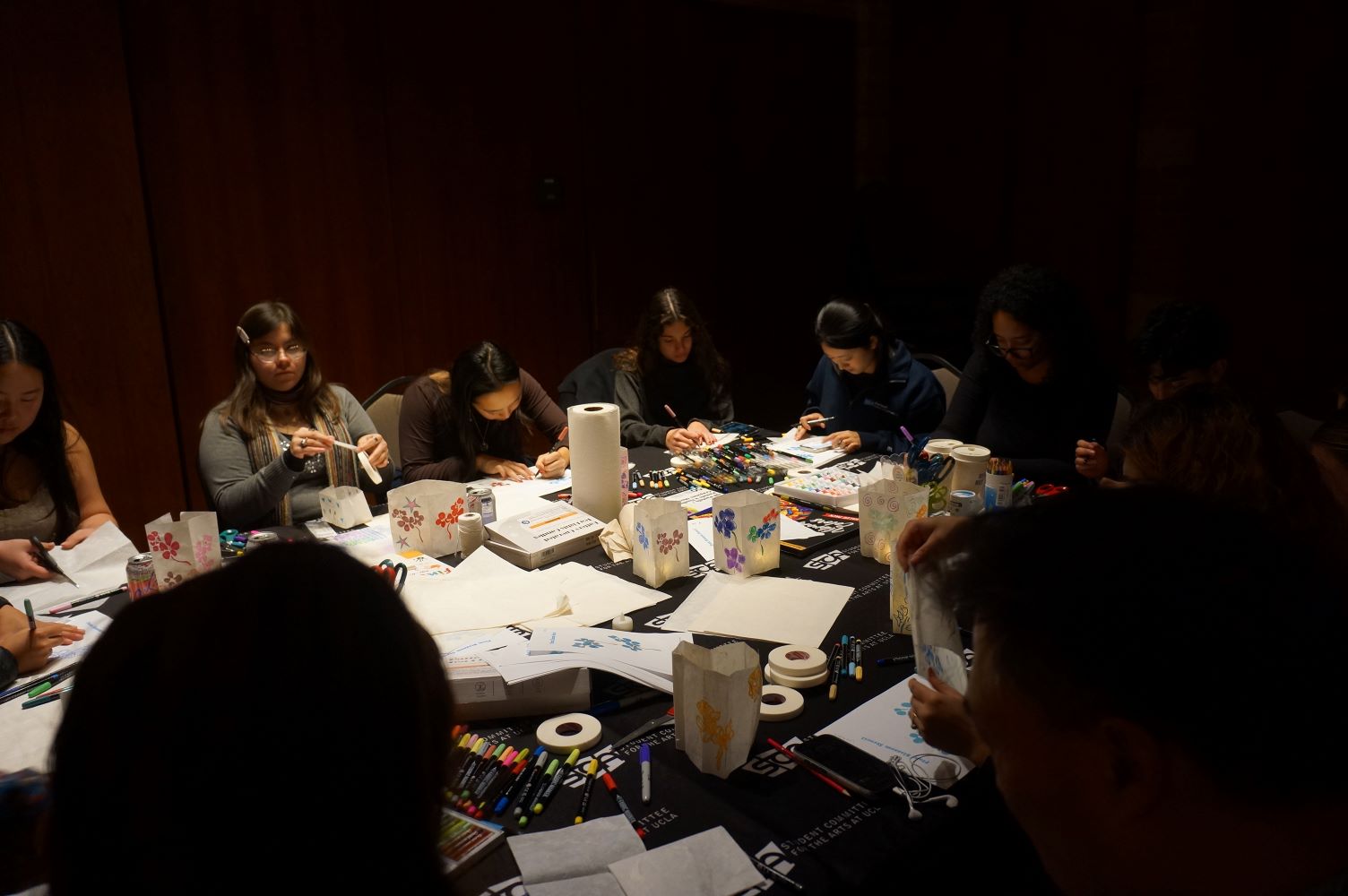
Outside Royce Hall, visitors could participate in lantern-making activities and mahjong, as well as sample Taiwanese specialty foods. These activities introduced audiences to Taiwanese folk culture through visual experiences, traditional games, music and food even before they entered the auditorium.
Samantha Yu, principal of the Taiwan School at the Los Angeles Taiwanese American Community Center, shared an emotional response to the experience.
“Having been in the United States for nearly 30 years, as a Taiwanese woman, the moment I walked into the venue and heard familiar music from the 1980s, I felt as if I had traveled back to a night market in Taiwan. I immediately remembered walking through the night markets as a little girl, wearing slippers and holding my parents’ hands.”
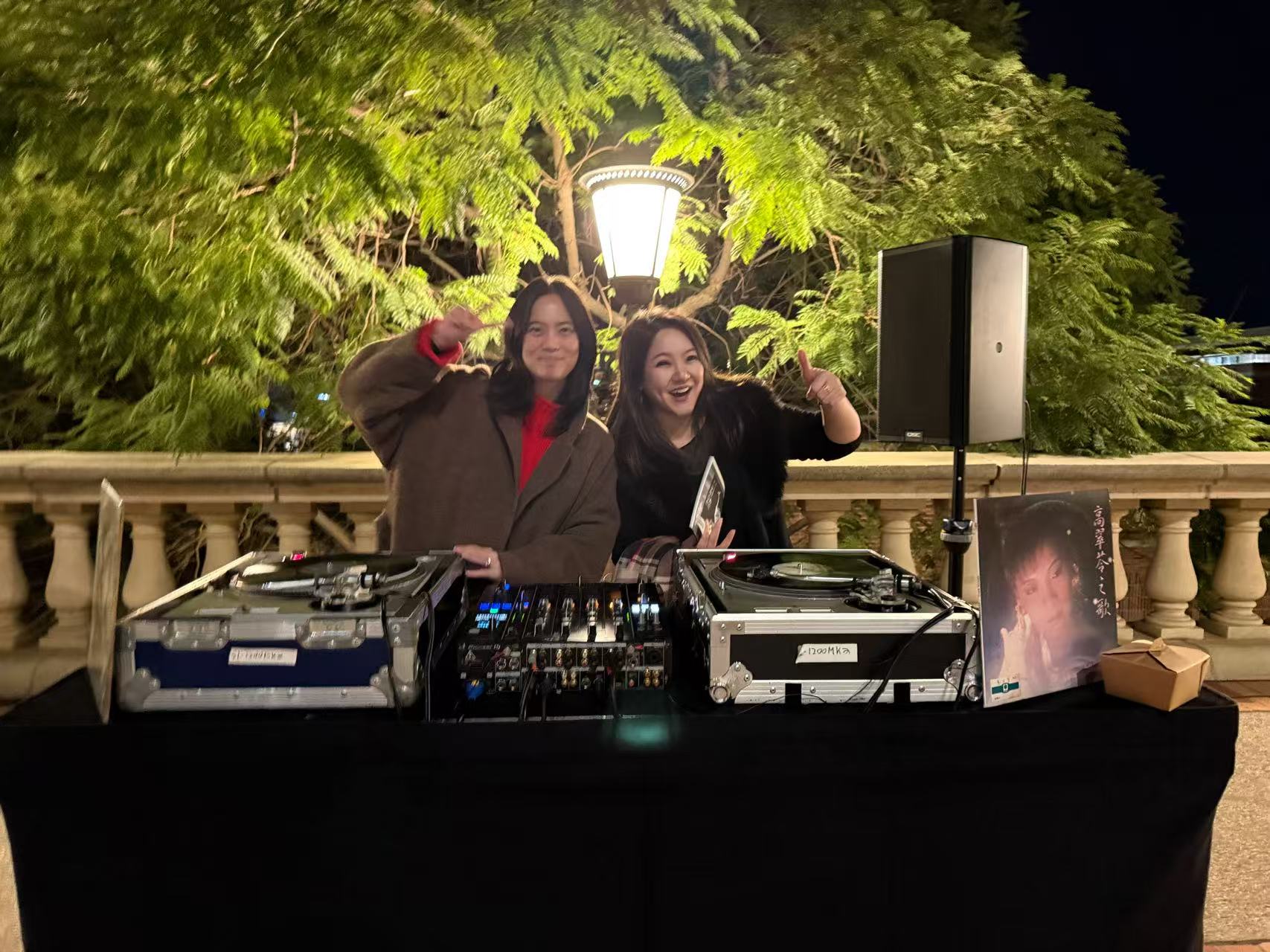
Samantha Yu (Right) (Photo provided by: Samantha Yu)
She smiled as she recalled the cool weather ahead of Thanksgiving, enjoying beer, grilled mochi skewers, Taiwanese rice rolls and hot-spring-style braised eggs.
“That was the taste of happiness I remember from Taiwanese night markets,” she said.
The activities allowed the cultural world portrayed in Beckoning to extend beyond the dancers’ movements, creating a more comprehensive experience through everyday settings, food and personal memories.
Ma Boyuan, director of the Taipei Economic and Cultural Office in Los Angeles, also attended the performance.
The Body as a Universal Language: Cloud Gate Concludes Its North American Tour
Cloud Gate’s North American tour ran from November 14 through November 21, with Cheng leading the company in performances of Blue Hour and Beckoning. The tour visited Santa Fe and Salt Lake City before concluding at UCLA’s Royce Hall in Los Angeles.
The contrasting works reflect two distinct dimensions of Cheng’s approach to contemporary dance. One draws on personal experience, transforming insomnia and the loneliness of living abroad into physical expression. The other returns to the cultural landscape of Taiwan, drawing creative material from temples, folk beliefs and collective traditions.
At Royce Hall, a venue known for classical music and major performing arts presentations, contemporary dance from Taiwan captivated a full house whose audience was predominantly non-Asian. The near-total silence throughout the performance, followed by a standing ovation and nearly 10 minutes of applause and cheers, provided a striking measure of the evening’s impact.
As the curtain rose for the third time and the dancers returned to the stage to acknowledge the audience, words were no longer necessary to explain the connection between performers and spectators. From the exuberance of Taiwan’s temple courtyards to the solitude of New York nights, Cheng used the language of the body to communicate emotions and cultural memories, creating an artistic encounter that transcended geography, language and cultural boundaries in Los Angeles.
(Photo by Richard Ren/LAPost)
(Photo by Richard Ren/LAPost)
(Photo by Richard Ren/LAPost)