US Smash 2026 Marks Kuai Man’s Breakthrough on the World Stage
LAPost / Ontario, California (Reported by Richard Ren) — July 6, 2026 — As the final point of the women’s singles championship match at the 2026 WTT US Smash came to an end, World No. 1 Sun Yingsha raised her arms in celebration after capturing the title. Across the table, however, Kuai Man received an equally warm and sustained ovation from the crowd.
Sun edged her younger Chinese teammate 4-3 in a dramatic seven-game final. Yet for many spectators, journalists, and international table tennis observers, one of the tournament’s most memorable stories belonged not to the champion, but to the 22-year-old rising star from China.
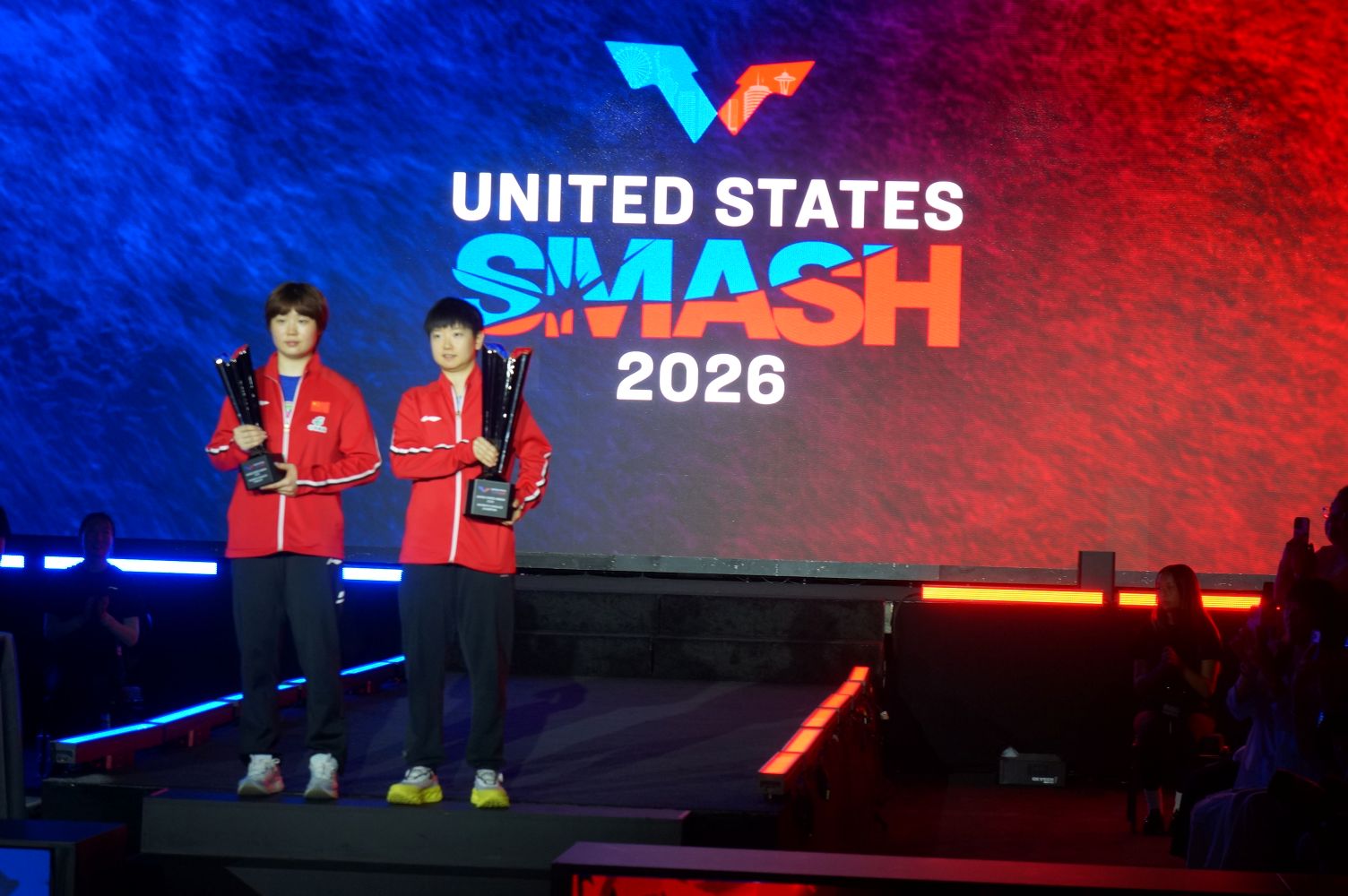
Sun Yingsha and Kuai Man (Photo by Richard Ren/LAPost)
Over eight days of competition, Kuai captured the women’s doubles title and finished runner-up in women’s singles. More importantly, she produced two unforgettable comeback victories against elite international opponents, completing what many consider the most significant breakthrough of her professional career.
Like Russian player Vladimir Sidorenko, who competed as an Independent Neutral Athlete and advanced all the way to the men’s singles final, Kuai emerged as one of the tournament’s biggest breakout stars. Beyond her results, her genuine emotions on court—whether smiling after a spectacular winner or encouraging herself after losing a point—also made her a fan favorite and highlighted her youthful personality.
Several reporters covering the event remarked that if the US Smash had presented a “Breakout Star Award,” Kuai would have been among the leading candidates.
From Supporting Role to Center Stage
Before the tournament began, most international media attention centered on established stars such as Sun Yingsha, Wang Manyu, Wang Chuqin, Tomokazu Harimoto, and Miwa Harimoto.
As the competition progressed, however, Kuai quickly became one of the most frequently discussed names in the mixed zone.
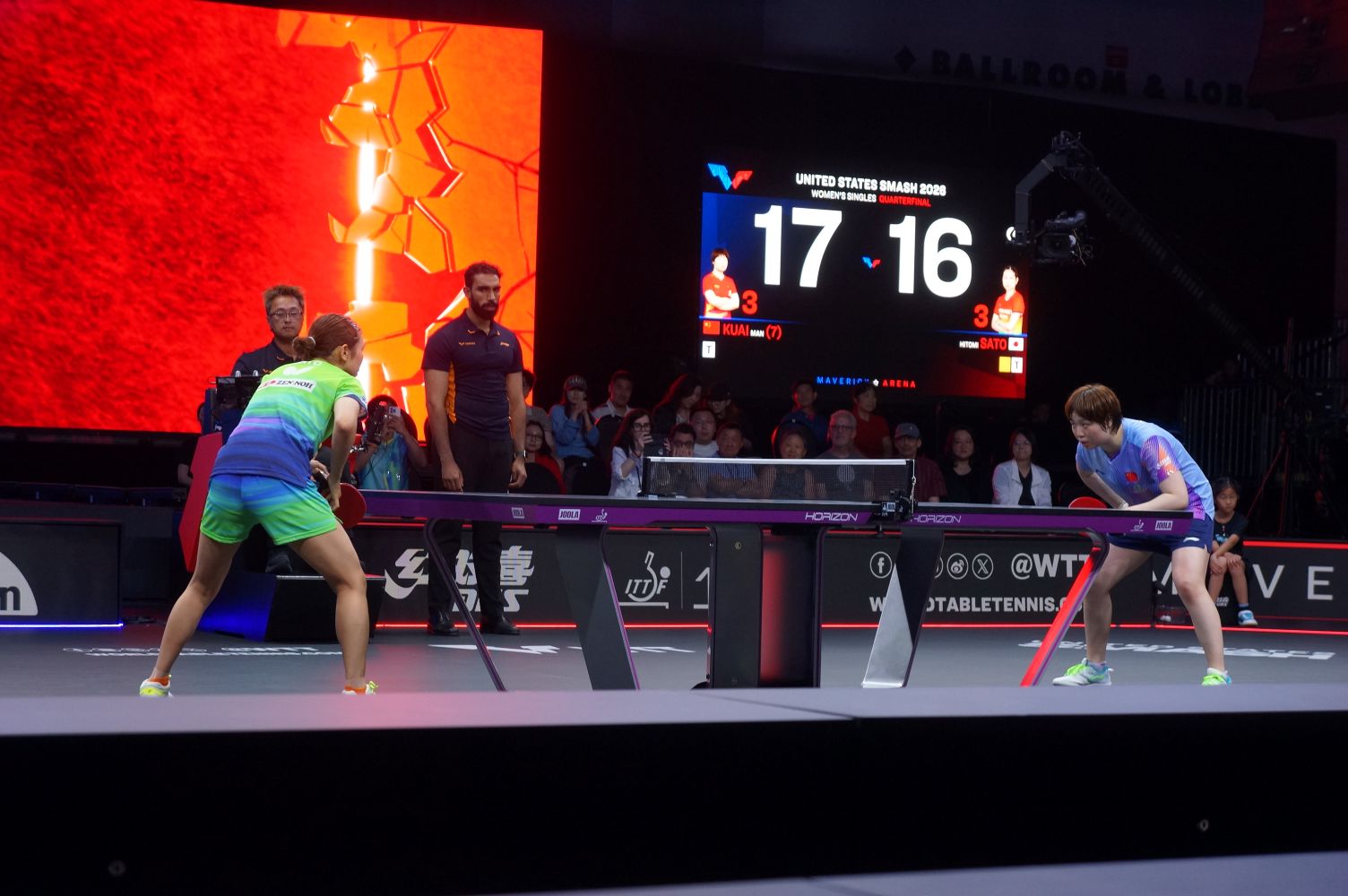
Kuai Man and Hitomi Sato (佐藤瞳) (Photo by Richard Ren/LAPost)
Her defining moment came in the women’s singles quarterfinal on July 4 against Japanese defensive specialist Hitomi Sato.
Facing one of the world’s most accomplished choppers, Kuai found herself trailing 1-3 and on the brink of elimination.
Beginning in Game 5, however, she adjusted her tactics, committed to an aggressive attacking style, and patiently battled through a series of exhausting rallies. She completed a stunning 4-3 comeback, eventually winning an unforgettable deciding game 18-16 in one of the tournament’s greatest matches.
Once the final game reached 10-10, every point electrified the arena. Fans repeatedly leapt from their seats, stomping, applauding, and roaring after nearly every rally as the Ontario Convention Center erupted with energy.
Afterward, several veteran Los Angeles sports journalists described it as “the signature match of the entire US Smash.”
One longtime Southern California sports reporter commented:
“This was the kind of match that could make even someone who has never watched table tennis fall in love with the sport. Kuai never stopped believing when she was at her lowest point. She changed the momentum entirely through sheer determination. This was the match that introduced her to a much larger international audience.”
Conquering Two Japanese Stars to Secure China’s Bottom Half
If defeating Sato demonstrated Kuai’s resilience, her semifinal victory over Miwa Harimoto represented a true coming-of-age performance.
Because of the tournament draw, Kuai was China’s only women’s singles player in the bottom half, leaving her to face the strongest international challengers on her own.
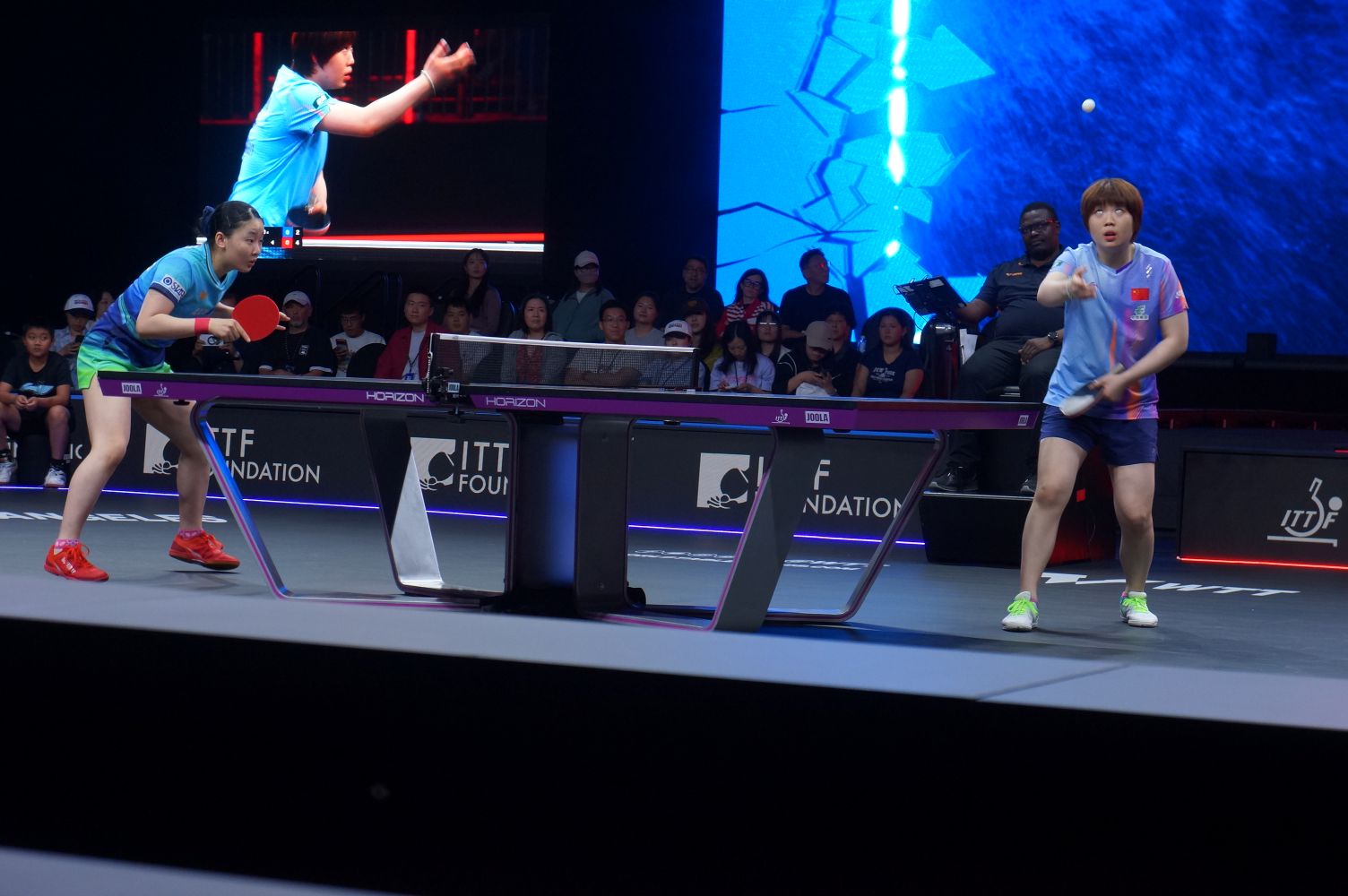
Kuai Man and Miwa Harimoto (Photo by Richard Ren/LAPost)
Against the 18-year-old Japanese star, currently ranked World No. 5, Kuai was pushed into another grueling seven-game battle.
Just four months earlier, she had narrowly lost 3-4 to Harimoto in the WTT Champions Chongqing final. This time, however, Kuai displayed remarkable maturity. Rather than forcing the pace against Harimoto’s explosive close-to-the-table attacks, she trusted her own rhythm and handled the biggest points with greater composure, completing another dramatic 4-3 comeback to reach her first Grand Smash singles final.
Two consecutive seven-game victories. Two remarkable comebacks under enormous pressure. Two victories over Japan’s top players with completely different playing styles.
Those performances made Kuai’s path to the final arguably the most demanding—and one of the most impressive—of any player in the tournament.
Defeat in the Final, Respect Earned
Facing World No. 1 Sun Yingsha in the championship match, Kuai dropped the opening two games 9-11 and 6-11.
She refused to fade.
Kuai claimed the third game 11-9 with more aggressive placement and tactical variation, then won the fifth 11-7 to stay alive. The most dramatic moment came in Game 6, when Sun held three championship points before Kuai fought back to win 12-10, forcing a deciding seventh game.
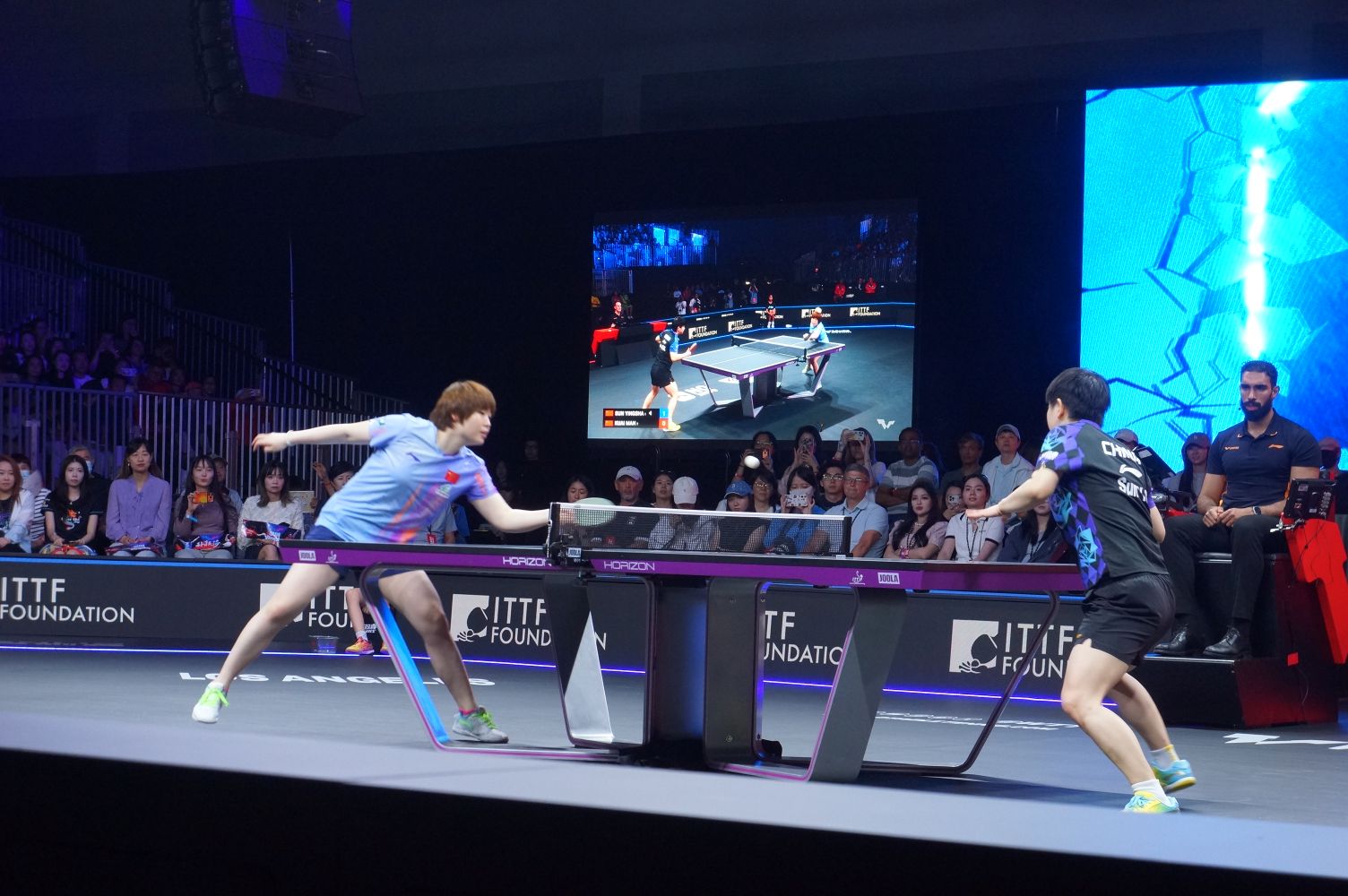
Kuai Man faces World No. 1 Sun Yingsha in the women’s singles final (Photo by Richard Ren/LAPost)
Although Sun ultimately closed out the match 11-3 in the final game, Kuai’s composure and determination earned widespread admiration.
Following the match, Sun praised her teammate’s performance.
“Kuai played exceptionally well throughout this tournament. She defeated two Japanese players to reach the final, and today she came in extremely well prepared. Even when facing difficult situations, she remained focused and calm. Her fighting spirit and mental toughness were especially impressive.”
Sun added that the experience gained from two dramatic comeback victories and a seven-game Grand Smash final would become invaluable for Kuai’s continued development.
Kuai Man: “My Biggest Gain Was Learning How to Read Matches”
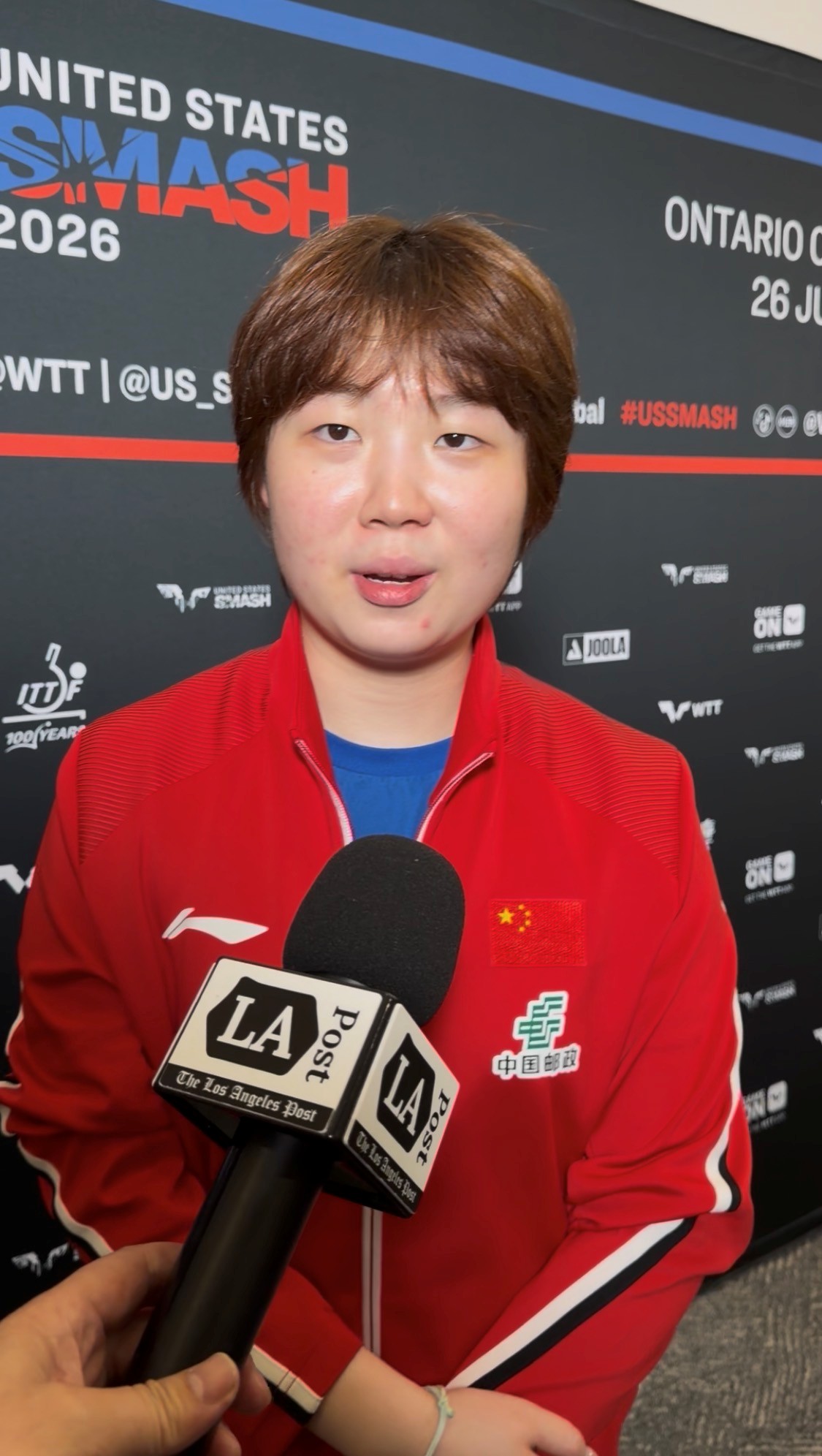
Kuai Man (Photo by Richard Ren/LAPost)
During her post-match interview, Kuai expressed satisfaction with her overall performance.
“Although I lost the final to Shajie (Sun Yingsha), I think my overall performance was quite good. Our mixed doubles partnership with Wen Ruibo improved, Wang Manyu and I won the women’s doubles title, and I defeated both Sato and Miwa Harimoto in singles. I believe I’ve made significant progress.”
Rather than focusing on medals, Kuai emphasized her personal growth.
“The biggest gain wasn’t the title or the prize money. It was improving my ability to read matches and understand different situations. After going through two seven-game battles, I feel much more composed when I’m behind, and I understand better how to solve problems during matches.”
She also acknowledged areas for improvement, particularly her physical conditioning and her tactical preparation against defensive players.
Career-High World Ranking Signals a New Chapter
The tournament carried significance beyond medals.

Wang Manyu and Kuai Man (Photo by Richard Ren/LAPost)
Thanks to the 1,400 ranking points earned as the women’s singles runner-up, Kuai climbed from World No. 7 to a career-high No. 3. She also partnered with Wang Manyu to capture the women’s doubles championship, delivering China’s first gold medal of the tournament.
Many international observers believe the US Smash represented more than a successful week of results—it marked Kuai’s transformation from a promising young prospect into a genuine contender at the highest level of women’s table tennis.
A longtime Southern California table tennis analyst summarized her breakthrough:
“The championship belongs to Sun Yingsha. But when people look back at this week, Kuai Man may well be remembered as the player who grew the most. She proved she can compete with the very best in the world—and, just as importantly, she showed she can win under immense pressure.”
From dramatic comeback victories over Hitomi Sato and Miwa Harimoto to pushing World No. 1 Sun Yingsha to a deciding game; from winning the women’s doubles title to rising to World No. 3, Kuai Man left the 2026 WTT US Smash with much more than an impressive résumé.
She left with a statement.
As the road to the Los Angeles Olympic Games begins, the rapid rise of China’s young star may become one of the most compelling stories in international women’s table tennis over the next several years.